

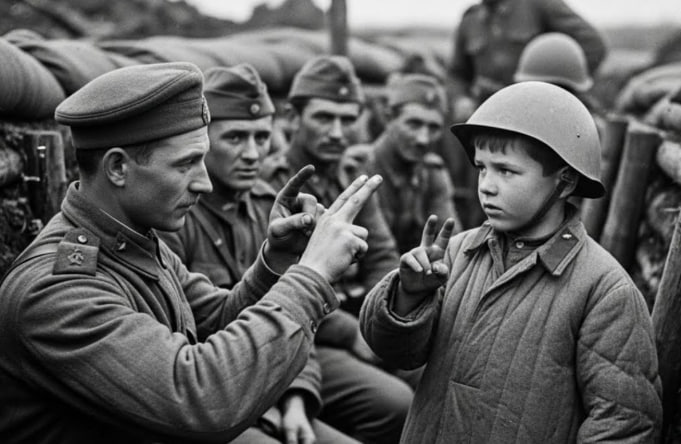
History is filled with stories that blur the line between documented reality and cultural legend. Some tales survive not because every detail can be verified, but because they reflect deeper truths about fear, courage, innovation, and human resilience. One such story is the mysterious account of Alexander Basilevich Suborov, a young Russian soldier who allegedly transformed military strategy during the chaos of the First World War.
According to popular retellings, Alexander entered the Russian army as a child after leaving his struggling village during wartime. Over time, he supposedly developed an unconventional tactical system based on confusion, flexibility, and psychological pressure. The story claims his ideas later influenced elite Soviet military training and even earned the respect of powerful leaders during the twentieth century.
Whether entirely factual or partially embellished through decades of retelling, the narrative has fascinated readers because it combines historical events with themes of genius, survival, and the unpredictable nature of conflict. It also raises important questions about how myths emerge during difficult times and why societies continue to celebrate extraordinary individuals.
This article explores the legend of the “Russian Boy Soldier” through both cultural storytelling and historical analysis while maintaining a balanced perspective grounded in historical context.
The Historical Setting of World War I Russia
To understand why stories like Alexander Suborov’s gained attention, it is important to examine the environment of Russia during World War I.
In 1914, the Russian Empire entered the global conflict against Germany and Austria-Hungary. The Eastern Front quickly became one of the harshest theaters of the war. Russian soldiers often faced severe shortages of supplies, transportation problems, poor communication systems, and inconsistent leadership.
Large rural communities lost many working-age men to military service, leaving families struggling to survive economically. Historical records show that morale among soldiers declined significantly during several periods of the war, especially after major defeats and logistical failures.
In this atmosphere, stories about unlikely heroes naturally emerged. Tales of young volunteers, brilliant tacticians, and fearless scouts spread across military camps and villages. Such narratives offered hope to exhausted populations searching for symbols of resilience.
The legend of Alexander fits perfectly into this historical pattern. A young individual overcoming impossible circumstances became a powerful image during a period when many people desperately needed inspiration.
The Myth of the Child Strategist
The most famous versions of the story describe Alexander as a teenager who observed enemy movement patterns and identified weaknesses in traditional battlefield formations.
According to the narrative, he realized that highly disciplined armies could struggle when confronted with unpredictable tactics. Instead of relying on rigid formations, he supposedly proposed small mobile groups capable of rapid movement and surprise coordination.
From a storytelling perspective, this idea is compelling because it presents intelligence and adaptability as more important than brute strength. The legend transforms a vulnerable child into a strategic thinker capable of challenging experienced commanders.
However, historians caution that many wartime legends become exaggerated over time. There is limited verified documentation confirming the existence of a military figure matching every detail associated with Alexander Suborov. Some researchers believe the character may represent a composite inspired by multiple soldiers, officers, and battlefield innovations from the era.
That does not necessarily make the story meaningless. Cultural myths often preserve emotional truths even when specific details remain uncertain.
Chaos and Innovation in Military Thinking
One of the most interesting aspects of the legend is the idea of “controlled chaos” in military operations.
Modern military historians recognize that twentieth-century warfare gradually moved away from rigid battlefield lines toward more flexible and decentralized strategies. During World War I, traditional frontal assaults often produced devastating losses while offering limited strategic success.
As a result, armies around the world experimented with infiltration tactics, mobile assault units, and flexible command structures. Germany developed specialized stormtrooper units. Other nations explored small-group coordination and rapid maneuver operations.
The legend of Alexander reflects these broader historical developments. His supposed philosophy emphasized unpredictability, initiative, and psychological pressure rather than strict linear engagement.
While there is no conclusive evidence that one young strategist single-handedly invented such concepts, the story symbolizes a real transformation in military thinking occurring across Europe at the time.
Why Legends Like This Become Popular
Stories about extraordinary individuals often become especially powerful during periods of uncertainty.
In difficult times, societies search for symbols that represent hope, intelligence, and resilience. The image of a young person surviving hardship and influencing history satisfies several emotional needs at once.
First, it reinforces the belief that talent can emerge from unexpected places.
Second, it suggests that creativity matters even during crisis.
Third, it gives audiences a central character through whom complicated historical events become easier to understand emotionally.
The Russian Boy Soldier legend also contains elements commonly found in epic storytelling traditions:
The Humble Beginning
Alexander is portrayed as coming from poverty and hardship, which creates emotional connection with readers.
The Hidden Genius
The idea that adults overlooked his intelligence adds dramatic tension and reinforces the theme of unconventional brilliance.
The Burden of Knowledge
As the story develops, Alexander allegedly struggles emotionally with the consequences of his ideas. This transforms him from a simple hero into a more reflective and human character.
The Disappearance
Many legends conclude with mystery rather than certainty. The unclear ending surrounding Alexander increases fascination because unanswered questions encourage speculation and retelling.
Soviet Influence and Wartime Storytelling
Another reason this narrative gained attention may relate to Soviet-era storytelling traditions.
During the twentieth century, Soviet culture frequently celebrated discipline, sacrifice, and strategic innovation. Military heroes occupied an important role in literature, film, and education. Stories highlighting resilience against overwhelming odds became part of national identity.
At the same time, secrecy surrounding intelligence operations and classified military research often encouraged public speculation. When historical records remain incomplete, myths naturally expand to fill informational gaps.
Some accounts claim Alexander later trained Soviet officers or contributed to elite tactical programs. While historians have not fully verified these claims, the idea aligns with broader Soviet admiration for military adaptability and strategic discipline.
The narrative also mirrors real debates within military academies during the interwar period. Many strategists sought new approaches capable of handling rapidly evolving technologies and changing battlefield conditions.
Psychological Warfare and Human Behavior
Beyond battlefield tactics, the legend highlights another important concept: psychology.
Military scholars widely acknowledge that uncertainty and confusion strongly affect decision-making under pressure. Unexpected situations can reduce coordination, increase hesitation, and disrupt communication.
The story repeatedly emphasizes the psychological dimension of conflict rather than focusing solely on physical confrontation. According to the legend, Alexander understood that fear and unpredictability could influence outcomes as much as weapons or numbers.
This reflects broader developments in twentieth-century strategy. Governments and military planners increasingly recognized the importance of morale, perception, and adaptability.
Today, psychologists studying decision-making often examine how humans react under stress. Flexible thinking and rapid adaptation remain valuable skills not only in military contexts but also in business, emergency management, sports, and leadership.
Could a Teenager Really Influence Military Strategy?
From a scientific and historical perspective, skepticism is appropriate.
Military systems are large and highly structured. Major strategic changes usually emerge from collaboration among many officers, planners, and institutions rather than from a single individual acting alone.
However, history does include examples of unusually young innovators and prodigies in various fields. Mathematics, music, science, and engineering have all seen exceptional contributions from talented teenagers.
It is therefore theoretically possible that a young observer could have introduced useful tactical observations, especially during chaotic wartime conditions where unconventional thinking sometimes gained attention.
Still, many dramatic elements in the story likely became amplified through oral retelling and internet-era sensationalism. Readers should approach such narratives with curiosity balanced by critical thinking.
The Internet and the Revival of Historical Legends
In recent years, digital media has helped revive many forgotten or semi-fictional wartime stories.
Online audiences are naturally drawn to narratives involving mystery, hidden history, and unlikely heroes. Emotional storytelling spreads quickly across social platforms, especially when combined with dramatic historical settings.
At times, however, simplified narratives can blur distinctions between documented fact and imaginative reconstruction. Articles and videos may emphasize emotional impact more than historical verification.
This does not mean audiences should reject every dramatic story. Instead, it highlights the importance of media literacy and source evaluation.
The legend of the Russian Boy Soldier becomes more meaningful when readers view it not simply as a literal biography, but as part of a larger tradition of wartime mythology and cultural memory.
The Human Cost Behind the Legend
One reason the story resonates emotionally is its recurring theme of emotional burden.
As the narrative progresses, Alexander allegedly becomes increasingly troubled by the consequences of strategic innovation. This detail reflects a broader truth found in many historical accounts: major conflicts often leave lasting psychological effects on those involved.
Modern psychology recognizes that prolonged exposure to extreme stress can deeply shape human behavior and emotional well-being. Veterans throughout history have described feelings of exhaustion, guilt, and emotional distance after surviving difficult experiences.
By including these themes, the legend avoids portraying strategy and conflict as glamorous. Instead, it presents innovation as something that can carry personal consequences.
This more reflective tone may explain why the story continues to attract attention decades later.
Conclusion
The story of Alexander Basilevich Suborov exists somewhere between history, folklore, and modern internet mythology. While many details remain difficult to verify fully, the narrative captures several genuine historical realities: the hardship of World War I Russia, the evolution of military strategy, and the emotional complexity of human survival during crisis.
Whether Alexander was a real tactical prodigy, a symbolic composite of multiple figures, or a legend shaped through generations of storytelling, the fascination surrounding him reveals something important about human nature.
People are drawn to stories that challenge assumptions about age, intelligence, and resilience. We continue searching for individuals who seem capable of transforming chaos into understanding. In many ways, legends like this endure not because every detail is historically certain, but because they reflect timeless questions about innovation, responsibility, and the cost of knowledge.
The enduring popularity of such stories reminds us that human curiosity is as powerful as ever. Across generations, people continue exploring the boundary between documented history and the myths that societies create to understand themselves.