

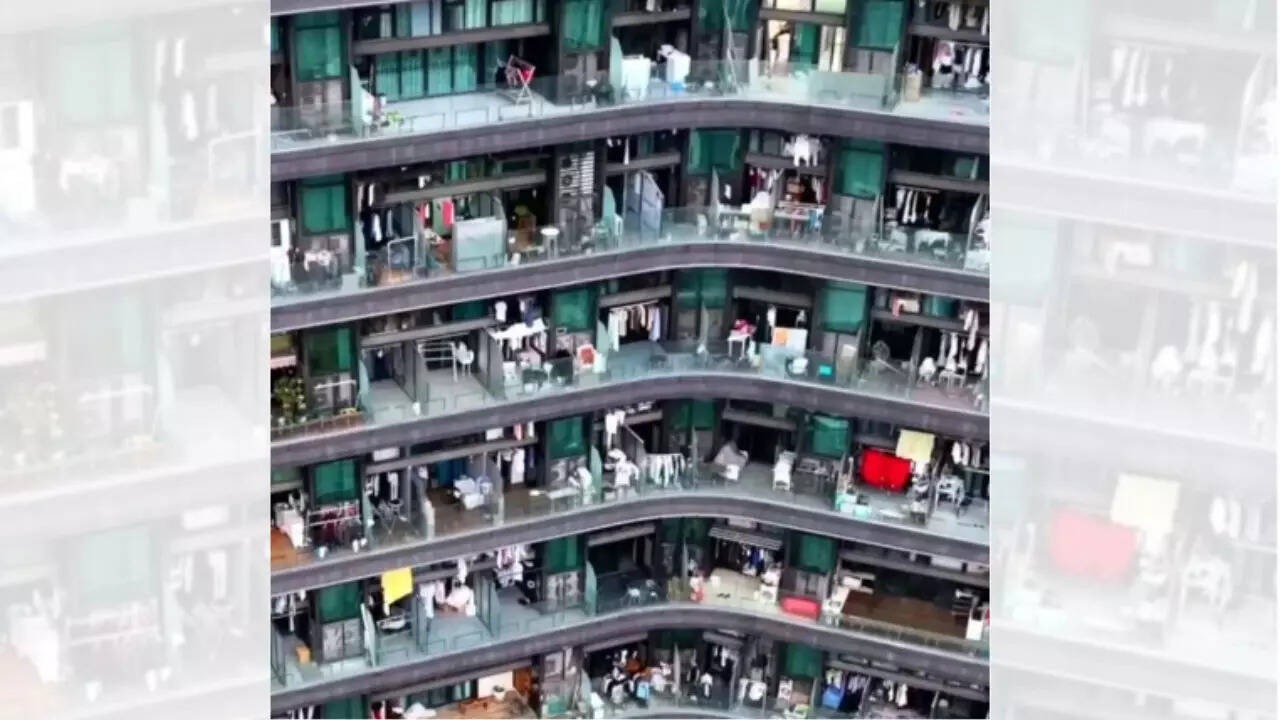
In the rapidly growing skyline of Hangzhou, one enormous residential complex has captured worldwide attention for its scale, design, and unusual lifestyle experience. Known as Regent International Center, the massive building has become famous online as a place where thousands of people can live, shop, work, and socialize without ever leaving the property.
For many viewers discovering the structure online for the first time, the concept almost feels futuristic. Yet the building is very real and continues attracting curiosity from architects, urban planners, travelers, and social media audiences around the world.
A Massive Residential Complex in the Heart of Hangzhou
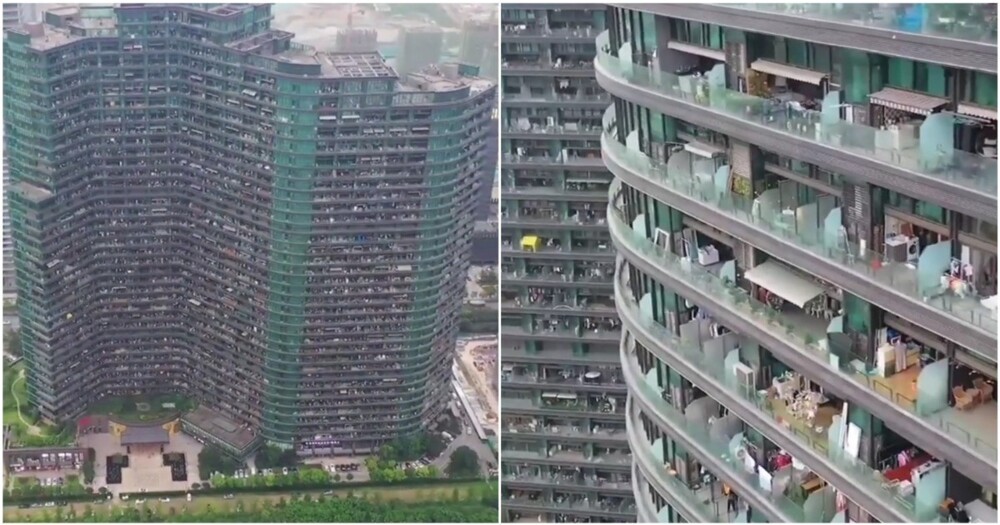
Regent International Center is often described as one of the largest apartment complexes in China.
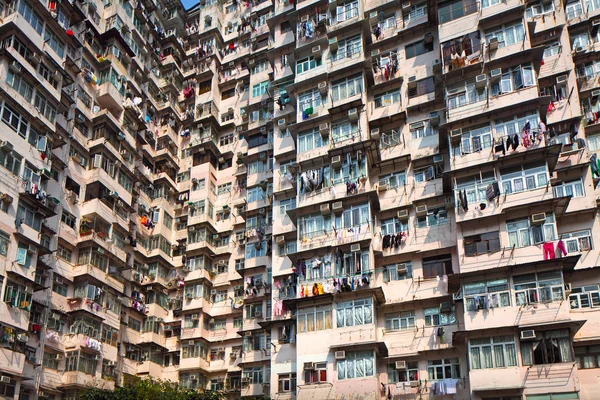
The giant S-shaped structure reportedly rises more than 200 meters into the skyline and contains thousands of residential units. Due to its immense size and self-contained environment, many online commentators have compared it to a “vertical city.”
The building was designed to support high-density urban living while combining residential, commercial, and lifestyle spaces into one enormous development.
Why the Building Draws So Much Attention
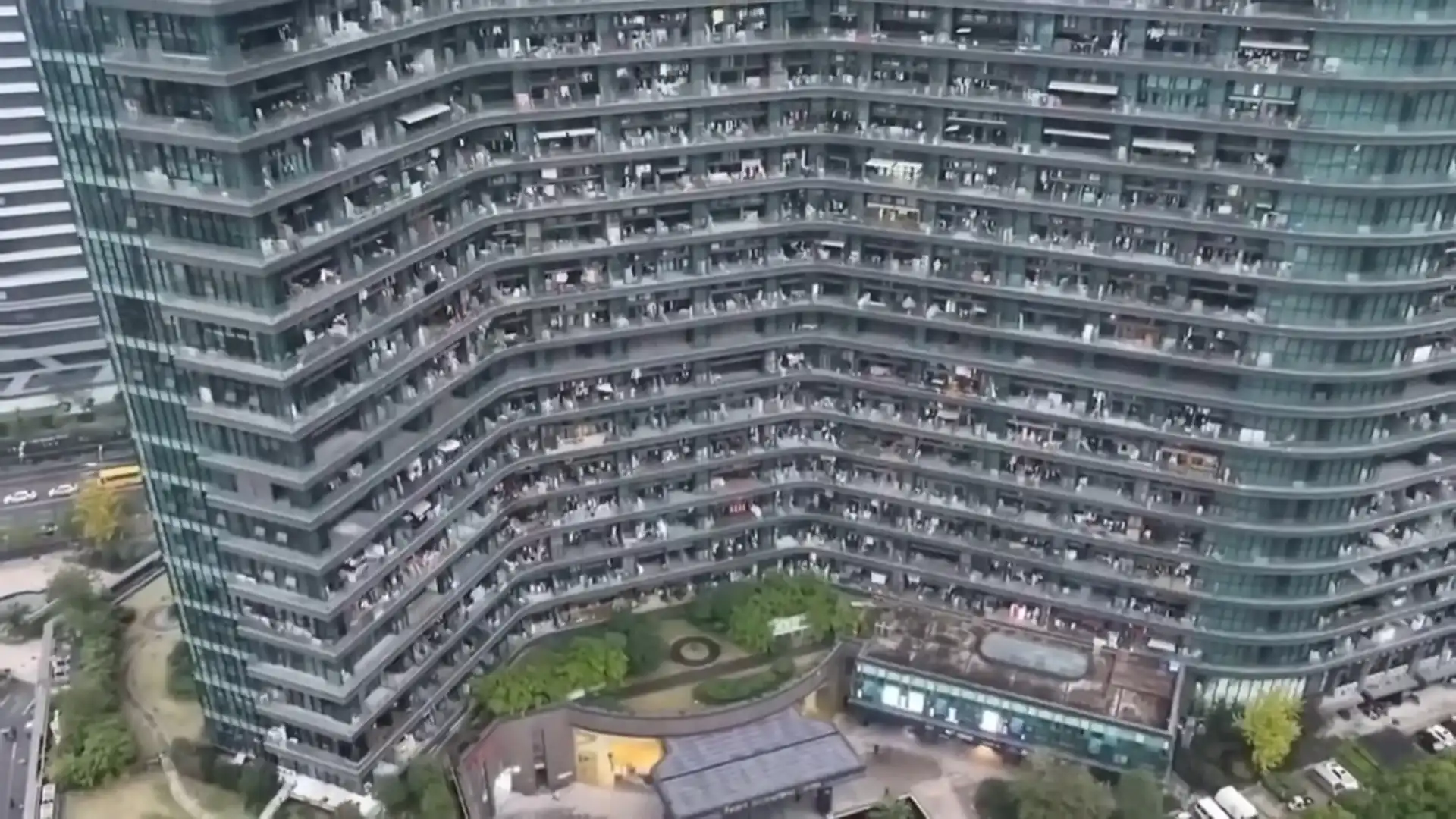
The complex became especially popular online because of reports suggesting that many residents can spend days inside the building without needing to travel elsewhere.
Inside the structure, residents may find:
- Restaurants
- Grocery stores
- Cafés
- Beauty salons
- Fitness areas
- Offices
- Convenience shops
- Entertainment spaces
This combination of services creates an environment that feels closer to a miniature city than a traditional apartment building.
A Reflection of Modern Urban Living
As major cities continue growing, developments like Regent International represent a broader trend toward compact, high-efficiency urban housing.
In densely populated cities, large mixed-use buildings can help:
- Reduce commuting time
- Maximize limited space
- Centralize daily services
- Support growing populations
- Create walkable living environments
For some residents, the convenience of having everything nearby makes this style of living highly attractive.
Social Media Fascination With “Mega-Buildings”
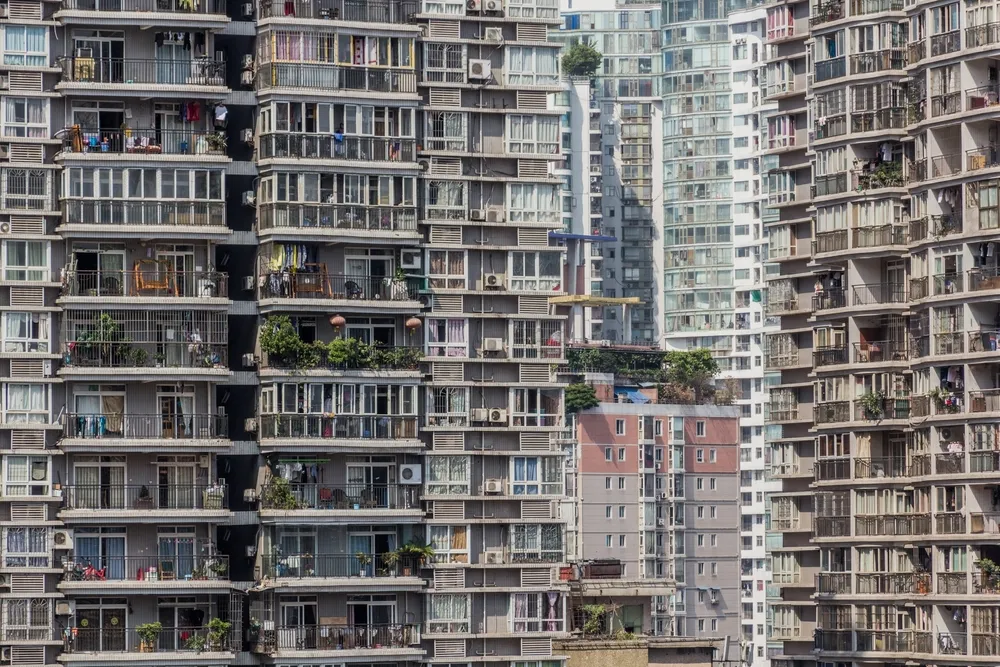
Videos and photos of the complex have spread rapidly across platforms like TikTok, YouTube, and Instagram.
Online audiences are often fascinated by:
- The building’s enormous scale
- The number of residents
- The futuristic appearance
- Drone footage of the curved design
- The idea of an entire community living inside one structure
Many internet users compare the building to settings from science fiction films because of its size and dense concentration of activity.
Different Reactions From Around the World
While some people admire the convenience and innovation behind mega-complexes like Regent International, others wonder about the long-term social effects of extremely dense living environments.
Supporters often praise:
- Convenience
- Accessibility
- Efficient urban planning
- Reduced travel needs
- Strong local community networks
Critics sometimes question:
- Privacy
- Overcrowding
- Noise levels
- Mental well-being in dense spaces
- Dependence on indoor environments
These discussions reflect larger global conversations about how future cities may evolve as urban populations continue expanding.
The Growing Popularity of Mixed-Use Developments
Buildings that combine residential, shopping, dining, and workspaces are becoming increasingly common in major cities worldwide.
Urban planners often view mixed-use developments as practical solutions for:
- Traffic reduction
- Sustainable growth
- Land efficiency
- Public transportation access
- Modern lifestyle demands
In many ways, Regent International has become one of the most recognizable examples of this trend because of its enormous scale and online visibility.

A Symbol of China’s Rapid Urban Expansion
Over the past few decades, cities across China have undergone dramatic architectural transformation.
Large-scale residential developments have become central to accommodating growing urban populations and evolving economic activity. Hangzhou itself has emerged as a major technology and innovation hub, contributing to demand for modern housing solutions.
Buildings like Regent International highlight how architecture continues adapting to changing urban lifestyles in fast-growing metropolitan areas.
Why Stories Like This Capture Global Curiosity
People are naturally fascinated by places that challenge traditional ideas of how communities function.
A building capable of housing thousands while offering everyday services under one roof raises intriguing questions:
- What will future cities look like?
- How much convenience do people want?
- Can vertical living replace traditional neighborhoods?
- Will mega-buildings become more common worldwide?
For many viewers online, Regent International represents both the promise and mystery of future urban life.
A Glimpse Into the Future of Cities
Whether admired as an engineering achievement or debated as an experiment in ultra-dense living, Regent International Center continues attracting worldwide attention.
Its enormous scale, self-contained lifestyle, and futuristic appearance make it one of the internet’s most talked-about residential buildings. As cities continue evolving, structures like this may offer an early glimpse into how millions of people could live in the decades ahead.