
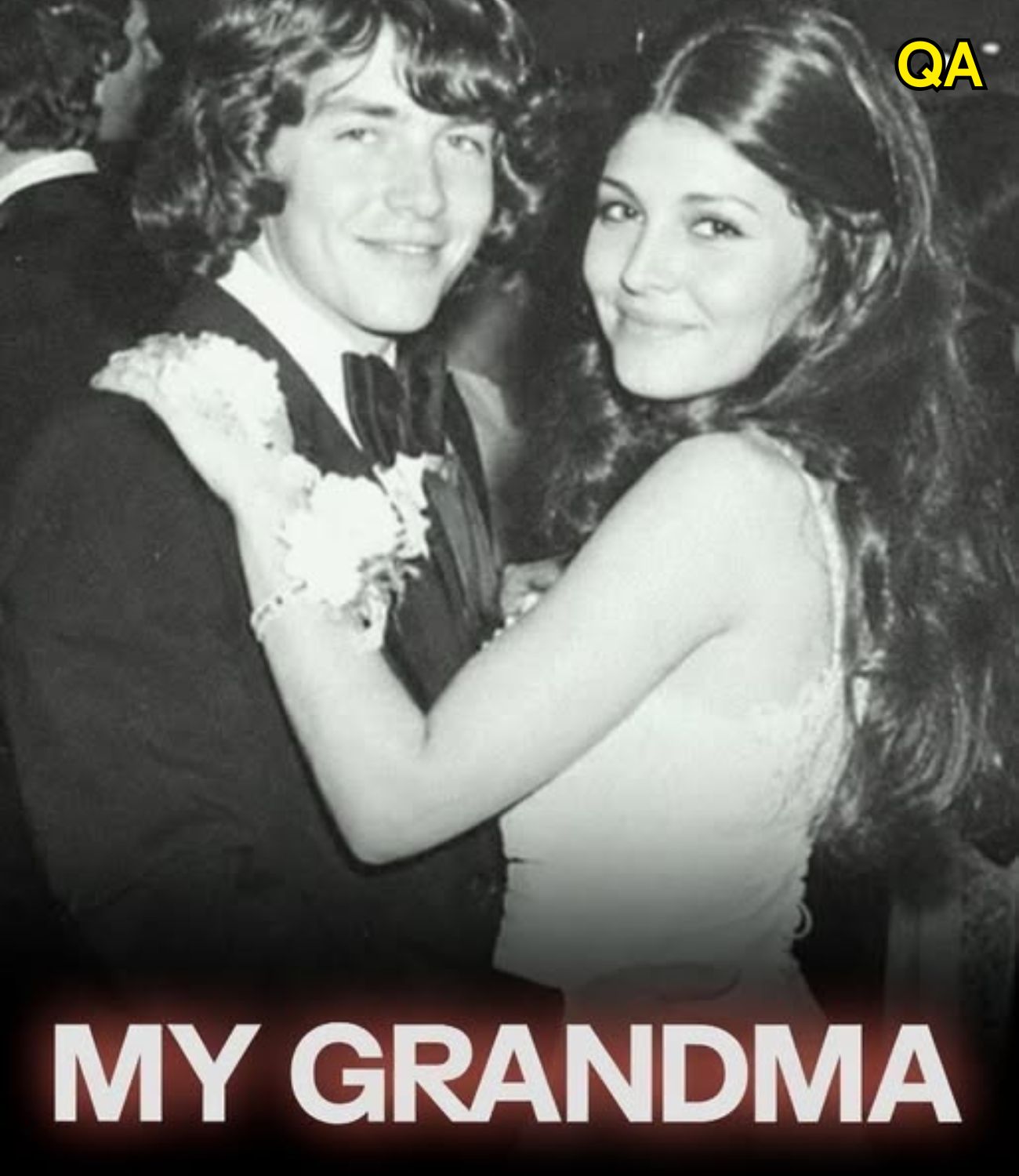
Every family has stories that remain untold.
Some are forgotten over time. Others are carefully tucked away in old photographs, handwritten letters, and memories that rarely surface in everyday conversation.
Growing up, I believed I knew everything important about my grandmother. She was the heart of our family, known for her kindness, homemade recipes, and ability to make everyone feel welcome. Her stories usually centered on family gatherings, childhood adventures, and lessons learned over the years.
But one quiet afternoon, she surprised me with a request that revealed an entirely different side of her life.
She asked me to find someone she had not seen in decades.
The person she wanted to find was her high school sweetheart.
What began as a simple search soon became a fascinating journey into family history, personal memories, and the enduring power of human connection.
The Unexpected Request
It started during a routine visit.
My grandmother was sitting by the window, watching birds move between the trees in her garden. The afternoon felt ordinary until she suddenly spoke.
“I want to find someone,” she said.
When I asked who she meant, she paused before answering.
“My first love.”
The statement caught me completely off guard.
In all the years I had known her, she had never spoken about a romantic relationship before meeting my grandfather.
Like many younger family members, I had unconsciously assumed that older relatives had always been exactly as I knew them.
That moment reminded me that every person has a life story extending far beyond what others see.
Discovering a Forgotten Chapter
Later that evening, my grandmother shared details she had never mentioned before.
She described her school years with remarkable clarity.
She spoke about classrooms filled with laughter, handwritten notes exchanged between friends, school events, and a young man who had played an important role in her life.
According to her memories, they had been very close.
However, life took them in different directions.
Career opportunities, family obligations, and changing circumstances gradually created distance between them.
As the years passed, communication faded.
Yet despite the passage of time, she never completely forgot him.
Listening to her speak, I realized I was hearing a part of family history that had remained hidden for decades.
Why People Search for Lost Connections
Stories like my grandmother’s are more common than many people realize.
Researchers who study memory and aging have found that people often become increasingly interested in personal history as they grow older.
This phenomenon can be connected to several factors:
-
Reflection on life experiences
-
Curiosity about unresolved questions
-
Desire for personal closure
-
Interest in preserving family history
-
Appreciation for meaningful relationships
Searching for someone from the past is not always about romance.
In many cases, it is about understanding one’s own life story more completely.
Beginning the Search
Although I had no experience locating long-lost acquaintances, I promised my grandmother I would try.
The challenge seemed significant.
Decades had passed.
People move, change careers, relocate, and sometimes become difficult to trace through traditional records.
Still, I began gathering information.
I searched through:
-
School yearbooks
-
Alumni directories
-
Public archives
-
Historical records
-
Community groups
-
Genealogy resources
Each small discovery felt like uncovering a missing piece of a puzzle.
The Growing Popularity of Family History Research
My search introduced me to the broader world of genealogy and historical research.
In recent years, interest in family history has grown dramatically around the world.
People are increasingly using:
-
Digital archives
-
Historical newspapers
-
Family tree platforms
-
Census records
-
Local history collections
These resources help individuals reconnect with their heritage and uncover forgotten stories.
What surprised me most was how often seemingly small details can lead to meaningful discoveries.
A yearbook photo, an old address, or a community record can reveal connections spanning generations.
Following the Clues
After several days of research, I finally located information matching the name my grandmother remembered.
The discovery felt surprisingly emotional.
Although I had never met this person, I understood how important the search had become.
As additional details emerged, it appeared that he had built a full life of his own, complete with family, achievements, and experiences.
When I shared this information with my grandmother, she smiled quietly.
She did not react dramatically.
Instead, she seemed grateful simply to know that he had lived a meaningful life.
That response taught me an important lesson about memory and perspective.
Sometimes people are not searching for what might have been.
They are simply seeking understanding.
A Message Across Time
Eventually, I found a way to contact a relative connected to the family.
After carefully explaining the situation, I waited.
Days passed without a response.
Then one evening, a reply arrived.
The message was brief.
“He remembers her.”
Those words carried remarkable emotional weight.
They suggested that memories can endure across decades, even when lives move in different directions.
The Power of Shared Memories
A conversation was eventually arranged.
When the call began, there was a moment of silence before familiar memories started to return.
The discussion focused on school days, mutual friends, community events, and the many experiences that had shaped their lives.
There were no dramatic revelations.
Instead, there was something much more meaningful.
There was recognition.
Two people who had once shared an important chapter of life were able to acknowledge that chapter again.
Psychologists often note that shared memories help shape personal identity.
Revisiting those memories can provide comfort, perspective, and a sense of continuity.
What the Experience Taught Me
Watching my grandmother reconnect with someone from her past changed my understanding of family history.
I learned that every person contains countless stories that younger generations may never hear unless they take time to ask.
Older relatives are often living archives of experiences, perspectives, and memories that cannot be found in books or databases.
Their stories provide valuable insights into:
-
Family traditions
-
Historical events
-
Personal growth
-
Community life
-
Human resilience
The search reminded me of the importance of preserving these stories before they disappear.
Why Nostalgia Matters
Modern research suggests that nostalgia serves an important psychological function.
Rather than keeping people trapped in the past, positive memories can help individuals:
-
Strengthen their sense of identity
-
Improve emotional well-being
-
Maintain social connections
-
Appreciate personal growth
-
Find meaning in life experiences
For many people, revisiting cherished memories creates a bridge between past and present.
That bridge can be surprisingly powerful.
The Importance of Listening
One of the most valuable lessons from this experience was the importance of listening.
Many people assume they already know the stories of parents, grandparents, and older relatives.
In reality, there are often entire chapters that remain untold.
Simple questions can reveal extraordinary experiences.
Asking about childhood friendships, school memories, personal dreams, and significant moments may uncover stories that enrich an entire family’s understanding of its history.
Preserving Family Stories for Future Generations
Experts encourage families to actively document personal histories.
This can be done through:
Recorded Interviews
Audio and video recordings preserve voices and emotions.
Written Journals
Personal memories can be documented for future generations.
Family Photo Collections
Photographs often serve as valuable historical records.
Genealogy Projects
Family trees help organize and preserve connections across generations.
Storytelling Traditions
Regular conversations allow important memories to remain alive.
Conclusion: More Than a Search
What began as a simple request ultimately became something much larger.
My grandmother did not regain her youth, nor was she trying to change the past.
Instead, she gained something equally meaningful: clarity, understanding, and the reassurance that an important chapter of her life had truly existed.
The experience taught me that people do not always leave their stories behind. Sometimes those stories simply wait patiently to be remembered.
Family history is more than names and dates. It is a collection of relationships, choices, dreams, and memories that shape who we become.
In a world that moves quickly, taking time to listen to those stories may be one of the most valuable gifts we can offer.
Human curiosity often leads us to ask questions about the future. Yet sometimes the most meaningful discoveries come from looking into the past and realizing that every life contains chapters still waiting to be understood.
Sources
-
National Institute on Aging (NIA) – Research on memory and aging
-
American Psychological Association (APA) – Studies on nostalgia and well-being
-
Library of Congress – Family history and oral history preservation resources
-
National Archives – Genealogy and historical records guidance
-
StoryCorps – Oral history and family storytelling resources
-
TrendUSA1 – Original story inspiration regarding a grandmother’s search for a childhood connection