

The Amazon rainforest has long inspired stories of hidden civilizations, mysterious creatures, and remarkable discoveries. Covering millions of square kilometers across South America, it remains one of Earth’s richest ecosystems and one of its least explored natural environments.
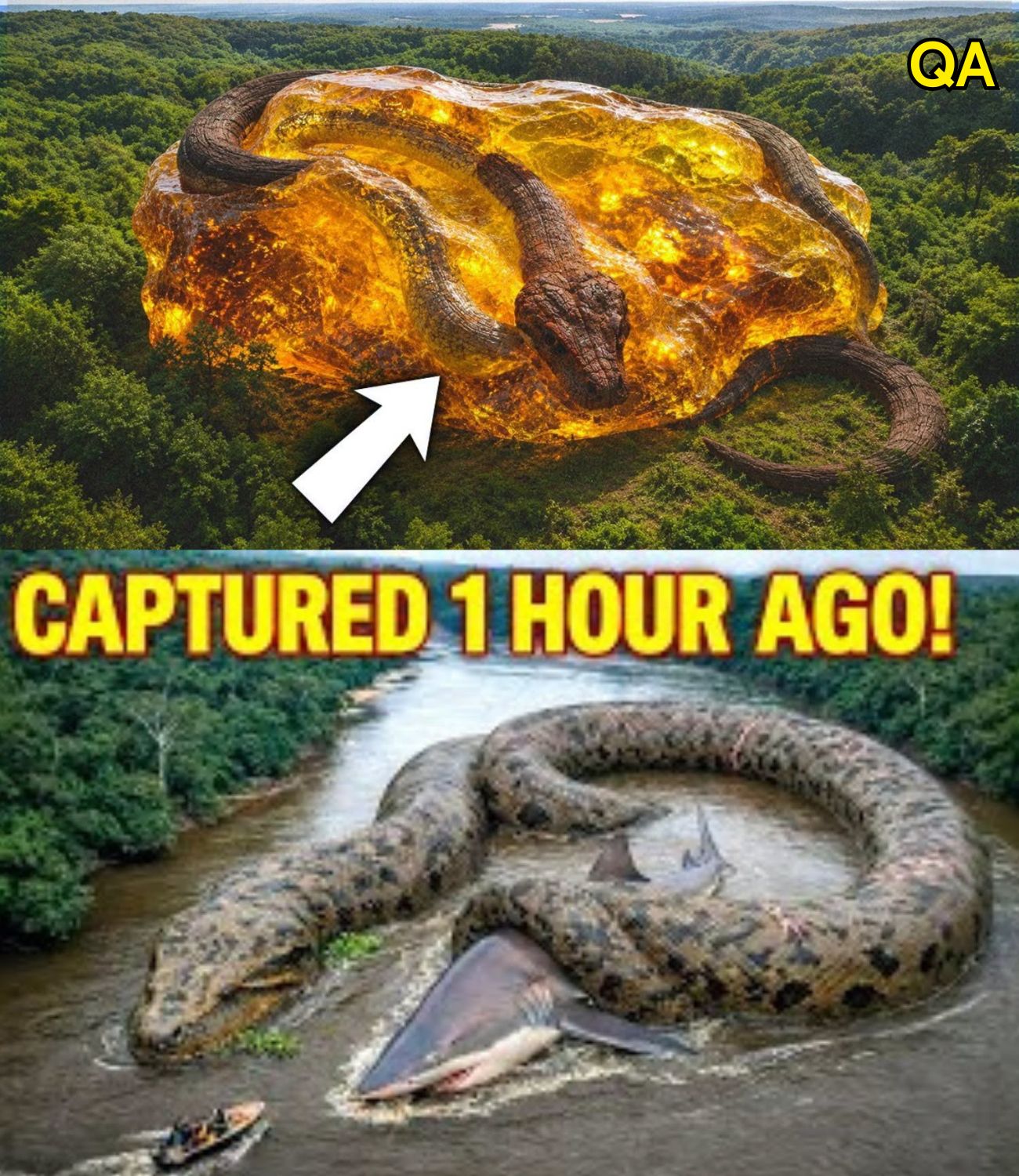
Because so much of the rainforest remains difficult to access, dramatic stories often emerge claiming that prehistoric animals or unknown species have been discovered beneath its dense canopy. One recent claim suggests that an enormous serpent was found completely preserved inside amber after millions of years.
At first glance, the story sounds like something from an adventure novel. But does modern science support such a discovery?
The answer reveals a fascinating combination of paleontology, geology, and cultural folklore—showing that while the Amazon still holds many mysteries, some viral claims stretch beyond what current scientific evidence can support.
Why the Amazon Inspires Extraordinary Stories
The Amazon is unlike almost any other place on Earth.
Home to an extraordinary variety of plants and animals, it continues to surprise scientists with newly documented species every year.
The rainforest includes:
-
Thousands of fish species
-
Hundreds of mammal species
-
Countless insects
-
Large reptiles
-
Diverse bird populations
-
Ancient geological formations
Its sheer size naturally encourages speculation about what might still remain undiscovered.
Understanding Amber
Amber is not ordinary stone.
It begins as sticky resin produced by ancient trees.
Over time, this resin hardens, becomes buried beneath layers of sediment, and eventually fossilizes into amber.
Because fresh resin can trap small organisms, amber sometimes preserves remarkable details that survive for millions of years.
Scientists have discovered amber containing:
-
Insects
-
Spider webs
-
Plant material
-
Pollen
-
Small feathers
-
Tiny reptiles on rare occasions
These fossils provide valuable insights into prehistoric ecosystems.
Could a Giant Snake Be Preserved in Amber?
This is where science becomes important.
Although amber is an exceptional preservative, it has physical limitations.
Tree resin flows slowly and usually surrounds only relatively small objects.
A fully grown giant snake would be far too large to become completely enclosed before decomposition or scavenging occurred.
For this reason, paleontologists consider the idea of an enormous serpent preserved entirely in amber to be scientifically implausible.
Small scales, skin fragments, or tiny tissue remnants would be much more realistic than an intact giant animal.
The Real Giant Snake: Titanoboa
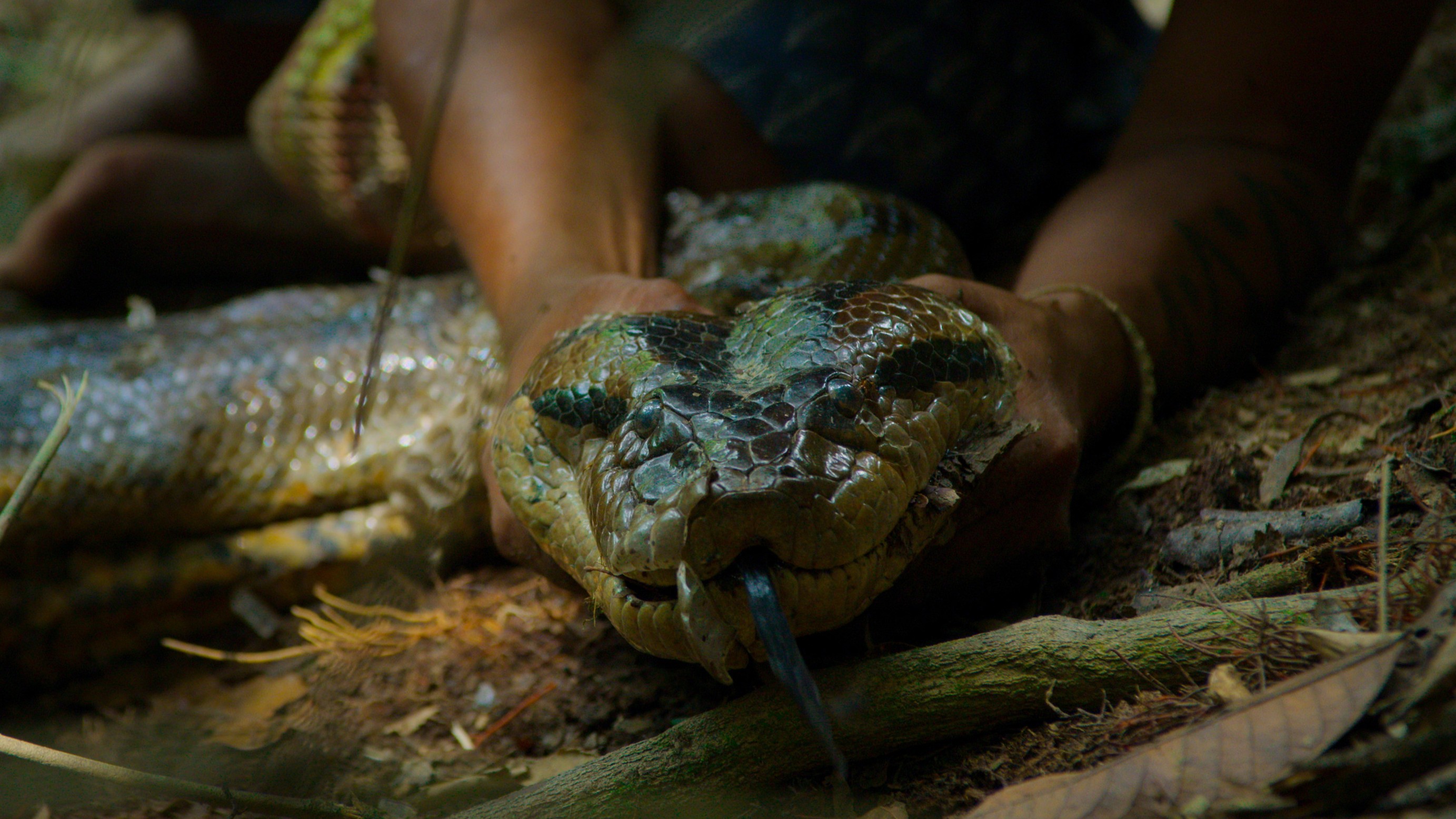
Although the amber story lacks scientific support, giant prehistoric snakes truly existed.
One of the most famous is Titanoboa, the largest snake currently known from the fossil record.
Living approximately 60 million years ago, Titanoboa inhabited warm tropical environments in what is now northern South America.
Based on fossil evidence, researchers estimate it reached extraordinary lengths and weighed well over a metric ton.
Unlike fictional stories, Titanoboa was identified through fossilized vertebrae, ribs, and other skeletal remains carefully studied by paleontologists.
Its discovery dramatically expanded scientific understanding of prehistoric reptiles.

Why Giant Serpents Appear in So Many Cultures
Long before modern science, civilizations around the world told stories about enormous snakes.
These legends often symbolized:
-
Creation
-
Wisdom
-
Protection
-
Rivers
-
Fertility
-
Natural power
Indigenous traditions throughout the Amazon include stories of massive serpents associated with waterways and the spiritual world.
Such stories served cultural, educational, and symbolic purposes rather than scientific ones.
This rich folklore helps explain why modern audiences are naturally drawn to reports involving giant snakes.
Science and Storytelling Can Coexist
Myths and scientific discoveries play different roles.
Science asks questions such as:
-
Where was the specimen found?
-
How old is it?
-
What evidence supports the identification?
-
Can other researchers verify the findings?
Folklore explores cultural meaning, imagination, and humanity’s relationship with nature.
Both contribute to our understanding of the world, but they should not be confused with one another.
What Amber Really Teaches Scientists
Even tiny fossils preserved in amber can transform scientific knowledge.
Researchers study amber specimens to understand:
-
Ancient forests
-
Evolutionary history
-
Climate change
-
Plant-insect interactions
-
Extinct ecosystems
A mosquito trapped millions of years ago may reveal information about prehistoric biodiversity that would otherwise be impossible to recover.
These discoveries demonstrate that remarkable science often comes from surprisingly small specimens.
The Amazon Still Holds Many Secrets
Although the claim of a giant serpent preserved in amber is unsupported, the Amazon continues to produce important discoveries.
Scientists regularly identify new plants, insects, amphibians, reptiles, and microorganisms throughout the region.
Each discovery contributes to a better understanding of biodiversity and highlights the importance of conserving one of the world’s most significant natural ecosystems.
Conclusion
Stories about giant serpents preserved in amber capture attention because they combine mystery, prehistoric life, and one of Earth’s most fascinating landscapes. While current scientific knowledge indicates that a complete giant snake could not realistically be preserved in amber, the legend reflects humanity’s enduring curiosity about the unknown.
The true wonders of paleontology are no less extraordinary. Fossils such as Titanoboa, along with the countless insects and plants preserved in amber, continue to reveal chapters of Earth’s history that remained hidden for millions of years.
By appreciating both folklore and evidence-based science, we gain a richer understanding of the natural world—one that celebrates imagination while remaining grounded in careful research and discovery.
Suggested References
-
Natural History Museum – Amber and Fossil Preservation
-
Smithsonian National Museum of Natural History
-
Scientific American – Amber Fossils
-
Florida Museum of Natural History – Titanoboa Research
-
Paleobiology and Paleontology Journal Articles