

The Transformative Power of Courage: A Son’s Stand Against Judgment
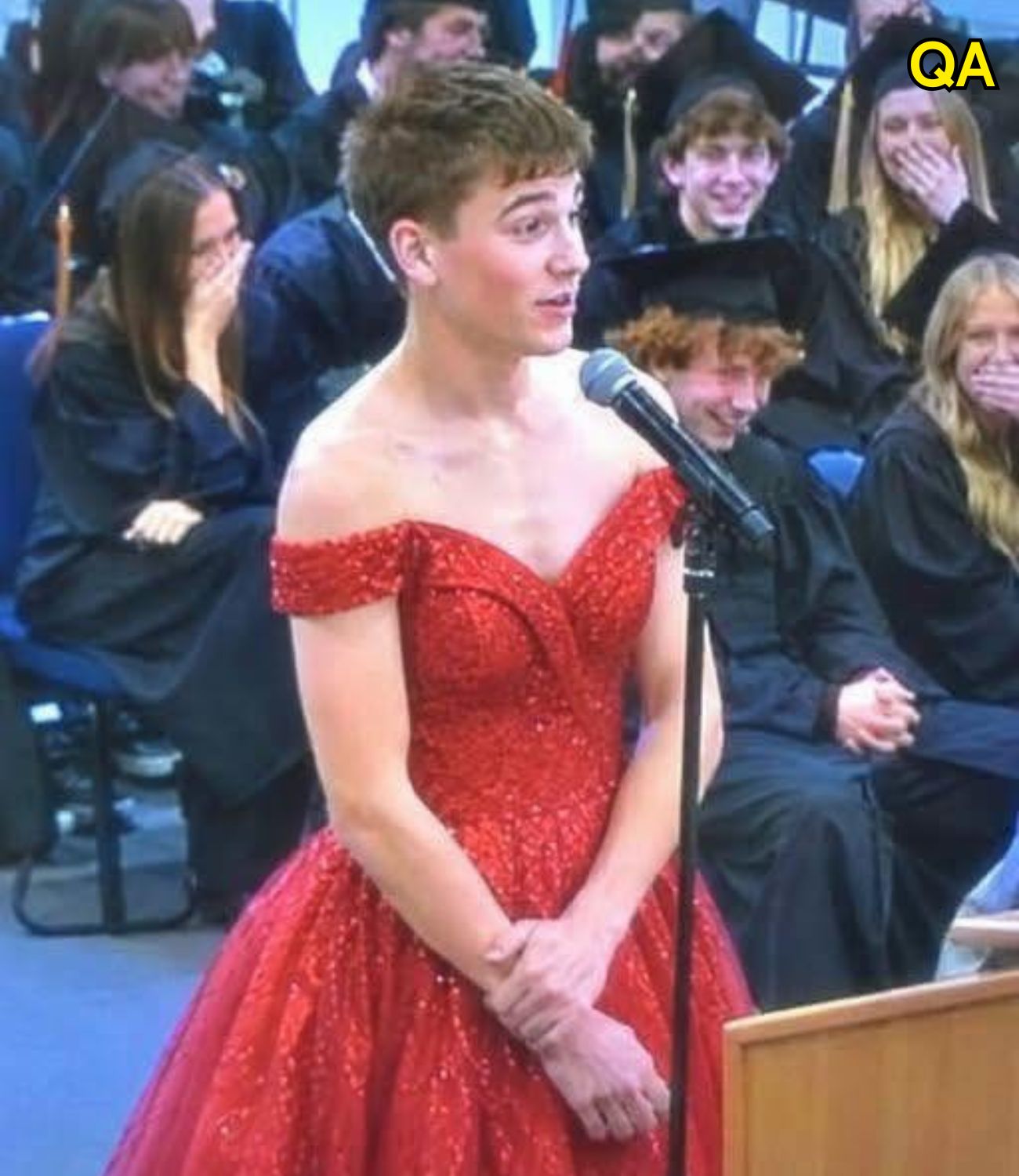
The auditorium was filled with an intensity that only a gathering of teenagers could generate. As my son, Liam, stepped onto the stage, the atmosphere thickened with an oppressive energy. Clad in a vibrant, flowing red dress that shimmered under the harsh spotlight, he faced a crowd that erupted into a storm of cruel laughter. Mocking whispers escalated into shouts, and I stood in the back of the room, hands trembling, heart fracturing as I watched Liam approach the microphone, his head held high.
A Mother’s Journey and Fears
Becoming a mother at the age of nineteen, I navigated a world that echoed doubt about my ability to not just survive, but to thrive. Liam became my universe, my anchor in a tumultuous existence. The years weighed heavily with sleepless nights, where I questioned whether my choices, including the absence of a traditional father figure in his life, had left him wanting. Watching him traverse his teenage years with a quiet, observant grace often invoked a sense of alienation in me. Yet, I never anticipated that he would stand isolated at the center of such a vicious, public display of derision.
The Power of Judgment
The audience, filled with peers and even some adults wearing smug expressions, appeared to revel in Liam’s supposed humiliation. They saw a boy in a dress and reduced him to a punchline. But I witnessed something different: the set of his jaw and the unwavering focus in his eyes as they scanned the crowd. As he reached the podium, adjusting the microphone, the cacophony of laughter didn’t dissipate immediately. Instead, it trickled down to a baffled silence as Liam stood resolute, refusing to acknowledge the jeers. Instead of anger or shame, he radiated an aura of profound strength and determination, as if he harbored a secret that would ignite a fire within the room.
Confronting the Crowd
“You’re all laughing because you think you know exactly what you’re looking at,” Liam began, his voice slicing through the thick, judgmental air with unyielding clarity. “You see a dress, and you see an invitation to mock. But this garment isn’t a joke, it isn’t a cry for attention, and it certainly isn’t a costume.”
A Heartfelt Message
As he continued, he revealed that he had spent months working with the unsung heroes of the school—the custodial staff who arrived before dawn, the cafeteria workers who ensured no child went hungry, and the crossing guards who braved the elements for minimal pay. Liam shed light on the often-overlooked individuals who supported not just him, but the entire student body, though they worked in the shadows, scrutinized and undervalued.
Artistry as a Tribute
Every detail of the dress was imbued with meaning. Liam described how he collaborated with local artists to weave symbols of these unsung heroes into the fabric of his attire. The vibrant red wasn’t an arbitrary choice; it represented the passion and life-force of those who kept the school functioning. Every fold, stitch, and hidden design element was a purposeful homage to individuals who had been pivotal in his life when the world weighed heavily on him.
The Stories Behind the Stitches
He didn’t merely mention their names; he told their stories. From Mr. Henderson, the janitor who tutored him in mathematics in the supply closet, to Ms. Clara, the lunch lady who always ensured he had a hot meal on days he couldn’t afford to pay. With each narrative, the atmosphere of the room began to shift. The laughter that once echoed turned into a grave silence, as the audience confronted their collective ignorance towards the invisible labor that underpinned their comfortable lives.
A Shift in Perspective
By the conclusion of his speech, the auditorium had transformed from a site of adolescent cruelty into a space of solemn reflection. The students who had once sneered were now staring at their laps, weighed down by the weight of their newfound awareness. Liam hadn’t merely donned a dress; he had presented a manifesto of gratitude that forced us to reevaluate our perceptions and attitudes. As he stepped away from the podium, the atmosphere held a heartbeat of silence—just long enough for every person in the room to contemplate their shortcomings—before it erupted into a thunderous standing ovation.
Reflections on Motherhood
In the back of the room, I felt tears welling in my eyes. The years I spent fearing that Liam lacked the structure of a “normal” family dissipated as I recognized what was taking place before me. I had been looking for indications of his failure, while he had been cultivating an extraordinary strength. In that moment, I realized he didn’t require the traditional family structure to emerge as a leader; he had forged a path to advocate for those consigned to the periphery.
Lessons in Success and Humanity
That night provided the ultimate lesson of my motherhood. True success is not measured in accolades or adherence to societal expectations; it lies in the bravery to confront a room full of individuals frightened to extend kindness. Liam approached the stage as a target of ridicule but departed as a figure of immense strength. He taught me that genuine power doesn’t emanate from being the loudest or most popular but from the grace found in recognizing and acknowledging the worth of others, even when society chooses to avert its gaze. My son didn’t merely endure the storm; he transformed it, imparting a vital lesson about humanity to our community.
In Conclusion
Ultimately, Liam’s experience serves as a poignant reminder of the importance of compassion, understanding, and the value of every individual within our communities. In our modern society, where judgment often overshadows empathy, it is crucial to celebrate those who challenge norms and uplift the stories of the marginalized. We must strive to foster an environment where kindness prevails, turning moments of ridicule into opportunities for growth and understanding.