


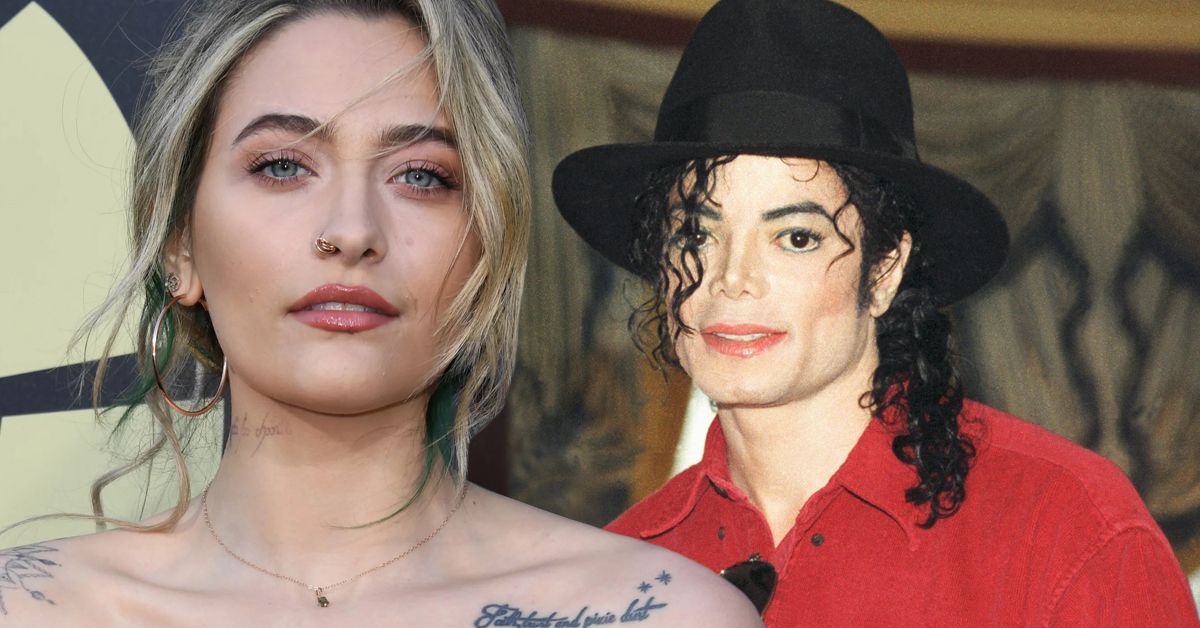
“Since I was born, daddy has been the best father you could ever imagine. And I just wanted to say I love him so much.” With these emotional words, then 11-year-old Paris Jackson addressed mourners at the 2009 memorial for her father, Michael Jackson. The brief tribute, delivered through tears, offered the world a glimpse of the deep bond she shared with the global superstar, known to millions as the “King of Pop” and to her simply as “dad.”
Losing a parent in childhood is widely recognized by psychologists as a profound and formative trauma. For Paris and her brothers, Prince and Prince Michael II (often known as “Blanket” or “Bigi”), their personal grief unfolded under intense public scrutiny. Michael Jackson had always tried to shield his children from the spotlight, often using masks or veils to protect their identities in public. After his death in June 2009, that protective barrier disappeared and the world’s media turned its attention toward his children.

Growing Up as Michael Jackson’s Daughter
Following Michael Jackson’s death, legal guardianship of his three children was granted to his mother, Katherine Jackson. Paris spent her early teenage years living with her grandmother in the family’s Los Angeles compound. This arrangement was approved by a California court and reflected Michael Jackson’s own wishes as expressed in his will.
When Paris turned 19, she made a significant change in her living situation. She moved into her father’s private studio space on the same family property, transforming it into a dorm-style bedroom and personal sanctuary. The move symbolized both independence and connection: she was stepping into adulthood while remaining surrounded by memories of her father and the creative environment that had shaped so much of his work.
Over the years, Paris has gradually become more open about her upbringing, her father’s influence, and her efforts to build a life and career of her own. In a widely viewed YouTube interview with supermodel Naomi Campbell, she spoke candidly about modeling, music, and the values Michael Jackson tried to instill in his children.
A Childhood Focused on Culture and Perspective
Michael Jackson was one of the most famous entertainers in the world, with enormous wealth and access to luxury. Yet according to Paris, he took deliberate steps to ensure that his children did not grow up in an insulated bubble. She has explained that their father prioritized education and real-world experience over glamour.
“My dad was really good about making sure we were cultured, making sure we were educated, and not just showing us the glitz and glam, like hotel hopping, five-star places,” she recalled in the interview with Campbell. “We saw everything. We saw third world countries. We saw every part of the spectrum.”
This approach aligns with broader parenting advice from child development experts, who emphasize the importance of empathy, exposure to diverse environments, and understanding inequalities in the world. By traveling with his children to locations beyond the usual celebrity circuit, Michael Jackson aimed to give them perspective and awareness beyond fame and privilege.
Learning to Earn, Not to Expect
Although Michael Jackson’s financial success could have allowed his children to have nearly anything they wanted, Paris describes a home life where rewards had to be earned. She has spoken about how her father created simple but clear systems to teach discipline and responsibility.
“Even growing up, it was about earning stuff,” she said. According to Paris, if she and her brothers wanted several toys from major stores like FAO Schwarz or Toys “R” Us, they first had to read an equal number of books. The message was straightforward: hard work and learning should come before material rewards.
“It’s earning it, not just being entitled to certain things or thinking, ‘Oh, I got this,’” she explained. “Working for it, working hard for it, it’s something else entirely, it’s an accomplishment.” This emphasis on effort over entitlement echoes widely accepted principles in child psychology and education, where intrinsic motivation and a “growth mindset” are viewed as crucial for long-term resilience and success.
Memories of Neverland and Ordinary Moments
In a 2010 interview with Oprah Winfrey, Paris offered another look at her father, far from the concert stages and recording studios. She described her childhood at Neverland Ranch, the sprawling property in California that combined a family home with amusement park-style attractions and extensive grounds.
“I kind of felt like no one understood what a good father he was,” she said. “He was the best cook ever. He was just a normal dad.” One particular memory she shared stood out: “He made the best French toast in the world.”
These recollections are significant because they contrast with the larger-than-life public image of Michael Jackson. For Paris, the essence of her father lies in small, everyday acts of care—cooking breakfast, creating a sense of normalcy, and being present as a parent. Grief specialists often note that such detailed, personal memories can be a vital source of comfort and continuity for those mourning a loved one.
Adolescence, Struggles, and Mental Health
Paris’s transition into adolescence came with challenges familiar to many teenagers, but intensified by her unique circumstances. When she began attending a private school in seventh grade, she encountered a new social environment and older peers. In later interviews, she has reflected critically on that period, acknowledging that she engaged in behaviors that were not healthy for someone her age.
“I was doing a lot of things that 13-, 14-, 15-year-olds shouldn’t do,” she told Rolling Stone. “I tried to grow up too fast, and I wasn’t really that nice of a person.” Her comments highlight the pressures young people can face when they are exposed early to adult social circles, especially within entertainment and celebrity cultures.
Mental health professionals often stress that adolescents who experience early loss, intense media scrutiny, or major life transitions may be at increased risk for emotional difficulties. In various interviews, Paris has discussed her struggles with self-esteem and emotional well-being, speaking openly about seeking help and working toward healing. Her willingness to discuss these issues publicly has been viewed by some commentators and fans as an important contribution to reducing stigma around mental health.

Building a Career in Music and Modeling
As an adult, Paris Jackson has chosen to enter fields closely associated with her father—music and public performance—while carving out a style and identity of her own. In 2015, she graduated from high school, and in the years since she has emerged as both a model and a musician.
Her modeling career has included appearances in high-profile fashion campaigns and features in major magazines. Well-known publications have placed her on their covers, recognizing her distinct look and growing cultural influence. For Paris, however, modeling has also been a complex experience due to long-standing insecurities.
“I’ve had self-esteem issues for a really, really long time,” she told Rolling Stone. She acknowledged that opinions about her appearance vary widely: “Plenty of people think I’m ugly, and plenty of people don’t.” Yet she described a noticeable shift that happens during photo shoots. When she focuses on the creative process—listening to the photographer’s direction, inhabiting a role—she temporarily lets go of her doubts. “There’s a moment when I’m modeling where I forget about my self-esteem issues and focus on what the photographer’s telling me—and I feel pretty. And in that sense, it’s selfish.”
In addition to modeling, Paris has devoted significant energy to music. Her debut solo album, Wilted, is an indie-folk project that showcases her own songwriting and vocal style, rather than attempting to imitate her father’s sound. She has described the record as “mainly just a story of heartbreak and love, in general, and the thoughts and feelings that come after it doesn’t work out.”
While Paris has acknowledged that she is inspired by her father’s artistry, her work on Wilted reflects a desire to explore different genres and personal themes. Music critics have generally noted that the album stands apart from pop expectations, favoring introspective lyrics and atmospheric arrangements. This deliberate distance from Michael Jackson’s musical legacy underscores her effort to be recognized as an artist in her own right.
Living with Grief and Honoring Her Father
More than a decade after Michael Jackson’s death, Paris continues to speak about the enduring impact of his loss on her life. She has memorialized him through multiple tattoos, several of which reference his imagery, lyrics, or personal symbols. These tattoos, she has said, are a way of keeping his presence close.
In her Rolling Stone interview, Paris described a mental framework shaped by that early bereavement. “I live life with the mentality of, ‘OK, I lost the only thing that has ever been important to me,’” she explained. “So going forward, anything bad that happens can’t be nearly as bad as what happened before. So I can handle it.”
Grief counselors often emphasize that there is no fixed timeline for mourning a parent, particularly when the loss occurs in childhood or adolescence. Instead, many people experience what experts call “continuing bonds”—ongoing connections that evolve over time through memories, rituals, and personal meanings. Paris’s comments and choices, from her tattoos to her career in music, can be seen as expressions of such a continuing bond with her father.
Internationally, public fascination with the Jackson family has remained strong. Fans around the world follow Paris’s artistic projects and social media posts, often viewing her journey as a window into life after extraordinary fame and loss. At the same time, Paris has repeatedly asked for respect for her privacy and for recognition as an individual rather than solely as “Michael Jackson’s daughter.”

Creating an Independent Identity
Despite the inevitable comparisons to her father, Paris Jackson’s path reflects a careful balancing act: acknowledging Michael Jackson’s enormous influence while moving toward her own sense of purpose. She has engaged with fashion, film, and music, and has also used her visibility to discuss topics such as mental health and self-acceptance.
Social commentators have observed that her openness mirrors broader cultural shifts. Younger public figures today are increasingly candid about emotional struggles, identity, and the pressures of online and offline scrutiny. By speaking about insecurity, grief, and personal growth, Paris contributes to ongoing conversations about how children of celebrities navigate expectations and how individuals can rebuild their lives after early trauma.
From her emotional words at her father’s memorial to her current work as a model and musician, Paris Jackson’s story continues to evolve. While she carries the weight and visibility of one of the most famous surnames in modern music history, she is steadily constructing a narrative that is distinctly her own—shaped by loss, resilience, creativity, and a determination to transform pain into art.