

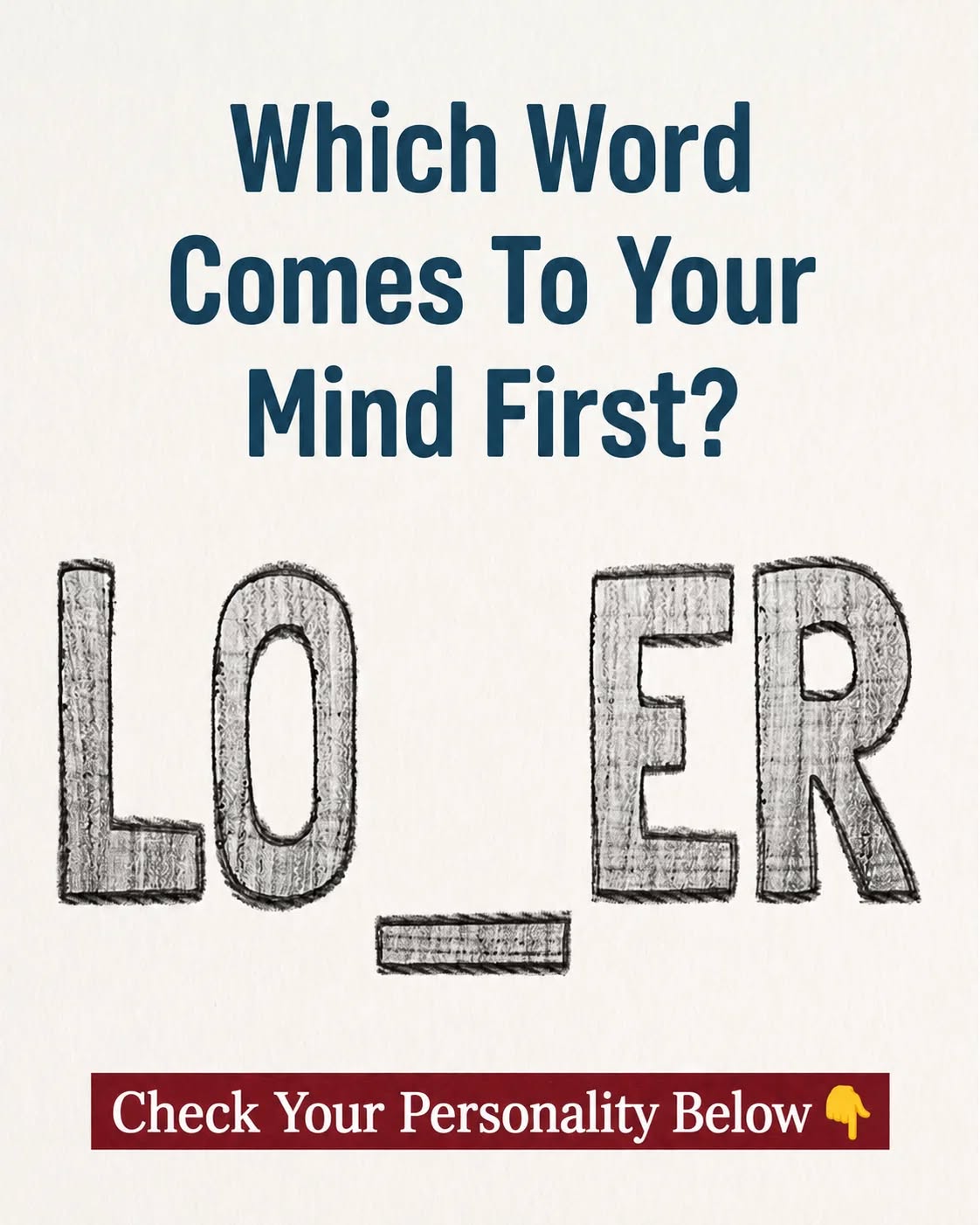
Many popular personality quizzes on the internet ask you to react quickly to a picture, a word, or a short phrase. One simple example is an image or text where people tend to notice either the word “LOVER” or “LOSER” first. This type of exercise is often presented as a fun way to “reveal” something about your character.
In reality, no single word can fully define who you are. However, the way you interpret words and situations can offer clues about your mindset, emotional focus, and what you naturally pay attention to. This article explains what it may suggest if the first word that comes to your mind is “LOVER” or “LOSER,” and places these ideas in a scientific and educational context based on current psychological understanding.
How quick-word personality prompts work
Exercises that ask you to respond to the first word you see or think of are loosely inspired by psychological methods such as free association and projective techniques. In classic psychology research, people might be shown ambiguous pictures or asked to say the first word that comes to mind after hearing another word. Researchers then look for patterns in responses.
Modern personality science usually relies on carefully tested questionnaires rather than simple visual tricks. Well-known tools include:
- Big Five personality traits (openness, conscientiousness, extraversion, agreeableness, neuroticism)
- Validated mood and anxiety scales used in clinical settings
- Standardized cognitive and perception tests
The “LOVER or LOSER” prompt is therefore best understood as an informal, reflective exercise. It can encourage you to think about your tendencies, but it is not a diagnostic tool and does not replace professional psychological assessment or advice.

What it may mean if the first word is “LOVER”
If the first word you notice or think of is LOVER, the explanation often suggested is that you may naturally focus on emotions, connection, and relationships. You might be especially aware of themes related to care, affection, and closeness with others.
People who resonate more with “LOVER” in this kind of exercise are sometimes described as:
- Romantic – inclined to value love, partnership, and meaningful emotional experiences.
- Kind-hearted – motivated to help, comfort, or support people around them.
- Emotionally expressive – relatively comfortable sharing feelings, whether positive or negative.
- Protective of loved ones – paying careful attention to the well-being and safety of family, friends, or partners.
- Sensitive to other people’s feelings – quick to notice shifts in mood, tone, or body language.
Psychological perspective on “LOVER”-type traits
From a research perspective, people who identify with these qualities might score higher on:
- Agreeableness – a Big Five trait associated with empathy, cooperation, and concern for others.
- Extraversion (social and emotional aspects) – comfort around people and enjoyment of close relationships.
- Attachment security – feeling generally safe and valued in close relationships, although this can vary widely.
Studies on social and emotional intelligence suggest that people who are good at understanding and managing both their own feelings and those of others often build strong support networks. This can contribute to better mental well-being, resilience in difficult times, and higher satisfaction in life.

Possible strengths of a “LOVER” orientation
If you tend to see “LOVER” first, you may experience certain benefits in everyday life:
- Deep connections – You may invest time and attention in relationships, leading to close friendships and strong family bonds.
- Supportive presence – Others might see you as someone who listens, understands, and offers comfort.
- Collaborative mindset – You are possibly more inclined to seek win–win solutions and maintain harmony.
- Emotional awareness – Recognizing your feelings can help you respond more thoughtfully instead of reacting impulsively.
Potential challenges to watch for
Being relationship-focused also comes with possible vulnerabilities. For example:
- Over-involvement – You may put others’ needs ahead of your own so often that you neglect self-care.
- Difficulty with boundaries – Saying “no” might feel uncomfortable if you worry about disappointing people.
- Emotional overload – Being highly sensitive to others’ feelings can be exhausting without healthy coping strategies.
Mental health professionals often encourage people with strong empathy and caregiving instincts to balance compassion for others with kindness toward themselves. Techniques such as setting clear boundaries, practicing mindfulness, and scheduling time for rest can help maintain that balance.
What it may mean if the first word is “LOSER”
If the first word that comes to your mind is LOSER, this does not mean that you are a negative or inferior person. Instead, it may indicate that your attention is quickly drawn to risk, potential failure, or problems that might arise. You might have a mind that scans for threats or weaknesses first, then looks for solutions.
People who notice “LOSER” before “LOVER” in such prompts are sometimes described as:
- Self-critical – often evaluating their own performance and behavior against high standards.
- Careful – thinking through possible downsides before acting, especially in important decisions.
- Alert – quick to detect when something seems wrong, risky, or likely to go off track.
- Honest about weaknesses – more willing to admit limitations or areas that need improvement.
- Afraid of making mistakes – concerned about failure, criticism, or disappointing themselves or others.
Psychological perspective on “LOSER”-type traits
Research in psychology shows that many people have a natural tendency to focus more on potential dangers or negative outcomes. This is sometimes called a negativity bias. It evolved as a survival mechanism: noticing threats quickly helped humans avoid harm.
Individuals who resonate with the “LOSER” interpretation might have:
- Higher sensitivity to criticism or rejection – they may strongly remember negative feedback.
- More cautious decision-making styles – preferring to analyze risks carefully before acting.
- Perfectionistic tendencies – setting very high standards and feeling pressure to meet them.
These traits can sometimes be linked to stress, low self-esteem, or anxious thinking when they become extreme. However, in moderate levels, they can support thorough planning and realistic risk assessment.

Possible strengths of a “LOSER” orientation
While the word itself carries a negative cultural meaning, the underlying traits associated with noticing it first can have clear advantages:
- Realistic appraisal – you may be better at identifying real obstacles, which allows for practical preparation.
- Risk management – your caution can prevent impulsive decisions in finance, work, or personal life.
- Continuous improvement – self-criticism, when balanced, can motivate learning and skill development.
- Attention to detail – noticing small issues early can prevent larger problems later.
Potential challenges to address
A strong focus on potential failure also brings certain challenges:
- Negative self-talk – repeatedly labeling yourself harshly can affect mood and confidence.
- Procrastination or avoidance – fear of mistakes may lead to delaying tasks or avoiding new opportunities.
- Difficulty recognizing strengths – you may overlook your abilities and achievements while focusing on flaws.
Evidence-based approaches like cognitive behavioral techniques encourage people to challenge unhelpful thoughts, look for balanced evidence, and practice more neutral or compassionate self-statements. Talking with a licensed mental health professional can also be helpful, especially if self-critical thinking is persistent or distressing.
Why different people see different words first
Several factors can influence which word stands out to you first in a combined “LOVER/LOSER” prompt:
- Current mood – feeling happy or supported may tilt your attention toward positive cues, while feeling stressed or discouraged can highlight negative ones.
- Recent experiences – a recent success in relationships might make “LOVER” more salient, while a setback at work or school might draw your eye to “LOSER.”
- General mindset – some people habitually scan for opportunities and support, others for dangers and errors.
- Visual design of the prompt – font, color, and layout can unintentionally emphasize one word over the other.
- Cultural and personal associations – language learning, media exposure, and personal history shape which words feel more familiar or emotionally charged.
Because of these many influences, a single momentary choice—seeing “LOVER” or “LOSER” first—should not be taken as a fixed label. It is better understood as a snapshot of your attention in that specific situation.
Using this exercise in a healthy, constructive way
Rather than treating this word prompt as a test that “defines” you, you can use it as a starting point for reflection:
- If you saw LOVER, you might ask: “In what ways do I prioritize relationships, and how can I care for myself while caring for others?”
- If you saw LOSER, you might ask: “Am I too hard on myself, and what evidence do I have of my strengths and successes?”
It can also be helpful to:
- Talk to trusted friends or family about how they see you. Others may notice strengths you overlook.
- Write down achievements and positive feedback to balance a tendency to remember only mistakes.
- Practice self-compassion by speaking to yourself as kindly as you would to a close friend.
- Seek professional support if negative self-beliefs or relationship difficulties significantly affect your daily life.
Limitations and the importance of scientific evidence
It is important to emphasize that exercises like this are not scientifically validated personality tests. They do not diagnose mental health conditions, and they should not be used to judge yourself or others.
Evidence-based personality assessment involves:
- Large samples of participants
- Careful statistical analysis
- Comparison across different cultures and age groups
- Testing reliability (consistency) and validity (accuracy)
The “LOVER/LOSER” idea is more of a popular-psychology tool for self-reflection than an official psychological instrument. When learning about your personality, it can be useful to combine informal exercises like this with more established methods and, if needed, professional guidance.

Balanced conclusion
Whether you first notice the word “LOVER” or “LOSER,” the reaction does not define your worth or your entire personality. Instead, it can highlight which themes—connection or caution, optimism or risk—your mind may be focusing on at a given moment.
If “LOVER” stands out, you may be oriented toward relationships, empathy, and emotional expression. If “LOSER” catches your attention first, you may have a careful, self-evaluating style that looks for problems to solve. Both tendencies have potential strengths and challenges.
Understanding these nuances can encourage you to build on your strengths, address unhelpful patterns, and approach yourself with curiosity rather than judgment. For deeper insight into your personality and mental health, information from reputable sources and, when appropriate, consultation with qualified professionals can be especially valuable.