

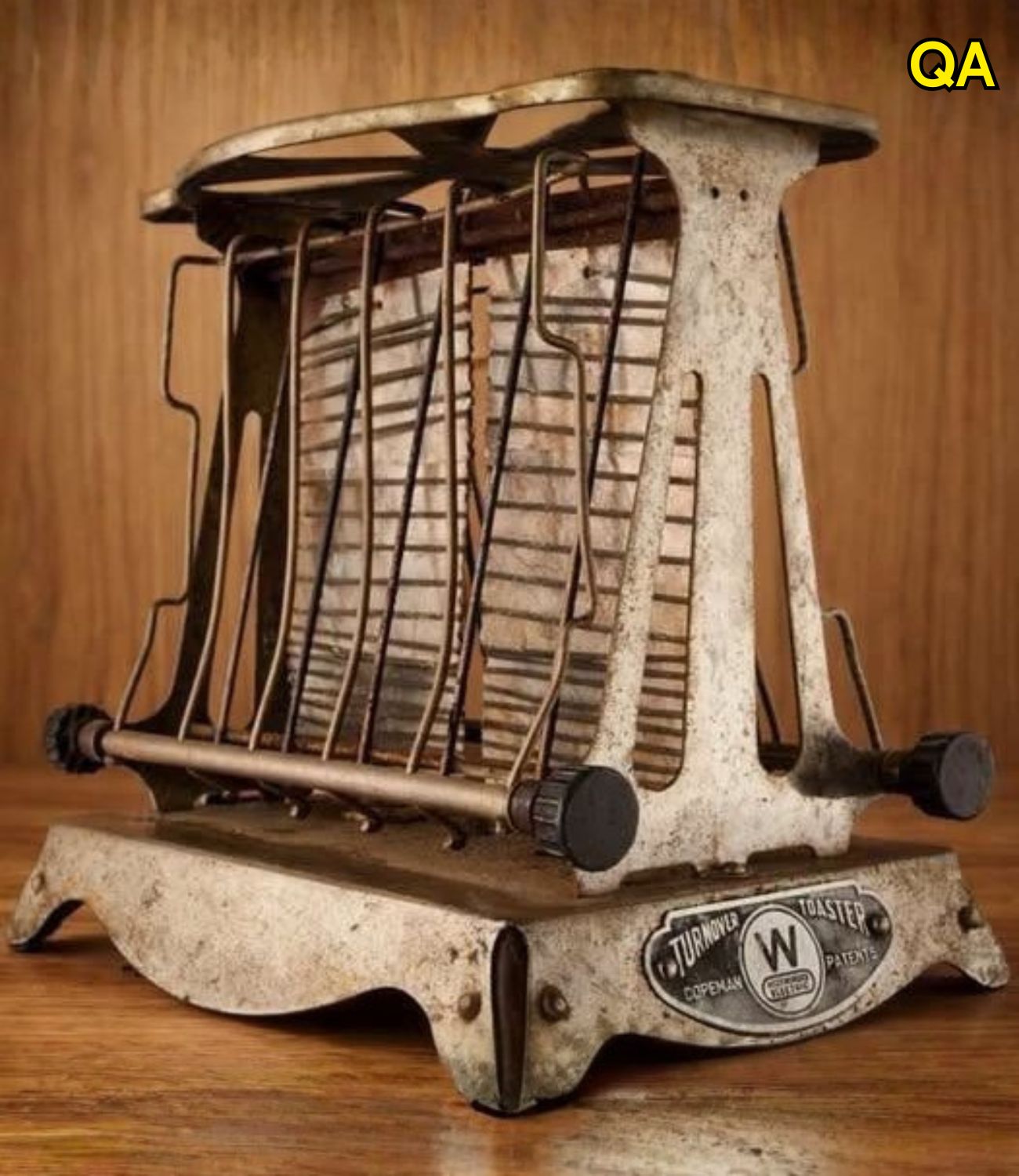
Nearly a century ago, a very different kind of toaster sat on kitchen counters across the United States and other industrialized countries. With exposed heating coils, an open metal frame, and no automatic timer, this vintage appliance required concentration, patience, and a practiced eye. Yet for many families, it felt nothing short of revolutionary. It marked the moment when breakfast began to move from the stovetop to the outlet, symbolizing the arrival of modern, electric living in ordinary homes.
The Ritual of Early Toasting
Unlike today’s push-button toasters, early electric models offered no automatic shutoff, spring-loaded mechanisms, or browning controls. The user placed slices of bread into an open-frame rack, watched as the coils glowed deep red, then flipped each slice by hand to toast the other side. Timing was crucial: turning the bread too soon meant pale, soft toast; waiting too long led to a scorched, bitter result.
For many households, this was part of a daily morning ritual. Someone in the family would stand by the toaster, often with a plate of butter or jam nearby, keeping careful watch. The sound of bread crisping and the smell of toast browning became a familiar signal that the day was beginning. While this manual process might seem inconvenient today, it brought a sense of participation and care to breakfast that some people now view with nostalgia.
The presence of such a toaster on a kitchen counter also hinted at something deeper: the household’s connection to a growing electrical grid. At a time when not every home had reliable power, owning an electric toaster suggested both access to infrastructure and an interest in new technology. It was a small appliance, but it carried large implications about progress, convenience, and changing domestic habits.

From Coal and Flame to Clean Electricity
To understand why this early toaster mattered, it helps to look at what came before it. Before reliable electric appliances, toast was usually made over an open flame on a gas or coal stove, using simple wire frames, toasting forks, or pans. This method worked, but it produced soot, smoke, and heat, and it demanded constant attention to avoid burning the bread.
The introduction of electric toasters in the early 20th century represented a notable shift. Electricity was cleaner at the point of use and created less mess in the kitchen. Instead of dealing with fuel, fire, and smoke, users could simply plug in the appliance and let current flow to resistance coils, which converted electrical energy into heat. Although the technology was basic by modern standards, it made breakfast preparation simpler, safer, and more predictable.
Historically, several inventors contributed to the development of the electric toaster. Early patents for electric heating elements were filed in the late 19th and early 20th centuries, and companies in the United States and Europe began experimenting with safe, durable alloys for heating coils. By the 1920s, electric toasters were widely sold in North America, especially in urban areas with established electric service. These early devices were open in design, often with visible coils and pivoting racks, but they set the stage for the fully automatic versions to come.
An Open-Frame Design in a World of Enclosed Appliances
The open-frame appearance of vintage toasters surprises many people today. Modern toasters are typically enclosed in metal or plastic casings, hiding the heating elements and containing bread crumbs for easy cleaning. In contrast, early models often left the coils, rack, and structural supports in full view. This was partly a practical choice: open design allowed heat to escape quickly and made it easier to flip or remove toast by hand.
From a design perspective, the open-frame toaster also reflects the engineering priorities of the time. Manufacturers emphasized reliability and function over aesthetic minimalism. Materials such as nickel-plated steel, chrome, and ceramic insulators were chosen for durability and heat resistance. Open structures reduced manufacturing complexity and allowed the user to see exactly what was happening during toasting, which helped prevent burns and waste.
As consumer expectations evolved, so did toaster design. Enclosed models increasingly offered better protection against accidental contact with hot coils, improved crumb management, and a smoother appearance that matched other streamlined kitchen appliances. Yet the vintage open-frame toaster remains an important link between raw industrial engineering and the more refined consumer products that came later.
How the Vintage Toaster Transformed Breakfast
The impact of the early electric toaster was not limited to the appliance itself. It helped reshape how breakfast was understood and prepared. As electrical appliances spread, morning routines could be reorganized around faster, more reliable cooking methods. Families could prepare toast, coffee, and other simple foods more quickly, supporting the shift toward shorter, more practical breakfasts for working adults and school-aged children.
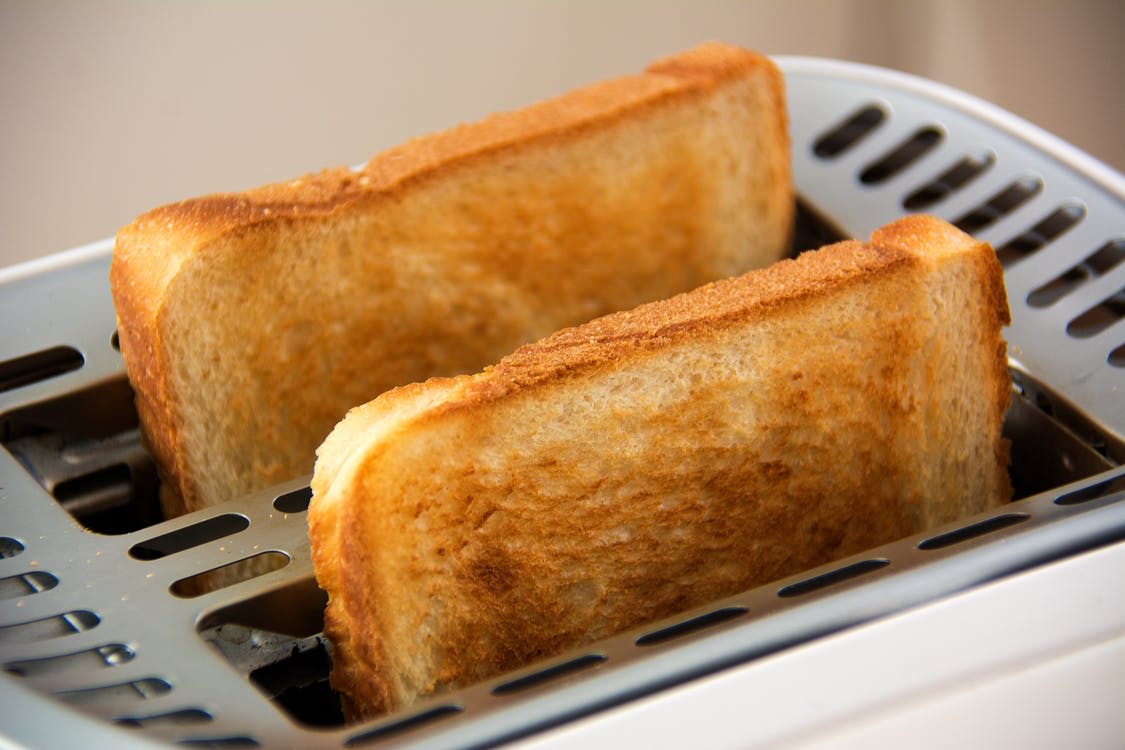
Toasted bread also complemented other emerging products. Commercially sliced bread, introduced on a large scale in the late 1920s, made toast even more convenient. Slices were more uniform, ensuring consistent results in electric toasters. This contributed to the rise of packaged bread brands and reinforced the link between home appliances and the growing food industry.
In addition, the spread of electric toasters intersected with broader changes in work patterns and gender roles. As more people sought wage labor outside the home, breakfast needed to be faster while still feeling complete. The toaster helped make that possible, offering a warm, satisfying food item in just a few minutes. It also signaled the broader modernization of the kitchen, paving the way for electric irons, coffee percolators, refrigerators, and many other devices.
The Toaster as a Symbol of Modern Domestic Life
Historians of technology and domestic life often point to the toaster as more than just a small appliance. It has become a symbol of the 20th-century home and of everyday electrification. Advertising campaigns from the mid-1900s frequently used images of toasters to represent comfort, convenience, and the promise of a modern lifestyle. They appeared in catalogues, department store displays, and magazine illustrations, signaling that a household was keeping pace with contemporary trends.
These toasters were also popular gifts, especially for weddings and housewarmings. Offering a toaster to a new couple suggested a wish for efficient, pleasant mornings together. Over time, the appliance came to embody a certain vision of domestic stability and routine: bread, heat, and transformation, repeated every day without fuss.
From a technological standpoint, the toaster also reveals how innovations often become invisible. Once an appliance becomes reliable, affordable, and widespread, people tend to stop noticing it. Yet for families who first encountered electric toasters decades ago, the change felt concrete and exciting. It demonstrated that electricity could do more than provide light; it could directly shape the texture and taste of food.
Evolution Toward Automatic and Smart Toasters
The hands-on, flip-by-hand design of early toasters would eventually give way to more advanced mechanisms. In the mid-20th century, manufacturers introduced spring-loaded carriages and automatic shutoff systems that lowered and raised slices at the touch of a lever. Bimetallic thermostats and timing circuits made it possible to select a browning level and trust the appliance to deliver consistent results.
These innovations reduced the need for constant supervision, redefining the user’s role from active operator to casual observer. The basic function, however, remained the same: applying controlled radiant heat to bread. As materials and electronics improved, toasters gained additional features such as defrost settings, bagel modes, and multiple slots.
In the 21st century, some models have adopted digital controls, precise temperature sensors, and even connectivity features that allow users to monitor or adjust settings remotely. While such devices differ dramatically from the original open-frame toaster, they share a direct lineage. The essence of controlled electric heating, first introduced with those early exposed coils, still shapes how breakfast is prepared today.
Why Vintage Toasters Still Fascinate Collectors
Although modern toasters are more convenient, vintage models continue to attract enthusiasts, collectors, and design historians. Many are drawn to the visible mechanics and the sturdy materials. The open-frame design, polished metal surfaces, and distinctive shapes reflect the industrial aesthetics of their era. Some people appreciate the sense of craftsmanship, as early devices were often built to be repaired rather than discarded.
Collectors also value these toasters as historical documents. Each model captures a moment in the story of domestic electrification, consumer culture, and industrial design. By examining patents, advertisements, and surviving appliances, researchers can trace how manufacturers responded to safety standards, user feedback, and competition in the marketplace.
In some homes, restored vintage toasters are still used with care, though many are kept as decorative pieces or museum objects due to concerns about wear and modern electrical codes. Their presence on a shelf or countertop can spark conversations about how much everyday technology has changed—and how much it has stayed the same in function.
International Spread and Cultural Impact
The influence of the electric toaster was not limited to any one country. As electrical infrastructure expanded across Europe, North America, and parts of Asia, similar appliances appeared under different brand names and with region-specific designs. Local bread types, voltage standards, and consumer tastes all shaped how toasters were built and used.
In some regions, toast became closely associated with hotel breakfasts and Western-style cafés, symbolizing a particular kind of modern, urban lifestyle. In others, it remained primarily a home-based ritual. The basic idea—slices of bread rapidly browned by radiant heat—proved adaptable to many cultures and cuisines, often paired with local spreads, cheeses, or toppings.
Over time, the toaster joined a larger group of everyday objects that subtly linked households around the world through shared routines. While recipes, meal times, and customs differ, the act of preparing toasted bread using electric heat has become widely recognizable, reflecting the global reach of both electrification and industrial food production.
A Small Appliance with Lasting Significance
When viewed from today’s perspective, the vintage open-frame toaster might look simple, even primitive. It lacked automatic shutoff, digital controls, and insulated housings. Yet its impact on domestic life was significant. It made breakfast quicker and more consistent, encouraged the spread of commercial bread products, and helped normalize the presence of electric appliances in the home.
More broadly, this early toaster illustrates how technological change often begins with humble, practical tools. By converting electrical energy into controlled heat, it showed consumers that electricity could directly improve everyday tasks. As other appliances followed, from irons to refrigerators, the home gradually became a center of electric convenience.
Today, when a slice of bread quietly descends into a modern toaster and rises again as evenly browned toast, it is easy to overlook the long history behind that simple act. The vintage toaster that once required careful attention and manual flipping played a crucial role in that story. It helped change breakfast—and, in its own way, it helped change how people experienced technology in the most familiar room of the house: the kitchen.
Sources
- BBC – Features and histories on everyday technology
- Reuters – Technology and consumer history coverage
- The Guardian – Design and culture reporting
- Smithsonian Magazine – History of home appliances
- Encyclopaedia Britannica – Toaster and electrical appliance history