A viral social media clip of a fitness influencer performing yoga in the aisle of a crowded commercial flight has triggered a wave of criticism online, reopening a familiar debate about airplane etiquette, personal space, and how far content creators should go to capture attention mid-flight.
While the original post focused on the content creator’s flexibility and wellness routine, much of the public reaction centered on the impact such behavior can have on fellow passengers and cabin safety. The incident has become one of several recent examples in which in-flight behavior, filmed and shared widely, has divided opinion around what is acceptable on planes.
The viral airplane yoga video
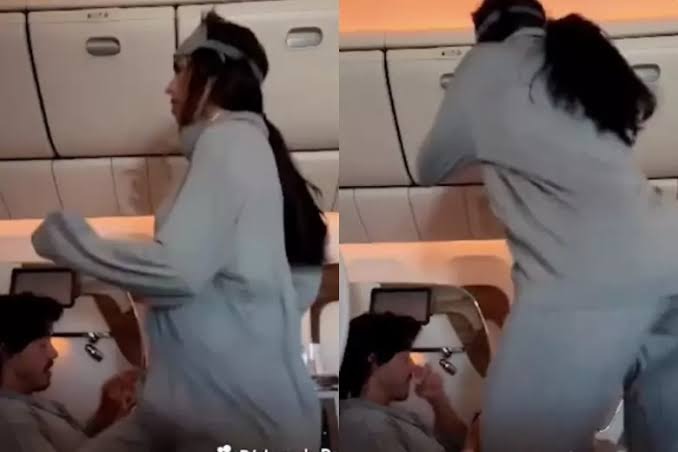
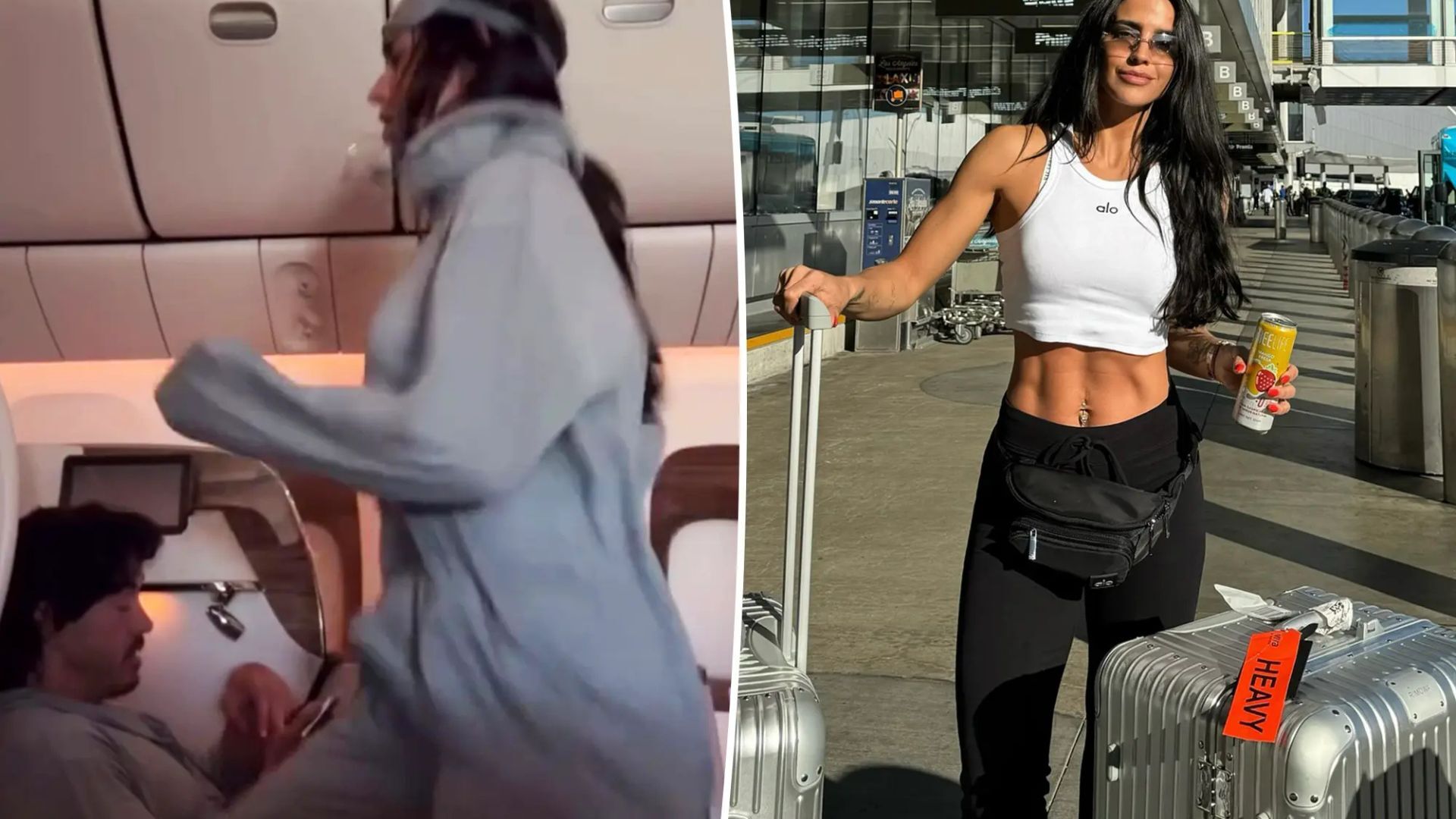
In the widely shared video, the fitness influencer, dressed in typical workout attire, can be seen leaving her seat to stand in the aircraft aisle. As other passengers remain seated, she proceeds to perform a series of advanced yoga poses, including deep stretches and balance-focused movements that take up much of the narrow walkway.
According to descriptions from viewers who reposted the clip, the sequence appears to include poses that require extending her legs into or near the path where passengers and crew would normally walk. Several people seated nearby seem to watch briefly before turning away, while others appear to ignore the performance altogether.
Although no airline has publicly confirmed details of the flight, the cabin layout and seating arrangement suggest it took place on a standard single-aisle commercial aircraft. The video, originally shared to a popular short-form video platform, quickly migrated to other social networks, where it accumulated millions of views and thousands of comments.

Accusations of “main character syndrome”
Online reaction was overwhelmingly critical. Many commenters accused the influencer of what internet users often call “main character syndrome,” a popular phrase used to describe people who behave as if they are the central figure in every situation, often at the expense of others’ comfort or convenience.
Critics argued that using a crowded airplane aisle as a personal yoga studio showed disregard for fellow travelers, particularly on longer flights where passengers may be tired, anxious, or simply seeking a quiet journey. Some users pointed out that airlines already place strict rules on movement during turbulence or takeoff and landing, and that non-essential activity in the aisle can complicate the work of cabin crew.
Others said that, while stretching on planes is understandable and even advisable for health reasons, there is a clear difference between simple, discreet movement near one’s seat and staging a full wellness routine intended to be filmed and shared with a large audience.
Why stretching on flights matters for health
Medical guidance has long encouraged passengers on medium- and long-haul flights to move regularly. Prolonged immobility can contribute to discomfort, muscle stiffness, and in rarer cases, an increased risk of deep vein thrombosis (DVT), a condition in which blood clots form in the deep veins, usually in the legs.
Health agencies such as the US Centers for Disease Control and Prevention (CDC) and organizations like the Mayo Clinic recommend simple in-seat exercises, such as ankle circles, calf raises, and gentle leg movements, as well as short walks down the aisle when the seatbelt sign is off and it is safe to move.
These movements are generally intended to be subtle, safe, and respectful of other passengers’ space. Airline safety briefings frequently emphasize that aisles must remain clear in case of emergencies and to allow cabin crew to move quickly if needed. Full yoga flows or acrobatic movements, especially those that require extended time in the aisle, are not part of typical medical recommendations for in-flight movement.
Travel health experts often stress that balance is important: passengers should take steps to protect their circulation and comfort, but also cooperate with safety guidance and consider the confined environment of an aircraft, where dozens or hundreds of people share a small cabin for several hours.
Airline etiquette and shared spaces
Even before the rise of social media, etiquette on airplanes was a frequent source of tension. Reclining seats, armrest “ownership,” loud conversations, and overhead-bin use have long sparked disputes among travelers. In recent years, the impulse to document these conflicts and unusual behaviors with smartphones has turned many of these moments into viral content.
In this case, the yoga performance has been framed by many viewers as part of a broader pattern of passengers treating the airplane cabin as a personal stage. Commenters drew parallels with other online clips showing people dancing in the aisle, filming elaborate skits, or setting up tripods in cramped spaces to produce travel content.
Etiquette specialists and travel writers generally agree on a few core principles for behavior on flights:
- Respect shared space by keeping aisles and exits clear unless moving deliberately and briefly.
- Avoid activities that could physically encroach on or disturb neighboring passengers.
- Follow crew instructions promptly, especially regarding seatbelts, turbulence, and movement.
- Keep noise levels, including phone use for filming, to a minimum when others are resting.
Within that framework, quiet stretching near one’s own seat or taking a short, unobtrusive walk during a long flight is usually considered acceptable. Activities that resemble performances or require other passengers to adjust around them are more likely to be perceived as inconsiderate.
The role of influencers and filming in confined environments
The incident has also restarted discussion about how social media influencers interact with public and semi-public spaces. Content creators commonly film in cafes, gyms, parks, and airports, sometimes involving other people in the background who did not consent to appearing in a widely shared clip.
On airplanes, these concerns can be heightened. Passengers have limited ability to move away, and flights are relatively private experiences despite occurring in public transport. Some privacy advocates argue that filming extended content in such confined settings, particularly when it includes identifiable fellow passengers, raises ethical questions.
Airlines typically allow casual photography and short videos, but many carriers reserve the right to intervene if filming disrupts operations, affects safety, or makes other passengers uncomfortable. Policies vary, and enforcement often depends on the judgment of the crew on a given flight.
In this case, there is no public record that flight attendants explicitly stopped the yoga routine, though online viewers questioned whether cabin crew should have intervened sooner in order to keep the aisle clear.

Safety considerations: why clear aisles matter
Aviation safety guidance consistently emphasizes that aisles and exits must be kept clear. In an emergency—such as rapid evacuation, smoke in the cabin, or a sudden need to access medical equipment—seconds can matter. Obstacles in the aisle, whether luggage, loose items, or people performing non-essential activities, can slow down response time.
International standards from bodies such as the International Civil Aviation Organization (ICAO) and national regulators like the US Federal Aviation Administration focus heavily on evacuation times and the ability for all passengers to reach exits quickly. While these rules are usually applied to cabin design and crew procedures, they also inform airlines’ expectations for passenger behavior.
Flight attendants are trained to manage passenger movement, particularly during turbulence or when the seatbelt sign is on. They may ask passengers to sit down if movement appears unsafe or disruptive. In non-emergency situations, crew often rely on judgment to distinguish between brief, reasonable stretching and activity that could pose a higher risk or inconvenience.
Public reaction: divided, but critical
Most online responses to the airplane yoga video were critical, but there were some users who defended the influencer. Supporters argued that long flights can be physically uncomfortable, especially for people with back pain, joint issues, or circulation concerns, and that taking a few minutes to stretch could be beneficial for health.
They also pointed out that many passengers get up to walk, stand by the lavatories, or stretch in the galley with permission from crew, and that the line between acceptable movement and inappropriate performance is not always clearly defined.
However, even some who sympathized with the physical need to move questioned why the yoga sequence had to be elaborate and filmed. They suggested that content specifically designed to attract attention naturally invites public scrutiny, particularly when it takes place in a shared, enclosed environment where others cannot easily opt out of participating.
Influencer culture and the “main character” debate
The term “main character syndrome” has become a shorthand critique of behavior that appears self-focused and theatrical. In the context of travel, it often surfaces when individuals seem to treat a communal space—like an airplane, train, or bus—as a backdrop for their personal narrative, even when it inconveniences others.
Social media researchers note that platforms built around short, eye-catching videos can encourage increasingly dramatic content. In competitive online environments, creators may feel pressure to produce scenes that stand out, whether through unusual stunts, unexpected locations, or striking visuals.
Experts in digital culture have observed that this dynamic can sometimes clash with long-standing social norms. Activities that might be acceptable in a private studio or open outdoor space can feel intrusive in tight quarters such as airplanes. When other people are effectively “trapped” in the background, ethical questions about consent and respect become central.
At the same time, scholars emphasize that not every filmed moment is malicious or intentionally disruptive. Many creators may not fully consider how their behavior is perceived by others who are not part of the online audience. This disconnect can fuel frustration when videos surface that show everyday travelers reacting with discomfort or irritation.
Balancing wellness, content creation, and courtesy
The controversy surrounding the airplane yoga video highlights a broader question: how can passengers take care of their health and, in some cases, their online work, without negatively affecting others?
Travel and health experts generally point to a set of practical guidelines:
- Prioritize safety instructions. Always follow the seatbelt sign and crew directions. Avoid standing or stretching during turbulence or critical phases of flight.
- Use in-seat exercises. Ankle rolls, calf raises, shoulder shrugs, and light twists can often be done while seated with minimal impact on neighbors.
- Choose low-impact movements when standing. If walking in the aisle, keep it brief and move back to your seat promptly. Avoid large, sweeping movements that extend into others’ space.
- Limit filming that includes other passengers. When creating content, try to frame shots to minimize identifiable faces or ask permission where practical and appropriate.
- Be aware of the cabin mood. On overnight or long-haul flights, many passengers are trying to sleep or relax. Noisy, attention-grabbing activities are more likely to be resented.
By combining these considerations, passengers can address legitimate health needs—such as preventing stiffness or reducing DVT risk—while respecting the shared nature of the aircraft cabin.
What this incident says about modern air travel
As more travel experiences are documented and distributed online, individual incidents like this yoga-in-the-aisle video are likely to continue sparking intense debate. Airplanes are uniquely constrained environments, and social expectations there can be stricter than in many other public places.
The strong reaction to the influencer’s actions suggests that many travelers still value traditional norms of consideration and low-key behavior in flight, even as digital culture pushes some people to be more performative. It also reflects ongoing tension between personal expression and collective comfort—a tension that is especially visible when every action can be recorded and shared to millions within hours.
For airlines, the incident is another reminder of the importance of clear communication about expected behavior on board. For passengers and content creators, it offers a case study in how quickly public opinion can turn when online performance collides with offline etiquette.