


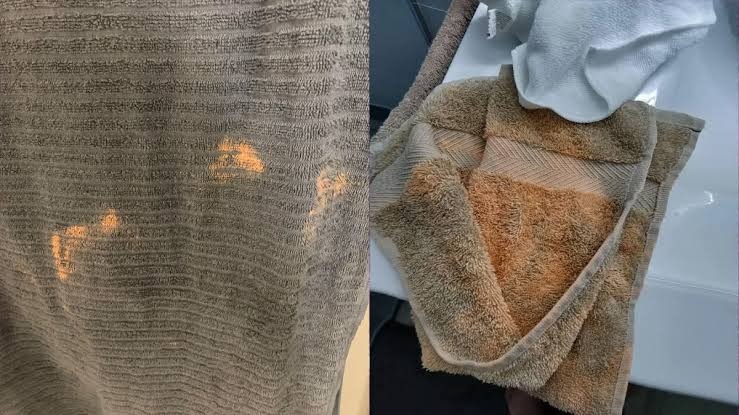
Pulling clean towels from the dryer and discovering unexpected orange or rust-colored marks can be confusing and annoying. Many people assume the problem is dirty laundry, poor washing habits, or low-quality detergent. In reality, these stains are often the result of chemistry, water quality, or everyday personal care products rather than simple dirt.
In many cases, the orange areas are not stains in the classic sense. Instead, they result from color loss, mineral deposits, or bacterial growth. This explains why they tend to resist normal washing and sometimes look worse over time. Understanding the underlying cause is essential if you want to stop the problem and prevent it in the future.
This guide explains the most common scientific and household reasons behind orange stains on towels, how to tell them apart, and what experts generally recommend to protect your fabrics without damaging them.
Benzoyl Peroxide: A Common But Hidden Cause of Orange Spots
One of the leading culprits behind orange or light-colored spots on towels is benzoyl peroxide, an active ingredient found in many over-the-counter and prescription acne treatments. According to dermatology references and product safety information, benzoyl peroxide is widely used because it helps reduce acne-causing bacteria and excess oil on the skin.
However, benzoyl peroxide is also a strong oxidizing agent. When it comes into contact with dyed fabrics, it can break down the color molecules in the fibers. Instead of adding a pigment that could be washed away, it removes or alters the existing dye. This process is closer to bleaching than staining.
How Benzoyl Peroxide Affects Towel Color
On white towels, this bleaching effect may be barely noticeable. On colored towels, however, the faded patches can appear orange, yellow, pink, or a lighter shade of the original color. The final appearance depends on the type of dye used and how it reacts with the oxidizing agent.
You may be dealing with benzoyl peroxide damage if:
- The affected areas look lighter than the towel’s original color rather than darker.
- The spots do not change or fade after several washes.
- You or someone in your household uses acne creams, gels, face washes, or spot treatments containing benzoyl peroxide.
- Marks often appear in areas where the face or body comes into contact with towels or pillowcases, such as edges and corners.
Can Benzoyl Peroxide Damage Be Reversed?
Because benzoyl peroxide removes or chemically alters the dye, the change is usually permanent. Laundry detergents and stain removers are designed to lift foreign substances from fabrics; they cannot restore color that has already been stripped out. Textile and laundry experts generally agree that once bleaching has occurred, the only options are to live with the discoloration, dye the fabric, or repurpose the towel for cleaning or other non-display use.
Hard Water, Iron, and Mineral Deposits
Another frequent reason for orange or rust-colored marks is hard water, particularly water with elevated levels of iron or manganese. Hard water is common in many regions and is identified by its high mineral content, often calcium and magnesium, but iron and manganese can also be present.
When towels are washed in water containing these minerals, iron can oxidize—similar to how metal rusts—forming iron oxide particles that bind to fabric fibers. These particles can appear as orange, reddish-brown, or even yellowish stains. Unlike benzoyl peroxide damage, these marks usually make the fabric darker rather than lighter.
Recognizing Hard Water and Iron Stains
Mineral-related discoloration may be the cause if you notice:
- Orange or brown marks that appear after washing or drying, even when detergent and machine settings remain the same.
- Discoloration that is darker than the towel’s original color.
- Similar rust-like buildup or rings in sinks, bathtubs, toilets, or on plumbing fixtures.
- Soap scum or difficulty forming lather with soap and shampoo, which are general signs of hard water.
These stains can be stubborn because regular detergents are not formulated to dissolve mineral deposits. Instead, the iron and other minerals become partly embedded in the fibers, and repeated washing in the same water can gradually worsen the discoloration.
Managing Mineral Stains Safely
For existing mineral-related stains, many laundry professionals recommend:
- Using products formulated to remove iron or rust stains that are safe for fabrics.
- Trying mild acidic agents such as white vinegar or citric acid in the wash cycle, following care labels and manufacturer instructions.
- Using oxygen-based bleach (non-chlorine) where the care label allows, as it is generally gentler on colors and fibers than chlorine bleach.
In the long term, improving water quality—such as installing a water softener or an iron filter—can reduce or prevent new mineral stains. Water treatment specialists can test household water and recommend appropriate filtration systems for the specific minerals detected.
Bacteria, Damp Towels, and Orange or Pink Residue
Bathrooms are often humid, and towels may stay damp for hours between uses. This environment can support the growth of bacteria and other microorganisms. Certain bacteria produce colored pigments that can appear pink, orange, or reddish and may be seen on both hard surfaces and fabrics.
One example sometimes mentioned in hygiene discussions is Serratia marcescens, a bacterium that can form reddish or orange biofilms in damp environments such as showers, grout lines, and around drains. Although its presence in households is usually related to moisture and organic residues rather than poor hygiene alone, it can be difficult to remove once established.
Why Bacterial Stains Develop on Towels
Color changes linked to microbial growth may be more likely when:
- Towels are left crumpled or stacked while still wet.
- There is limited air circulation in the bathroom, slowing down drying.
- Towels are used frequently between washes, allowing moisture and body oils to accumulate.
- Damp towels come into contact with already contaminated surfaces or bathroom fixtures.
Possible warning signs can include:
- A persistent musty or “wet” odor even after washing.
- Colored areas that slowly spread or become more noticeable over time.
- Discoloration that returns quickly if towels are not fully dried.
Cleaning Towels Affected by Bacteria
Unlike benzoyl peroxide bleaching, some bacterial or organic stains can be reduced with more intensive cleaning. General recommendations commonly include:
- Washing towels in the warmest water temperature allowed by the care label.
- Using a quality detergent and, if appropriate, an oxygen-based bleach to help break down organic residues.
- Ensuring towels are completely dried after washing, either in a dryer or in a well-ventilated area.
- Washing towels more frequently if they are used multiple times per day or in very humid climates.
Keeping bathroom surfaces clean and dry, using exhaust fans where available, and avoiding long-term storage of damp textiles can also reduce the conditions that favor microbial growth.
Sunscreen, Pool Days, and Chemical Reactions
Orange marks on towels used at pools or beaches can sometimes be linked to sunscreen ingredients and their interactions with minerals or chlorine. Some sunscreen filters and other cosmetic ingredients may react with metals in hard water, chlorinated pool water, or iron particles, leading to rust-like discoloration on fabrics.
Signs Sunscreen May Be Involved
Sunscreen- or cosmetic-related staining is more likely when:
- Discoloration appears after outdoor activities, swimming, or sunbathing.
- Only the towels used for drying off sunscreen-covered skin are affected.
- The marks remain even after repeated washing, especially on light-colored towels.
Because these marks can involve both product residues and mineral interactions, they often behave like a combination of oil-based and mineral stains, making them more complex to treat.

Other Everyday Factors That May Contribute
Beyond the main causes above, several other household factors can lead to unusual orange or rust-like marks on towels.
Laundry Products and Additives
Certain detergents, fabric softeners, or laundry additives can interact with minerals in hard water or with existing residues in the washing machine. This may occasionally cause discoloration or spotted areas on fabrics. Making sure you use the correct dose of detergent, following manufacturer instructions, and running periodic maintenance cycles on your washer can help minimize buildup.
Old or Corroded Plumbing
Older pipes and fixtures can release small amounts of rust or metal particles into the water supply, especially when water has been sitting in pipes for long periods. Over time, these particles can settle into fabrics and cause recurring marks. If this is suspected, running the tap for a short period before starting laundry or consulting a plumber or water specialist may be helpful.
Cleaning and Cosmetic Products
Household cleaning sprays, bathroom cleaners, and some cosmetic products can cause color changes if they accidentally come into contact with towels. Examples include:
- Certain bathroom cleaners that contain bleaching or oxidizing agents.
- Hair dyes or toners that may transfer onto towels used after coloring treatments.
- Toothpastes or mouthwashes with strong coloring agents, which can leave residues if not fully rinsed away before drying.
Storing towels away from active cleaning areas and avoiding direct contact between textiles and strong chemicals can reduce these risks.
Why Many Orange “Stains” Do Not Wash Out
The persistence of these marks often comes down to their underlying chemistry:
- Benzoyl peroxide and other oxidizers remove or modify fabric dyes, which standard washing cannot reverse.
- Minerals such as iron and manganese bind to fibers or form deposits that regular detergents are not designed to dissolve.
- Bacteria and biofilms can adhere strongly to surfaces and require more targeted cleaning methods than routine washing provides.
This is why repeatedly washing affected towels in the same conditions can fail to help and, in the case of hard water, may gradually worsen discoloration as more minerals accumulate.
How to Prevent Orange Stains on Towels
Prevention is usually more effective than trying to undo permanent or semi-permanent color changes. Small habit changes and attention to water and product choices can make a noticeable difference.
Adopt Helpful Daily Habits
- Rinse your face and hands thoroughly after using acne treatments or other leave-on products containing benzoyl peroxide, then gently pat dry.
- Avoid wiping active skincare products directly onto colored towels or fabric surfaces.
- Consider using white towels and pillowcases if benzoyl peroxide or similar treatments are part of your regular routine, as color loss is less visible on white textiles.
- After applying sunscreen, allow it to absorb and, when possible, briefly rinse off pool or seawater before drying with towels.
Improve Water and Laundry Conditions
- If you live in a hard-water area, explore installing a water softener or an iron filter to reduce mineral content.
- Periodically add a small amount of white vinegar or a water conditioner designed for laundry, following care labels and product instructions.
- Use detergents appropriate for your water hardness level, and avoid overloading the machine so towels can rinse thoroughly.
- Run cleaning cycles on your washing machine to remove buildup and residues.
Keep Towels Dry and Well Ventilated
- Hang towels fully spread out after each use to promote faster drying.
- Avoid leaving towels in damp piles, on the floor, or in closed hampers while still wet.
- Use bathroom fans or open windows when possible to reduce humidity.
- Wash towels regularly based on how often they are used and your local climate.
What to Do If Towels Are Already Stained
How to proceed depends on the type of discoloration:
- Light, bleached-looking spots from benzoyl peroxide or strong oxidizers: These areas generally cannot be restored to the original color. Many people choose to reuse such towels for cleaning, pet care, or other non-decorative purposes.
- Darker, rust-like marks from minerals: Consider products specifically formulated to remove iron and rust stains that are safe for textiles, or try gentle agents like white vinegar or oxygen-based bleach, following care instructions.
- Musty or spreading discoloration from bacteria: Wash in hot water allowed by the care label, use effective detergent, and ensure complete drying. If odor or color persists, a second wash or specialized laundry disinfectant (if compatible with the fabric) may be helpful.
Many laundry experts caution against using chlorine bleach on unknown orange stains, as it may worsen certain types of discoloration or further weaken fabric fibers, especially if minerals or specific dyes are involved.
Conclusion: Understanding the Science Behind Orange Towel Stains
Orange stains on towels may look like a routine laundry problem, but they often stem from more complex interactions among skincare ingredients, water quality, microorganisms, and fabric dyes. Oxidizing agents like benzoyl peroxide can permanently strip color, minerals in hard water can leave rust-like deposits, and damp conditions can allow pigmented bacteria to grow.
The most effective way to address the issue is to identify the likely source. By observing whether marks are lighter or darker than the original color, when they appear, and which products or conditions are involved, you can narrow down the cause and choose strategies that make sense for your household.
With thoughtful daily habits, attention to water quality, good drying practices, and careful product use, it is possible to significantly reduce the risk of orange stains and keep towels looking cleaner and fresher for longer. In this way, laundry becomes less about guesswork and more about understanding how everyday chemistry and environment affect the textiles you use every day.
Sources
- Mayo Clinic – Acne treatments and benzoyl peroxide information
- U.S. Centers for Disease Control and Prevention (CDC) – General household hygiene guidance
- U.S. Environmental Protection Agency (EPA) – Drinking water and hard water information
- BBC News – Science & Environment coverage on water quality and household issues
- Consumer Reports – Laundry, detergents, and washing machine care guides
Disclaimer: This content is intended for entertainment purposes only and is not based on real events.