


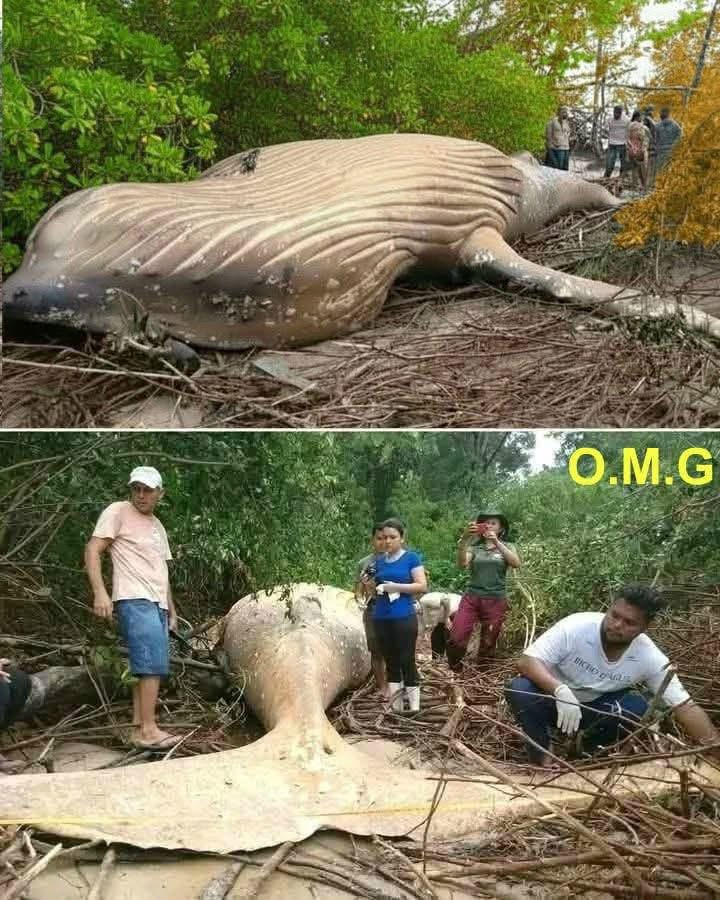
Imagine walking through a quiet mangrove forest, surrounded by twisting tree roots and the sounds of birds, only to discover something no one expects to see—a massive humpback whale resting far from the shoreline.
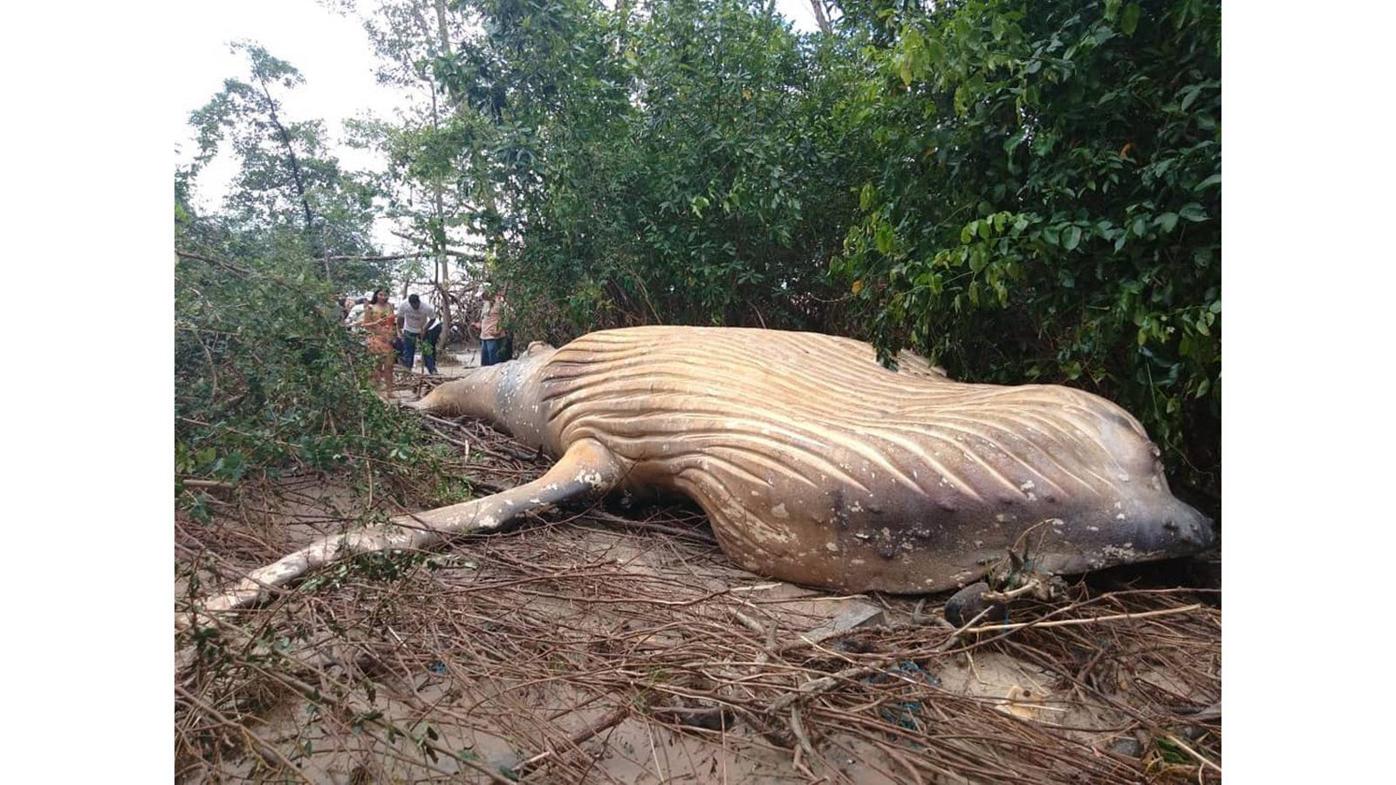
That was the remarkable scene that greeted residents on Marajó Island in northern Brazil. At first glance, the sight seemed almost unbelievable. An approximately eight-meter-long humpback whale calf lay among dense vegetation, well away from open water. The unusual location quickly sparked curiosity, with many wondering whether the event was the result of an extraordinary natural mystery.
While the discovery inspired speculation, marine scientists soon began investigating the scene. Their findings suggest that this remarkable event was most likely the result of powerful natural forces rather than anything mysterious. The story offers a fascinating glimpse into how dynamic coastal environments can occasionally produce events that seem almost impossible.
Where Was the Whale Found?
The whale was discovered on Marajó Island, located at the mouth of the Amazon River in Brazil. This unique region contains one of the world’s largest networks of rivers, tidal channels, wetlands, and mangrove forests.
Unlike sandy beaches, mangroves feature thick tree roots that extend above the water, creating habitats for fish, birds, crabs, and countless other species.
Finding a whale in this environment is exceptionally uncommon, making the discovery both surprising and scientifically valuable.
What Scientists Believe Happened
After examining the location, marine biologists proposed a practical explanation.
The young humpback whale was likely carried inland by an unusually powerful high tide or storm-driven surge. As water levels temporarily rose, the whale may have entered flooded mangrove areas. When the tide receded, it was left stranded approximately 15 meters (about 50 feet) from the nearest water.
Importantly, investigators reported no obvious external injuries that immediately explained why the whale became stranded.
Because the event occurred in a region strongly influenced by tides, scientists consider this explanation consistent with the area’s natural coastal dynamics.
Why Do Whales Sometimes Become Stranded?
Whale strandings occur in many parts of the world and can happen for several reasons.
Some of the most common scientific explanations include:
Strong Ocean Conditions
Powerful tides, storms, and changing currents can occasionally push marine animals into shallow coastal areas where returning to deeper water becomes difficult.
Young or Inexperienced Animals
Juvenile whales are still learning migration routes and navigating changing ocean conditions. Younger animals may be more vulnerable to becoming separated from deeper waters.
Natural Navigation Challenges
Whales rely on hearing, underwater geography, and environmental cues to travel vast distances. Complex coastlines, shallow estuaries, and changing tides can sometimes create challenging conditions.
Health Factors
In some cases, illness, weakness, or nutritional stress may contribute to strandings. Determining whether these factors played a role typically requires careful scientific examination.
Why Mangrove Forests Make Events Like This So Unusual
Mangrove ecosystems are among Earth’s most dynamic coastal environments.
Twice each day, tides flood and drain large portions of these forests. During especially high tides or unusual weather conditions, water can extend much farther inland than many people realize.
Although large marine mammals rarely enter these habitats, temporary flooding can occasionally carry unexpected visitors into areas that later become isolated as water levels fall.
This combination of tides, waterways, and dense vegetation helps explain why the Marajó Island discovery attracted worldwide attention.

From Curiosity to Scientific Research
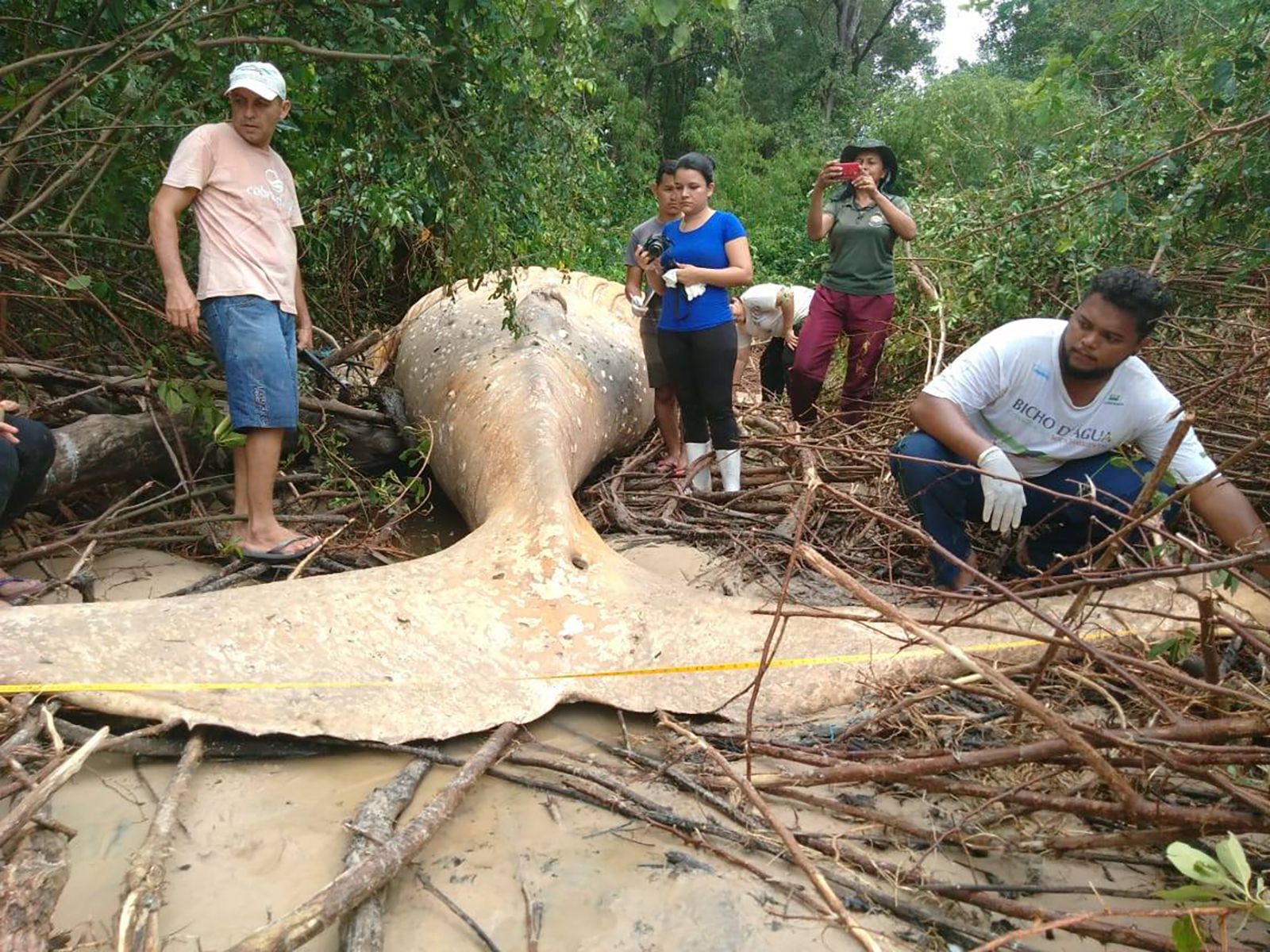
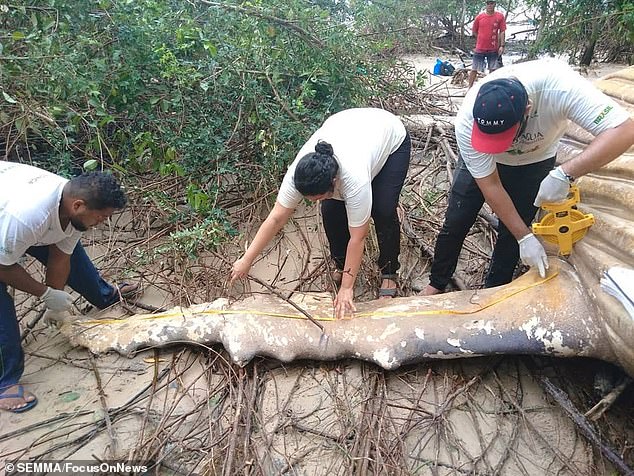
Rather than treating the whale solely as a curiosity, researchers viewed it as an opportunity to better understand marine ecosystems.
By examining the animal, scientists can gather information about:
- The health of humpback whale populations
- Juvenile migration patterns
- Coastal tidal behavior
- Environmental conditions affecting marine mammals
- Future conservation efforts
Each unusual discovery contributes valuable knowledge that may help protect whales and improve understanding of changing coastal environments.
What Happened to the Whale?
Because of the whale’s size and remote location, moving it immediately was not considered practical.
Instead, researchers planned to allow natural decomposition before preserving the skeleton for scientific study and museum display.
This approach enables future researchers, students, and visitors to learn more about humpback whales while documenting one of the most unusual discoveries recorded in the region.
Myths Versus Science
Whenever an extraordinary natural event occurs, imaginative explanations often spread quickly.
Stories involving unusual animal discoveries have inspired folklore across cultures for centuries. While these tales reflect humanity’s fascination with nature, scientific investigation provides evidence-based answers.
In this case, researchers found no indication of anything supernatural. Instead, the evidence points toward a rare combination of coastal geography, powerful tides, and natural environmental conditions.
Sometimes nature itself creates events that appear almost impossible without requiring extraordinary explanations.
Why This Discovery Fascinated the World
People are naturally drawn to stories that challenge their expectations.
A humpback whale belongs in the open ocean—not among mangrove trees. Seeing those two worlds unexpectedly intersect captures the imagination while reminding us how powerful natural forces can be.
The discovery also highlights how much scientists continue to learn about coastal ecosystems. Even in an age of satellites and advanced research, nature occasionally presents surprises that encourage further exploration.
Conclusion
The discovery of a humpback whale deep within a mangrove forest on Brazil’s Marajó Island remains one of the most remarkable wildlife stories in recent years.
Although the scene initially appeared mysterious, scientific investigation suggests that powerful tides and the island’s unique coastal geography offer the most likely explanation. Rather than diminishing the wonder of the event, understanding the science makes it even more fascinating.
This remarkable discovery reminds us that Earth’s oceans and coastlines remain dynamic, constantly shaped by weather, tides, and natural processes. Occasionally, those forces combine to create moments that seem almost unbelievable—until science helps reveal the story behind them.
As our understanding of marine ecosystems continues to grow, discoveries like this inspire both curiosity and respect for the complexity of the natural world. They encourage us to keep asking questions, appreciating evidence, and recognizing that even familiar coastlines can still hold extraordinary surprises.
Sources
- National Oceanic and Atmospheric Administration – Humpback whale biology and marine mammal strandings
- International Whaling Commission – Whale conservation and migration resources
- Smithsonian Institution – Marine mammal educational resources
- Instituto Bicho d’Água
- Peer-reviewed studies on coastal tides, mangrove ecosystems, and marine mammal strandings published in marine biology journals.