


The golden sunrise stretched across the endless plains of Tanzania’s Serengeti, where the sounds of birds and distant wildlife welcomed another day in one of Africa’s most remarkable ecosystems. Visitors on an early photographic safari scanned the landscape, hoping to catch a glimpse of lions beginning their daily routines.
Instead, they witnessed something few people ever expect to see.
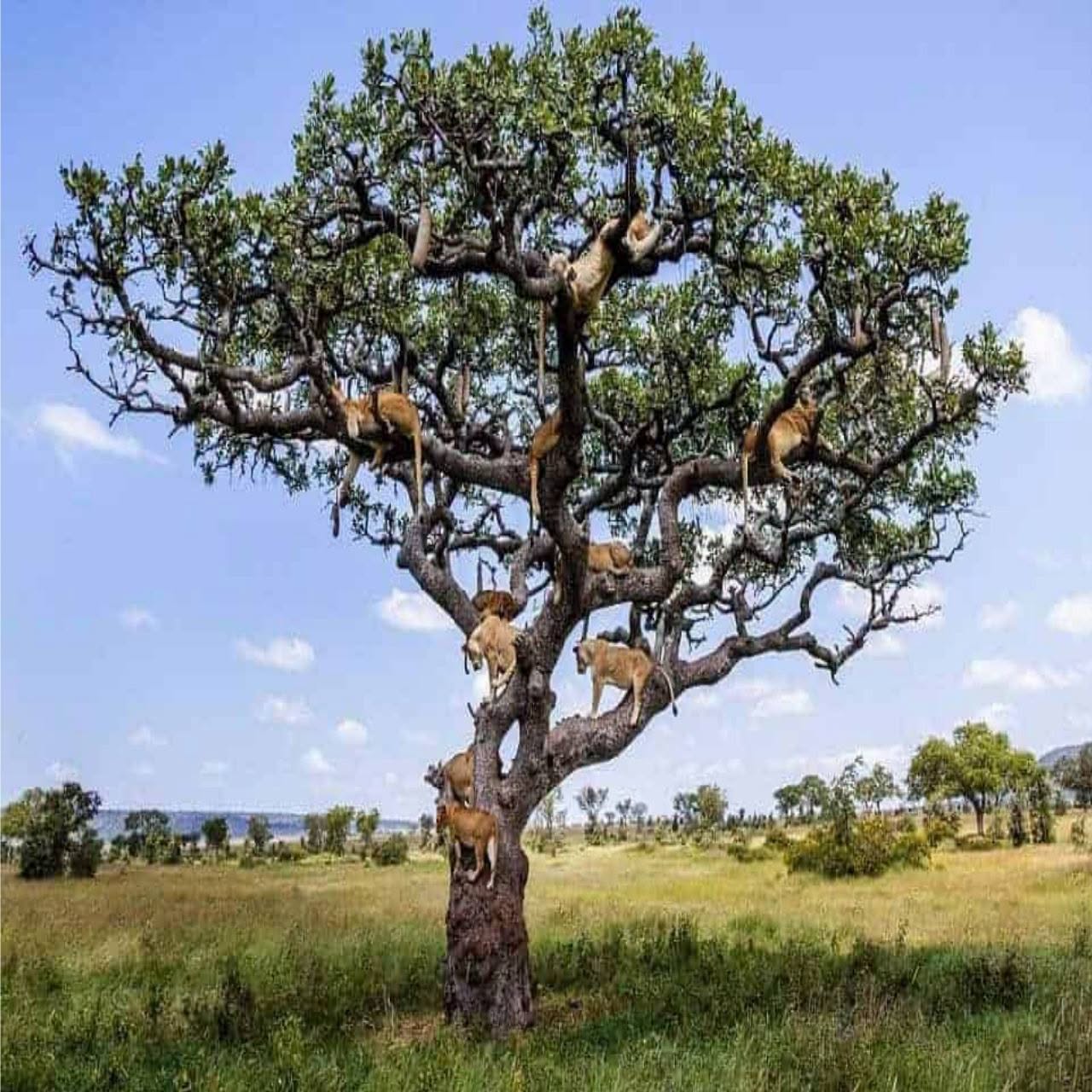
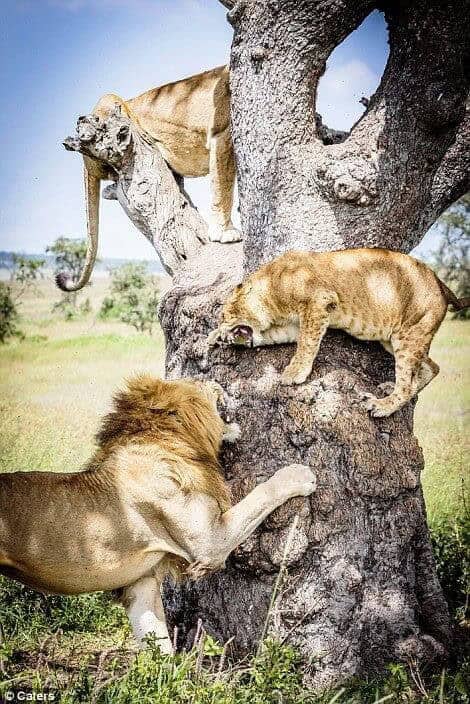
High above the ground, several lions rested peacefully among the sturdy branches of a broad tree. Some lounged comfortably in the shade, while others carefully balanced themselves between thick limbs. It was an unforgettable sight that challenged the common image of lions spending nearly all their time on open grasslands.
Australian wildlife photographer Bobby-Jo Clow captured this extraordinary moment during a safari in central Serengeti, creating photographs that quickly fascinated wildlife enthusiasts around the world. While tree-climbing lions are uncommon, scientists explain that this behavior is a natural adaptation to local environmental conditions rather than a mystery.
By exploring both scientific research and the cultural symbolism surrounding lions, we gain a deeper appreciation for one of nature’s most iconic animals.
Why Lions Usually Stay on the Ground
Lions (Panthera leo) are built for life on the plains.
Unlike leopards, which are agile climbers that frequently rest in trees, lions have heavier bodies, shorter limbs relative to their size, and muscular builds designed for strength rather than climbing.
Most lion prides spend their days:
Resting on the ground
Socializing with pride members
Patrolling their territory
Hunting across open grasslands
Raising young cubs
Because of their body structure, climbing trees requires considerably more effort for lions than it does for other large cats.
That is why seeing several lions comfortably resting among branches remains a memorable wildlife observation.

Why Some Lions Climb Trees
Although uncommon across much of Africa, tree-climbing has been observed in several lion populations, particularly in parts of Tanzania and Uganda.
Wildlife experts believe there are several practical reasons for this behavior.
Escaping Annoying Insects
One widely accepted explanation involves biting insects.
During warmer periods, flies and other insects can become especially active around the ground, creating constant irritation for resting animals.
Higher branches often experience stronger breezes, making trees a more comfortable place where insects are less concentrated.
The lions photographed in the Serengeti were believed to be seeking relief from persistent flies while enjoying the cooler air above the savanna.
Finding a Cooler Resting Spot
Shade is another important factor.
Trees provide protection from the intense African sun, allowing lions to conserve energy during the hottest hours of the day.
Because lions typically rest for many hours each day, choosing a comfortable location can make a noticeable difference in their daily routine.
Better Views of the Landscape
Elevated positions also offer excellent visibility.
From a sturdy branch, lions can observe nearby wildlife, monitor movement across the grasslands, and remain aware of activity within their territory.
Although they do not usually hunt from trees, the higher vantage point may provide useful information about their surroundings.
Are Tree-Climbing Lions Rare?
Yes, but they are not entirely unique.
Several lion populations have become well known for regularly climbing trees.
The most famous include lions living near:
Lake Manyara National Park in Tanzania
Ishasha Sector of Queen Elizabeth National Park in Uganda
Certain regions of the Serengeti ecosystem
Researchers continue studying why these particular populations climb more frequently than others.
Some scientists suggest that young lions learn the behavior by observing experienced pride members, allowing the habit to spread across generations within specific groups.
Although the exact explanation remains under investigation, available evidence indicates that environmental conditions and learned behavior both contribute.

The Science Behind Lion Adaptability
Lions are highly adaptable predators capable of living in a variety of environments.
Their habitats include:
Open savannas
Woodlands
Semi-arid regions
Grasslands
Protected conservation areas
This adaptability has helped lions survive across different African landscapes despite changing environmental conditions.
Behavioral flexibility is an important part of that success.
Scientists studying animal behavior note that wildlife often develops local habits based on available resources, weather patterns, and habitat characteristics.
Tree climbing appears to be one example of this remarkable flexibility.
A Photographer’s Once-in-a-Lifetime Experience
Australian photographer Bobby-Jo Clow described the experience as unforgettable.
During the safari, the group’s guide first noticed the pride resting among the branches.
After approaching carefully and respectfully, the visitors were able to observe the lions from a safe distance while capturing remarkable photographs.
According to Clow, the peaceful atmosphere allowed him to hear some of the lions gently snoring as they relaxed in the tree.
Moments like these remind photographers that patience often leads to extraordinary wildlife encounters.
Unlike staged images, authentic wildlife photography depends on timing, observation, and respect for animals in their natural habitats.
Lions in Culture and Mythology
Lions have symbolized strength, courage, and leadership throughout human history.
Ancient civilizations frequently featured lions in artwork, architecture, and storytelling.
In many African traditions, lions represent wisdom, bravery, and the balance of nature.
Ancient Egyptian culture associated lions with protection and royal authority.
Greek mythology often portrayed lions as symbols of heroic challenges and resilience.
Across Asia, lion-inspired statues continue to represent guardianship and good fortune at temples and historical landmarks.
Although cultures interpret lions differently, one common theme appears repeatedly: admiration for their confidence and presence.
Seeing these majestic animals calmly resting in trees offers a different perspective, reminding us that even powerful predators seek comfort, rest, and relief from everyday environmental challenges.
The Serengeti: One of Earth’s Greatest Wildlife Ecosystems
The Serengeti ecosystem is among the world’s most celebrated wildlife destinations.
Covering thousands of square kilometers across northern Tanzania and extending into Kenya, it supports an extraordinary diversity of species.
Visitors may encounter:
Lions
Elephants
Giraffes
Cheetahs
Leopards
Zebras
Wildebeest
Hyenas
Numerous bird species
The region is especially famous for the annual Great Migration, during which vast herds travel across the plains in search of fresh grazing areas.
Healthy predator populations play an essential role in maintaining ecological balance throughout this complex ecosystem.
Conservation efforts within Serengeti National Park help protect habitats while supporting scientific research and sustainable tourism.
Why Wildlife Photography Inspires Conservation
Images like Bobby-Jo Clow’s photographs do more than capture beautiful moments.
They encourage curiosity.
Many people first become interested in wildlife conservation after seeing unusual animal behavior documented through photography.
These images inspire questions such as:
Why do lions climb trees?
How do they adapt to different habitats?
What makes certain ecosystems unique?
The search for answers often leads people to learn more about biodiversity, conservation science, and the importance of protecting natural habitats.
Responsible wildlife photography also demonstrates that memorable experiences can occur without disturbing animals or altering their natural behavior.
What Scientists Continue to Study
Although researchers understand many aspects of lion behavior, several questions remain open for future study.
Scientists continue investigating:
How environmental conditions influence climbing behavior
Whether certain prides pass the habit to younger generations
The relationship between seasonal weather and tree use
How habitat characteristics affect resting preferences
Ongoing research helps conservationists better understand the needs of lion populations across Africa.
As new technologies such as GPS tracking and remote camera systems improve wildlife observation, researchers continue discovering fascinating details about these remarkable animals.

A Reflection on Nature’s Endless Surprises
The sight of lions relaxing among tree branches reminds us that nature is full of unexpected moments waiting to be discovered.
While lions are widely recognized as powerful hunters of the African plains, they also demonstrate flexibility, intelligence, and an impressive ability to adapt to their surroundings. Scientific research explains much of this fascinating behavior, while cultural traditions continue celebrating lions as enduring symbols of strength and resilience.
Together, science and storytelling reveal that every unusual wildlife observation offers an opportunity to learn something new about the natural world. The more carefully we observe animals in their habitats, the greater our appreciation becomes for the complexity, beauty, and interconnectedness of life on Earth. Curiosity remains one of humanity’s greatest tools for understanding and protecting the remarkable diversity of our planet.
Sources
Nature Daily BB News. Lions Take to the Trees: A Rare Sight of Nature’s Kings.
International Union for Conservation of Nature (IUCN). Panthera leo Species Assessment.
World Wildlife Fund (WWF). African Wildlife and Savanna Ecosystem Resources.
National Geographic. Lion behavior, habitat, and wildlife conservation articles.
Smithsonian’s National Zoo & Conservation Biology Institute. Lion facts and behavioral research.
Serengeti National Park. Wildlife information and ecosystem conservation resources.