

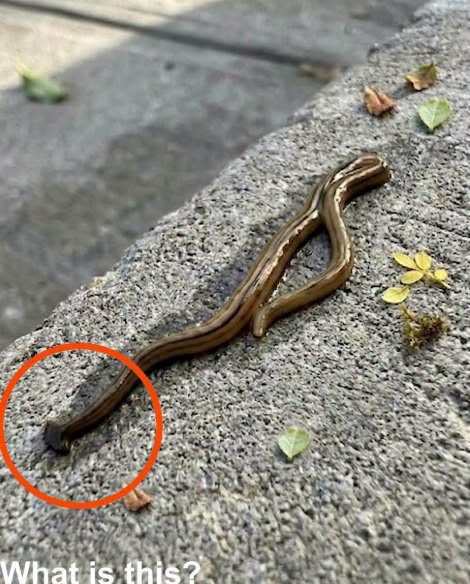
A peaceful walk through the garden often reveals familiar sights—flowers in bloom, busy insects, and the occasional earthworm after a rain. But every now and then, something unusual catches the eye. It glides silently across the soil with a body unlike any ordinary worm, leaving many homeowners wondering what they have just discovered.
At first glance, it may appear to be a common garden worm. A closer look, however, reveals a flattened body and a broad, shovel-shaped head that immediately sets it apart. This fascinating creature is commonly known as the hammerhead worm, a type of land planarian that has attracted growing attention from gardeners, naturalists, and scientists alike.
Although its appearance may seem unusual, the hammerhead worm offers an opportunity to learn more about backyard ecosystems, soil health, and the delicate balance of nature. While some species are considered invasive in certain regions, understanding their behavior is more helpful than reacting with alarm.
What Is a Hammerhead Worm?
The hammerhead worm is a terrestrial flatworm belonging to the family Geoplanidae. Unlike earthworms, which are segmented and spend much of their lives underground, hammerhead worms have smooth, flattened bodies that allow them to glide across moist surfaces.
Their most recognizable feature is their wide, crescent-shaped head, which resembles a hammer or shovel. This distinctive shape gives the animal its common name.
Hammerhead worms are most often seen after rainfall or during periods of high humidity when damp conditions make movement easier.
They vary considerably in size depending on the species. Some measure only a few inches long, while others can grow considerably larger under favorable environmental conditions.
How Do Hammerhead Worms Move?
One of the most fascinating characteristics of hammerhead worms is the way they travel.
Rather than stretching and contracting like earthworms, these flatworms glide smoothly over surfaces.
This movement is possible because they produce a thin layer of mucus while tiny hair-like structures on the underside of their bodies help propel them forward.
The result is a slow, graceful motion that can appear almost effortless.
They are commonly found moving across:
- Garden beds
- Sidewalks after rain
- Compost piles
- Mulched landscapes
- Moist lawns
- Forest floors
Because they lose moisture easily, they generally avoid dry conditions and are most active during cool, damp weather.
Where Are Hammerhead Worms Found?
Hammerhead worms are believed to have originated in parts of Asia but have gradually appeared in many other regions through the movement of soil, nursery plants, and landscaping materials.
Today, they have been reported in numerous countries and are found in several areas with warm or humid climates.
Their distribution continues to be monitored by researchers because some species establish populations outside their native range.
The presence of a hammerhead worm does not necessarily indicate a widespread problem, but repeated sightings may be worth noting, particularly in regions where environmental agencies classify certain species as invasive.
What Do Hammerhead Worms Eat?
Unlike earthworms, which help recycle organic matter, hammerhead worms are predators.
Their primary diet includes small soil-dwelling animals, particularly earthworms.
They locate prey using specialized sensory structures on their head, allowing them to detect chemical signals in the environment.
Once prey is located, the hammerhead worm captures it using specialized feeding mechanisms unique to flatworms.
Although this feeding behavior is a natural part of their biology, it has raised ecological concerns in areas where hammerhead worms are not native.
Why Earthworms Matter
To understand why scientists pay attention to hammerhead worms, it helps to understand the importance of earthworms.
Earthworms perform several valuable functions in healthy soil.
They help:
- Break down organic matter
- Improve soil aeration
- Enhance water movement through the soil
- Mix nutrients into deeper layers
- Support plant root development
Healthy earthworm populations often contribute to productive gardens, lawns, and agricultural fields.
Because hammerhead worms feed on earthworms, researchers continue studying how large populations might influence local soil ecosystems over time.
Are Hammerhead Worms Harmful to People?
One of the most common questions homeowners ask is whether hammerhead worms are dangerous.
Current scientific information indicates that these flatworms are generally not aggressive toward people or household pets.
However, experts recommend avoiding unnecessary direct contact.
Some species produce defensive chemicals and mucus that may cause mild skin irritation in sensitive individuals.
For this reason, it is a good idea to observe them without handling them directly.
If contact does occur, washing hands thoroughly afterward is recommended.
Why Scientists Consider Some Species Invasive
An invasive species is an organism introduced outside its natural range that may affect local ecosystems.
Not every introduced species becomes invasive, and impacts vary depending on climate, habitat, and local biodiversity.
Several hammerhead worm species have attracted scientific attention because they may establish stable populations in environments where natural predators are limited.
Researchers continue studying questions such as:
- How quickly populations spread
- Which habitats are most suitable
- Potential effects on native earthworms
- Long-term ecological impacts
These ongoing studies help environmental agencies develop appropriate management recommendations.
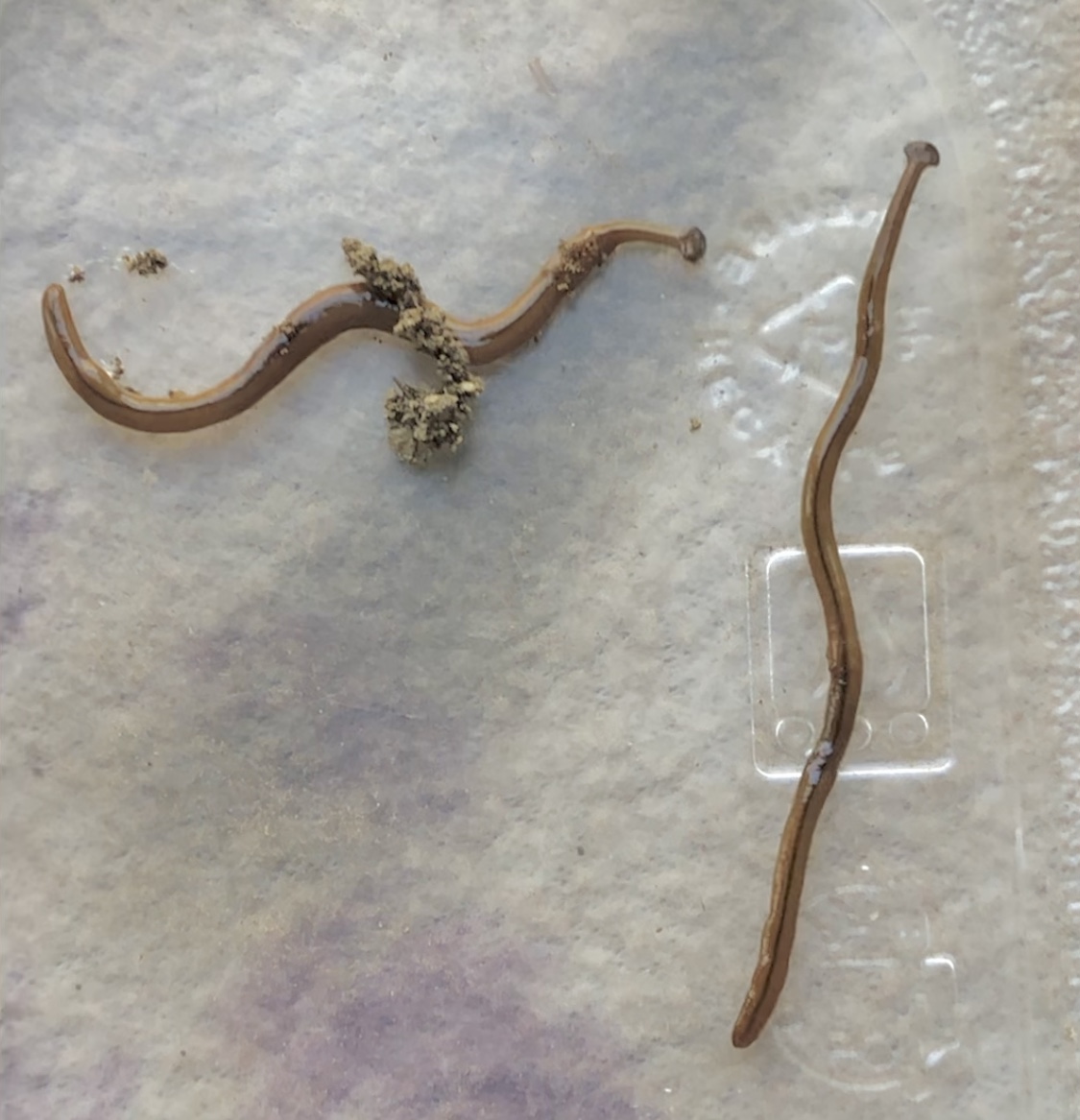
What Should You Do If You Find One?
Discovering a hammerhead worm in your yard is usually more of an opportunity for observation than a reason for concern.
If local authorities identify hammerhead worms as an invasive species in your area, follow their recommendations for reporting or managing sightings.
Practical steps include:
- Avoid handling the worm with bare hands.
- Take a clear photograph if identification is uncertain.
- Consult your local cooperative extension service or environmental agency.
- Follow region-specific guidance for removal if recommended.
Because recommendations differ between locations, local advice is generally the most reliable source of information.
Fascinating Facts About Hammerhead Worms
Hammerhead worms possess several unusual biological features that continue to interest scientists.
They have relatively simple body structures compared with many other animals, yet they demonstrate impressive regenerative abilities under certain conditions. This capability has made some species valuable subjects for biological research into tissue regeneration and cellular development.
Their sensory systems also allow them to navigate effectively despite lacking the complex eyes found in many other animals.
Instead, they rely on light-sensitive structures and chemical receptors to detect changes in their surroundings.
These adaptations help them survive in moist terrestrial environments where visibility may be limited.
Why Backyard Wildlife Matters
Most people think of wildlife as something found in forests, mountains, or national parks.
In reality, many fascinating organisms live much closer to home.
Gardens, compost piles, flower beds, and lawns form miniature ecosystems filled with insects, fungi, worms, birds, and countless microscopic organisms working together to support healthy soil.
Observing unusual species like the hammerhead worm encourages curiosity about these often-overlooked ecosystems.
It also reminds homeowners that every backyard contains a surprising diversity of life.
The Importance of Responsible Observation
When encountering unfamiliar wildlife, curiosity should always be balanced with respect.
Rather than immediately assuming a strange-looking creature is dangerous, experts encourage careful observation and accurate identification.
Photographs, field guides, university extension services, and reputable environmental organizations can all help determine what has been found.
Learning before reacting benefits both people and local ecosystems.
It also helps reduce misunderstandings about wildlife that may simply be unfamiliar rather than harmful.
What Gardeners Can Learn
Gardeners are often among the first people to notice changes in local wildlife.
Regular observation of soil, plants, insects, and other organisms provides valuable insight into the health of an outdoor space.
Maintaining healthy soil through composting, mulching, and responsible gardening practices supports biodiversity and creates resilient landscapes.
While hammerhead worms may occasionally become part of that picture, they also serve as a reminder that ecosystems are constantly changing.
Understanding those changes allows homeowners to make informed decisions based on science rather than speculation.
A Small Discovery With a Bigger Lesson
Finding a hammerhead worm crossing a garden path may seem like a minor event, yet it opens a window into the remarkable complexity of the natural world.
Its unusual appearance, distinctive movement, and ecological role have made it one of the most recognizable flatworms encountered by homeowners. Although some species are monitored because of their potential impact on local ecosystems, there is no reason for unnecessary alarm. Instead, thoughtful observation and awareness of local environmental guidance remain the best approach.
Every garden contains countless stories waiting to be discovered, from the smallest insects to the hidden organisms beneath the soil. The hammerhead worm reminds us that even familiar places can still surprise us, inspiring a deeper appreciation for the intricate relationships that sustain nature. Curiosity, guided by reliable scientific knowledge, helps transform unexpected encounters into opportunities for learning and a greater understanding of the world just outside our doors.
Sources
- University of Florida Institute of Food and Agricultural Sciences (UF/IFAS). Information on hammerhead flatworms and invasive land planarians.
- United States Department of Agriculture (USDA). Resources on invasive species and soil ecosystems.
- Smithsonian Magazine. Articles on the biology and spread of hammerhead worms.
- National Geographic. Educational resources on worms, soil biodiversity, and ecosystems.
- Integrated Taxonomic Information System (ITIS). Taxonomic information on land planarians.
- Original story summary adapted from TBDig: The Odd Backyard Visitor That Deserves a Second Look.