

Stories about extraordinary wildlife discoveries often spread quickly, especially when they involve animals that appear to challenge what scientists currently understand about nature.
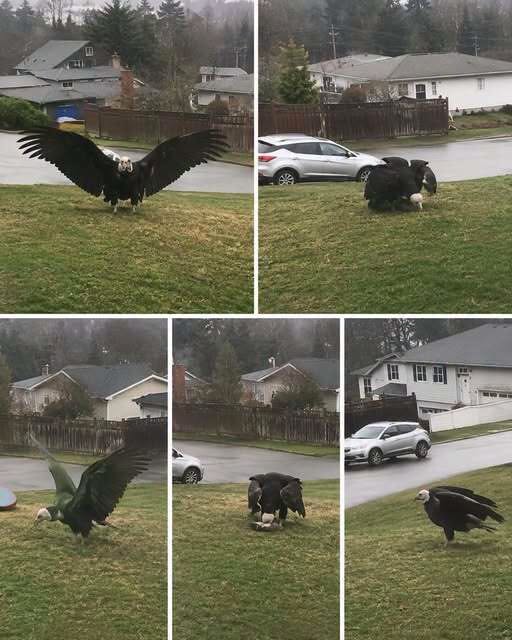
One recent report claims that an unusually large eagle was discovered near Brownsville, Texas, close to the U.S.–Mexico border. According to the story, the bird possesses an estimated wingspan of nearly 10 feet, making it substantially larger than any known native eagle species in North America.
The report has generated widespread curiosity. However, as of now, there is no verified scientific evidence or official announcement confirming the discovery of a previously unknown giant eagle species in Texas. Until researchers publish peer-reviewed findings or wildlife agencies release official information, the claims should be treated as unconfirmed.
What the Report Claims
According to the published story, hikers first observed an exceptionally large bird flying near the Texas border.
The report further claims that wildlife specialists:
- Located the bird using tracking technology.
- Safely captured it without injury.
- Transported it to a conservation facility.
- Began DNA and biological testing.
The article also suggests researchers are investigating whether the bird could represent:
- An unknown species
- A rare subspecies
- An unusually large individual resulting from genetic variation
At present, these claims have not been independently confirmed by recognized scientific organizations.

How Large Are North America’s Eagles?
North America is home to several impressive birds of prey.
Among the largest are:
Bald Eagle
The Bald Eagle typically has a wingspan ranging from approximately 6 to 8 feet and is one of North America’s best-known raptors.
Golden Eagle
Golden Eagles are similarly impressive, with wingspans approaching 7 feet in large individuals.
A bird approaching a 10-foot wingspan would be significantly larger than these well-documented species, making such a discovery scientifically remarkable if confirmed.
Why Scientists Require Strong Evidence
Extraordinary biological discoveries undergo extensive scientific review before being accepted.
Researchers typically require:
- Physical examination
- High-quality photographs
- DNA analysis
- Independent verification
- Peer-reviewed publication
These steps ensure that new discoveries are based on reliable evidence rather than misidentification or incomplete observations.
Scientific caution helps maintain confidence in new findings.
Could Such a Bird Exist?
From a scientific perspective, several possibilities could explain reports of an unusually large raptor.
Misjudged size
Estimating the size of birds in flight can be challenging because distance and perspective may create optical illusions.
Individual variation
Some animals naturally grow larger than average members of their species.
Previously undocumented population
Although uncommon, researchers occasionally identify isolated populations with unique characteristics.
New scientific discovery
Entirely new species are still discovered each year, although finding a large bird in a well-studied region would be exceptionally rare.
Without verified evidence, none of these possibilities can currently be confirmed.

Comparing the Report to Extinct Giant Eagles
The article compares the reported bird to Haast’s Eagle.
Haast’s Eagle lived in New Zealand thousands of years ago and is considered one of the largest eagles known to science.
Scientists estimate it possessed:
- An enormous body size
- Exceptional hunting ability
- Adaptations for pursuing large prey
Because Haast’s Eagle is well documented through fossil evidence, comparisons naturally attract attention whenever reports of unusually large modern raptors appear.
How Wildlife Scientists Study Large Birds
When researchers investigate unusual birds, they often use several scientific techniques.
These include:
DNA sequencing
Genetic analysis helps determine relationships between species.
Feather analysis
Feathers provide information about diet, health, and environmental exposure.
GPS tracking
Satellite tracking allows scientists to study movement and migration.
Veterinary examinations
Health assessments identify age, condition, and physical characteristics.
Together, these methods provide a comprehensive understanding of individual animals.
Why Wildlife Discoveries Fascinate People
Humans have long been captivated by remarkable animals.
Stories involving giant birds appear throughout history and many cultures.
Ancient legends often featured enormous eagles as symbols of:
- Strength
- Freedom
- Protection
- Wisdom
- Power
Although folklore differs from scientific research, these cultural traditions demonstrate humanity’s enduring fascination with impressive wildlife.

Conservation Remains Important
Regardless of whether this particular report is eventually confirmed, birds of prey remain essential components of healthy ecosystems.
Raptors help by:
- Regulating prey populations
- Maintaining ecological balance
- Serving as indicators of environmental health
Conservation organizations continue working to protect eagle habitats through habitat restoration, research, and public education.
Why Critical Thinking Matters
Stories describing extraordinary discoveries often become widely shared online.
Before accepting remarkable claims, readers can ask several helpful questions.
Has the discovery been confirmed?
Official wildlife agencies and scientific institutions typically announce significant findings.
Are independent experts involved?
Peer review strengthens scientific credibility.
Is evidence publicly available?
Photographs, research papers, and verified documentation support reliable conclusions.
Has the information been updated?
Developing stories sometimes change as additional evidence emerges.
These habits encourage informed understanding while reducing the spread of misinformation.
Conclusion
The reported discovery of a giant eagle near Brownsville, Texas, has captured widespread curiosity because it suggests the possibility of an extraordinary addition to our understanding of birds of prey. However, until wildlife authorities and scientific researchers provide verified evidence through official studies and peer-reviewed research, the claims should be viewed as unconfirmed. Careful investigation remains essential whenever unusual discoveries are reported.
Stories like this also highlight humanity’s enduring fascination with the natural world. Curiosity inspires exploration and scientific discovery, but it is careful observation, rigorous evidence, and thoughtful research that ultimately transform remarkable claims into established knowledge.

Sources
- Prime Dailys – Giant Eagle Captured in Bro!
- U.S. Fish and Wildlife Service – Information on North American birds of prey
- Cornell Lab of Ornithology – Bird identification and research resources
- National Audubon Society – Eagle conservation and bird science
- American Ornithological Society – Research on bird biology and evolution