
Discovering a new rash on your child’s skin can be worrying, especially if it appears suddenly or begins to spread. A ring-shaped rash often catches a parent’s attention because of its distinctive appearance, but the good news is that many circular rashes are caused by common, treatable conditions.
The most important first step is to stay calm and carefully observe the rash. Paying attention to its size, appearance, and any accompanying symptoms can help healthcare professionals determine the most likely cause.
This article explains several common reasons a child may develop a ring-shaped rash, offers practical home care tips, and outlines situations in which medical evaluation is recommended.
Start by Examining the Rash
Before applying creams or trying home remedies, take a few moments to observe the rash carefully.
Consider the following questions:
How large is the rash?
Has it changed in size?
Does it itch, hurt, or feel warm?
Is the center lighter than the outer edge?
Are there multiple spots?
Does your child have a fever or seem generally unwell?
Taking a clear photograph can also help you monitor changes over time and provide useful information during a medical appointment.

Common Causes of Ring-Shaped Rashes
A circular rash does not automatically indicate a serious illness. Several conditions can produce a similar appearance.
Ringworm (Tinea Corporis)
Despite its name, ringworm is not caused by a worm.
It is a common fungal skin infection that typically causes:
A circular or oval rash
A slightly raised, scaly border
A clearer center
Mild to moderate itching
Healthcare providers can usually diagnose ringworm through a physical examination. Many uncomplicated cases respond well to topical antifungal medications, although professional confirmation is recommended before treatment.
Insect Bite Reactions
Some insect bites can trigger circular areas of redness as the skin reacts.
These reactions often:
Remain localized
Cause itching
Improve over several days
Do not continue expanding indefinitely
Cold compresses and avoiding scratching may help relieve discomfort.
Contact Dermatitis
Contact dermatitis develops when the skin reacts to an irritating substance or an allergen.
Possible triggers include:
Soaps
Detergents
Plants
Metals
Cosmetics
Certain fabrics
Removing the triggering substance often allows the rash to improve.
Eczema
Some forms of eczema can appear as round patches rather than widespread dry skin.
Additional signs may include:
Dryness
Scaling
Itching
Recurring flare-ups
Because eczema has several forms, medical evaluation can help guide appropriate treatment.

Lyme Disease
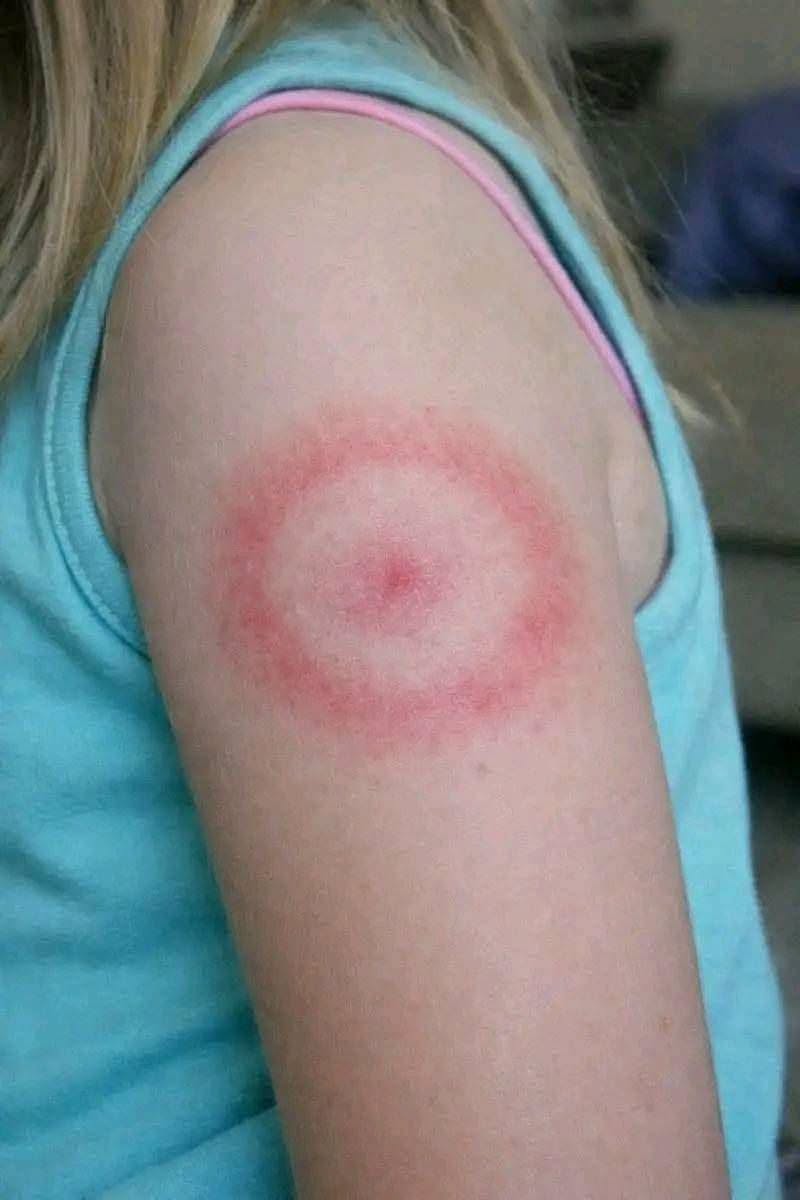
In areas where Lyme disease occurs, a tick bite may sometimes produce a slowly expanding rash known as erythema migrans.
This rash may:
Appear several days after a tick bite
Gradually enlarge
Have central clearing in some cases
Be only mildly itchy or painless
Not every Lyme disease rash forms a classic “bull’s-eye” pattern.
If Lyme disease is suspected, prompt medical evaluation is important because treatment generally requires prescription antibiotics.
Less Common Possibilities
Other medical conditions can occasionally produce circular skin lesions.
Examples include:
Granuloma annulare
Certain viral skin conditions
Drug-related skin reactions
Less common fungal infections
Because many rashes look similar, appearance alone cannot always establish the correct diagnosis.
Caring for the Rash at Home
While arranging medical advice, parents can usually take several simple steps.
These include:
Keeping the affected area clean.
Keeping the skin dry.
Discouraging scratching.
Using loose, comfortable clothing.
Avoiding multiple creams unless recommended by a healthcare professional.
If ringworm is suspected, avoid sharing towels, clothing, hats, or sports equipment until a diagnosis has been confirmed.
When Should You Contact Your Doctor?
Medical evaluation is recommended if:
The rash continues expanding.
The rash lasts more than several days without improvement.
Your child develops fever or appears unwell.
The rash becomes painful.
Swelling or drainage develops.
Multiple new rashes appear.
The diagnosis is uncertain.
Early assessment can help identify the cause and guide appropriate treatment.
When Should You Seek Immediate Medical Care?
Seek urgent medical attention if your child develops:
Difficulty breathing.
Rapid facial swelling.
A widespread rash accompanied by fever.
Severe pain.
Confusion or unusual drowsiness.
Rapidly worsening skin changes.
These symptoms require prompt evaluation by a healthcare professional.
Preventing Certain Skin Infections
Although not every rash can be prevented, several healthy habits may reduce risk.
These include:
Regular handwashing.
Keeping skin clean and dry.
Avoiding sharing personal items.
Promptly cleaning minor cuts and scrapes.
Checking for ticks after outdoor activities in wooded or grassy areas.
Wearing protective clothing when appropriate.
These practices support overall skin health.
Why Accurate Diagnosis Matters
Many skin conditions resemble one another.
For example, ringworm, eczema, insect bite reactions, and Lyme disease can sometimes appear similar during their early stages.
Treatments differ depending on the underlying cause, making professional evaluation especially important when the diagnosis is uncertain.
Reassurance for Parents
Most childhood rashes are not medical emergencies.
Many improve with simple treatment or resolve naturally over time.
Remaining calm, observing changes carefully, and seeking medical advice when needed are often the most effective steps parents can take.
Conclusion
A ring-shaped rash in a child can have several possible causes, ranging from common fungal infections and insect bite reactions to eczema or, less commonly, Lyme disease in areas where it occurs. Because these conditions can look similar, careful observation and professional evaluation help ensure the correct diagnosis and treatment.
Most circular rashes are manageable when identified early. Keeping the affected area clean, avoiding unnecessary treatments, and monitoring for changes can support recovery while awaiting medical advice.
Human curiosity naturally leads parents to search for answers when unexpected symptoms appear. Combining careful observation with evidence-based medical guidance offers the best path toward protecting a child’s health and providing peace of mind.
Sources
American Academy of Pediatrics (AAP). Skin conditions in children.
American Academy of Dermatology (AAD). Ringworm and common childhood rashes.
Centers for Disease Control and Prevention (CDC). Lyme disease information.
Mayo Clinic. Ringworm symptoms and treatment.
National Health Service (NHS). Rashes in babies and children.
Disclaimer: This article is intended for educational purposes only and does not replace professional medical advice. If you are concerned about your child’s rash or symptoms, consult a qualified healthcare professional for evaluation and treatment.