
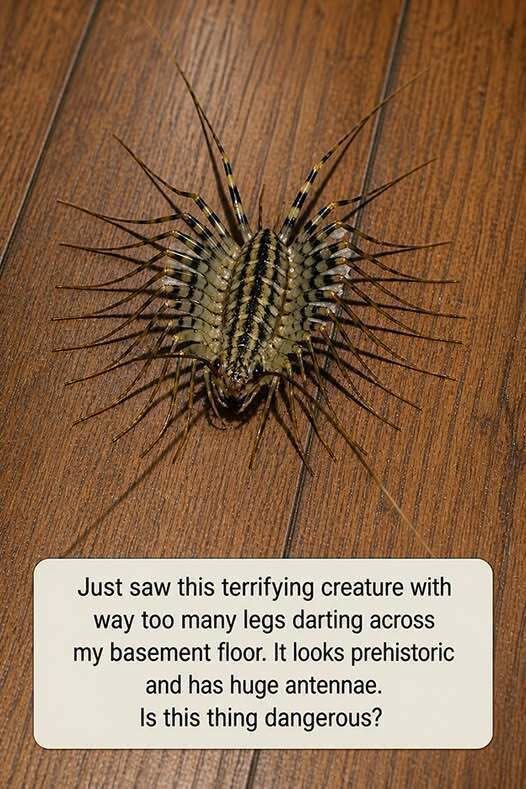
It happens in an instant. You’re walking through your basement or bathroom when something with long, delicate legs darts across the floor faster than you can react. Your first instinct may be to jump back or wonder how it got inside.
Although their appearance often catches people off guard, these fast-moving creatures are usually house centipedes—and they may not be the unwelcome guests they seem to be.
Unlike many household pests, house centipedes don’t feed on furniture, clothing, or stored food. Instead, they spend much of their time hunting other small insects that share your home. Their presence can actually signal that they’re helping reduce populations of less desirable pests.
Learning more about house centipedes can replace unnecessary fear with a better understanding of their role in the indoor environment.
What Is a House Centipede?
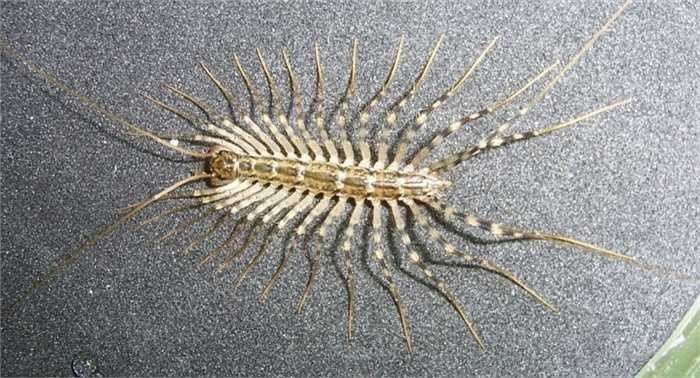
House centipede
The house centipede is a common indoor arthropod recognized by its:
- Long, slender body
- Many delicate legs
- Fast movement
- Long antennae
Despite its unusual appearance, it has adapted well to living in human-made structures and is commonly found in homes throughout many parts of the world.
Why Do House Centipedes Enter Homes?
House centipedes typically seek places that provide:
Food
They are attracted to areas where other insects are abundant.
Moisture
Basements, bathrooms, crawl spaces, and laundry rooms often provide the humidity they prefer.
Shelter
Dark, quiet spaces offer protection during the day, as house centipedes are primarily active at night.

What Do House Centipedes Eat?
One reason many entomologists consider house centipedes beneficial is their diet.
They commonly feed on small household pests, including:
- Ants
- Cockroaches
- Silverfish
- Spiders
- Small flies
- Booklice
- Termites (occasionally, if encountered)
- Other small insects
Because they are predators, they can contribute to the natural control of indoor insect populations.
Are House Centipedes Dangerous?
For most people, house centipedes present very little risk.
They possess venom that helps them capture small insect prey, but it is designed for hunting insects rather than affecting humans.
According to experts:
- House centipedes generally avoid human contact.
- They rarely bite people.
- When bites do occur, they are typically minor and short-lived.
Anyone experiencing unusual reactions after contact with any insect or arthropod should consult a healthcare professional.
Why Seeing One May Indicate Other Insects
House centipedes usually do not remain where food is unavailable.
If one appears regularly, it may suggest that the home contains a population of insects serving as prey.
Rather than viewing the centipede as the primary issue, it can be helpful to identify and address the insects attracting it.
How to Reduce House Centipedes Naturally
If you’d prefer to discourage house centipedes from entering your home, addressing the environment is generally more effective than focusing only on the centipedes themselves.
Reduce Moisture
Lower indoor humidity by:
- Repairing plumbing leaks
- Using dehumidifiers where needed
- Improving ventilation
Seal Entry Points
Small openings around:
- Doors
- Windows
- Pipes
- Foundations
can allow various insects to enter.
Sealing these gaps helps reduce access.
Eliminate Food Sources
Reducing populations of other household insects naturally makes the environment less attractive to predators like house centipedes.
Regular cleaning and proper food storage also help minimize insect activity.

The Ecological Role of House Centipedes
Every ecosystem contains predators that help maintain balance.
Inside homes, house centipedes perform a similar function by feeding on insects that many homeowners consider pests.
While few people enjoy seeing them indoors, their presence illustrates how natural food webs continue to exist even in human environments.
Common Myths About House Centipedes
Myth: They damage homes.
House centipedes do not chew wood, damage fabrics, or consume household materials.
Myth: They are aggressive.
They generally avoid people and quickly retreat when disturbed.
Myth: Their appearance reflects their danger.
Their numerous long legs may seem intimidating, but appearance alone does not indicate a significant threat.
Frequently Asked Questions
Why are house centipedes usually found in basements?
Basements often provide the cool temperatures, moisture, shelter, and insect prey they prefer.
Should you remove house centipedes?
If their presence is occasional, many homeowners simply choose to relocate them outdoors. If they appear frequently, reducing moisture and other insect populations can help address the underlying cause.
Do house centipedes help control pests?
Yes. They are natural predators that feed on various small household insects.
How can you prevent them from entering your home?
Reducing humidity, sealing entry points, repairing leaks, and controlling other insects are effective long-term strategies.
Conclusion
House centipedes may not win any popularity contests based on appearance alone, but they are fascinating examples of nature’s ability to adapt to human environments. Rather than damaging homes or seeking interaction with people, they quietly hunt insects that many homeowners would rather not have indoors.
Understanding their behavior helps replace fear with informed awareness. Although you may still prefer not to share your living space with them, recognizing their ecological role offers a more balanced perspective on these fast-moving nighttime visitors.
Sometimes, the creatures that appear the most unusual are simply carrying out an important job behind the scenes—reminding us that even inside our homes, nature continues to maintain its own remarkable balance.
Sources
- University of Kentucky Entomology – House centipede identification and biology
- University of California Integrated Pest Management – Information on household pests and centipedes
- Smithsonian Institution – Educational resources on arthropods and biodiversity
- National Pest Management Association – Guidance on common household pests
- Editorial inspiration: Prime Dailys, “The Creepy Basement Creature You Saw Might Actually Be Helping Your Home.” This article expands on the topic using established entomological information while avoiding exaggerated or misleading claims.