
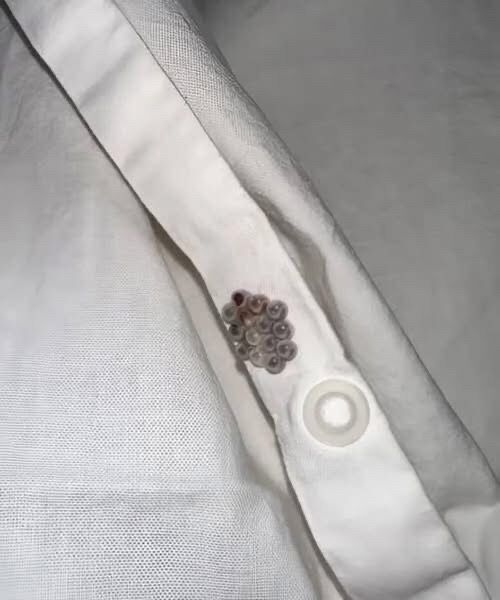
Discovering something unusual in your home can be surprising, especially when it appears in a place as personal as your bed. Small, pale, round objects scattered across bedding may immediately spark concern, leading many people to wonder whether they have discovered insect eggs or another household pest.
A recently shared online story described someone finding tiny round objects on their bed that were later identified as stink bug eggs. While the experience was unsettling, it also serves as a useful reminder that many household insect encounters can be managed calmly with proper identification and simple cleaning measures.
Before assuming the worst, it’s important to understand what stink bug eggs look like, where these insects usually lay them, and when it may be appropriate to seek professional pest control assistance.
What Are Stink Bugs?
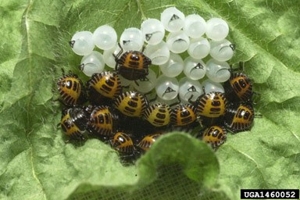
Stink bugs are insects belonging to the family Pentatomidae. One of the most familiar species in many regions is the brown marmorated stink bug.
These insects are well known for producing a distinctive odor when disturbed or threatened, which serves as a natural defense against predators.
Although they may become a nuisance indoors, stink bugs are generally not considered harmful to people. They do not bite, sting, or spread diseases in homes.
What Do Stink Bug Eggs Look Like?
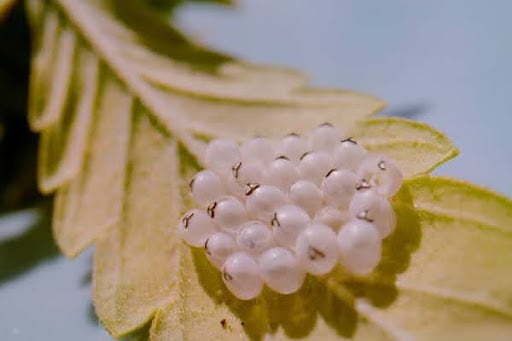
Stink bug eggs have several recognizable characteristics.
They are typically:
- Small and nearly spherical or barrel-shaped
- Pale white, light green, or cream-colored
- Arranged in tight clusters
- Firmly attached to a surface
Most clusters contain between 20 and 30 eggs, although the number can vary.
Because of their neat arrangement, they may resemble tiny beads placed side by side.
Where Are Stink Bug Eggs Usually Found?
Under normal circumstances, stink bugs lay their eggs outdoors, not inside homes.
Common outdoor locations include:
- The underside of leaves
- Garden plants
- Shrubs
- Fruit trees
- Vegetable crops
Finding eggs directly on bedding is considered uncommon.
If similar objects are discovered indoors, careful identification is important because they could also be seeds, debris, or eggs from another insect species.
When uncertain, photographs can often be reviewed by local extension offices or licensed pest management professionals.
Why Do Stink Bugs Enter Homes?
Adult stink bugs commonly enter buildings during cooler months while searching for sheltered places to spend the winter.
They often gather around:
- Windows
- Doors
- Attics
- Wall voids
- Garages
Once inside, they usually remain inactive until warmer temperatures return.
Although seeing a few stink bugs indoors is relatively common in some regions, indoor egg-laying is reported much less frequently than outdoor egg-laying.
What Should You Do If You Find Suspected Insect Eggs?
If you discover small clusters that may be insect eggs, avoid touching them with bare hands until you know what they are.
Instead:
Inspect Carefully
Look at the color, shape, and arrangement.
Take a Photograph
A clear close-up photo can help with identification.
Remove Safely
If appropriate, use disposable gloves or tissue to collect the material.
Clean the Area
Wash bedding and clean surrounding surfaces according to normal household cleaning practices.
Continue Monitoring
Check nearby windows, curtains, and houseplants for additional signs of insects.
If insects continue appearing regularly, professional advice may be helpful.
How to Reduce Stink Bugs Indoors
Preventing insects from entering the home is often the most effective solution.
Experts recommend:
- Sealing cracks around windows and doors
- Repairing damaged screens
- Closing gaps around utility pipes
- Reducing outdoor lighting near entrances when practical
- Inspecting the home during autumn when stink bugs often seek shelter
Simple home maintenance can significantly reduce indoor insect activity.
Are Stink Bugs Dangerous?
Fortunately, stink bugs are considered primarily a nuisance pest.
They generally do not:
- Bite people
- Damage household furniture
- Spread diseases indoors
Their biggest inconvenience is the odor they may release when handled or crushed.
For this reason, many pest experts recommend gently removing them rather than crushing them inside the home.
Other Household Insects That Lay Eggs
Several insects produce eggs that may appear similar at first glance.
These include:
- Lady beetles
- Moths
- Certain beetles
- Lacewings
Because insect eggs vary greatly in appearance, accurate identification is more reliable than making assumptions based on online photos alone.
Local agricultural extension services are often excellent resources for identifying insects.
Keeping Your Bedroom Pest-Free
Maintaining a clean bedroom can help discourage many household pests.
Good habits include:
- Washing bedding regularly
- Vacuuming under furniture
- Reducing clutter
- Inspecting window frames
- Keeping indoor plants healthy
- Addressing moisture problems promptly
While cleanliness cannot prevent every insect from entering a home, it supports a healthier indoor environment.
Common Myths About Stink Bugs
Myth: Stink Bugs Always Lay Eggs Indoors
Not typically.
Most egg-laying occurs outdoors on plants.
Myth: They Are Dangerous to Humans
Current evidence indicates that stink bugs are nuisance insects rather than significant health threats.
Myth: One Stink Bug Means a Major Infestation
Not necessarily.
Individual insects may simply have entered while seeking shelter.
Monitoring the situation is usually more helpful than assuming widespread infestation.
Conclusion
Finding unfamiliar objects on your bedding can certainly be surprising, but careful observation and accurate identification are the best first steps. While stink bug eggs are generally found outdoors rather than on beds, unusual indoor discoveries can happen, making it worthwhile to inspect the area calmly instead of jumping to conclusions.
Most encounters with stink bugs involve temporary nuisance rather than serious health concerns. By practicing good household maintenance, sealing entry points, and identifying insects accurately before taking action, homeowners can manage these situations effectively.
Human curiosity often begins with simple questions about unexpected discoveries around the home. When paired with reliable information and practical prevention strategies, that curiosity helps us respond with confidence rather than unnecessary worry.
Sources
U.S. Environmental Protection Agency (EPA). Pest Control in the Home. https://www.epa.gov/
University of Kentucky Entomology. Brown Marmorated Stink Bug Information. https://entomology.ca.uky.edu/
Penn State Extension. Brown Marmorated Stink Bug Resources. https://extension.psu.edu/
National Pesticide Information Center (NPIC). Household Pest Information. https://npic.orst.edu/
University of California Integrated Pest Management Program. Stink Bug Identification and Management. https://ipm.ucanr.edu/