
Every so often, an animal story captures hearts around the world. Sometimes it is a rescued sea turtle returning to the ocean, a panda cub taking its first steps, or a young primate overcoming difficult beginnings. These stories remind us of the remarkable resilience found throughout the animal kingdom and the dedication of the people who care for wildlife.
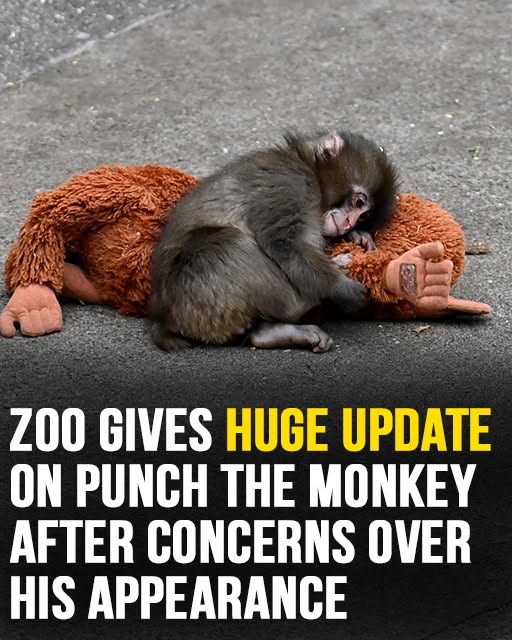
One such story is that of Punch, a baby Japanese macaque at Ichikawa City Zoo near Tokyo, Japan. After experiencing maternal rejection shortly after birth, Punch became an internet sensation thanks to his close attachment to a stuffed orangutan toy that helped comfort him during his earliest days.
Recently, the zoo released encouraging updates about Punch’s development, addressing public concerns while explaining the science behind macaque behavior and the careful process of introducing young primates into established social groups.
Who Is Punch?
Punch, affectionately known as Punch-kun, is a Japanese macaque (Macaca fuscata) born on July 26, 2025, at Ichikawa City Zoo.
Japanese macaques, often called snow monkeys, are native to Japan and are famous for their intelligence, complex social lives, and remarkable ability to survive in cold climates.
Soon after Punch was born, his mother did not provide the typical maternal care expected for newborn macaques.
Because newborn primates rely heavily on their mothers during their first months of life, zoo staff quickly intervened to provide specialized neonatal care.
Their goal was not only to keep Punch healthy but also to prepare him for eventual integration into a normal macaque social group.
Why Maternal Care Matters for Baby Macaques
In the wild, young Japanese macaques spend much of their first year in constant contact with their mothers.
This close relationship helps them learn essential behaviors, including:
-
Climbing safely
-
Finding food
-
Grooming
-
Recognizing social signals
-
Interacting with other troop members
When maternal care is unavailable, animal care professionals often provide additional support while encouraging natural development whenever possible.
The long-term objective is usually to help young animals develop the skills necessary to interact successfully with members of their own species.
The Stuffed Orangutan That Won Hearts
As part of Punch’s early enrichment program, caretakers introduced several soft comfort items into his living space.
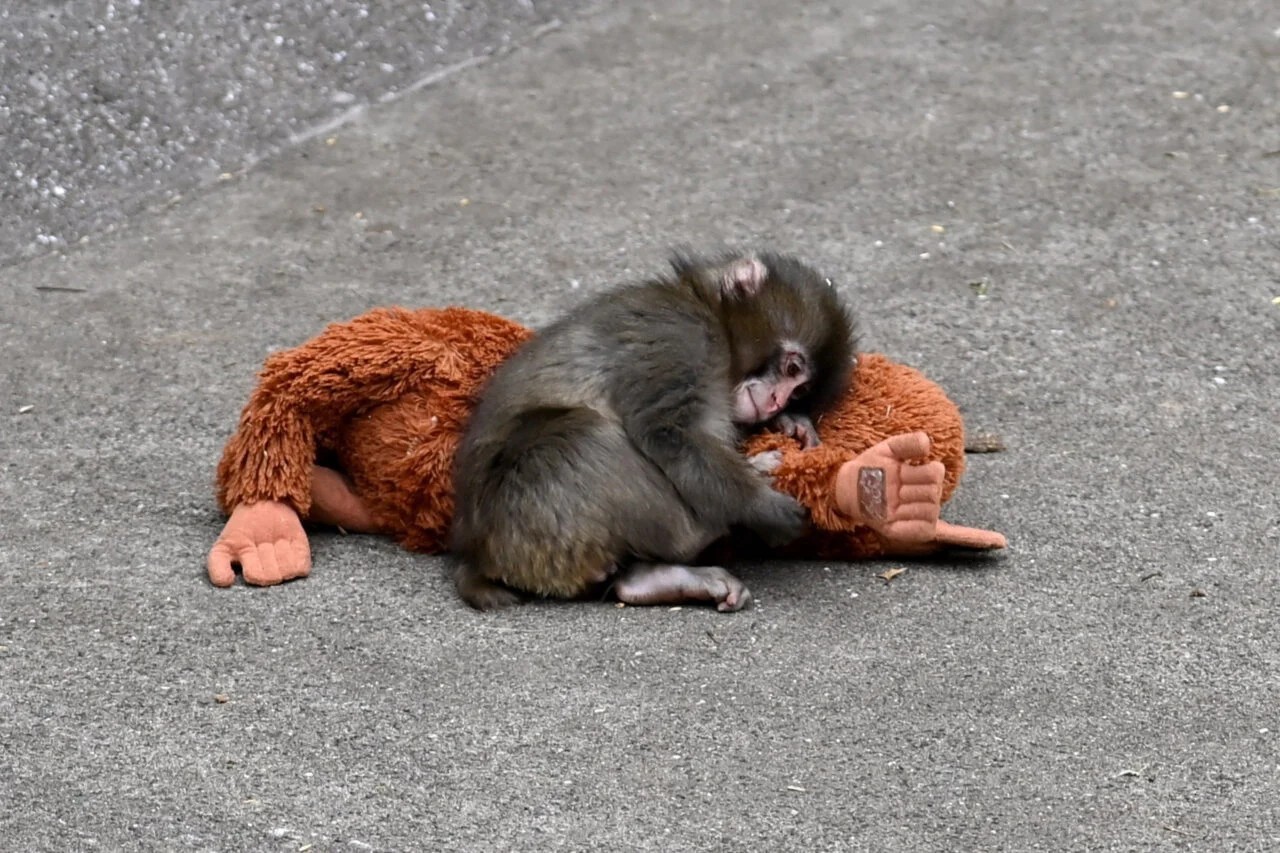
Punch quickly formed a strong attachment to a plush orangutan toy.
Photographs showing the tiny macaque sleeping, eating, and cuddling the stuffed animal spread rapidly across social media.
The touching images attracted worldwide attention and introduced millions of people to Punch’s remarkable story.
His popularity also sparked broader conversations about zoo animal welfare and enrichment practices.
Why Animal Enrichment Is Important
Modern accredited zoos use enrichment to encourage natural behaviors and improve animal welfare.
Enrichment may include:
-
Climbing structures
-
Puzzle feeders
-
Natural vegetation
-
Toys
-
Social interaction
-
Opportunities for exploration
For young primates, familiar objects may also provide temporary comfort during stressful transitions.
However, enrichment is typically designed to complement—not replace—normal interactions with members of the same species.
The Video That Raised Questions
Earlier this year, a video showing Punch interacting with an older macaque circulated widely online.
Some viewers interpreted the encounter as aggressive behavior and expressed concern for Punch’s welfare.
Following these reactions, Ichikawa City Zoo explained that such interactions had been anticipated during Punch’s gradual introduction to the troop.
According to the zoo, what appeared concerning to many human observers represented typical social behavior among Japanese macaques establishing group relationships.
Understanding Macaque Social Behavior
Japanese macaques live within structured social groups that include established hierarchies.
Young monkeys gradually learn acceptable behavior through interactions with older troop members.
Animal behavior specialists note that these social corrections often help young macaques understand group expectations.
Although these interactions may appear uncomfortable from a human perspective, they frequently play an important role in normal social development.
Zoo staff emphasized that Punch has shown resilience throughout this adjustment period.
Encouraging Signs of Progress
The zoo recently shared several positive updates regarding Punch’s development.
Caretakers reported observing him:
-
Playing confidently with other young macaques.
-
Eating independently.
-
Exploring his surroundings more comfortably.
-
Showing increasing confidence within the troop.
One particularly encouraging milestone involved Punch voluntarily leaving the safety of his caretaker to join feeding activities with other monkeys.
This represented growing independence and increasing comfort within his social environment.
Growing Confidence
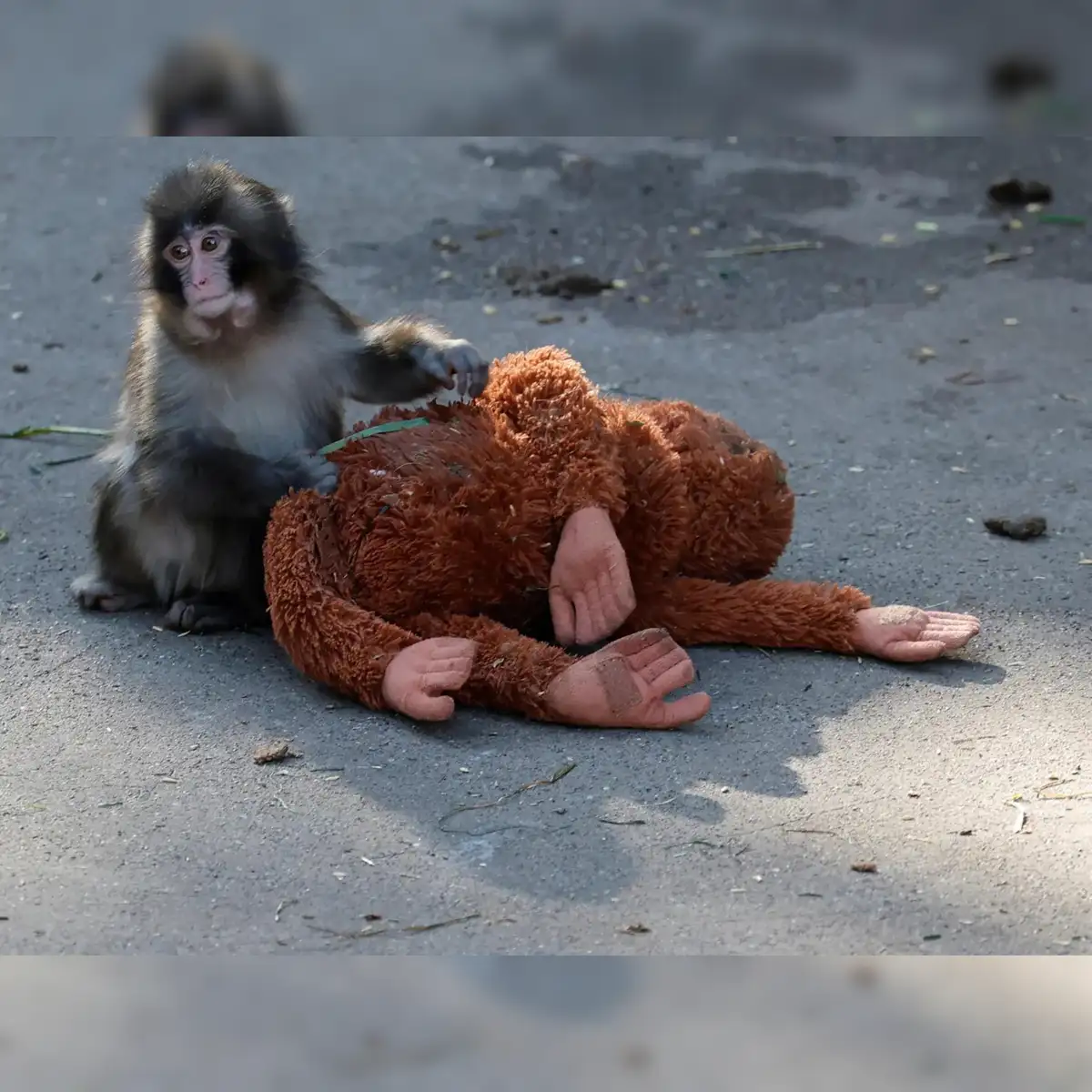
Perhaps the most significant recent development came when Punch was observed interacting with other juvenile macaques without carrying his stuffed orangutan.
While the toy had provided comfort during his earliest weeks, spending more time engaging naturally with fellow monkeys suggests continued social progress.
Zoo staff viewed this as an encouraging step toward successful integration.
Addressing Health Concerns
Some online followers also expressed concern after noticing areas where Punch appeared to have thinner fur.
The zoo explained that temporary hair thinning can occur during winter because macaques groom each other more frequently.
Veterinarians examined Punch and reported no evidence of underlying medical problems.
Caretakers continue monitoring his health as part of his routine care.
Balancing Welfare and Natural Behavior
Following widespread public interest, zoo officials explained that introducing rescued infants into established primate groups requires patience.
Making sudden changes to the environment could unintentionally disrupt existing social relationships and increase stress for multiple animals.
Instead, the zoo has chosen a gradual approach focused on:
-
Careful observation.
-
Veterinary monitoring.
-
Environmental enrichment.
-
Opportunities for quiet retreat.
-
Progressive social integration.
Private indoor spaces remain available whenever Punch needs time away from the larger troop.
The Science of Social Integration
Wildlife professionals recognize that successful introductions depend on many factors.
These include:
-
Individual personality
-
Age
-
Health
-
Existing troop dynamics
-
Environmental design
-
Careful supervision
Each primate responds differently, so caretakers continually adjust management strategies based on observed behavior.
This individualized approach reflects current animal welfare practices used by many accredited zoological institutions.
IKEA’s Unexpected Contribution
Punch’s growing popularity eventually reached IKEA Japan.
The company donated additional versions of the same orangutan plush toy that had become closely associated with the young macaque.
The story even increased public interest in the toy itself, demonstrating how one small animal’s journey unexpectedly connected wildlife care with popular culture.
Although the stuffed companion became symbolic of Punch’s early recovery, caretakers remain focused on encouraging natural social relationships within the macaque troop.
What We Can Learn From Punch’s Story
Punch’s journey illustrates several important lessons about wildlife care.
First, early challenges do not necessarily prevent healthy development when appropriate care is available.
Second, animal behavior often differs from human expectations, making scientific understanding essential before drawing conclusions.
Finally, responsible zoos continually balance compassionate care with opportunities for animals to express their natural behaviors.
As Punch continues growing, each developmental milestone reflects months of careful planning by veterinarians, animal care specialists, and behavioral experts.
Conclusion
Punch’s story has inspired people around the world because it combines resilience, compassion, and scientific animal care. What began as a difficult start following maternal rejection has gradually become an encouraging example of how dedicated caretakers can support healthy development while preparing young animals for life within their own social groups.
The latest updates from Ichikawa City Zoo suggest that Punch is becoming increasingly confident, interacting more naturally with fellow macaques, and taking important steps toward independence. While his stuffed orangutan captured global attention, his greatest achievement may be the growing confidence he now shows among his own troop.
Human curiosity naturally draws us to remarkable animal stories, but they also offer valuable opportunities to learn about wildlife behavior, conservation, and the importance of evidence-based animal welfare. Punch’s continuing progress reminds us that patience, thoughtful care, and respect for natural behavior can help create positive outcomes for animals facing challenging beginnings.
Sources
-
Ichikawa City Zoo – Official updates.
-
People – Coverage of Punch’s development.
-
International Union for Conservation of Nature (IUCN) – Japanese macaque species information.
-
Smithsonian’s National Zoo & Conservation Biology Institute – Primate behavior resources.
-
Association of Zoos and Aquariums (AZA) – Animal welfare and enrichment guidelines.
-
Japan Monkey Centre – Educational resources on Japanese macaques.
-
International Primatological Society – Primate welfare information.