
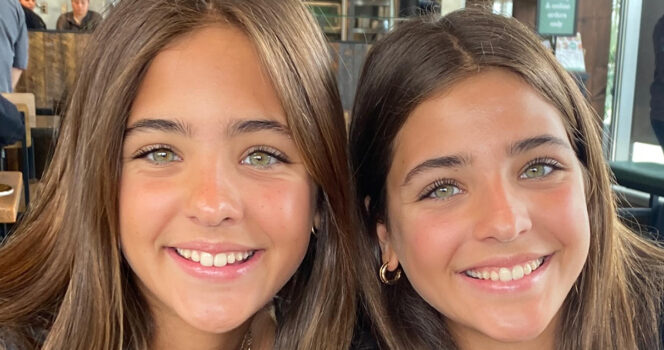
On a sunny morning in Southern California, a mother uploaded a simple portrait of her seven-year-old twin daughters to a newly created social media account. It was intended as a modest online album for friends and distant relatives, a quiet digital repository of childhood milestones. Within weeks, however, the digital universe responded with unprecedented intensity. The striking image of identical sisters Leah Rose and Ava Marie Clements began circulating globally, capturing millions of views and earning them the viral moniker of the “most beautiful twins in the world.”
What began as a personal photo page rapidly transformed into an international modeling trajectory, complete with major brand partnerships and a audience numbering in the millions. Yet, beneath the glamour and the inevitable public debates regarding young creative careers, the family’s journey took a far more profound turn. When an unexpected health crisis impacted their household, the sisters mobilized their vast online community to register thousands of potential bone marrow donors across the country.
This journey highlights a compelling intersection of biology, culture, and human connection. By looking past the immediate novelty of viral fame, we can explore the historical fascination with identical twins, the evolutionary psychology behind facial symmetry, and the genuine strength of online communities coming together for a common purpose.
Echoes in the Mirror: The Cultural Mythology of Twins
Throughout recorded history, identical twins have held a distinct, almost mystical place in human storytelling. Long before modern genetics provided a clear scientific explanation for identical DNA, societies around the globe sought to understand the extraordinary phenomenon of two individuals sharing an identical appearance and an uncanny emotional connection.
In ancient Greek mythology, the Gemini twins Castor and Pollux represented dual aspects of human existence, bound together so tightly that they shared a single celestial destiny. West African Yoruba traditions celebrated twins, known as Ibeji, as symbols of balance, prosperity, and spiritual harmony. These cultural perspectives reflected a deep-seated human instinct to view identical siblings as living mirrors—a rare biological occurrence that challenges our understanding of individual identity.When modern audiences are drawn to portraits of identical twins like the Clements sisters, they are participating in a contemporary continuation of this age-old curiosity. The biological rarity of monozygotic twins—occurring in roughly three to four per thousand births worldwide—creates a natural sense of wonder. Society continues to find intrigue in the interplay between identical genetics and the gradual development of two distinct personalities.

The Biology of Attraction: Symmetry and Evolutionary Genetics
From a scientific standpoint, human interest in physical aesthetics is far from accidental. Evolutionary biologists and perceptual psychologists have long studied how the human brain processes visual harmony, finding that our recognition of facial beauty is deeply tied to evolutionary cues regarding health and genetic viability.
Central to this visual processing is the concept of facial symmetry and proportional balance. When the human brain encounters a face with balanced features, it processes the image with minimal cognitive effort—a phenomenon known as processing fluency. In identical twins, this effect is often doubled, creating a heightened visual harmony that immediately captures human attention.
Research suggests that our aesthetic preferences evolved as subtle mechanisms to identify healthy genetic traits in potential partners. While modern society elevates these traits through artistic photography and digital media, our fundamental appreciation for symmetry remains rooted in basic human biology. The captivating presence of identical twins simply highlights these natural perceptual mechanisms in a clear, striking way.

Digital Mobilization: How Social Networks Drive Real-World Action
While viral attention often centers on visual appeal, the evolution of digital platforms has demonstrated that large online followings can be channeled into meaningful real-world support. The story of the Clements family took a pivotal turn when their father faced a serious medical diagnosis requiring a specialized bone marrow transplant.
Facing a challenging medical landscape, the family utilized their public platform to raise awareness about donor registries. Their public appeal encouraged thousands of followers to register as potential bone marrow donors, contributing to national databases that serve patients far beyond their own family.
“A public platform, regardless of how it is initially formed, becomes genuinely meaningful when it is used to foster human empathy, raise health awareness, and bring real assistance to those in need.”
This phenomenon aligns with sociological research into digital community dynamics. When individuals feel connected to a creator or family through daily online updates, they develop a sense of shared community. When called upon for a serious cause, this digital connection can translate into swift, organized action, demonstrating the positive potential of modern global connectivity.
Balancing Public Visibility and Personal Growth
Navigating public attention during adolescence requires careful management and clear boundaries. As young content creators transition from childhood to their teenage years, families must balance professional opportunities with traditional education, personal development, and mental well-being.
Child development experts emphasize that healthy growth in the public eye depends heavily on maintaining parental guidance, personal autonomy, and a supportive home environment. Allowing young individuals to guide their own involvement in creative projects ensures that their public engagement remains a positive choice rather than an obligation.
By prioritizing education and supporting independent interests, families can ensure that public creative work serves as a constructive experience rather than a defining pressure. The ability to pivot from commercial projects to meaningful health advocacy reflects a balanced approach to modern digital life.

A Reflection on Human Curiosity and Connection
Our enduring interest in stories of twin identity, aesthetics, and digital mobilization reflects fundamental aspects of the human experience. We are naturally drawn to harmony, intrigued by biological uniqueness, and eager to participate in communities that offer mutual support. When we observe the journey of identical twins growing up in the digital age, we are not merely observing viral media; we are reflecting on our shared human connection.
These narratives remind us of our innate desire to seek out beauty, comprehend the subtle mechanisms of biology, and find purpose in collective action. Whether viewed through the lens of ancient folklore, the exact measurements of evolutionary science, or the heartwarming reality of a community answering a call for medical aid, our curiosity continues to drive us toward empathy and understanding.
In the end, the true value of any public platform lies not in the applause of the crowd, but in its capacity to bring people together, highlight our common humanity, and turn everyday visibility into lasting, positive impact.
Sources
-
The American Journal of Human Genetics: Studies analyzing the biological mechanisms, frequency, and genetic characteristics of monozygotic twinning.
-
The Psychology of Aesthetics, Creativity, and the Arts: Research papers on facial symmetry, visual processing fluency, and biological theories of attractiveness.
-
The National Marrow Donor Program (Be The Match): Educational data regarding bone marrow registries, donor recruitment metrics, and public awareness initiatives.
-
The Journal of Adolescent Research: Peer-reviewed articles investigating the social, emotional, and psychological impacts of early media exposure on young individuals.
-
PEOPLE Magazine: Journalistic reporting documenting public statements, health updates, and community mobilization efforts by the Clements family.