
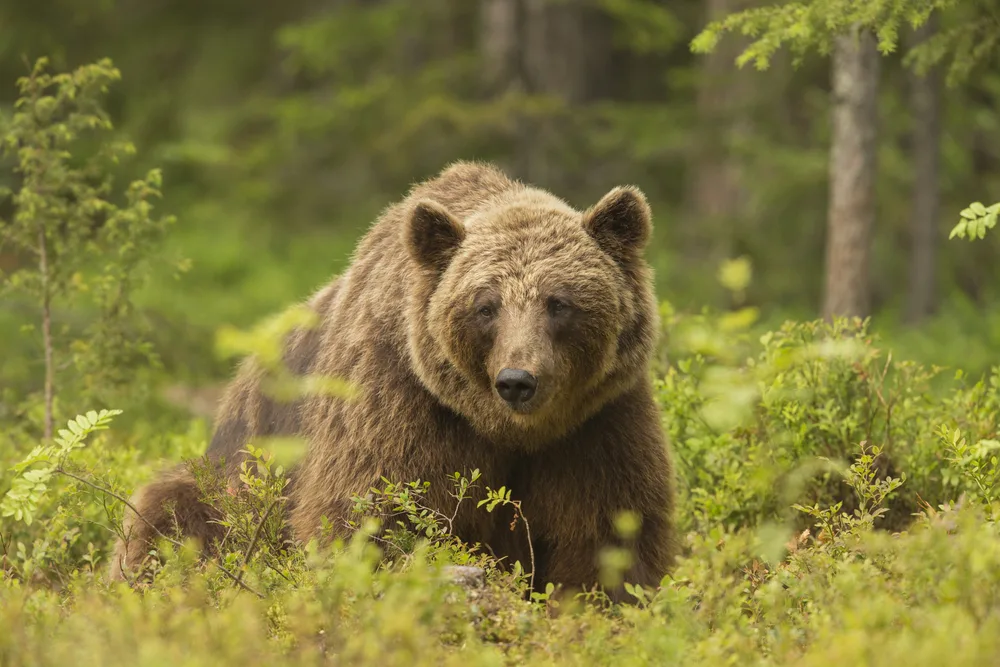
Drivers traveling along a highway in New Mexico expected an ordinary journey. Instead, many found themselves looking up at an extraordinary sight—a black bear perched high atop a utility pole. At first glance, some believed it was not moving. A closer look revealed the animal was alive, appearing tired and unable to find a safe way down.
Photos and videos quickly spread across social media, prompting widespread concern and countless questions. Why didn’t rescuers simply bring the bear down? Could the power have been turned off? Was there another solution?
While the outcome was deeply saddening, the incident highlights the complex challenges wildlife professionals face when balancing public safety, animal welfare, and the risks posed by electrical infrastructure. Understanding these challenges can help us better appreciate both the unpredictability of wildlife behavior and the careful decision-making required during rescue operations.
The Bear Was First Spotted High Above the Ground
The incident began when travelers noticed what appeared to be a black bear sitting on a utility pole near Highway 56, close to Clayton, New Mexico.
Initially, witnesses thought the animal might not be alive. After taking a closer look, however, they realized the bear was still moving but appeared exhausted and reluctant to descend.
Concerned observers contacted local authorities and the New Mexico Department of Game and Fish. Meanwhile, other motorists stopped to photograph the unusual scene, and images soon circulated widely online.
As public interest grew, many people hoped rescuers would quickly return the bear safely to the ground.
Why Didn’t Wildlife Officials Sedate the Bear?
One of the most common questions was why wildlife specialists did not tranquilize the bear.
Although sedation is an important wildlife management tool, experts explain that it is not suitable in every situation.
The Risk of Falling
A tranquilizer does not work instantly, but once it begins taking effect, an animal gradually loses coordination and muscle control.
If the bear had become unconscious while positioned high above the ground, it could have fallen before rescue teams had an opportunity to secure it.
Because of this possibility, tranquilizing the bear while it remained on the utility pole carried significant risks.
Electrical Hazards
The bear was also surrounded by energized electrical equipment.
Rescue personnel would have needed to consider not only the safety of the animal but also the safety of emergency responders, utility workers, and nearby members of the public.
Working around high-voltage infrastructure requires careful coordination and planning.
Why the Bear May Have Stayed on the Pole
Wildlife experts note that black bears often climb trees or elevated structures when frightened.
Remaining high above the ground can feel like a safer option from the animal’s perspective.
Several factors may have contributed to the bear remaining on the utility pole.
Heavy Traffic
Passing vehicles create continuous movement and noise, which can increase stress for wild animals.
Crowds of Spectators
As news spread through social media, more people reportedly gathered nearby to observe the bear.
Although well intentioned, large crowds may unintentionally increase an animal’s anxiety.
Dogs and Other Disturbances
Wildlife officials also pointed out that barking dogs and nearby activity can discourage frightened animals from climbing back down.
The bear may have remained on the pole because it perceived the surroundings as unsafe.
The Challenges of Utility Pole Rescues
Unlike rescuing an animal from a tree, utility poles present unique dangers.
Electrical lines carry high voltage, and every rescue decision must minimize risks to everyone involved.
Potential considerations include:
- Coordinating with utility companies
- Assessing electrical hazards
- Protecting rescue personnel
- Preventing additional stress to the animal
- Managing traffic and public safety
Each wildlife emergency presents different circumstances, making it difficult to apply a single solution to every situation.
A Sad Outcome
According to the New Mexico Department of Game and Fish, the bear eventually attempted to climb down on its own.
During that effort, it came into contact with energized electrical equipment.
Officials later confirmed that the animal could not be saved.
The news disappointed many people who had been following the story online and hoping for a positive resolution.
Public Reactions
The incident generated widespread discussion across social media.
Some people questioned whether electricity could have been temporarily disconnected to improve the chances of a safe rescue.
Others acknowledged the difficult position facing wildlife authorities, recognizing that rescue operations involving power infrastructure require careful planning and coordination.
Although opinions differed, many agreed that everyone involved wanted the safest possible outcome under challenging circumstances.
A Similar Rescue That Ended Differently
Wildlife experts noted that similar situations have produced different outcomes in the past.
In 2021, a young black bear climbed a utility pole in Willcox, Arizona.
In that case, utility crews temporarily disconnected electrical power, allowing trained personnel to safely encourage the bear back to the ground.
While comparisons are understandable, every rescue differs depending on factors such as infrastructure, weather, terrain, available equipment, and the animal’s behavior.
For this reason, wildlife professionals evaluate each situation individually rather than relying on a standard response.
What This Incident Teaches About Wildlife Encounters
Although rare, unusual wildlife encounters offer important lessons.
Give Wild Animals Space
Maintaining a safe distance reduces stress for wildlife and gives trained responders more room to work effectively.
Avoid Gathering in Large Crowds
Crowds, loud voices, and constant activity may unintentionally discourage animals from moving toward safer locations.
Report the Situation Promptly
Contacting local wildlife authorities allows trained professionals to assess the circumstances as quickly as possible.
Let Experts Lead
Wildlife rescues often involve complex considerations that are not immediately visible to observers.
Patience allows specialists to evaluate the safest available options.

The Science Behind Black Bear Behavior
Black bears are intelligent, adaptable mammals that frequently climb trees for safety, rest, or food.
When startled, climbing is often an instinctive response.
Research suggests that frightened bears may remain in elevated locations for extended periods until they believe the surrounding environment is secure.
Stressful conditions, unfamiliar sounds, and persistent human activity can influence how long an animal stays in place.
Understanding these natural behaviors helps explain why wildlife professionals often encourage people to leave the area whenever possible.
Balancing Compassion and Practical Challenges
Stories like this naturally inspire compassion.
Seeing an animal in an unusual situation encourages people to imagine simple solutions. In reality, wildlife rescue often involves balancing multiple priorities, including public safety, responder safety, animal welfare, and environmental conditions.
While it is understandable that observers hoped for a different outcome, the incident illustrates how complex wildlife emergencies can become, particularly around electrical infrastructure.
It also highlights the importance of continued collaboration between wildlife agencies, utility companies, and local communities to improve emergency response whenever similar situations occur.
Conclusion
The New Mexico utility pole incident serves as a reminder that wildlife and human infrastructure sometimes intersect in unexpected ways. Although the outcome was deeply disappointing for many who followed the story, it also sparked valuable conversations about wildlife behavior, rescue strategies, and public awareness.
Rather than focusing solely on the event itself, the broader lesson is one of respect—for wild animals, for the professionals who respond to emergencies, and for the complexity of nature. Human curiosity often draws us closer to remarkable moments, but understanding and patience are equally important when wildlife needs space to find safety.
By learning from incidents like this, communities can better support conservation efforts while appreciating the remarkable adaptability of the animals that share our environment.
Sources
- New Mexico Department of Game and Fish
- U.S. Fish & Wildlife Service
- National Park Service – Bear Safety Guidance
- BearWise.org – Living Responsibly with Black Bears
- EntertainmentMind.com (background summary; factual details should be verified through official wildlife authorities)