
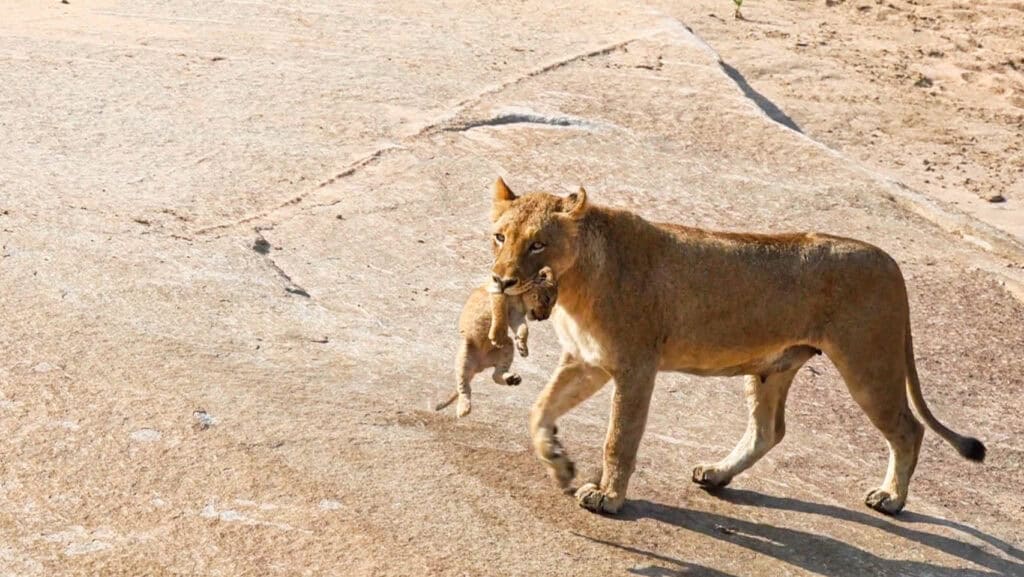
The African savanna is filled with remarkable moments of survival, but some of its most touching stories are not about speed or strength—they are about care. Among the many behaviors that capture the attention of wildlife enthusiasts, few are as heartwarming as watching a lioness gently carry her cub to safety.
In one widely shared wildlife moment, a lioness was seen transporting her young cub across a river before continuing through the landscape in search of a safer place. The scene reminded viewers that even one of nature’s most powerful predators displays remarkable gentleness when caring for its offspring.
While such encounters may appear extraordinary, wildlife experts explain that this behavior is a natural part of how lionesses protect and raise their young during the earliest months of life.
Why Lionesses Carry Their Cubs
A lioness carries her cub by gently gripping the loose skin on the back of its neck, commonly called the scruff.
This behavior is completely natural and serves several important purposes.
Young cubs cannot travel long distances safely.
They tire easily.
They are vulnerable to predators.
They may struggle to navigate rough terrain.
By carrying them herself, the mother ensures they reach secure locations while conserving the cub’s energy.

What Happens When a Cub Is Picked Up?
One fascinating feature of young lions is an instinctive response often called the scruffing reflex.
When lifted by the scruff, a cub typically becomes calm and relaxes its body.
This response helps the mother transport her offspring efficiently without unnecessary movement.
The reflex is also observed in several other members of the cat family, including domestic cats and some wild feline species.
Crossing Water: An Uncommon Challenge
Lions generally spend most of their lives on land.
Although they are capable swimmers when necessary, they do not usually enter water unless circumstances require it.
A river crossing may become necessary for several reasons:
- Searching for safer den sites.
- Following the movement of prey.
- Avoiding disturbances.
- Relocating the pride.
When a cub is still very young, carrying it across water greatly increases its safety.
The Early Life of Lion Cubs
Lion cubs are born small, helpless, and entirely dependent on their mother.
During the first weeks of life, a lioness often keeps her cubs hidden away from the rest of the pride while they grow stronger.
As the cubs develop, she gradually introduces them to other pride members.
During this period, she frequently moves them between sheltered locations to reduce the chance of attracting unwanted attention from other animals.
The Role of Lionesses in a Pride
Lionesses are the primary caregivers within a lion pride.
Their responsibilities include:
- Nursing cubs.
- Protecting young lions.
- Teaching hunting skills.
- Guiding social behavior.
- Cooperating with other females to care for offspring.
Many prides include related females who work together, creating one of the most cooperative family structures among large cats.
Do Male Lions Care for Cubs?
Male lions play an important, though different, role.
Rather than providing daily care, adult males primarily defend the pride’s territory from rival lions.
By maintaining a secure territory, they help create an environment where cubs have a greater chance of growing successfully.
Meanwhile, the lionesses handle most of the direct parenting responsibilities.

Maternal Instinct in the Animal Kingdom
The bond between a mother and her offspring appears across many animal species.
Elephants protect calves within family groups.
Wolves cooperate to raise pups.
Penguins carefully guard eggs and chicks.
Lionesses demonstrate their devotion by feeding, grooming, carrying, and defending their cubs during the most vulnerable stages of life.
Although parenting strategies differ between species, the shared goal remains the same: giving the next generation the best opportunity to survive.
Why Wildlife Moments Inspire People
Images of a lioness carefully transporting her cub often resonate because they reveal a softer side of an animal usually associated with strength and hunting.
These moments remind us that successful survival in nature depends not only on power but also on patience, care, and protection.
They also encourage greater appreciation for wildlife conservation and the importance of preserving habitats where these natural behaviors can continue.

Protecting Lions and Their Habitats
African lions face several conservation challenges, including habitat loss, reductions in available prey, and conflicts between wildlife and human activities.
Conservation organizations work alongside local communities to:
- Protect natural habitats.
- Monitor lion populations.
- Reduce human-wildlife conflict.
- Support sustainable land management.
- Promote wildlife education.
Healthy ecosystems benefit not only lions but countless other species that share the same environment.
Conclusion
The sight of a lioness carrying her cub across a river is more than a beautiful wildlife photograph—it is a powerful reminder of the remarkable instincts that help ensure the survival of future generations. Through gentle care, constant vigilance, and tireless dedication, mother lions provide their cubs with the protection and guidance they need during life’s earliest stages.
Nature is filled with extraordinary moments that deepen our understanding of the animal world. By observing these behaviors through both scientific research and respectful wildlife photography, we gain a greater appreciation for the complex relationships that exist across the natural world.
Human curiosity has always drawn us to stories of remarkable animals, and scenes like this continue to inspire admiration for the resilience, intelligence, and nurturing instincts that flourish in the wild.

Sources
- World Wildlife Fund
- African Wildlife Foundation
- National Geographic Society
- Smithsonian’s National Zoo and Conservation Biology Institute
- International Union for Conservation of Nature