
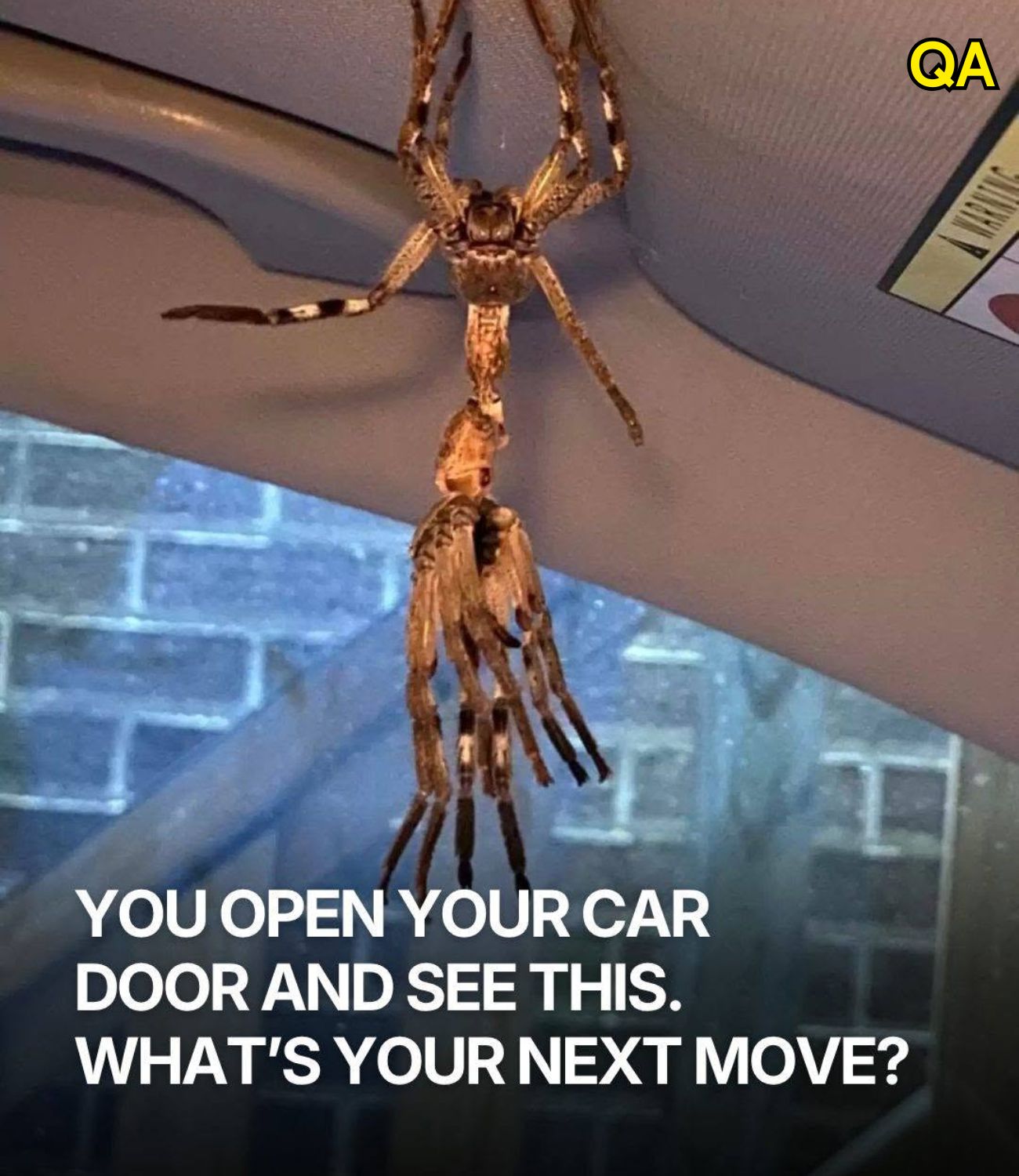
Imagine walking into your garage on a quiet evening, opening your car door, and suddenly freezing in place. Hanging from the sun visor appears to be not one, but two enormous spiders suspended in midair. Your heart skips a beat as you try to make sense of the bizarre scene.
That is exactly what happened to Australian resident Andrew Mcleay, whose unusual encounter quickly caught the attention of wildlife enthusiasts. At first glance, the sight looked alarming, but what he witnessed turned out to be one of nature’s most fascinating transformations rather than anything dangerous.
The remarkable moment offered a rare glimpse into the life cycle of a huntsman spider, reminding us that many creatures often misunderstood by humans have incredible biological adaptations. While seeing a large spider inside a vehicle might surprise almost anyone, the event became an educational opportunity that highlighted the wonders of the natural world.
What Happened When the Car Door Opened?
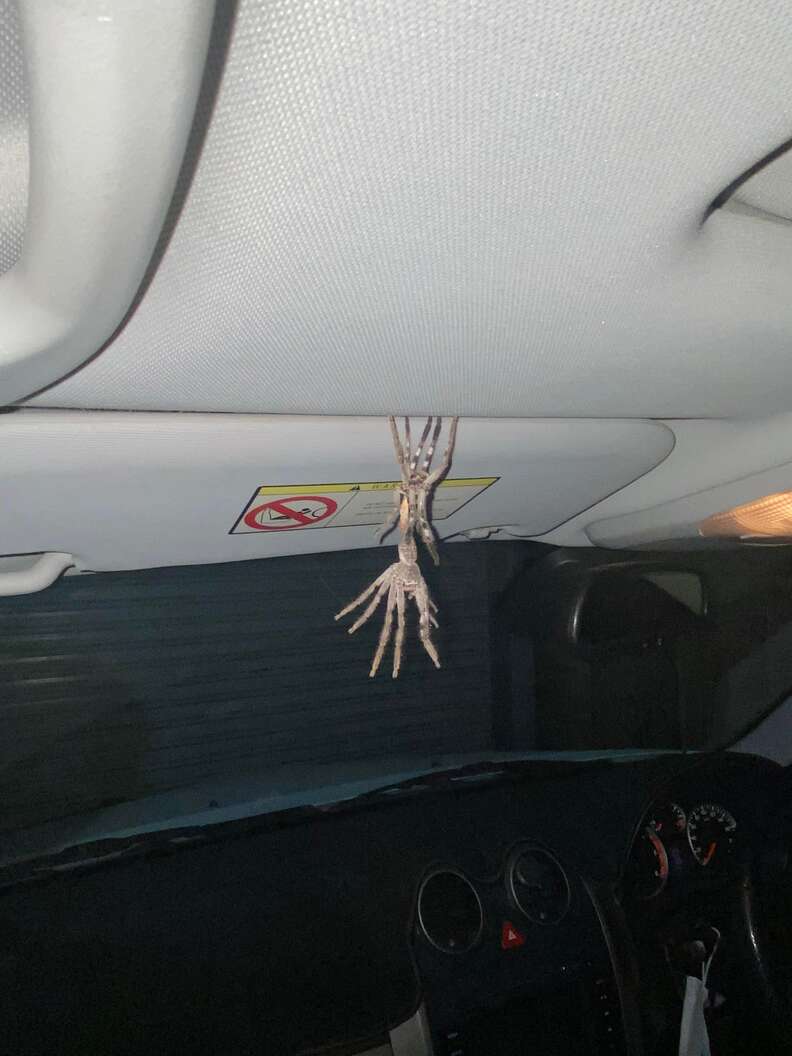
One evening, Andrew Mcleay went to his garage to retrieve something from his car. As soon as he opened the driver’s side door, he noticed what looked like two giant spiders hanging from the sun visor.
Each appeared to span roughly five inches across, making the sight even more startling.
Initially, Mcleay assumed that one spider had defeated the other in some sort of struggle. The upper spider remained perfectly still while the lower one showed slight movement, adding to the confusion.
However, after watching more carefully, he realized something unexpected was taking place.
There weren’t two spiders at all.
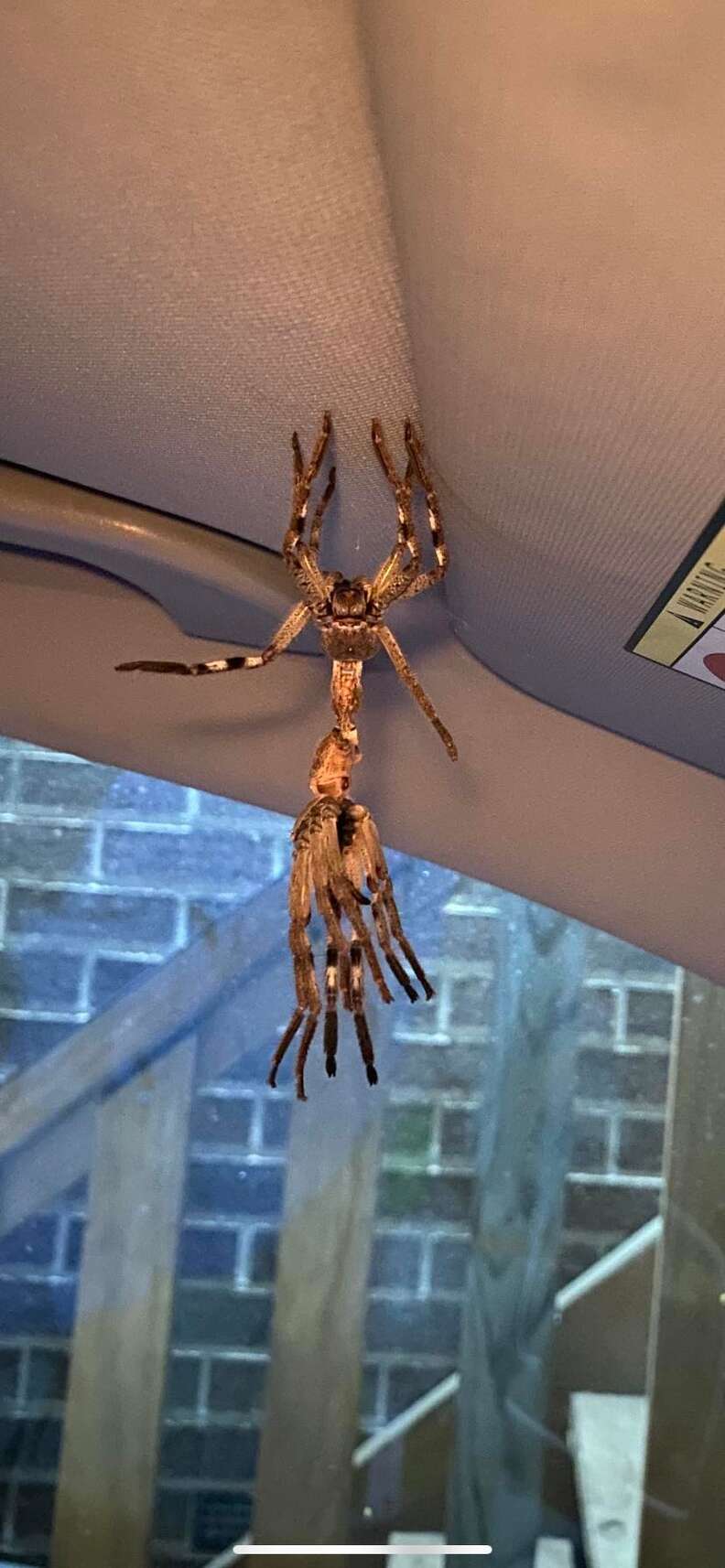
Instead, he was witnessing a single huntsman spider in the middle of molting, one of the most remarkable stages of a spider’s life cycle.
Understanding the Spider Molting Process
Molting is a completely natural process that allows spiders to grow.
Unlike mammals, spiders have a rigid outer covering called an exoskeleton. This protective shell cannot stretch as the animal grows. To become larger, the spider must periodically shed its old exoskeleton and emerge with a new, soft one that gradually hardens over time.
During this process, the empty shell often remains attached to the spider for several minutes, creating the illusion that there are two spiders.
For someone unfamiliar with molting, the scene can appear mysterious or even unsettling.
Wildlife experts note that observing a spider actively molting is relatively uncommon because the process usually occurs in sheltered locations where the spider is less vulnerable.
What Is a Huntsman Spider?
Large but Generally Calm
Huntsman spiders belong to the family Sparassidae and are among the largest spiders commonly encountered in Australia and many tropical regions around the world.
Their long legs can make them appear intimidating, but they are typically shy animals that prefer avoiding people whenever possible.
Why They Enter Homes and Cars
Huntsman spiders often wander into garages, sheds, homes, or even parked vehicles while searching for shelter or insects to eat.
Warm, quiet spaces provide suitable temporary hiding places, especially during changing weather conditions.
Because they move quickly and often remain hidden during the day, people are sometimes surprised when they unexpectedly encounter one.
Why the Spider Looked Like Two Separate Animals
The unusual appearance resulted from the spider’s old exoskeleton remaining attached while the new spider gradually emerged.
During molting:
- The old exoskeleton splits open.
- The spider slowly pulls itself free.
- Its new body appears pale and soft at first.
- The empty shell retains the exact shape of the spider.
- The spider hangs quietly while its new exoskeleton hardens.
From a distance, this creates the convincing illusion that two spiders are stacked together.
It is an excellent example of how nature can produce scenes that seem extraordinary until science provides the explanation.
Is It Rare to Witness a Spider Molting?
Although every spider molts multiple times throughout its life, witnessing the event in progress is relatively unusual.
Several factors contribute to its rarity:
Spiders Choose Hidden Locations
Most spiders seek protected areas where they are less likely to be disturbed while vulnerable.
The Process Takes Limited Time
Depending on the species and age of the spider, the actual emergence from the old exoskeleton may occur within a relatively short period.
People Are Rarely Nearby
Since molting often occurs at night or in concealed spaces, few people happen to observe it firsthand.
For these reasons, wildlife photographers and nature enthusiasts consider such sightings especially interesting.
A Calm and Respectful Response
Instead of reacting impulsively, Mcleay carefully observed what was happening.
After the spider completed the molting process and descended on a silk thread, he gently collected it using a bucket and relocated it to a safe location outdoors.
He also moved the empty exoskeleton into his garden.
This thoughtful response protected both the spider and himself while allowing the natural process to conclude without interruption.
It serves as a reminder that many wildlife encounters can be handled safely through patience and respect.
The Science Behind Spider Growth
Molting is essential because spiders cannot grow continuously inside a rigid exoskeleton.
During each molt:
Growth Occurs Quickly
Before shedding, the spider develops a larger body beneath its existing exoskeleton.
The New Exoskeleton Is Flexible
Immediately after emerging, the new outer covering remains soft, allowing the spider’s body to expand before hardening.
Recovery Takes Time
Freshly molted spiders often remain still while their new exoskeleton gains strength.
During this vulnerable stage, they generally avoid unnecessary movement.
Common Myths About Large Spiders
Large spiders frequently inspire myths and exaggerated stories. Scientific research helps separate fact from fiction.
Myth: Bigger Spiders Are More Dangerous
Body size does not necessarily indicate risk. Many large spider species are more interested in avoiding humans than interacting with them.
Myth: Spiders Chase People
Most spiders move quickly toward shelter rather than toward people. Their rapid movement can sometimes create the mistaken impression that they are chasing someone.
Myth: Seeing a Spider Means There Are Hundreds Nearby
A single spider does not automatically indicate a large population. Many species are solitary and spend much of their lives alone.
Why Huntsman Spiders Matter
Despite their intimidating appearance, huntsman spiders play an important ecological role.
They help regulate populations of insects and other small invertebrates, contributing to balanced ecosystems.
Because they are active hunters rather than web builders, they often capture insects that many people consider household pests.
Their presence illustrates the complexity and interconnectedness of nature.
Lessons From an Unexpected Encounter
Stories like this remind us that first impressions can be misleading.
What initially appeared to be two enormous spiders involved in a mysterious struggle turned out to be an ordinary biological process rarely witnessed by humans.
Instead of becoming a frightening experience, the encounter became an opportunity to learn more about wildlife and appreciate one of nature’s remarkable adaptations.
Curiosity transformed surprise into understanding.
Tips If You Encounter a Large Spider
If you unexpectedly find a large spider in your home or vehicle:
- Stay calm and avoid sudden movements.
- Observe from a safe distance if possible.
- Remember that many spiders prefer to avoid human contact.
- If relocation is necessary, consider using a container and a piece of cardboard or contact local wildlife professionals if you are unsure of the species.
- Avoid disturbing a spider that appears to be molting, as it is especially vulnerable during this stage.
These simple steps help ensure a safe outcome for both people and wildlife.
Conclusion
Andrew Mcleay’s surprising discovery inside his car offered much more than an unexpected wildlife encounter. It revealed one of the hidden wonders of the natural world—a huntsman spider quietly shedding its old exoskeleton as part of its normal growth.
Although the sight initially appeared puzzling, science provided a fascinating explanation that transformed confusion into appreciation. Encounters like this remind us that many of nature’s most remarkable moments occur in ordinary places, often when we least expect them.
Human curiosity has always driven us to look beyond first impressions. Whether we are observing wildlife in our gardens, our homes, or even our cars, taking a moment to understand what we see can reveal extraordinary stories hidden within everyday life.
Sources
- The Dodo. Guy Opens Car Door And Spots A Giant Spider At An Awkward Moment. By Stephen Messenger.
- Australian Museum. Huntsman Spiders (Family Sparassidae). https://australian.museum/
- Australian Museum. Spider Biology and Molting. https://australian.museum/
- Encyclopaedia Britannica. Spider. https://www.britannica.com/animal/spider-arachnid
- National Geographic. Spider Facts. https://www.nationalgeographic.com/animals
- Smithsonian National Museum of Natural History. Spider Biology. https://naturalhistory.si.edu/