
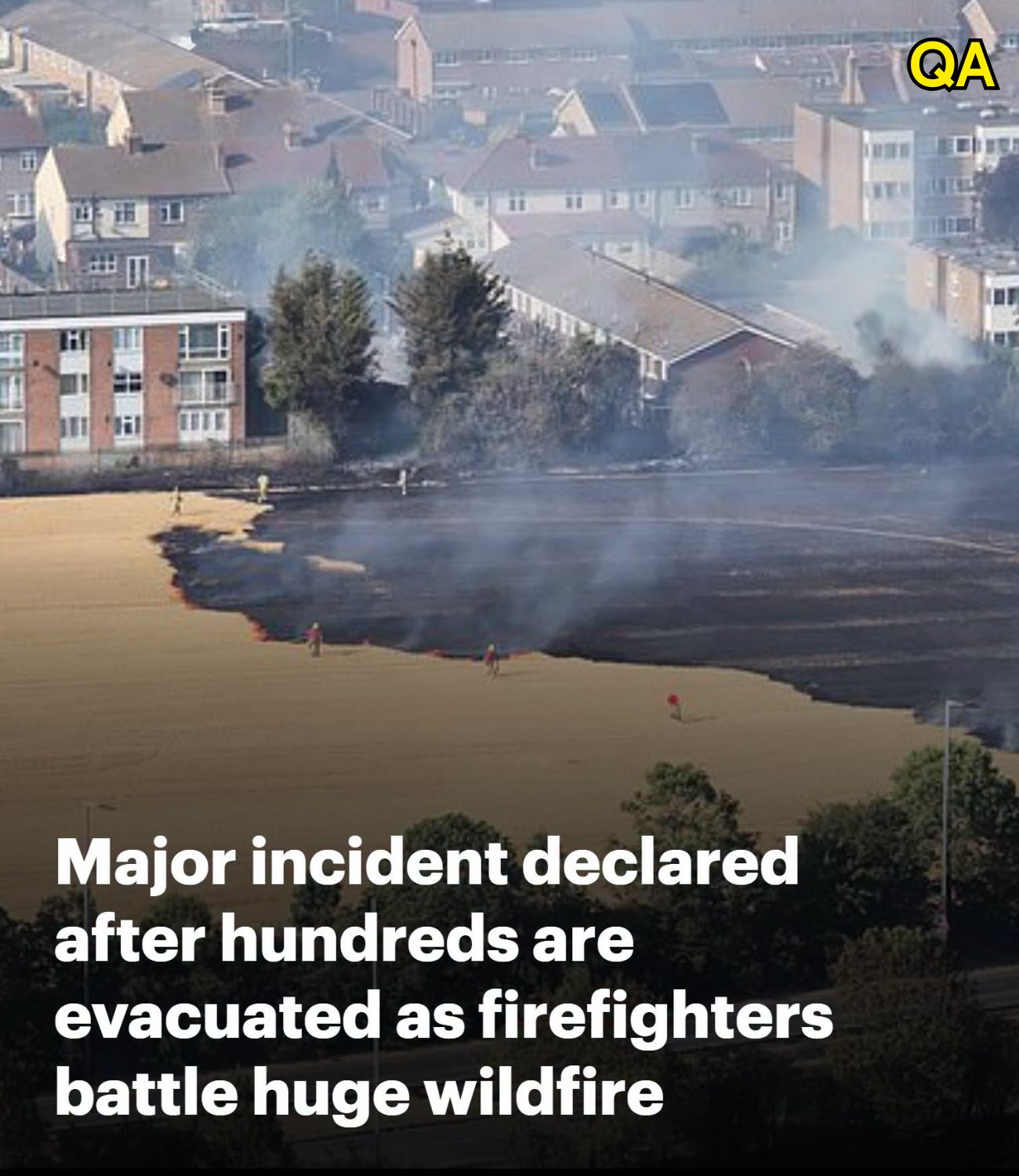
On a warm summer evening, what began as a fire on heathland in Suffolk quickly became one of several major wildfire incidents stretching emergency services across England. Firefighters worked through the night to protect nearby holiday parks while thick smoke drifted across the countryside. At the same time, other grassland fires were burning around London, highlighting how prolonged heat and dry conditions can rapidly transform vegetation into fuel.
The recent wildfires have attracted widespread attention not only because of their scale but also because they illustrate a growing environmental challenge. While dramatic images often dominate headlines, scientists explain that these events are closely linked to weather patterns, drought conditions, and changing landscapes. Understanding both the immediate response and the broader scientific context helps explain why wildfires are becoming an increasingly important issue across parts of the United Kingdom.
Wildfires Break Out Across England
Large wildfires were reported in several locations as exceptionally hot and dry weather continued across much of England.
One of the most significant incidents occurred at Dunwich Heath in Suffolk, where a heathland fire spread rapidly after beginning during the evening. Fire crews declared the incident a major emergency because of its size and the difficult conditions created by strong winds.
Around 90 firefighters were deployed to contain the blaze while working to protect nearby holiday accommodation. Approximately 200 caravans at Cliff House Holiday Park were evacuated as a precaution.
Elsewhere, firefighters responded to extensive grassland fires in Romford and Rainham in east London. Together, these incidents affected dozens of acres of dry vegetation and required significant emergency resources.

Why the Fire Drew Attention
The Suffolk wildfire attracted additional public interest because it was moving in the general direction of the Sizewell B nuclear power station.
Authorities emphasized that the facility itself was not considered to be under immediate threat. Nevertheless, emergency officials continued monitoring the situation carefully while concentrating efforts on controlling the surrounding wildfire.
Officials also advised nearby residents and visitors to avoid affected areas and keep doors and windows closed due to smoke.
The Role of Extreme Heat
The United Kingdom has experienced multiple periods of unusually hot weather during the summer.
Temperatures climbed into the mid-30 degrees Celsius range in some regions, while weeks of limited rainfall left vegetation exceptionally dry.
Heat alone does not create wildfires.
However, prolonged high temperatures remove moisture from grasses, shrubs, and woodland, making them much easier to ignite if a fire starts.
Scientists often compare this process to drying wood before using it in a fireplace. The drier the material becomes, the faster it can burn.
Understanding Drought Conditions
Environmental agencies have warned that much of England has entered serious drought conditions.
Drought develops when rainfall remains below normal levels for extended periods, reducing available water in soils, rivers, and reservoirs.
As plants lose moisture, landscapes become increasingly vulnerable to fire.
Experts also note that consecutive dry summers can amplify these effects because ecosystems have less opportunity to recover between seasons.

Why Wind Makes Wildfires More Dangerous
Wind is one of the most important factors influencing wildfire behavior.
Strong winds can:
-
Carry sparks into new areas.
-
Increase oxygen available to flames.
-
Push fires across dry vegetation more quickly.
-
Complicate firefighting operations.
In open heathland and grassland, changing wind direction can cause fires to spread unpredictably, requiring firefighters to constantly adjust their strategies.
Heathland Ecosystems and Fire
Dunwich Heath is one of England’s well-known heathland landscapes.
Heathlands support unique plant species, insects, birds, and other wildlife adapted to nutrient-poor soils.
Although some heathland plants have evolved alongside occasional natural fires over long periods, unusually intense or widespread fires may affect habitats more significantly, especially during prolonged drought.
Conservation groups often work to restore these landscapes after wildfire events.

The Science Behind Britain’s Increasing Wildfire Risk
Historically, the United Kingdom has experienced fewer major wildfires than regions such as southern Europe, Australia, or western North America.
However, researchers have observed conditions that may increase wildfire risk.
Several contributing factors include:
-
Longer periods of hot weather.
-
Reduced summer rainfall.
-
Dry vegetation.
-
Expanding grassland fuel.
-
Strong seasonal winds.
Scientists emphasize that each wildfire results from a combination of weather, available vegetation, and an ignition source rather than any single factor alone.
Firefighters Face Challenging Conditions
Wildfires differ significantly from structural fires.
Instead of protecting individual buildings alone, firefighters may need to defend large landscapes covering many hectares.
Emergency crews often establish fire breaks by removing vegetation ahead of advancing flames.
These gaps reduce the amount of fuel available and help slow the fire’s progress.
Firefighters may also coordinate with forestry specialists, environmental agencies, and local authorities during prolonged incidents.
Protecting Communities
During large wildfires, public safety becomes a priority.
Authorities may recommend temporary evacuations when smoke or advancing flames create potential hazards.
Residents are often encouraged to:
-
Follow official instructions.
-
Avoid entering affected areas.
-
Keep windows and doors closed if smoke is present.
-
Allow emergency vehicles unrestricted access.
These precautions help reduce unnecessary risks while emergency crews work.
Wildlife During Wildfires
Wildfires can temporarily disrupt habitats for many animals.
Birds, insects, reptiles, and mammals may relocate while vegetation recovers.
Conservation organizations frequently assess affected areas after fires to understand habitat impacts and support restoration efforts where needed.
Many ecosystems gradually regenerate over time, although recovery rates vary depending on vegetation type and weather conditions.
Water Resources Under Pressure
The same weather conditions that increase wildfire risk also place additional pressure on water supplies.
During drought, rivers, reservoirs, and groundwater recharge more slowly.
Meanwhile, households often use more water during hot weather.
Environmental agencies encourage responsible water use to help conserve supplies during prolonged dry periods.
Climate Research and Future Trends
Climate scientists continue studying how changing weather patterns may influence wildfire activity across northern Europe.
Research suggests that warmer temperatures and more frequent heatwaves can create longer fire seasons in some regions.
However, experts caution that wildfire activity depends on numerous local factors, including vegetation management, rainfall patterns, land use, and emergency preparedness.
Ongoing scientific monitoring helps governments improve forecasting and wildfire response planning.
Lessons From the Recent Fires
The recent wildfires across Suffolk, London, and Scotland demonstrate how quickly environmental conditions can change during periods of prolonged heat.
They also highlight the importance of preparation, coordinated emergency response, and public awareness.
Modern forecasting systems allow authorities to identify periods of elevated wildfire risk, helping emergency services prepare resources before major incidents develop.
Public cooperation remains an essential part of reducing risks during these events.
Conclusion
The recent wildfires in England serve as a reminder that even regions not traditionally associated with large fires can experience significant wildfire activity when drought, heat, wind, and dry vegetation combine. While emergency crews continue working to protect communities and natural landscapes, scientists are using these events to better understand how changing environmental conditions influence wildfire behavior.
Rather than viewing wildfires solely as isolated disasters, they can also be understood through the broader lens of climate, ecology, and land management. As research continues and communities adapt, the combination of scientific knowledge, effective emergency planning, and public awareness will remain essential in reducing future risks.
Human curiosity has always driven us to understand the forces shaping our environment. By learning how weather, ecosystems, and human activity interact, we become better equipped to appreciate nature’s complexity while supporting efforts to protect both people and the landscapes they cherish.

Sources
-
Daily Mail. Tinderbox Britain battles wildfires: Huge infernos ravage Suffolk.
-
UK Met Office. Wildfire Forecasts and Weather Information.
-
UK Health Security Agency (UKHSA). Heat-Health Alerts.
-
Environment Agency (UK). Drought Monitoring and Water Resources.
-
National Fire Chiefs Council (NFCC). Wildfire Safety and Statistics.
-
National Trust. Managing Heathland and Wildfire Risk.