


More than 200K homes across Tri-State left without power after Tuesday’s storms
Severe storms that swept through the Greater Cincinnati Tri-State area on Tuesday left more than 200,000 customers without electricity, disrupting daily life, straining household budgets, and raising questions about power grid resilience as extreme weather becomes more frequent.
The outages, which affected parts of Ohio, Kentucky, and Indiana, continued into Wednesday, with thousands of homes and businesses still in the dark more than 24 hours after the storms moved through. Among those impacted were nursing homes, gas stations, and residential neighborhoods, underscoring how deeply a widespread power interruption can affect essential services and vulnerable residents.
Storm impact across the Tri-State region
According to local utility updates and media reports, the storms brought strong winds, heavy rain, and localized damage to power lines and electrical infrastructure. In some communities, downed trees and branches fell onto distribution lines, while in others, equipment failures and damaged poles contributed to prolonged outages.
More than 200,000 customers were reported without power at the peak of the storm’s impact. Utilities prioritize restoring electricity first to critical infrastructure such as hospitals, emergency services, and key transportation corridors, followed by areas where damage can be repaired most efficiently to restore power to the largest number of customers. As a result, some neighborhoods remained without power longer than others, even within the same city.
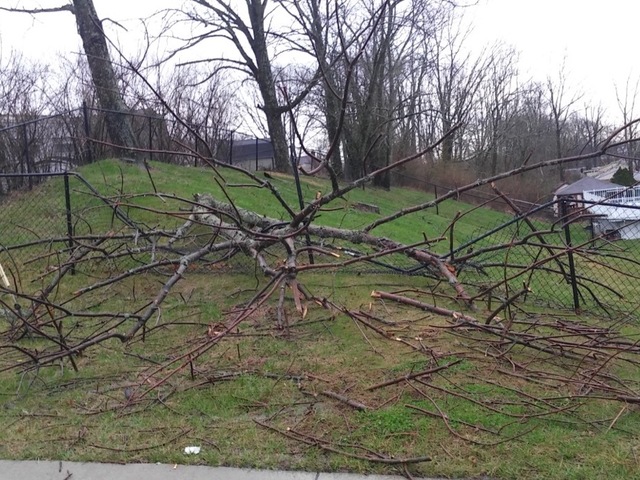
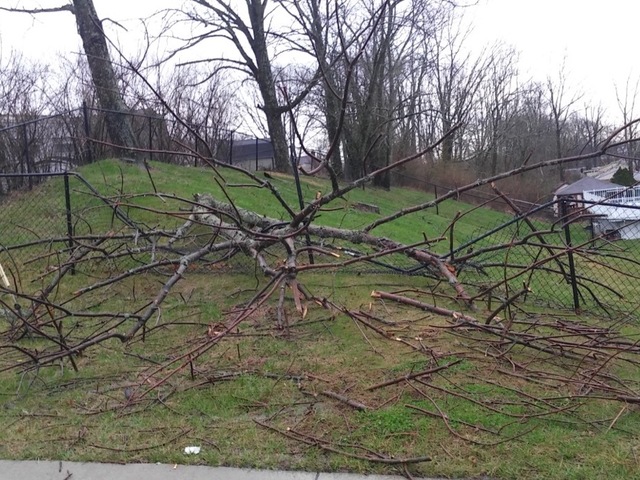
Storm damage was reported in several communities, including Florence, Kentucky, where residents documented wind damage and debris along major roads such as Industrial Road leading toward Independence. Images from the region showed scattered limbs, damaged structures, and utility crews working around the clock to clear hazards and repair lines.
Households struggle with food and medication loss
For many residents, the outage was not just an inconvenience but a direct threat to health and finances. In Cincinnati’s College Hill neighborhood, resident Latosha Wright was still waiting for her power to be restored on Wednesday afternoon. She described the mounting pressure of trying to protect essential medication that must be kept cold and the financial hit of losing groceries to spoilage.
“I have medication that we have to keep refrigerated,” she told WCPO 9 News, explaining that the lack of electricity had quickly become a serious concern. When refrigeration is lost for extended periods, many medications—such as insulin—can become ineffective or unsafe to use, forcing patients to replace them at potentially high cost.
Wright also highlighted the challenge of replacing spoiled food at a time when many families already feel the strain of higher grocery prices. “You can have two bags and then you know the total may come to $100, so what are we supposed to do?” she said, underscoring how unexpected outages can compound broader inflation pressures and leave lower- and middle-income households particularly vulnerable.
Public health agencies such as the U.S. Centers for Disease Control and Prevention (CDC) advise that refrigerated foods can usually be kept safely for about four hours during a power outage if doors are kept closed, while a full freezer can hold its temperature for approximately 48 hours. However, longer outages significantly increase the risk that food and temperature-sensitive medicines will need to be discarded for safety reasons, resulting in substantial economic losses for affected families.
Frustration over communication and uncertainty
Beyond the immediate financial and health-related concerns, many residents expressed frustration with what they perceived as limited or unclear communication from their utility provider. Wright described feeling “left in the dark in more ways than one,” noting not only the physical darkness without electricity but also a lack of timely information about when power would return.
“We’re just basically in the dark in the dark—like sitting in the dark and in the dark in terms of what is actually going on with the weather, so that’s very concerning as well. I just wished that Duke would provide better communication to customers,” she said.
Effective communication during outages is an increasing focus of both regulators and utilities. Customers often look for accurate, frequently updated estimates for restoration times, maps showing affected areas, and clear safety guidance. When those details are not easily accessible or change frequently, it can heighten stress and make it harder for families to plan for childcare, work, medical needs, and food replacement.
Utility response and restoration efforts
Duke Energy, the primary electric utility serving the region, reported that its crews had been deployed across the affected areas to assess damage, repair lines, and restore service. Company spokesperson Matt Martin said significant progress had been made by Wednesday afternoon.
“More than 150,000 customers have been restored, but certainly we know there are a high number that still are remaining without power and our crews are still working now to restore those remaining without power as quickly and safely as possible,” Martin told WCPO.
Large-scale outages require a systematic approach. Utilities typically begin by addressing threats to public safety such as downed live wires, then move on to repairing high-voltage transmission lines, substations, and major distribution lines before working through smaller neighborhood circuits and individual service lines. This means that while the overall outage numbers may fall quickly, some customers may remain without power longer if they are connected to lines that sustained particularly heavy damage.
Safety is also a key factor slowing restoration. Crews must sometimes wait until severe weather completely clears before using bucket trucks or climbing poles. In some cases, they must coordinate with local emergency services and public works departments to remove trees or debris before electrical repairs can safely proceed.
Investments in grid resilience and “self-healing” technology
Martin explained that Duke Energy has been investing in upgrades meant to reduce both the number and duration of outages, especially as severe weather events become more common in many parts of the United States. One of the tools the company is deploying is so-called “self-healing” grid technology.
Self-healing systems use sensors, automated switches, and advanced software to detect problems on the grid and reroute power around them when possible. Martin compared the technology to navigation systems used in cars and mobile phones.
“It’s kind of like the GPS in your car where you’re on the road, you’re on the way to your destination, you hit traffic or construction, and your GPS will reroute you in real time. It’s a lot like how self-healing technology works,” he said. “We’re able to, a lot of times, isolate the outages and then reroute power faster or prevent outages altogether. So if you’ve ever heard of someone—or if you’ve experienced—maybe your lights flickering three times but not losing power, that was an outage that was saved from self-healing technologies.”
Across the country, utilities are increasingly turning to grid modernization strategies that include self-healing networks, undergrounding some lines in high-risk areas, reinforcing poles, and integrating more real-time monitoring to spot issues before they lead to widespread failures. Regulatory bodies such as state public utility commissions often review and approve long-term plans and cost recovery for these investments, balancing reliability improvements with rate impacts on customers.
Growing concerns about extreme weather and infrastructure
The storms in the Tri-State area are part of a broader pattern of weather-related events that have stressed power systems in many regions. Studies summarized by agencies such as the National Oceanic and Atmospheric Administration (NOAA) show that the United States has experienced an increasing number of costly weather and climate disasters in recent decades, including severe storms, floods, and heat waves.
As more communities confront outages from storms, ice, or extreme heat, discussions have intensified about how quickly utilities and regulators should move to reinforce infrastructure and integrate advanced technologies. The goal is not only to restore power faster but also to prevent equipment failures that can amplify the impacts of severe weather.
Residents like Wright see modern digital tools and artificial intelligence as potential aids in this process. “I mean this is 2026. They should be able to—we have AI, we have a lot of different services that can help them improve their equipment so we won’t have incidents like this where power is out for a long period of time,” she said, reflecting a growing expectation that utilities leverage new technologies to strengthen reliability.
Energy experts note that while AI and automation can significantly improve grid management, they must be integrated into physical systems that are also designed to withstand high winds, heavy rain, and other hazards. This often involves a combination of stronger infrastructure, more flexible system design, smarter monitoring and control, and detailed emergency planning with local and state agencies.
Impacts on critical services and local businesses
Outages from the storms did not only affect private homes. Nursing homes, gas stations, and other essential facilities were also among those reported to be without power at various points. Extended outages can pose particular challenges for elder-care facilities and medical providers that rely on powered medical devices, refrigeration for medications, and climate control.
Most such facilities are required or strongly encouraged to maintain backup generators and emergency plans. However, those systems have limits; they may depend on fuel deliveries, can sometimes fail, and may not provide full power to every area of a building. For that reason, public health authorities typically emphasize the importance of robust contingency planning, regular testing of backup equipment, and close coordination with utilities during prolonged emergencies.
Local businesses also faced disruptions, from gas stations unable to pump fuel without power to grocery stores that had to protect perishable goods using generators or risk losses. Some households were further impacted by the inability to refuel vehicles or purchase replacement groceries nearby when their own neighborhoods remained without power.
Guidance for residents during outages
As cleanup and repairs continued, Duke Energy urged customers to monitor its real-time outage map for updates and to exercise caution around crews and downed power lines. Standard safety recommendations during and after storms include:
- Staying away from downed power lines and anything touching them, such as trees or fences, and reporting them immediately to the utility or emergency services.
- Using generators outdoors and far from windows and doors to reduce the risk of carbon monoxide poisoning.
- Keeping refrigerator and freezer doors closed as much as possible to maintain cold temperatures for food and medication.
- Following official guidance from local authorities regarding shelter openings, road closures, and additional support services.
Public health organizations, including the CDC and local health departments, also provide checklists for preparing emergency kits with flashlights, batteries, non-perishable food, water, and basic medical supplies, which can help households better manage multi-day outages.
Local journalism and community reporting
Coverage of the storms and their aftermath has been supported by local journalists who document conditions on the ground, share residents’ experiences, and seek answers from officials and utilities. Reporters such as WCPO 9’s Jackie Bauer, who covers Warren County and surrounding areas, play a role in connecting community concerns—like those voiced by Wright—with decision-makers responsible for infrastructure and emergency response.
As the region continues to recover and further storms remain in the forecast, residents, utilities, and local governments are likely to continue discussions on how best to strengthen resilience, improve communication, and protect vulnerable populations when the power goes out.
Looking ahead
The storms that left more than 200,000 Tri-State customers without electricity highlight the complex challenges of maintaining a reliable power grid in the face of increasingly volatile weather. For residents, the outage was a stark reminder that access to electricity underpins everything from health and safety to financial stability and everyday comfort.
Utility companies, regulators, and policymakers are under growing pressure to accelerate investments in grid modernization, expand the use of self-healing and predictive technologies, and ensure that emergency communication tools meet the needs of customers who must make immediate decisions about food, medication, and shelter.
While many customers had their power restored within a day, others, like those in parts of College Hill, endured longer waits and faced real losses. Their experiences are likely to inform ongoing debates over how quickly and comprehensively infrastructure should be upgraded—and how to ensure that the benefits of those upgrades are felt equitably across all neighborhoods.
Sources
- Reuters – U.S. weather and power outage coverage
- BBC News – North America weather and infrastructure reports
- The Guardian – U.S. weather, climate, and utilities reporting
- CDC – Power Outages: Safety and Health Guidance
- NOAA – U.S. Weather and Climate Events Information
- Duke Energy – Outage Information and Grid Modernization
Disclaimer: This content is intended for entertainment purposes only and is not based on real events.