

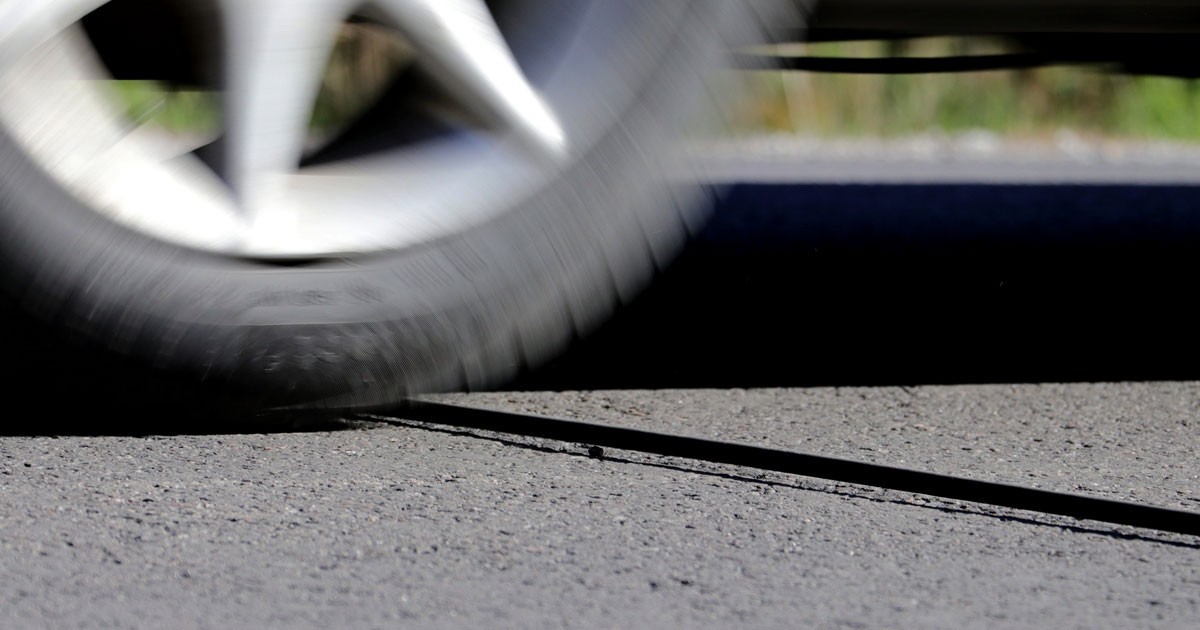
What Are Those Black Cables Across the Road? Understanding Road Tubes and Their Role in Traffic Data Collection

The next time you find yourself driving along a highway, arterial, or residential road, take a moment to observe the surface beneath your wheels. You might notice one or more black, rubbery cables or tubes stretched perpendicularly across your lane. These seemingly simple devices are a common sight, yet many drivers are unsure of their function. The presence of these tubes often raises curiosity—what exactly are they, and why are they placed on the road? This article aims to unpack the purpose, technology, and significance of these black cables, known as road tubes, offering a comprehensive explanation based on reliable sources and current transportation industry practices.
What Are Road Tubes?
Road tubes, sometimes called pneumatic road tubes, are specialized devices used by transportation authorities and urban planners for collecting crucial road traffic data. Made from durable rubber and designed to withstand weather and constant vehicle passage, these tubes lie flat across sections of roadway, typically fastened at either end. Their primary function is to help agencies record detailed information about vehicular movement with minimal disruption to traffic flow.
Far from being a hazard or an incidental feature, road tubes are a vital part of modern traffic monitoring and infrastructure planning. They remain a popular solution due to their ease of installation, temporary nature, and cost-effectiveness compared to embedded sensors or larger electronic systems.
How Do Road Tubes Work?
At the simplest level, a road tube system operates by detecting the physical pressure exerted when a vehicle tire rolls over the tube. Here’s a step-by-step breakdown of how the process unfolds:
- As a vehicle passes, its tires compress the rubber road tube.
- This compression sends a pulse of air through the tube, similar to squeezing a balloon or a hose.
- The pulse travels within the tube to a counter or sensor box positioned at one end or roadside.
- The sensor records the pulse as a vehicle pass and logs the exact time and sequence.
This non-intrusive method efficiently counts traffic while maintaining road safety and minimizing disturbance. Road tubes are often left in position for days or weeks, allowing agencies to collect a robust dataset capturing both routine and surge usage periods.
Types of Data Captured by Road Tubes
Modern road tube setups can capture much more than just vehicle counts. Depending on the configuration, they provide valuable details including:
- Traffic Volume: The total number of vehicles passing over the tube within a given timeframe, such as hourly or daily counts.
- Vehicle Speed: By placing two tubes a set distance apart, the system calculates a vehicle’s speed based on how long it takes to trigger both tubes consecutively.
- Direction of Travel: With paired tubes, direction can be inferred by the sequence in which each tube is compressed.
- Vehicle Classification: Algorithms estimate vehicle types (car, truck, motorcycle, etc.) by interpreting axle count, spacing, and the pressure signature.
- Traffic Flow Patterns: Continuous monitoring allows agencies to identify rush hour periods, quiet times, and daily or weekly traffic trends.
Why Do Transportation Agencies Use Road Tubes?
The use of road tubes delivers several key benefits to city planners, transportation engineers, and government agencies:
- Informed Decision-Making: Accurately counting vehicles and analyzing usage patterns supports better decisions about where improvements, repairs, or expansions are needed.
- Speed Limit Assessment: Recorded traffic speeds help agencies determine if speed limits are appropriate for specific stretches of road or if adjustments are required.
- Road Safety: By highlighting periods of congestion or excessive speed, collected data drives safety interventions, such as signage updates, crosswalk installations, or speed enforcement measures.
- Resource Allocation: Knowing where and when traffic is heaviest helps agencies deploy maintenance or enforcement resources cost-effectively.
- Temporary and Efficient: Unlike embedded sensors, road tubes are temporary and easy to install and remove, reducing labor and long-term costs.
Road Tubes Versus Other Traffic Monitoring Technologies
Although road tubes remain one of the most widely used portable traffic counting methods, they are part of a broader toolkit of monitoring solutions, such as magnetic sensors, cameras with object recognition software, inductive loops, and radar guns. Each has strengths and limitations:
- Pneumatic Road Tubes: Best for short-term studies, quick deployment, and cost-effectiveness. They work well on all paved surfaces and are suitable for most types of vehicle counting.
- Inductive Loops: Embedded beneath the road surface, these are highly accurate and ideal for permanent installations but are expensive and intrusive to install.
- Video Analytics: Cameras can track vehicle types, volumes, and movements and are useful for complex intersections, but performance may be impacted by lighting or weather.
- Radar and Magnetic Sensors: These provide non-contact vehicle detection but often require higher setup costs.
For temporary or trial surveys—especially in smaller towns, rural areas, or rapid urban studies—road tubes remain the go-to choice due to their flexibility and reliability.
The Role of Data in Modern Transportation Planning
Traffic data gathered via road tubes is integral to a wide range of planning and public safety initiatives. Urbanization, population growth, and evolving commuting patterns are putting increasing demands on road networks. Authorities must continually assess infrastructure needs, setting priorities for maintenance, upgrades, or expansion.
Some practical uses of this data include:
- Evaluating and updating traffic signal timings for improved flow.
- Planning new crosswalks, roundabouts, or bicycle lanes.
- Identifying streets suitable for school zones or pedestrian enhancements.
- Supporting funding requests for infrastructure projects with quantitative evidence.
- Analyzing the impact of nearby construction or special events on local traffic.
The accuracy and accessibility of road tube data enable transportation officials to back up their decisions with objective measurements, increasing transparency and public trust.
Global and Local Applications
Road tube technology is not unique to one country or region—it is widely implemented internationally. Cities from North America to Europe, Asia, and Australia rely on this system for granular, real-time data. For example, in the United States, departments of transportation at the state and municipal levels deploy temporary road tubes during annual traffic volume studies. In the United Kingdom and Australia, road tubes support data-driven planning for both urban centers and remote highways.
This widespread use attests to their reliability, ease of operation, and universal fit for data-collection needs across different climates and infrastructure types.
Expert Perspectives on Road Tubes and Traffic Data Collection
Experts in transportation engineering advocate for the continued use of road tubes, especially as a supplement to more advanced and costly solutions. According to the American Association of State Highway and Transportation Officials (AASHTO), pneumatic road tubes provide sufficient accuracy for most traffic volume and classification studies, provided they are installed and maintained according to manufacturer guidelines. The Federal Highway Administration (FHWA) also recognizes road tubes as an approved method for short-duration traffic counts.
However, specialists note that data from road tubes should be periodically verified to account for sensor drift, tube wear, or changes in road conditions. Routine maintenance and calibration ensure the longevity and accuracy of the measurement instruments.
Societal Reactions and Public Perception
For many drivers and pedestrians, the sight of black cables across the road is a source of curiosity. Often, these tubes are left unmarked and blend into the pavement, which can cause concern or confusion. Transportation departments occasionally place small signs or publish updates during major studies to inform the public and encourage cooperation, such as avoiding unnecessary swerving or removing debris.
Community awareness helps enhance participation and reduces instances of vandalism or accidental damage. In many cases, sharing road tube findings with the public—such as average daily traffic statistics or speed enforcement data—can also improve road user safety and foster trust in municipal decision-making processes.
The Future of Traffic Data Collection
While technological advancements are leading to newer traffic-monitoring systems, road tubes show enduring relevance. The next generation of road tube counters will likely incorporate wireless telemetry, more accurate timestamping, and integration with cloud-based analytics platforms. These upgrades are expected to streamline the collection and analysis of traffic data further, providing cities and agencies with instant insights to adapt to ever-changing urban dynamics.
However, given the affordability and simplicity of traditional systems, it is likely that pneumatic road tubes will continue to play a crucial role for the foreseeable future, especially in rapid assessment, rural deployment, and places where budgets are constrained.
Conclusion
The black rubber cables observed on city streets and highways serve far more than a decorative or incidental purpose. As crucial instruments in the science of traffic engineering, road tubes help transportation experts make informed decisions about infrastructure, safety, and urban planning. Their durable design and sophisticated data-capturing ability make them an indispensable tool in the quest to keep our roads safe, efficient, and responsive to modern challenges. The next time you drive over one, you’ll know you’re playing a small part in a much larger effort to improve travel for all.
Sources
- Federal Highway Administration (FHWA)
- BBC News
- Reuters
- The Guardian
- Newsner – Traffic
- U.S. Department of Transportation
Disclaimer: This content is intended for entertainment purposes only and is not based on real events.