


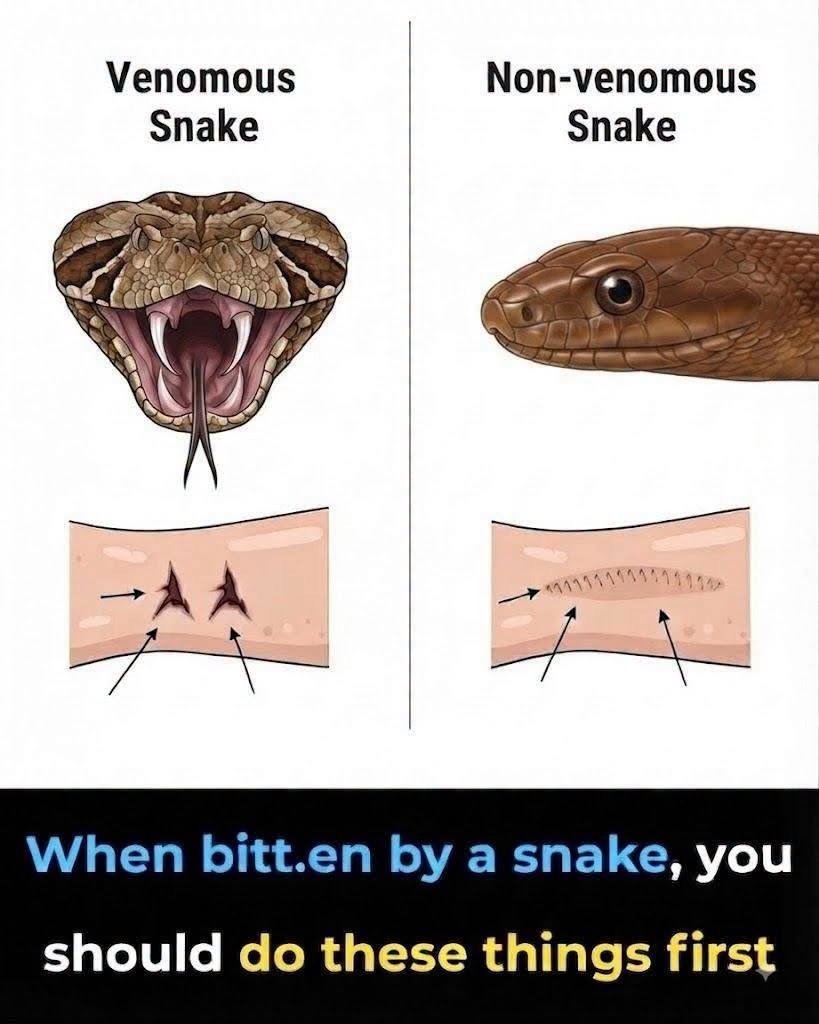
Imagine walking along a trail, working in the garden, or exploring an unfamiliar outdoor area when you suddenly notice a snake nearby. Before you have time to react, you realize you may have been bitten.
In that moment, fear can take over. Many people have heard traditional advice about snakebites, from trying to remove venom to applying a tourniquet or using home remedies. Unfortunately, some of these responses can make the situation worse.
The safest approach is much simpler: move away from the snake, stay as calm and still as possible, and seek professional medical care immediately.
Snakebite treatment has changed considerably as medical knowledge has improved. Today, health professionals emphasize rapid assessment, minimizing movement, and avoiding methods that can damage tissue or delay appropriate treatment.
Whether a snake is venomous or not may not be obvious, so it is generally safer to treat a suspected snakebite seriously.
What Should You Do Immediately After a Snakebite?
The first priority is safety.
Move away from the snake and find a safe place. Do not attempt to approach it again, even if you want to identify the species.
If possible, ask someone nearby to contact emergency medical services or arrange transportation to an appropriate medical facility.
Try to remain calm and avoid unnecessary movement.
This matters because physical activity can increase circulation and may contribute to the spread of venom through the body if the snake was venomous.
If you can do so without delaying medical care, note the snake’s appearance from a safe distance. A photograph taken without approaching the animal may help medical professionals identify the species.
However, never risk another bite simply to obtain a photograph.
Why Staying Still Can Help
After a suspected venomous snakebite, unnecessary movement should be minimized.
Walking long distances, running, or repeatedly moving the affected limb can increase circulation. Keeping the person as still and comfortable as possible while waiting for medical assistance is generally recommended.
If the bite occurred on an arm or leg, keep that limb still and avoid unnecessary activity.
Remove rings, watches, bracelets, or tight clothing near the affected area because swelling may develop.
Do not attempt to test whether the bite is serious by exercising or waiting for symptoms.
Some snakebites produce relatively mild symptoms initially, while serious effects may take time to develop.
That is why professional assessment is important even when the person initially feels well.
Do Not Try to Suck Out the Venom
One of the most persistent myths about snakebites involves trying to remove venom by mouth.
This is not recommended.
Attempting to suck venom from a bite does not provide a reliable way to remove venom from the body and can introduce additional problems.
Instead, focus on keeping the affected person calm and still and obtaining medical attention as quickly as possible.
Modern snakebite management relies on professional evaluation rather than improvised methods.
Avoid Cutting or Opening the Bite
Another traditional method involves making an incision around the bite.
This should be avoided.
Cutting the skin can cause additional injury and may increase the risk of infection. It does not provide a dependable method for removing venom.
A snakebite should not be treated like a wound that needs to be opened to release something trapped underneath the skin.
Professional medical teams have safer methods for evaluating and treating the injury.

Do Not Apply a Tourniquet Unless Medical Professionals Direct You
Tourniquets are sometimes associated with snakebite first aid, but using one incorrectly can create serious complications.
A tightly applied tourniquet can restrict blood flow to an arm or leg. If it remains in place for too long, tissue can be damaged.
Because snakebite management varies depending on the species and circumstances, people should follow instructions from emergency medical professionals rather than improvising with belts, ropes, or other materials.
In some regions and for particular snake species, specialized pressure immobilization techniques may be recommended. However, these techniques must be distinguished from applying an improvised tourniquet.
Local medical guidance is important.
Do Not Use Ice or Extreme Cold
Applying ice directly to a snakebite is another commonly suggested home remedy that should be avoided.
Extreme cold can damage the skin and underlying tissues without treating the venom itself.
The goal after a suspected snakebite is not to freeze or numb the affected area.
Instead, the priority is to minimize movement and reach appropriate medical care.
Do Not Drink Alcohol as a Remedy
Alcohol is sometimes suggested in traditional approaches to snakebite, but it does not neutralize venom.
It can also affect judgment and make it harder to assess how the person’s condition is changing.
Water and appropriate medical care are far more useful than attempting to counteract a snakebite with alcoholic drinks or other home remedies.
Should You Try to Catch the Snake?
No.
This is one of the most important safety points.
After a bite, people may feel tempted to catch the snake so doctors can identify it.
That creates another opportunity for injury.
Even a snake that appears motionless can sometimes move unexpectedly. A person should never approach, handle, or attempt to capture a snake for identification.
If it can be done safely from a distance, a photograph or description may be useful.
Otherwise, leave identification to professionals.
What Symptoms Can Occur?
Snakebite symptoms vary significantly depending on the species, the amount of venom involved, and the location of the bite.
Possible symptoms can include pain, swelling, changes around the bite area, nausea, dizziness, weakness, changes in vision, difficulty breathing, or other systemic effects.
However, symptoms are not a reliable way to determine whether a snakebite requires medical attention.
A person may initially feel relatively normal.
That is one reason suspected venomous bites should be evaluated promptly rather than monitored at home.
Why Identification Can Be Helpful
If medical professionals know which snake species was involved, this information can assist with treatment decisions.
Different snake venoms can affect the body in different ways.
Some primarily affect the nervous system, while others can influence blood clotting, muscles, or tissues.
This is why geographical location and snake identification can be medically useful.
However, identification should never come at the expense of personal safety.
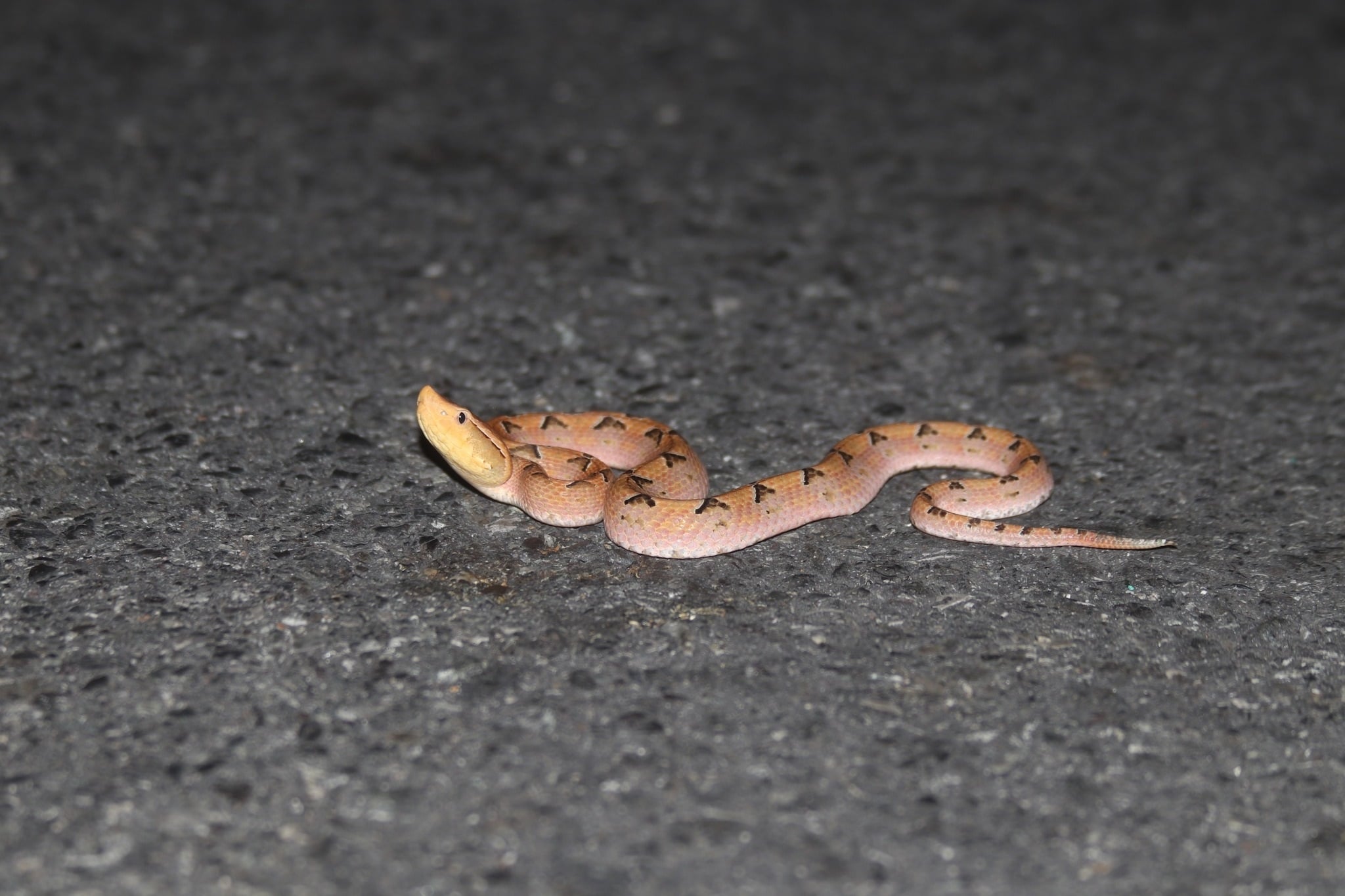
A simple description such as the snake’s approximate size, color, markings, and location may be helpful if the person observed it without approaching.
A photograph taken from a safe distance can also provide useful information.
What Happens at a Medical Facility?
When someone arrives at a medical facility after a suspected snakebite, healthcare professionals can assess the bite and monitor the person’s condition.
They may examine the affected area, check vital signs, perform blood tests, and observe for changes that could indicate systemic effects.
Treatment depends on the circumstances.
In cases involving significant envenomation, antivenom may be considered.
Antivenom is a specialized medical treatment designed to counteract the effects of particular snake venoms. It is administered by trained healthcare professionals when appropriate.
Other supportive treatments may also be necessary depending on the symptoms.
The key point is that treatment should be guided by medical professionals rather than home experimentation.
What If You Are Not Sure Whether the Snake Was Venomous?
Treat the situation seriously.
In many parts of the world, people may not know which local snakes are medically significant.
Trying to identify a snake based solely on a quick glance can also be unreliable.
Some harmless snakes may resemble species that require greater caution.
If a bite has occurred and there is any possibility that the snake was venomous, seek medical assessment.
It is much safer to have a healthcare professional determine that no serious treatment is necessary than to delay care because the snake appeared harmless.
What If the Snakebite Happens Far From Help?
Outdoor activities can make snakebite situations more complicated.
If you are hiking or traveling in an area where medically significant snakes are present, it is useful to know how emergency medical assistance can be reached before starting the trip.
After a bite, avoid unnecessary walking if possible.
Contact emergency services and provide your location as accurately as you can.
If you are with other people, let them coordinate communication and transportation while the bitten person remains as still as possible.
Preparation can make a major difference in remote environments.
Knowing the emergency number, carrying a charged phone, and understanding the area’s medical resources are simple precautions that can help.
How Can Snakebites Be Prevented?
Prevention is often easier than dealing with an emergency afterward.
When hiking or working outdoors, wear appropriate footwear and avoid placing your hands into holes, piles of leaves, rock crevices, or other places where a snake could be hiding.
Use a flashlight when walking outdoors after dark.
Before stepping over logs or rocks, check the area carefully.
If you encounter a snake, give it plenty of space.
Most snakes prefer to avoid people, and maintaining distance is one of the simplest ways to reduce the chance of an encounter becoming dangerous.
Never attempt to handle a wild snake simply because it appears calm.
Common Snakebite Myths to Remember
Several traditional ideas about snakebites continue to circulate.
Sucking venom from the wound is not a recommended treatment.
Cutting the bite does not safely remove venom.
Applying ice does not neutralize venom.
Drinking alcohol does not counteract venom.
Trying to capture the snake can create another safety risk.
And perhaps most importantly, waiting to see whether symptoms develop is not a reliable strategy.
The safest response is to seek professional medical guidance promptly.
Frequently Asked Questions
Is every snakebite dangerous?
Not every snakebite results in serious medical effects, and many snakes are not venomous. However, it can be difficult to determine the significance of a bite immediately, so suspected snakebites should receive professional medical assessment.
Should I try to catch the snake?
No. Do not approach or handle the snake. If it can be done safely, remember its appearance or take a photograph from a distance.
Should I suck venom out of a snakebite?
No. Attempting to suck venom from the bite is not considered an effective first-aid method.
Should I put ice on the bite?
Avoid applying ice directly to a suspected snakebite. Extreme cold can cause additional tissue injury.
Should I use a tourniquet?
Do not improvise with a tight tourniquet unless specifically instructed by qualified medical professionals. Incorrect application can restrict blood flow and cause additional harm.
What is the most important first step?
Move away from the snake, keep the affected person calm and still, and seek emergency medical assistance or appropriate medical care as quickly as possible.
Final Thoughts: Knowledge Is More Useful Than Panic
A snakebite can be frightening, especially when the species is unfamiliar.
But fear does not have to determine what happens next.
The most valuable response is not an old-fashioned home remedy or a dramatic attempt to fight the venom. It is calm, careful action: create distance from the snake, minimize movement, avoid potentially harmful treatments, and obtain professional medical care promptly.
The story of snakebite first aid is also a reminder of how medical knowledge evolves. Some advice that has been passed from one generation to another may sound convincing but does not reflect modern medical recommendations.
When an emergency occurs, reliable information matters.
A few simple principles can make the response safer: do not handle the snake, do not experiment with the bite, minimize movement, and seek professional help.
Nature can be unpredictable, but preparation does not have to be.
Understanding what to do before an emergency occurs may help replace panic with clear thinking—and that may be one of the most useful forms of outdoor preparedness.
Sources
World Health Organization – Snakebite Envenoming
WHO Snakebite Envenoming
CDC – Venomous Snakes
CDC Venomous Snakes
Australian Red Cross – Snake Bite First Aid
Australian Red Cross First Aid
Mayo Clinic – Snakebite First Aid
Mayo Clinic Snakebite First Aid
MedlinePlus – Snake Bites
MedlinePlus Snake Bites