


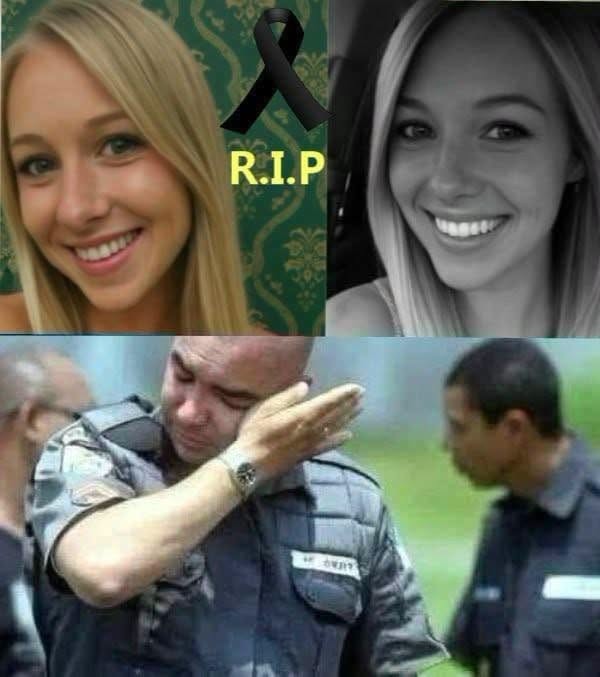
I first encountered the story of Carolina and Luiza through the kind of emotional post that makes you stop scrolling.
Two 18-year-old twin sisters were reportedly missing. A community had supposedly come together to search for them. Days passed, hope faded, and eventually online reports described a devastating discovery in a remote area outside an unnamed city.
The story seemed detailed enough to be real.
Yet when I looked more closely, something important was missing. Where was the city? What were the sisters’ full names? Which police department was investigating? Was there an official statement from authorities? Which local newspaper had originally reported the case?
Those questions led to a very different story.
Rather than providing a clearly documented case with identifiable authorities and original reporting, many online versions of The Tragic Mystery of the Twin Sisters appear to repeat substantially similar claims without providing enough information for independent verification.
That does not automatically prove that every detail is false. It does, however, mean readers should separate what the internet is claiming from what reliable sources have actually established.
Understanding The Tragic Mystery of the Twin Sisters
What the Viral Accounts Claim
Online versions of the Carolina and Luiza story generally follow a similar structure.
The reports describe Carolina and Luiza as 18-year-old twins who reportedly disappeared for several days. Their absence supposedly prompted concern from relatives and friends, followed by a wider search involving authorities and community volunteers.
Some versions describe photographs being shared on social media and residents distributing information in an effort to locate the sisters. Other versions mention searches of wooded or isolated areas, reviews of phone activity, surveillance footage, and interviews with people who may have known the twins.
The accounts then describe authorities locating the sisters in a remote area outside the city.
However, the most important identifying information remains surprisingly unclear.
The sisters are generally identified only by their first names. Their city is often not named. The police department is not clearly identified. No readily traceable case number is provided. Links to an official police announcement, coroner’s office, prosecutor, or major local news organization are also difficult to locate.
That creates a significant verification problem.
A story can contain many details and still lack evidence that readers can independently check.
For example, saying that volunteers searched wooded areas sounds specific. Saying which organization coordinated those volunteers, where the search took place, and which authority confirmed it would be much more useful.
This distinction is important when examining emotional stories online.
Why Multiple Websites Do Not Necessarily Mean Multiple Sources
One of the most interesting features of the Carolina and Luiza story is how frequently similar versions appear online.
Search results include pages published by sites such as Aliacar, ZepNews, DailyDish, RZ News, Toptenplay, and other small websites. Several use nearly identical narrative elements, including the sisters’ ages, a community search, a remote location, an ongoing investigation, and references to forensic examinations.
At first glance, this may look like confirmation.
It is not necessarily confirmation.
If several websites are independently reporting information from separate interviews, official documents, or local authorities, repetition can strengthen confidence.
But if several sites are rewriting the same unattributed story, ten articles may effectively represent one unverified claim repeated ten times.
The Associated Press emphasizes the importance of corroborating information with documents and on-the-record sources, particularly when verifying material circulating online. AP also notes that verification involves comparing information across multiple reliable sources rather than simply counting how many pages repeat a claim.
That principle is especially useful here.
The presence of numerous articles should encourage readers to ask, Where did the information originally come from?
A Real Case With Similar Names Shows Why Verification Matters
There is another reason this story deserves careful attention.
A genuine 2025 report from Florianópolis, Brazil, described 18-year-old twin sisters named Ana Carolina Kisner and Ana Luiza Kisner who had gone missing after leaving home. The report from CBN Total identified the sisters by their full names, gave the city, provided information from their mother, and explained that the young women were later located near the Federal University of Santa Catarina and taken to a local support facility.
This is an important comparison.
The verified-looking local report contains the kinds of details readers can investigate: full names, location, date, family attribution, and identifiable institutions.
The viral Carolina and Luiza narrative generally does not provide that same level of traceability.
This does not establish that the two stories are connected.
It simply demonstrates why names alone are not enough to identify a real-world case. Carolina and Luiza are common first names, and stories involving people with similar names can easily become confused when information is copied without context.
For responsible readers, the lesson is straightforward: never connect two cases merely because they share names, ages, or a general storyline.
How to Evaluate The Tragic Mystery of the Twin Sisters
Look for Full Names and a Location
The first step is surprisingly simple.
Ask whether the report identifies the people clearly.
A reliable report about a specific missing-person case will often contain a full name, age, photograph, date, last-known location, or information about the agency handling the case.
Not every detail will always be published, especially when authorities are protecting privacy. However, there should normally be some combination of identifying information that allows readers to determine whether the story refers to a real and specific event.
The Carolina and Luiza reports currently circulating leave too many of those questions unanswered.
Identify the Investigating Authority
The second step is to find the official authority.
Instead of accepting phrases such as “police confirmed” or “authorities said,” look for the name of the police department, sheriff’s office, public prosecutor, medical examiner, or other responsible institution.
This provides a starting point for verification.
If an article says an investigation is underway but never identifies the agency supposedly conducting it, readers should be cautious.
Search for Original Local Reporting
National and international stories often begin with local reporting.
A genuine event may first appear in a local newspaper, television station, police bulletin, government announcement, or community organization.
Therefore, searching the alleged location together with the sisters’ names can be more useful than searching the headline alone.
If the story does not provide a location, that search becomes much more difficult.
This is one of the central weaknesses of the viral narrative.
Without a city or region, readers cannot easily determine which local media organizations or public authorities should have information about the case.
Compare Dates Carefully
Publication dates also deserve attention.
Different versions of the Carolina and Luiza story appear across several months, including reports from November 2025, February 2026, April 2026, May 2026, and later months.
That unusual pattern does not prove that the narrative is fabricated.
However, it makes the source history more important.
Readers should ask whether later articles are reporting new developments or simply republishing an older story with a new date.
A change in publication date is not the same thing as a new piece of evidence.
Why Emotional Stories Spread So Easily
Stories about missing people naturally attract attention because they activate some of our strongest emotions: concern, hope, empathy, and curiosity.
Social media can amplify those emotions even further.
A dramatic photograph may encourage people to share a post before reading the full article. A headline can create urgency. Comments can make an uncertain claim appear established.
UNESCO has repeatedly highlighted the importance of media and information literacy, noting that people increasingly need the ability to evaluate the source, credibility, accuracy, and purpose of information they encounter online.
A 2024 UNESCO survey also found that many digital content creators do not consistently perform rigorous fact-checking before sharing information, while social engagement signals such as likes and shares can influence perceptions of credibility.
That is particularly relevant to emotional stories.
A post with thousands of shares may feel more trustworthy than a post with ten shares.
But popularity is not evidence.
A claim does not become true because it travels farther.
Myth, Culture, and the Meaning of Twin Stories
Beyond the question of factual verification, stories about twins carry a special cultural fascination.
Across different societies, twins have often been associated with ideas of connection, balance, similarity, destiny, and unusual emotional bonds.
Literature and folklore frequently portray twins as symbolic pairs. They may represent two sides of the same idea, complementary personalities, or an almost mysterious connection between siblings.
Modern storytelling continues that tradition.
When two sisters are presented as inseparable, readers may naturally become more emotionally invested in the narrative. The idea of two people sharing the same birthday, growing up together, and appearing side by side creates a powerful sense of symmetry.
There is nothing inherently mysterious about that emotional reaction.
Psychology and culture both help explain why twin stories capture attention.
What should be avoided, however, is turning cultural fascination into factual claims.
There is no scientific basis for assuming that twins possess supernatural communication abilities or that an unexplained event involving twins must have a paranormal explanation.
Such ideas can be interesting within folklore, fiction, or cultural history, but they should remain clearly separated from evidence-based reporting.
What Science Can Tell Us About Online Mystery Stories
Science does not provide a shortcut for determining whether a viral story is authentic.
Instead, scientific thinking offers a useful habit: distinguish observation from interpretation.
Observation might be that several websites published similar articles.
Interpretation might be that all those websites independently confirmed the same event.
The first statement can be documented.
The second requires additional evidence.
This distinction is fundamental to critical thinking.
Similarly, an article might mention phone records, surveillance footage, forensic examinations, or official interviews. Those terms can make a story sound authoritative, but the presence of technical language does not prove that the underlying events occurred.
Evidence must still be traceable to a credible source.
The Associated Press describes a similar approach in its verification work, which can include checking original material, comparing details, confirming sources, and using multiple independent sources.
Reuters also maintains a dedicated fact-checking operation for claims and material circulating online, reflecting the broader journalistic principle that viral content should be tested rather than automatically accepted.
How Readers Can Respond Responsibly
The best response to an uncertain story is neither blind belief nor instant dismissal.
Instead, pause.
Ask where the information came from.
Look for a full name, date, location, agency, original statement, and reputable local reporting.
If those pieces cannot be found, describe the story honestly as an unverified online account.
Avoid adding theories about what may have happened.
Avoid inventing motives, identities, explanations, or quotations.
Most importantly, avoid presenting speculation as a confirmed update.
This approach is not cold or insensitive.
It is an act of respect.
If the people described in a viral story are real, inaccurate information can affect their families and communities. If the story is substantially misleading, repeating it only increases confusion.
Compassion and skepticism can exist together.
The Tragic Mystery of the Twin Sisters: What We Can Say With Confidence
At present, the safest conclusion is that The Tragic Mystery of the Twin Sisters is a widely circulated online narrative about two 18-year-old sisters identified as Carolina and Luiza.
Multiple websites repeat similar claims about their disappearance, a community search, and a later discovery in a remote area.
However, the versions reviewed do not provide enough consistent, independently verifiable information to establish the complete story as a confirmed case.
That uncertainty should remain part of the story.
The absence of easily traceable official information does not prove that nothing happened. It simply means that readers should not treat anonymous or repetitive online reports as equivalent to independently verified journalism.
For now, the most responsible position is to keep the distinction clear between what is being claimed and what has been demonstrated.
Conclusion: Curiosity Needs Care
Human curiosity is one of the reasons stories travel so quickly.
When something feels mysterious, emotional, or unresolved, we naturally want answers. We search for explanations, share updates, compare theories, and look for the missing piece that will make everything make sense.
That curiosity is not a weakness.
It is part of what makes us human.
But curiosity becomes more valuable when it is accompanied by patience.
The story of Carolina and Luiza reminds us that an emotional narrative can feel convincing long before it becomes verifiable. A dozen websites can repeat the same sentence without creating a dozen independent sources.
The best readers therefore do something simple but powerful: they slow down.
They ask questions.
They look for original evidence.
And when the evidence is incomplete, they are willing to say, “We do not know yet.”
In an internet filled with stories competing for our attention, that small sentence may be one of the most responsible things we can share.
Sources
Associated Press: AP explains its approach to accuracy, fact-checking, source corroboration, and verification of online material.
UNESCO: Resources on media and information literacy, source verification, misinformation, and responsible digital information sharing.
Reuters Fact Check: Information about Reuters’ independent fact-checking operation and its approach to verifying claims circulating online.
CBN Total, Florianópolis: A separate 2025 report concerning 18-year-old twins Ana Carolina Kisner and Ana Luiza Kisner, useful as an example of how identifiable local reporting provides names, location, dates, and attributed information.
Online reports reviewed: Multiple versions of the Carolina and Luiza narrative were compared to identify recurring claims and inconsistencies. These pages were treated as examples of the circulating narrative rather than as authoritative confirmation.