


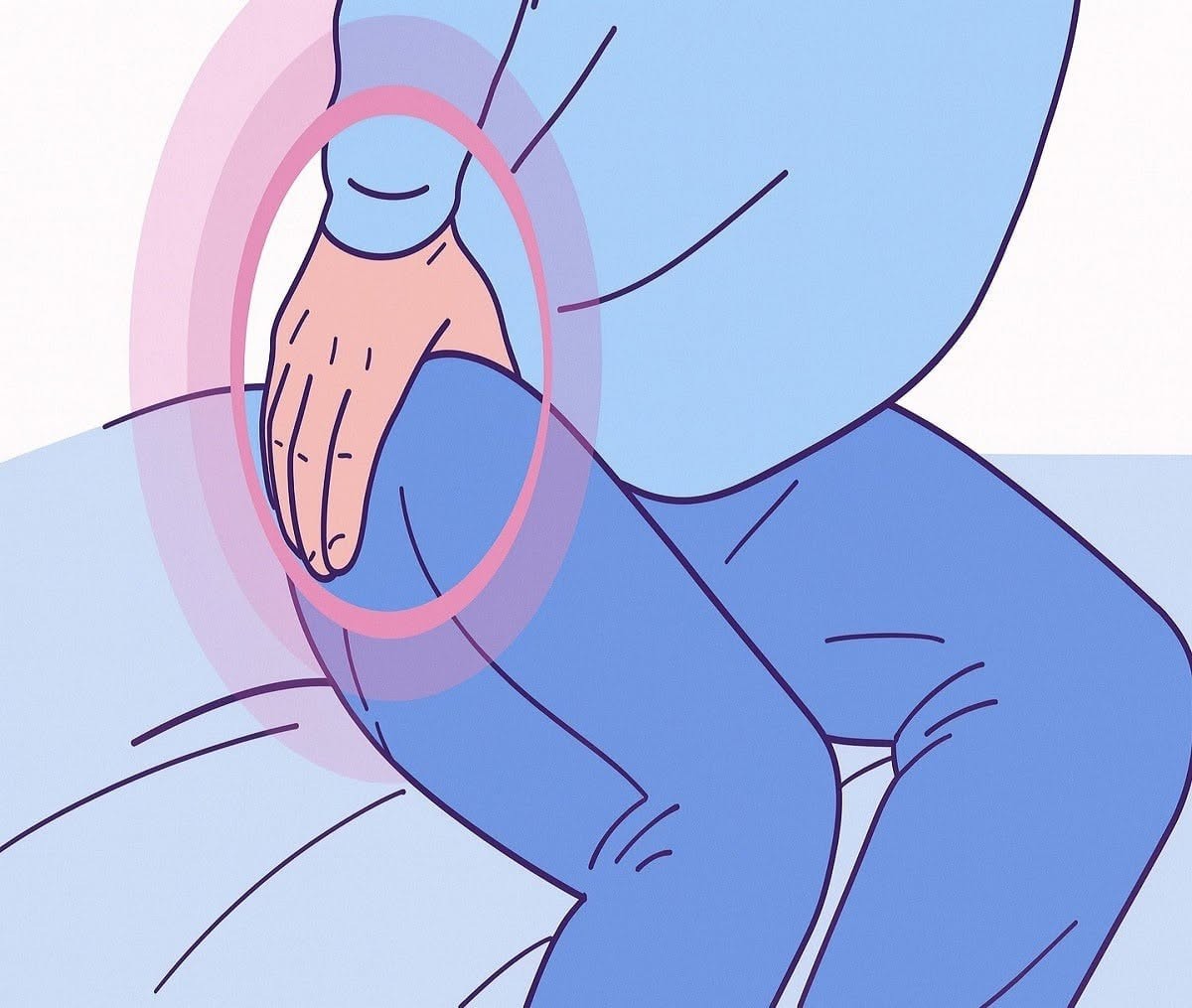
One morning, you bend down to tie your shoes and notice something you had never paid much attention to before: your hip feels stiff.
A few days later, climbing the stairs seems less comfortable. Getting out of a chair takes a little more effort. Perhaps there is an ache around the groin, upper thigh, or side of the hip that appears after walking.
It is easy to dismiss these changes as simply getting older or being overly active.
But hip discomfort can have many possible causes, and recognizing persistent symptoms is an important first step toward understanding what may be happening.
One possibility is hip osteoarthritis, a condition involving changes to the joint and its protective cartilage. However, hip pain does not automatically mean that the joint is “worn out.” Muscle problems, tendon irritation, previous injuries, inflammatory conditions, and other issues can also cause discomfort around the hip.
Understanding the difference can help you make more informed decisions about when to rest, when to adjust your activities, and when to speak with a healthcare professional.
What Is Hip Osteoarthritis?
The hip is a ball-and-socket joint that allows the leg to move in many directions. Its surfaces are covered by smooth cartilage that helps the bones move against each other with less friction.
In osteoarthritis, the cartilage and other structures within the joint undergo gradual changes. The condition can affect the cartilage, underlying bone, joint lining, and surrounding tissues. Mayo Clinic notes that osteoarthritis commonly affects weight-bearing joints such as the hips and knees.
This is why describing osteoarthritis simply as “wear and tear” can be misleading.
The condition is more complex than the idea of cartilage being used up like a machine part. Age can increase the likelihood of osteoarthritis, but other factors also matter.
Previous joint injuries, genetics, body weight, repetitive stress, certain joint shapes, and other health factors may contribute to the risk.
Importantly, having hip discomfort does not by itself establish that someone has osteoarthritis. A proper diagnosis requires an assessment by a qualified healthcare professional.
What Does Hip Osteoarthritis Feel Like?
Hip osteoarthritis often develops gradually, although symptoms can vary considerably between individuals.
Common symptoms include pain during or after movement, stiffness after waking or periods of inactivity, reduced flexibility, and difficulty moving the joint through its normal range. Some people also notice a grating or crackling sensation.
The location of discomfort can also be confusing.
Hip-related pain may be felt around the groin, thigh, buttock, or other nearby areas. In some cases, discomfort can be felt farther down the leg.
This means that simply pointing to where you feel pain is not always enough to identify its source.
For example, discomfort around the outside of the hip may involve muscles or tendons rather than the hip joint itself. Lower-back problems can also sometimes produce symptoms that feel as though they are coming from the hip.
That is why persistent or unexplained symptoms deserve proper evaluation rather than self-diagnosis.
Everyday Signs Worth Paying Attention To
Certain everyday movements can make hip problems more noticeable.
Difficulty Putting on Shoes
If bringing one foot toward you to put on a sock or shoe becomes increasingly difficult, reduced hip mobility may be involved.
This does not necessarily mean osteoarthritis. Limited movement can have several causes, including muscle tightness and other joint conditions.
Nevertheless, a noticeable and persistent change from your normal movement pattern is worth discussing with a healthcare professional.
Stiffness After Rest
Some people with osteoarthritis experience stiffness after waking up or remaining inactive for a while.
The NHS lists pain and stiffness as the main symptoms of osteoarthritis and notes that symptoms may become more noticeable after a period without movement.
Occasional stiffness is common and does not automatically indicate disease.
The more important question is whether it is persistent, worsening, or interfering with everyday activities.
Discomfort While Walking or Climbing Stairs
Activities that place greater demands on the hip may make symptoms more noticeable.
Walking longer distances, climbing stairs, standing for extended periods, or getting up from a chair can sometimes bring out hip discomfort.
Again, this symptom has many possible explanations. Muscle weakness, tendon problems, previous injuries, and other joint conditions can all affect movement.
Reduced Flexibility
You may notice that movements that once felt effortless now require more effort.
For example, turning the leg inward or outward may feel restricted. You may also find certain sitting positions uncomfortable.
Reduced flexibility is one of the symptoms that healthcare professionals consider when assessing possible osteoarthritis.
What Can Increase the Risk of Hip Osteoarthritis?
There is no single cause that explains every case.
Instead, several factors can influence the likelihood of developing osteoarthritis.
Age
The risk of osteoarthritis generally increases as people get older. However, hip osteoarthritis is not exclusively a condition of older adults.
Younger people can also develop joint problems, particularly when other risk factors are present.
Previous Joint Injuries
A previous injury involving the hip or surrounding structures can affect the joint over time.
Mayo Clinic notes that joint injuries can increase the risk of osteoarthritis, even when the original injury happened years earlier.
This is one reason it is useful to tell a healthcare professional about significant previous injuries when discussing persistent hip symptoms.
Body Weight
Higher body weight can increase stress on weight-bearing joints such as the hips and knees.
Mayo Clinic also notes that body fat can influence inflammatory processes, meaning the relationship between body weight and osteoarthritis is more complicated than simple mechanical pressure alone.
Maintaining a healthy weight, when appropriate for the individual, can therefore be part of a broader approach to joint health.
Genetics
Family history may also play a role.
Some people inherit characteristics that make them more likely to develop osteoarthritis. Joint shape and other inherited factors can influence how forces are distributed through the hip.
Repetitive Physical Stress
Certain occupations and sports place repeated demands on the hips.
This does not mean that exercise is harmful.
In fact, staying physically active is generally an important part of maintaining mobility and overall health. The issue is that repeated high loads, particularly when combined with other risk factors, may contribute to joint problems in some individuals.
The goal is not to avoid movement but to find an appropriate level and type of activity.
Does Hip Pain Always Mean Osteoarthritis?
No.
This is one of the most important points to remember.
Pain around the hip can come from many different structures.
Muscle strains, tendon irritation, bursitis, previous injuries, problems involving the lower back, inflammatory arthritis, and other conditions can produce similar symptoms.
Even when imaging shows changes associated with osteoarthritis, those findings do not necessarily explain every symptom.
This is why healthcare professionals consider the person’s symptoms, medical history, physical examination, and, when appropriate, imaging together.
According to Mayo Clinic, X-rays can show changes such as narrowing of the space between bones and bone spurs, while MRI can provide more detailed information about soft tissues and cartilage when necessary.
An MRI is not routinely required for every person with suspected osteoarthritis.
The appropriate evaluation depends on the individual situation.
How Is Hip Osteoarthritis Diagnosed?
Diagnosis usually begins with a conversation and physical examination.
A healthcare professional may ask when the symptoms began, what activities make them better or worse, whether there has been a previous injury, and how the discomfort affects everyday activities.
The hip may then be assessed for movement, tenderness, flexibility, and strength.
If imaging is appropriate, an X-ray may be used to examine the joint.
Other tests may sometimes be considered when the symptoms suggest a different condition. Blood tests, for example, can help evaluate certain inflammatory conditions, while joint fluid analysis may be used in specific circumstances.
This is another reason why self-diagnosis based on an online symptom list is unreliable.
Two people can experience similar hip discomfort while having entirely different underlying causes.
What Can Help Manage Hip Symptoms?
The good news is that hip discomfort does not always mean you need to stop moving.
For people with diagnosed hip osteoarthritis, treatment commonly focuses on reducing symptoms, maintaining mobility, and improving everyday function.
Stay Physically Active
Appropriate physical activity can help maintain strength and mobility.
Mayo Clinic notes that regular gentle exercise, including activities such as walking or swimming, can be useful for people with osteoarthritis. Physical therapy may also help strengthen the muscles around the joint and improve flexibility.
The right exercise program depends on the individual.
If a particular movement consistently increases pain, a healthcare professional or physical therapist can help identify safer alternatives.
Consider Physical Therapy
Physical therapy can be particularly useful when weakness, reduced mobility, or movement difficulties contribute to symptoms.
The American Academy of Orthopaedic Surgeons updated its clinical practice guideline for hip osteoarthritis in 2024 and identified physical therapy as an option for people with mild to moderate symptomatic hip osteoarthritis to improve function and reduce pain.
A personalized program may include strengthening, flexibility exercises, balance work, and strategies for managing everyday movements.
Maintain a Healthy Weight
For people who are above a healthy weight, gradual weight management may reduce stress on weight-bearing joints.
However, weight should be discussed in the context of the person’s overall health rather than treated as a simple explanation for every case of hip pain.
Discuss Medication With a Professional
Depending on the diagnosis and the person’s health history, healthcare professionals may recommend medication to manage symptoms.
Nonsteroidal anti-inflammatory drugs, commonly known as NSAIDs, can reduce pain for people with osteoarthritis, but they are not appropriate for everyone and can have important side effects.
That is why medication should be selected according to individual circumstances, particularly for people with other medical conditions or those already taking other medicines.
When Should You Seek Medical Advice?
You do not necessarily need medical attention for every brief episode of hip discomfort.
However, persistent symptoms should not simply be ignored.
Consider speaking with a healthcare professional if hip pain or stiffness continues, repeatedly returns, becomes worse, or starts interfering with normal activities.
The NHS recommends seeking medical advice when symptoms persist so that the cause can be assessed and appropriate treatment considered.
You should also seek prompt professional assessment when hip symptoms appear suddenly, follow a significant injury, or are accompanied by other concerning changes.
The important principle is simple: persistent hip pain deserves an explanation rather than an assumption.
Can Hip Osteoarthritis Be Reversed?
At present, there is no treatment that simply restores an osteoarthritic joint to its original condition.
Mayo Clinic explains that osteoarthritis-related joint damage cannot currently be reversed, but symptoms can often be managed and progression may be slowed through appropriate measures such as physical activity, healthy weight management, and treatment.
This does not mean that people with osteoarthritis are destined to live with severe discomfort.
Many people manage their symptoms successfully for years with appropriate lifestyle changes, exercise, physical therapy, medication when appropriate, and other treatments.
For some individuals with advanced symptomatic hip osteoarthritis, joint replacement may eventually become an option.
The decision is based on symptoms, function, imaging, overall health, and the response to other approaches rather than on an X-ray alone.
Myth vs. Science: Is Hip Pain Just Part of Getting Older?
It is tempting to think that hip discomfort is simply something everyone must accept with age.
That is an oversimplification.
Age is an important risk factor for osteoarthritis, but getting older does not automatically mean developing disabling hip problems.
Likewise, being physically active does not necessarily mean your hips are destined to deteriorate.
Scientific evidence points toward a much more complicated interaction between age, genetics, previous injuries, body weight, joint structure, physical demands, and other factors.
The cultural idea of a “worn-out joint” can therefore be replaced with a more accurate concept: the hip is a living, complex structure that changes over time, and different people experience those changes differently.
Final Thoughts
Hip pain can be unsettling, especially when simple activities such as walking upstairs, getting out of a chair, or putting on shoes suddenly feel different.
But discomfort does not automatically mean your hip is “wearing out.”
Hip osteoarthritis is one possible explanation, but it is only one of several conditions that can affect the area. Understanding the symptoms, recognizing risk factors, maintaining appropriate physical activity, and seeking professional advice when symptoms persist can all help you make better decisions about your health.
Perhaps the most useful lesson is to listen to changes in your body without immediately assuming the worst.
A stiff hip may be temporary. It may reflect an activity-related problem. Or it may be a sign that deserves further evaluation.
The goal is not to fear every ache.
It is to understand your body well enough to know when a small change is worth paying attention to.
Sources
Mayo Clinic: Osteoarthritis symptoms, causes, risk factors, diagnosis, and treatment.
NHS: Osteoarthritis symptoms, causes, and general guidance for seeking medical advice.
American Academy of Orthopaedic Surgeons: Evidence-based clinical practice guideline for the management of hip osteoarthritis.
PubMed / Journal of the American Academy of Orthopaedic Surgeons: 2024 clinical practice guideline summary for hip osteoarthritis.
American Family Physician: Evidence-based summary of the AAOS hip osteoarthritis guideline.
This article is intended for general educational purposes and is not a substitute for individualized medical advice, diagnosis, or treatment from a qualified healthcare professional.