


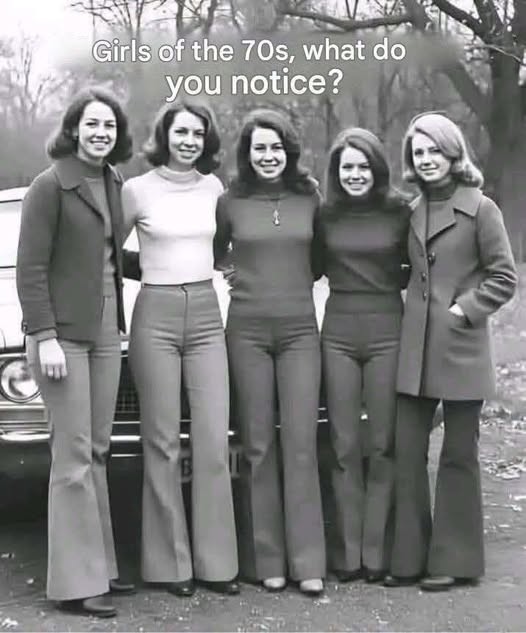
There is something almost magical about looking at a photograph from the 1970s.
The image may show nothing extraordinary: a group of friends standing outside a house, a family gathering for a special occasion, or someone casually posing beside a car. Yet somehow, these ordinary scenes can feel more intimate than many photographs taken today.
Perhaps it is the grain of the film. Perhaps it is the clothing, the hairstyles, or the way people naturally stand in front of the camera. Or perhaps it is the quiet feeling that comes from seeing a world before smartphones and social media became part of everyday life.
A vintage photograph does more than preserve a face.
It preserves a moment in time.
And when we look closely, those moments can tell us a surprising amount about how people lived, socialized, dressed and remembered their lives several decades ago.
The Distinctive Style of the 1970s
One of the first things people notice in photographs from the 1970s is the fashion.
Slim trousers, polo shirts, simple jackets and carefully chosen coats appear frequently in photographs from the period. Clothing varied considerably throughout the decade, of course, but many everyday looks had a practical quality that can feel surprisingly timeless today.
Hairstyles were equally distinctive.
Longer hair, natural textures and relaxed styling were common, while different cultural and social groups developed their own interpretations of the decade’s fashion.
Looking at these photographs today can make the past seem almost cinematic.
Yet the people in these images were not trying to create a nostalgic aesthetic.
They were simply wearing the clothes of their time.
That is one of the fascinating things about historical photographs. What appears carefully curated to us may have felt completely ordinary to the people living through it.
Life Before the Smartphone
Perhaps the biggest difference between photographs from the 1970s and photographs from today is what is missing.
There are no smartphones.
There are no tablets.
There are no glowing screens appearing in the background.
Of course, people in the 1970s had telephones, televisions, radios and other forms of technology. But digital communication had not yet transformed everyday interaction.
When friends met, they generally had fewer opportunities to divide their attention between a physical conversation and an online world.
That does not mean every social experience in the 1970s was more meaningful than one today. Nostalgia can easily simplify the past.
Still, vintage photographs offer an interesting glimpse into a different rhythm of social life.
A group of people sitting together might simply be sitting together.
A family gathering might revolve around conversation, food, music or shared activities rather than documenting every moment for a digital audience.
The Patience of Film Photography
The technology behind these photographs also shaped how people thought about taking pictures.
Film photography required more planning.
A roll of film contained a limited number of exposures. Taking a photograph therefore involved a decision: Is this moment worth capturing?
After the shutter clicked, there was no immediate preview.
There was no instant opportunity to check the composition, adjust the exposure and take another photograph within seconds.
The film had to be developed.
That waiting period created a completely different relationship with photography.
Today, a person can take dozens of photographs in a few minutes and immediately choose a favorite. In the film era, each photograph carried a greater sense of limitation.
This did not necessarily mean that every vintage photograph was technically better.
It simply meant that the process encouraged a different kind of attention.
When Photographs Were Physical Objects
Another important difference was what happened after a photograph was taken.
It could become a physical object.
Families might place photographs into albums, keep them in boxes or display selected images around the home.
Years later, someone could pick up that album and turn through its pages.
The experience was tactile.
You could hold the photograph in your hands, examine its details and notice the small imperfections created by aging, printing or the original film.
Today, memories are often stored digitally.
That offers enormous advantages. Thousands of photographs can fit on a small device, and copies can be shared around the world almost instantly.
But digital abundance has also changed how we experience individual photographs.
A physical photograph might remain visible for years.
A digital image can disappear beneath hundreds of newer pictures within minutes.
The Beauty of Imperfection
Vintage photographs also possess imperfections that modern cameras often eliminate.
Film grain, uneven exposure, soft focus and faded colors can become part of the image’s character.
A slightly blurred photograph may once have been considered an imperfect result.
Today, that same imperfection can make the image feel authentic.
It reminds us that the photograph was created by a physical process rather than a perfectly controlled digital system.
Even scratches and discoloration can become part of the history of an old photograph.
They tell us that the image has survived.
It has been handled, stored and carried through decades.
Ordinary Moments Become Historical
Perhaps the most valuable photographs are not always the ones showing major events.
A picture of someone standing in a driveway can reveal the design of an old automobile.
A family photograph can show furniture, home decoration and clothing.
A picture taken at a restaurant may reveal the way menus, interiors and table settings looked at the time.
A photograph of friends walking through a neighborhood can preserve architectural details that may no longer exist.
In this sense, everyday photographs become historical documents.
The people taking them probably never imagined that strangers decades later would study their clothes, surroundings and expressions.
They were simply recording their lives.
The Risk of Romanticizing the Past
It is tempting to look at these images and conclude that the 1970s were a simpler and better time.
But history is rarely that straightforward.
The decade had its own social tensions, economic challenges, technological limitations and uncertainties.
People experienced stress, disagreement and personal difficulties just as people do today.
The absence of smartphones does not automatically mean people were happier.
Likewise, modern technology is not inherently harmful simply because it has changed the way people communicate.
The more useful comparison is to recognize that every era has its own advantages and challenges.
Vintage photographs should not necessarily make us want to return to the past.
Instead, they can encourage us to notice what has changed.
What We Can Learn From Film Photography
Perhaps one lesson worth carrying into the present is intentionality.
Modern cameras make photography effortless.
That is wonderful.
We can document birthdays, vacations, meals, family gatherings and everyday moments without worrying about running out of film.
But having unlimited opportunities to take photographs does not necessarily mean we need to capture everything.
Sometimes, taking fewer photographs can encourage us to pay greater attention to the moment itself.
Instead of immediately reaching for a phone, we can occasionally look around.
Notice the people with us.
Notice the surroundings.
Listen to the conversation.
Then, if the moment still feels worth preserving, take the photograph.
Creating Memories That Feel Personal
There is also value in bringing some physicality back into the way we preserve memories.
Printing a few favorite photographs can transform a digital image into something tangible.
Creating a family album can give photographs a sense of continuity.
Writing a short note beside a photograph can preserve details that an image alone cannot communicate.
Who was there?
Where was the picture taken?
What happened that day?
Years from now, those details may become just as valuable as the photograph itself.
Why Vintage Photographs Still Fascinate Us
Perhaps the enduring appeal of 1970s photography comes from its ability to make ordinary life feel significant.
The people in these pictures were not trying to become historical figures.
They were simply living.
They went to work, met friends, attended celebrations, traveled, relaxed at home and spent time with family.
Decades later, those ordinary moments have become windows into another world.
That is the quiet power of photography.
A single frame can preserve something that written history often overlooks: the texture of everyday life.
Final Thoughts: What Will Our Photographs Say About Us?
When future generations look at photographs from our era, they may notice things that seem completely ordinary to us.
They may wonder why everyone carried small rectangular devices.
They may study today’s clothing, hairstyles, homes and cars.
They may be fascinated by how frequently people photographed their meals, vacations and daily activities.
And perhaps they will wonder what our photographs reveal about the way we lived.
The 1970s remind us that technology changes quickly, while human curiosity remains remarkably consistent.
We still want to remember the people we love.
We still want to preserve special moments.
We still take photographs because we know that time moves forward and moments disappear.
The tools may change from film cameras to smartphones and whatever comes next.
But the desire behind the photograph remains the same.
We take pictures because we want a small piece of the present to survive into the future.