

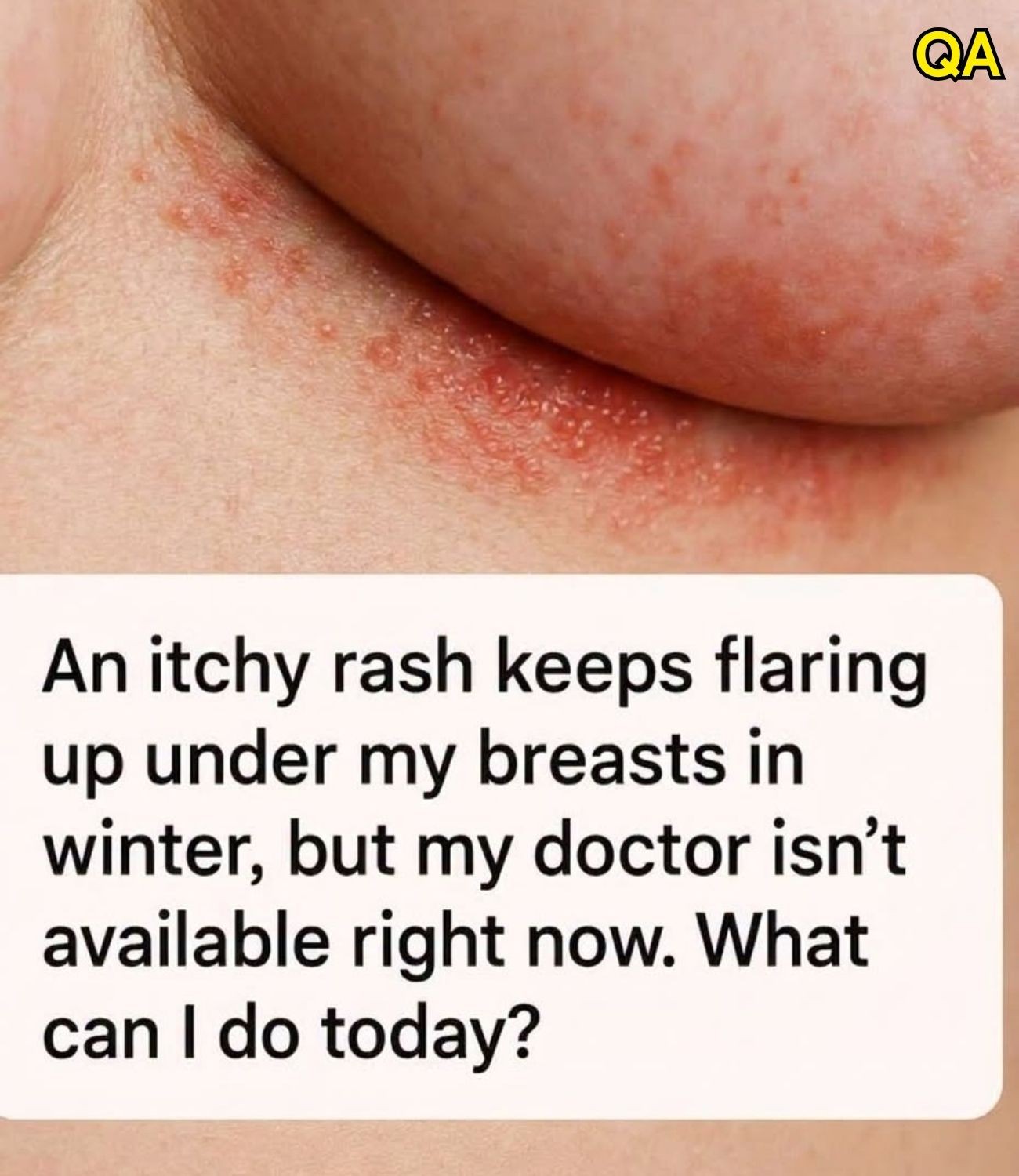
Winter can bring an unexpected skin problem for some people: an itchy, irritated rash developing in the warm, covered area beneath the breasts.
At first, it may seem like a minor annoyance. A little redness appears, followed by itching or a burning sensation. But when clothing, bras and layers of winter clothing repeatedly rub against the area, the discomfort can become increasingly noticeable.
So what might be causing it?
There are several possibilities, and understanding the common causes can help you decide what gentle steps may be appropriate while waiting to speak with a healthcare professional.
Why Does a Rash Develop Under the Breasts?
The skin beneath the breasts forms a natural fold where warmth and moisture can become trapped.
Even during colder weather, this area may remain warm because it is covered by clothing. Sweating, friction and limited airflow can create an environment in which irritated skin has difficulty recovering.
A condition called intertrigo is one possible explanation.
Intertrigo refers to inflammation that develops where skin rubs against skin, particularly in warm and moist areas. The condition can occur beneath the breasts, in the groin, between abdominal folds and in other skin creases.
The irritation may cause redness, itching, tenderness or a burning sensation.

Could It Be a Yeast-Related Rash?
Sometimes, irritated skin folds can become affected by an overgrowth of Candida, a type of yeast that naturally exists on the skin.
When warmth and moisture remain trapped in a skin fold, yeast can multiply more readily.
A yeast-related rash may appear bright red and irritated. In some cases, smaller spots or bumps may appear around the edges of the main rash.
However, it is important not to assume that every rash beneath the breasts is caused by yeast.
Contact dermatitis, eczema, bacterial infections and other skin conditions can produce similar symptoms.
That is why persistent or unusual rashes are best assessed by a healthcare professional.
Why Winter Can Make the Problem Worse
It might seem strange for moisture-related skin irritation to become troublesome during winter.
After all, winter air is generally colder and often drier.
But the environment underneath clothing can be completely different.
Heavy sweaters, coats and multiple layers can reduce ventilation. Warm indoor environments can also encourage sweating, while bras and other clothing may increase friction against already irritated skin.
At the same time, dry winter air can weaken the skin barrier elsewhere on the body.
This combination can make some people particularly aware of irritation during colder months.
What Can You Do Today?
If you are waiting to speak with a doctor and the rash is mild, several gentle measures may help reduce irritation.
Keep the Area Clean and Dry
Gently wash the area with lukewarm water and a mild, fragrance-free cleanser if needed.
Avoid aggressive scrubbing.
After washing, carefully pat the skin dry rather than rubbing it. Making sure the skin fold is completely dry can help reduce the moisture that contributes to irritation.
Choose Breathable Clothing
Tight clothing can increase friction and trap warmth.
When possible, choose comfortable, breathable fabrics and avoid anything that repeatedly rubs against the affected area.
Changing out of damp clothing after sweating can also help.
Avoid New Fragranced Products
Perfumes, scented body washes, deodorants and some laundry products can irritate sensitive skin.
If the rash appeared after introducing a new product, consider stopping that product until you know whether it is contributing to the problem.
Using fewer products can also make it easier to identify potential triggers.

Should You Use an Antifungal Cream?
If a rash is suspected to be yeast-related, an over-the-counter antifungal product may sometimes be appropriate.
However, identifying the cause matters.
A steroid cream, for example, may make certain fungal skin conditions harder to recognize or potentially worsen them when used incorrectly.
For that reason, if you are uncertain whether the rash is fungal, irritated skin or another condition, asking a pharmacist or healthcare professional before starting treatment can be a sensible option.
Always follow the product instructions and avoid using medication on broken or severely irritated skin unless a healthcare professional advises you to do so.
What About Moisturizer?
Moisturizers can be useful for dry or irritated skin, but the location matters.
A thick product that traps additional moisture beneath a breast fold may not be ideal when the primary problem involves sweating and dampness.
If the skin is simply dry and irritated, a fragrance-free moisturizer may help.
If the area is persistently moist, macerated or suspected to have a fungal rash, professional advice is preferable before applying heavy products.
When Should You Seek Medical Advice?
Most minor skin irritation does not require an emergency visit.
However, certain changes should prompt medical evaluation.
Seek professional advice if the rash:
- Keeps returning
- Does not improve with gentle skin care
- Spreads to other areas
- Becomes increasingly painful
- Develops significant swelling
- Produces discharge or an unusual odor
- Develops open areas or significant skin breakdown
- Appears alongside fever or feeling generally unwell
A healthcare professional can examine the rash and determine whether testing or prescription treatment is necessary.

Don’t Assume Every Rash Is the Same
One of the biggest mistakes people can make with recurring skin problems is assuming that the cause must be the same every time.
A rash beneath the breasts can result from friction and moisture, but other conditions can look similar.
Eczema, psoriasis, contact dermatitis, yeast-related irritation and other skin conditions may require different approaches.
A photograph or description alone may not always be enough to distinguish them.
That is particularly important when a rash repeatedly returns in exactly the same location.
A Simple Winter Skin Routine
For people who frequently experience irritation beneath the breasts during colder months, a straightforward routine may help reduce triggers.
Keep the area gently clean.
Dry the skin carefully after bathing.
Wear comfortable, breathable clothing.
Change damp clothing promptly.
Avoid heavily fragranced products.
Pay attention to whether a particular bra, detergent or skincare product coincides with flare-ups.
And if the problem keeps returning, discuss it with a healthcare professional rather than repeatedly treating it without knowing the underlying cause.
The Bottom Line
An itchy rash beneath the breasts can be uncomfortable, particularly when winter clothing creates additional warmth and friction.
In many cases, moisture, friction and irritation play an important role. Sometimes a yeast-related rash may be involved, while other skin conditions can produce similar symptoms.
For a mild rash, keeping the area clean, dry and well ventilated while avoiding potential irritants can be a reasonable first step.
But recurring, worsening or unusual symptoms deserve professional attention.
The most important thing is not to panic or assume the worst. A rash can have many explanations, and identifying the cause is the best way to choose the right treatment.