

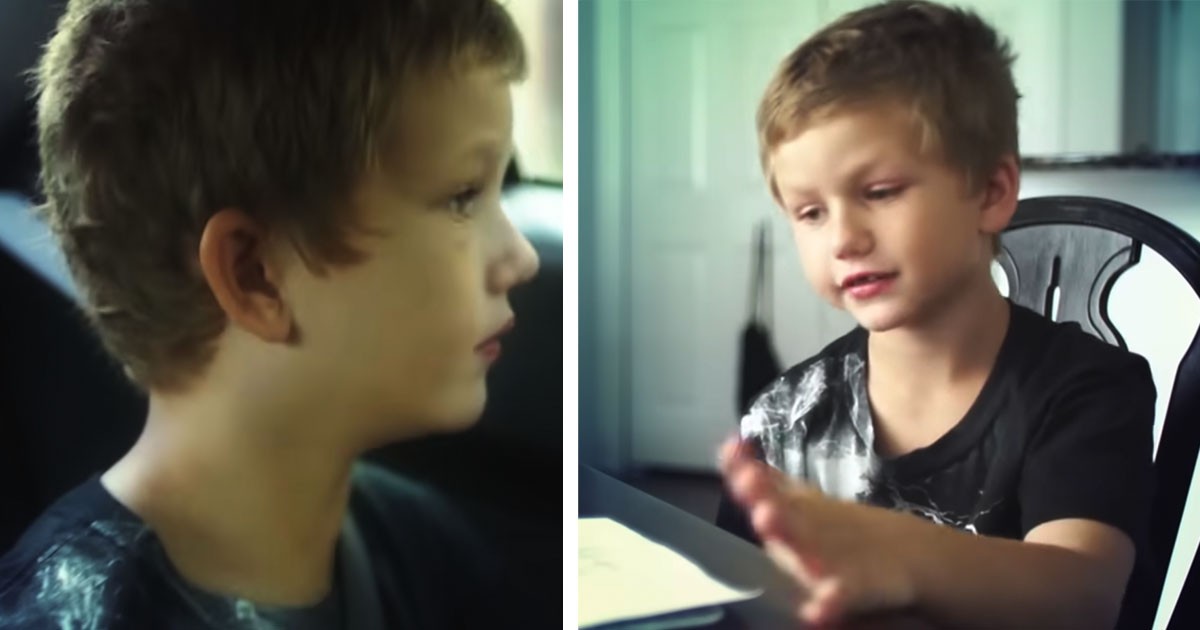
A Mother Links Her Child’s Nightmares to 9/11 Victim: The Story of Cade Wilson
The mysterious case of Cade Wilson—a young child experiencing overwhelming fears and nightmares about planes, skyscrapers, and dying in a building explosion—has drawn attention due to parallels between his dreams and the experience of a man who perished in the September 11, 2001 attacks. This article explores Cade’s story, the psychological implications, and broader societal responses, through a balanced, factual, and analytical lens.
Introduction: Unexplained Nightmares and Fears in a Young Child
Cade Wilson was just three years old when unexpected and frightening nightmares began to disrupt his sleep. His mother, Molly Curnutte, recalls that Cade would wake up in tears, describing terrifying dreams of being in a tall building with a clear view of the Statue of Liberty from his office window—a level of geographic detail that seemed impossible for a preschooler who had never visited New York City.
Initially, Molly dismissed these episodes as typical childhood imagination. She described them as odd but didn’t suspect anything extraordinary or alarming at first. “I noted it as an oddism. I just thought he had a vivid imagination,” she shared in an interview with LMN’s The Ghost Inside My Child.
Cade’s father, Rick, also affirmed that neither parent nor anyone in the family had ties to New York City or the World Trade Center. The Wilsons were ordinary people, untouched by the tragedy of 9/11, making Cade’s recurring nightmares all the more confounding.
Cade’s Intensifying Fears: From Imagination to Obsession
As weeks progressed, Cade’s fears deepened. He developed an obsessive aversion not just to airplanes, but specifically to the sight, sound, and idea of planes and skyscrapers. He was “totally petrified” of airplanes, his grandmother Fae recounted, likening his dread to a nightmare scenario. This was not a simple fear of flying; Cade would become distressed even seeing airplanes outside or depicted in media.
The impact extended outside the home. Routine family drives became challenging. Passing by tall buildings, Cade would panic, his anxiety quickly escalating into near hysteria. These physical reactions extended far beyond what child psychologists describe as typical developmental fears.
The specificity of his nightmares heightened further. According to Molly, Cade spoke of “being in a building that was hit by something, that it exploded, and that he fell.” He described a workplace where he could see the Statue of Liberty every day, an image closely associated with the view from the upper floors of the World Trade Center.
In a surprising turn, Cade even began to insist his name was not Cade at all—a declaration that further unsettled his parents. Such statements prompted Molly to wonder if there could be an underlying psychological explanation, or if there was something deeper at play.
Searching for Answers: The Online Community and a Surprising Discovery
Driven by concern and a sense of bewilderment, Molly turned to the internet, sharing Cade’s story on online support forums. Her hope was that someone else might have faced a similar situation or could offer a rational explanation for Cade’s vivid experiences.
To her astonishment, another mother responded, referencing a man who worked in the World Trade Center and had died on September 11, 2001. The details of this man’s life and tragic death seemed to align with the specifics Cade had described: working in a tower with a Statue of Liberty view and dying in an explosion following a plane impact.
Upon reviewing the obituary and photograph of this individual, Molly felt as if “the last puzzle piece had been found.” Despite this emotional connection, she never contacted the victim’s family, out of respect for their grief and privacy. This choice reflected a profound empathy for the survivors of 9/11, many of whom continue to cope with unimaginable loss two decades after the tragedy.
The Personal and Social Impact: Cade’s School and Peer Relationships
Cade’s struggles were not confined to his family or the privacy of their home. As his anxieties spilled over into daily life, the repercussions affected his experience in school and his relationships with peers. Some children at school began to call Cade a liar, mocking his claims or simply refusing to believe his stories. Several parents, skeptical of his experiences, barred their own children from playing with him—a situation known to be detrimental to a child’s social development and self-esteem.
His mother described the emotional toll of watching her child become socially isolated: “I’m heartbroken, absolutely heartbroken,” Molly said. “You just want everybody to like your kid.”
Teachers, unaware or unconvinced of the full context, found Cade’s disruptions increasingly difficult to manage, adding yet another challenge for the family. The Wilsons, like many parents facing the stigma of childhood psychological challenges, found themselves fighting not just for understanding, but for their son’s right to a normal, happy childhood.
Despite everything, Molly and Rick remained steadfast, focused on helping Cade “learn to be Cade, to learn to be a kid again, to learn to laugh.” Molly expressed hope that with loving support and time, her son would adjust and flourish, putting the nightmares behind him.
Expert Insights: Childhood Nightmares, Memory, and Trauma
Cases like Cade’s attract interest from psychologists and pediatricians, especially in the field of early childhood trauma, memory, and fear development. Nightmares and intense fears are common in young children, but experts agree that persistent, detailed, and phobia-like symptoms warrant additional evaluation.
According to the Mayo Clinic, nightmares can be triggered by stress, trauma, or significant changes in a child’s environment, and commonly feature elements that children experience or are exposed to, even indirectly. However, Cade’s account stood out due to its specificity about an event he had never directly encountered, raising questions among some about memory, imagination, and suggestibility in young minds.
Dr. Jim Tucker, a child psychiatrist at the University of Virginia known for researching children’s memories of past lives, has observed that children sometimes develop detailed memories or anxieties that defy logical explanations. While mainstream psychology remains cautious, many researchers emphasize that children are also highly impressionable. Exposure to news coverage, overheard adult conversations, or indirect cues could all impact a child’s subconscious, shaping dreams and memories in unexpected ways.
Nevertheless, most mental health professionals advocate a careful, supportive approach when children exhibit distressing fears or recurrent nightmares. Supporting the child, offering reassurance, establishing routines, and seeking professional advice when needed can help resolve acute symptoms and boost a child’s well-being.
The Role of Media and Culture in Childhood Memory Formation
The case of Cade Wilson not only underscores the importance of understanding how media and public events can indirectly affect children, but also how sensitive families must be in navigating such discussions. 9/11 remains a defining moment in recent history, and stories, images, and conversations about the tragedy continue to permeate culture long after the event. Children, even very young ones, may absorb snippets of information that later emerge in their dreams or imaginations.
Leading child development experts advise that children’s exposure to potentially distressing news or complex adult topics be carefully managed. The Centers for Disease Control and Prevention (CDC) and American Psychological Association (APA) recommend open, age-appropriate conversations and reassurance to help children process confusing or frightening world events.
Societal Reactions and the Broader Discussion
Society often struggles with stories like Cade’s. Narratives of children remembering previous lives, or developing unexplained memories and fears, divide public opinion between skepticism and support. While scientific evidence for claims of past-life memories is limited, belief in such phenomena persists in many cultures and communities worldwide.
Social media has provided a new forum for parents to share unusual childhood experiences, for better and worse. On the positive side, online communities can offer empathy and practical advice. On the other hand, public exposure can also lead to misunderstanding, skepticism, or even bullying, as evidenced by Cade’s classmates’ reactions.
The Wilson family’s experience highlights the complex interplay between a child’s emotional well-being, parental support, community understanding, and the enduring impact of major historical events on new generations. It is a reminder of the need for compassion—both for children struggling with complicated emotions and for families seeking acceptance and empathy.
Conclusion: Navigating the Unknown with Compassion and Care
While the link between Cade Wilson’s experiences and the events of 9/11 will never be fully resolved in a scientific sense, his story shines a light on the resilience of children, the challenges faced by families coping with unexplained psychological symptoms, and the importance of a nurturing environment. As awareness grows regarding the effects of trauma, memory, and environmental influences on young children, continued research and understanding are crucial.
The Wilsons’ journey demonstrates how families can navigate even the most bewildering circumstances with empathy, hope, and commitment to their child’s happiness. For Cade, the path forward is one of healing, supported by loved ones determined to help him find laughter and security once more.
Sources
- BBC News
- Centers for Disease Control and Prevention (CDC)
- Mayo Clinic
- Reuters
- American Psychological Association (APA)
- The Guardian
- Al Jazeera
Disclaimer: This content is intended for entertainment purposes only and is not based on real events.