

How a Forgotten Pistachio Shell Taught Me About the Power of Imagination
Introduction: The Surprising Mystery Under the Bed
Everyday life is full of small mysteries, but sometimes an ordinary event becomes an insightful reminder of how our minds work. One such experience occurred while I was cleaning my son’s room, causing a brief surge of fear and confusion. The incident, while simple, became a window into understanding how quickly an ambiguous situation can be transformed by our imagination into something much scarier than reality. This article explores the psychological underpinnings of such moments, provides expert insights on our fear of the unknown, and considers why our minds often jump to unsettling conclusions.
The Discovery: Uncovering the Unknown
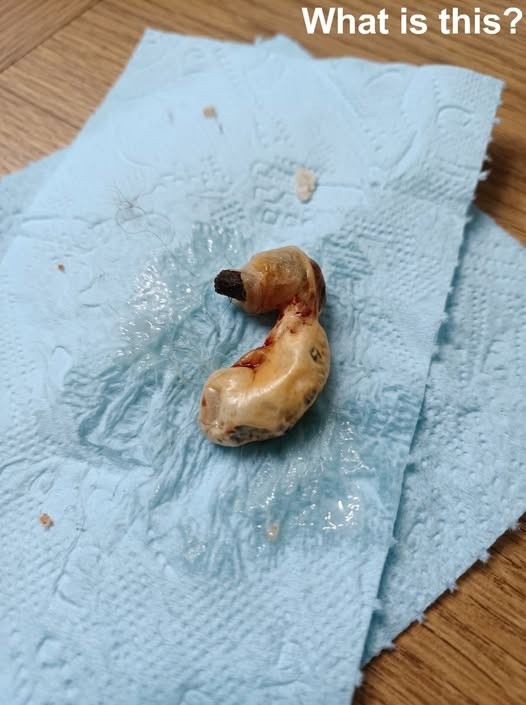
While sorting through my son’s belongings and tidying his bedroom, my attention was suddenly caught by a pale, curved object protruding from beneath the bed. It looked distinctly organic; the surface was dusty and part of the end appeared darkened and pointed. In that moment, my thoughts ran wild. Was it a parasite, an animal part, or, worst of all, the remains of something that had died and gone unnoticed? Instantly, I felt uneasy, and my senses seemed heightened—every smell seemed peculiar, every sound suspicious.
Wanting confirmation, I called my son to take a look. However, his confusion was as apparent as my own. Neither of us felt brave enough to reach for the mystery directly. The object’s vague outline and the shadowy space under the bed made it all too easy for our imaginations to fill in horrifying details. The air in the room felt thick with uncertainty as we speculated in whispers about what we might have found.
The Reveal: A Common Pistachio Shell
Armed with a broom and summoning some courage, I carefully pushed the object from its hiding place. The anticipation built up; I braced myself for something unpleasant. The truth, as it turned out, was hilariously mundane. There, exposed in the light, was a simple pistachio shell—one half of a snack my son must have eaten days or weeks before, with dust and dirt adding to its appearance of decay.
My son and I stood in silent surprise, processing how dramatically we had overestimated the situation. Then, as the absurdity set in, the tension broke and gave way to laughter. Our anxiety and the wild narratives our minds imagined vanished instantly, replaced by relief and embarrassment. The ‘creature’ under the bed had been nothing more than a forgotten fragment of an old snack. The moment became a source of amusement and a gentle reminder of how the mind can play tricks on us when confronted with uncertainty.
The Psychology of Fear and Imagination
The reaction to an ambiguous object in a dimly lit, seldom-cleaned space is rooted in basic psychological responses shared by people across cultures and ages. According to cognitive psychologists, the human brain is wired to detect threats quickly as a survival mechanism. When presented with limited information—especially in situations like a dark room or a cluttered space—our brains fill in the gaps, often erring on the side of caution by assuming the worst.
Renowned psychologist Dr. Michael Carleton explains, “Our fear response is triggered by ambiguity. When we cannot clearly identify something in our environment, the natural reaction is to treat it as a potential threat until proven otherwise.” This trait, known as hypervigilance, is an evolutionary leftover that helped early humans avoid danger. While rarely necessary in modern life, it still influences how we react to unfamiliar sights, sounds, or even mysterious objects found around the home.
Why Our Minds Play Tricks: The Science Behind the Jump to Conclusions
Uncertainty fuels the imagination, especially in children, whose ability to conjure up creative explanations is well documented by developmental psychologists. However, adults are not immune to these processes. Studies indicate that low-light conditions, distraction, and lack of context can all increase the likelihood of misperception. This is because the brain is a “prediction machine,” using past experiences and partial information to create a coherent interpretation of current stimuli.
This tendency is called pareidolia: the perception of meaningful patterns, such as faces or figures, in random objects or data. While pareidolia most often refers to visual illusions—like seeing faces in clouds or animals in stains—the principle applies to anything ambiguous. Psychologist Dr. Emily Knight notes, “Our minds abhor a vacuum of information. If we can’t make sense of something instantly, we often substitute our own narrative, sometimes creating unnecessary fear.”
The Role of Environmental Context: Shadows, Clutter, and Perspective
Environmental factors also contribute significantly to how we interpret objects and situations. Shadows, poor lighting, or an accumulation of dust and dirt can dramatically alter the appearance of mundane objects. In the context of the pistachio shell, the dark tip, combined with stray fibers and shadows under the bed, created the illusion of something far less innocent.
Experts in human perception assert that context plays a key role in identification. When an object is removed from its typical environment—like a shell hidden under a bed—it is far more likely to be misidentified. This confusion often leads to elevated anxiety and the search for explanations, rational or otherwise.
Learning from Everyday Anxieties: Reflection and Relief
In retrospect, the incident offered more than just laughter; it presented a learning opportunity. The mind’s rush to fill in the blanks with fear rather than logic reminds us all to question our first assumptions. Reflecting on the experience, I recognized that uncertainty is a powerful motivator for the imagination, but rarely should it be trusted without verification.
Empirical studies on anxiety highlight the benefits of “reality testing”—a process where individuals confront their fears directly, compare them with the facts, and often discover their worries are unfounded. Mental health professionals advocate practices like mindfulness and curiosity in the face of ambiguity, which help mitigate unnecessary spirals of anxiety.
Shared Experiences: Why These Incidents Resonate
Anecdotes about mistaking ordinary objects for something more sinister are common in popular culture and everyday conversation. These stories serve as a social glue, allowing people to bond over their shared fallibility and the quirks of perception. From mistaken ‘monster’ shapes in a child’s closet to misidentified noises in the night, these episodes underscore the universal nature of fear and the imagination.
Around the world, cultural stories and urban legends often begin with similar misperceptions. The human brain’s penchant for pattern-finding and meaning-making is not limited to any one region or background—it is part of what makes us creative, cautious, and, sometimes, needlessly anxious.
Practical Tips: How to Manage Anxiety Over the Unknown at Home
- Keep spaces clutter-free: Regular cleaning reduces the likelihood that forgotten objects will accumulate under beds or in corners, removing sources of confusion.
- Improve lighting: Well-lit environments help the brain easily process visual information, reducing misinterpretation.
- Reality check: Before panicking over something mysterious, take a closer look when it’s safe, or ask for another set of eyes. Often, a fresh perspective will reveal the benign truth.
- Model calmness: For families, showing children how to respond logically and unemotionally can prevent anxiety from escalating unnecessarily.
Conclusion: The Value of Perspective
The discovery of the pistachio shell under the bed evolved from a moment of apprehension to a lesson in humility and humor. It highlighted how the unknown can breed unfounded anxiety, especially when filtered through the lens of imperfect perception and a lively imagination. By stepping back and examining our assumptions, we often find that reality is much less frightening than our minds suggest.
Such experiences quietly teach us about our humanity: our brains’ caution and creativity, our shared need for certainty, and the comfort found in discovering the ordinary where we least expect it. The next time something under the bed seems terrifying, remember—sometimes the culprit is as harmless, and as insignificant, as a forgotten pistachio shell.
Sources
- BBC Future – Why We Jump to Conclusions
- American Psychological Association – Anxiety
- Psychology Today – The Science of Fear
- Mayo Clinic – Anxiety Disorders
Disclaimer: This content is intended for entertainment purposes only and is not based on real events.