
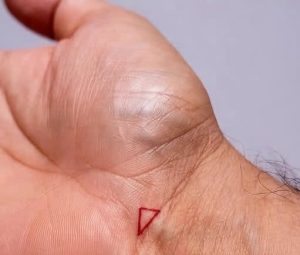

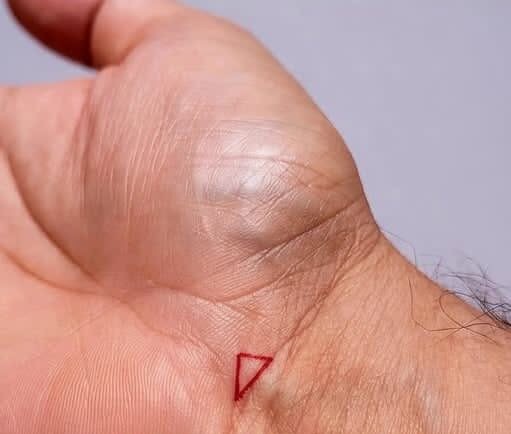
What a Triangle Mark on the Wrist Really Means
Understanding Wrist Creases and Skin Patterns
The human body is covered with natural lines, folds, and creases—features that often attract our curiosity. Among these, the small lines on the wrist sometimes appear to form geometric shapes, such as triangles. While some see these as ordinary skin creases, others find meaning or significance in the markings. This fascination is rooted in both the universal human tendency to search for patterns and the rich traditions of storytelling and superstition spanning many cultures.
Why Small Wrist Lines Attract Attention
Humans are naturally inclined to notice familiar shapes and patterns. This phenomenon, known as pareidolia, explains why we might see figures in clouds or faces in everyday objects. When it comes to wrist lines, intersecting creases may form triangles or similar shapes, which can seem unusual or even meaningful. This is particularly true when old stories or local customs have attached significance to such marks, turning them into objects of curiosity or even superstition.
Folklore and the Triangle Mark: Historical Perspectives
For centuries, folklore has ascribed various meanings to marks and shapes found on the body. In some traditions, a triangle mark on the wrist is seen as a sign of resilience, luck, strength, or an optimistic future. Such beliefs often promise that those with specific markings will succeed, recover from hardship swiftly, or attract unexpected good fortune. These narratives endure not because of any scientific proof, but because they provide comforting explanations in the face of uncertainty.
Despite their charm, these stories have no scientific foundation. There is no evidence suggesting that the presence—or absence—of a triangle mark on the wrist can predict a person’s fate, guarantee positive traits, or influence life events in any way.
The Psychology Behind Seeking Patterns
Scientists agree that humans are hardwired to identify patterns, even in random arrangements. This ability is an evolutionary advantage, allowing us to quickly recognize potential threats or opportunities in our environment. However, this same ability can also lead us to see meaning where there is none. A triangle formed by wrist creases may stand out, but its significance is a product of interpretation, not physical or metaphysical reality.
Separating Myth from Reality: What Science Says
From a dermatological perspective, the lines seen on wrists—sometimes forming triangles or other shapes—are known as flexion creases. These develop during fetal growth and are influenced by genetics, skin type, and how the wrist is used throughout life. There is no scientific evidence connecting the arrangement of these creases to personality, destiny, health, or fortune. Major health authorities like the World Health Organization and the Mayo Clinic confirm that skin creases are purely anatomical and carry no special meaning beyond their biological function.

The Enduring Power of Superstition
Superstitions tend to endure across cultures and generations, particularly when they offer reassuring or hopeful messages. The idea that a physical mark can predict positive outcomes provides comfort and can help individuals cope with uncertainty. Whether the story is about resilience, luck, or recovery, these tales become embedded in popular culture because they offer simple explanations for complex experiences. Yet, this does not mean they have any basis in reality.
Experts in psychology suggest that such beliefs persist because they are easy to share and emotionally satisfying. They often spread through word of mouth, visual cues, or confirmation bias—remembering instances when the superstition “appears” to be true and forgetting the many times it is not.
Folklore About Strength and Resilience
Among the many claims, one of the most enduring is that the triangle mark offers protection or signals an individual’s unique strength. Stories may describe a person with the mark as inherently more capable of enduring hardship or bouncing back from adversity. While these narratives can inspire hope and bolster confidence, research in psychology shows that resilience develops from life experiences, personal choices, support systems, and learned coping strategies—not from the natural arrangement of skin creases.
Real resilience, determination, and strength are shaped by character and social context, not by the presence or absence of a symbol on the skin.
Financial Prosperity and the Mark: An Unfounded Link
Another variant of the superstition links wrist triangles with sudden wealth or unexpected good luck. Such beliefs promise that fortune will arrive for those with the unique mark. However alluring this idea seems, it is not grounded in evidence. Socio-economic outcomes are determined by factors like education, opportunity, hard work, and broader economic forces. No credible research supports the notion that a skin marking can influence one’s financial fate.
Palmistry and Traditional Storytelling: Cultural Roots
The association between wrist lines and personal destiny is strongly tied to the folk practice of palmistry—or chiromancy. Palmistry extends meaning-making from the palm to other parts of the hand and wrist, assigning elaborate interpretations to lines and symbols. While palmistry remains popular as a form of entertainment or cultural exploration, mainstream science does not regard it as a legitimate method for diagnosing character or predicting events. Its value lies in its folklore, not in its predictive power.
Cultural historians emphasize that enjoying tradition and folklore is different from accepting them as literal truth. It is possible to be intrigued by old customs while keeping a scientific perspective on their claims.
Citrine Stones and Amplifying Superstitions
Some versions of triangle mark lore suggest that wearing certain stones—like citrine—can enhance the positive energy associated with the wrist marking. Citrine is a yellow quartz often linked with prosperity or personal energy in crystal healing circles. However, there is no scientific evidence that citrine (or any other stone) can influence luck, personal qualities, or the future. Symbolic or decorative uses of stones can have personal significance, but their power remains within the realm of personal belief, not empirical fact.
Why Such Stories Remain Popular
Superstitions become sticky for several reasons. They offer hope, provide memorable narratives, are easy to share, and can make people feel special. In uncertain times, a mark or talisman can act as an emotional anchor, offering a sense of control. Moreover, when shared among family and friends, these beliefs gain social reinforcement, making them more likely to survive across generations—even in the absence of evidence.
Despite their emotional value, experts encourage a cautious approach. Depending on a physical mark or an object to determine one’s fortune may distract individuals from pursuing practical strategies for growth, problem-solving, or resilience.
Real Sources of Strength and Good Fortune
Scientific research consistently points to the importance of psychological resilience, social support, education, and proactive decision-making in shaping outcomes. Overcoming hardship, finding luck, and developing strength depend on factors such as adaptability, patience, effective coping mechanisms, and community—not the configuration of lines on one’s wrist.
Furthermore, putting faith in physical attributes as fate-determining can, for some, conflict with broader spiritual or religious beliefs, shifting focus away from more universally acknowledged sources of guidance and hope.
Cultural Curiosity vs. Superstitious Belief
It is valid—and even enriching—to be curious about the traditions and stories that shape our world. Learning about palmistry, wrist folklore, and symbolic meanings connects us with global cultures and histories. Nevertheless, distinguish between enjoying the story and letting it dictate your decisions or define your self-worth.
Everyone carries unique lines and features formed by genetics and life experiences. These physical marks can be appreciated for their individuality, but they do not forecast the future or determine a person’s value.
A Modern Perspective on Triangle Marks
In summary, a triangle formed by wrist creases is an ordinary feature given extraordinary meaning by folklore and superstition. While such stories provide comfort and cultural fascination, no scientific or medical evidence supports claims that these marks influence character, luck, or destiny. Modern health authorities and dermatologists affirm that skin lines are shaped by biology and lifestyle, not by mystical forces.
People are defined not by physical markings, but by their actions, relationships, principles, and the ways they navigate life’s opportunities and challenges. Resilience and luck are cultivated through tangible choices and efforts, not predetermined by the shapes on our skin.
Conclusion: Embracing Science and Tradition Mindfully
Wrist lines—sometimes appearing as triangles—provide a fascinating window into the ways humans assign meaning to everyday experiences. These marks serve as reminders of the enduring power of folklore and the importance of critical thinking. By balancing curiosity and skepticism, we can respect tradition while making choices rooted in evidence and personal agency. Ultimately, everyone’s future is shaped by much more than lines on the skin—it is written through actions, relationships, and the ability to adapt and grow.
Disclaimer: This content is intended for entertainment purposes only and is not based on real events.