

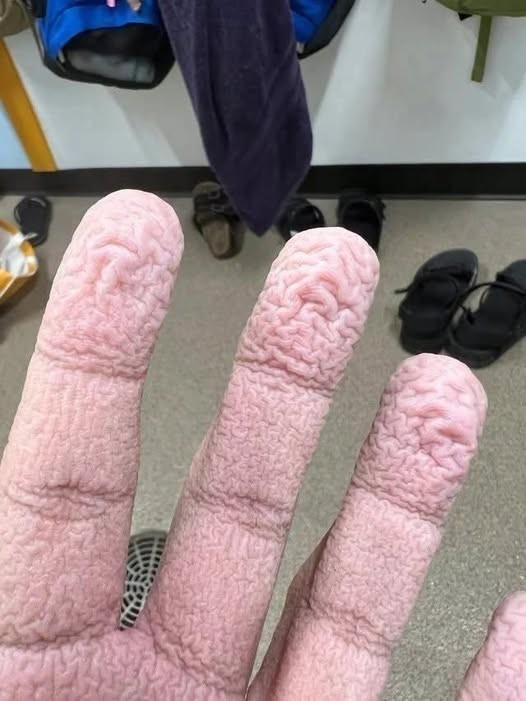
Why Your Fingers Wrinkle in Water Is Stranger Than It Looks
Have you ever wondered why your fingers wrinkle after only a few minutes in water? This ordinary phenomenon has fascinated both scientists and the general public, raising questions about the biological purpose behind these wrinkles and the mechanisms that drive them. While the effect is familiar to anyone who has spent time bathing or swimming, the science underpinning this response is far more complex—and stranger—than it first appears.
A Brief History of the Phenomenon
Human curiosity about wrinkly fingers in water dates back thousands of years. However, only recently has scientific investigation provided insights into this odd but common occurrence. For decades, the prevailing wisdom was that water simply seeped into the outer layers of the skin, causing it to swell unevenly. But as research advanced, scientists discovered that the wrinkling is not a passive effect of water absorption, but a sophisticated response orchestrated by our nervous system.
The Science Behind Wrinkled Fingers
When fingers are submerged in water, particularly for more than about 5 minutes, the skin begins to wrinkle, forming a pattern of ridges and valleys. While this response occurs on both fingers and toes, it is most noticeable on the hands.
The outermost layer of skin, known as the epidermis, is covered by a thin film called the stratum corneum. This layer is made of dead skin cells bonded by lipids which protect against water loss and invasion. When immersed, water disrupts these bonds; but a key discovery in recent decades revealed that the wrinkling depends on nerve activity rather than just osmosis.
Studies involving people with nerve damage showed their skin did not wrinkle in water, suggesting that the autonomic nervous system—the part responsible for involuntary functions—triggers a constriction of blood vessels beneath the skin. This process, called vasoconstriction, pulls the skin inward and creates the familiar wrinkling pattern.
Evolutionary Purpose: More Than A Quirk
Scientific interest has grown around the question of whether there is an evolutionary advantage to water-induced skin wrinkling. The most prominent theory proposes that wrinkled fingers improve grip in wet conditions. Research conducted by scientists at the University of Newcastle found that participants with wrinkled fingers could pick up wet objects more effectively than those with smooth fingers.
This enhancement likely helped our ancestors handle objects, such as stones or branches, in rivers or rain-soaked environments—acting in a manner similar to tire treads dispersing water.
Despite these advantages, wrinkling does not occur on other parts of the body like the soles of the feet as quickly. This suggests a specific adaptation to environmental contexts where better grip was valuable.
How Long Does It Take for Fingers to Wrinkle?
The wrinkling process varies depending on several factors: water temperature, the presence of soap or chemicals, and individual physiology. Generally, the effect becomes visible within 5 to 10 minutes in warm water, while cold water slows the process. Some people experience more pronounced wrinkling due to individual differences in skin properties and nervous system sensitivity.
Health professionals note that the absence of finger wrinkling may indicate underlying nerve issues. Neurologists sometimes use the “water immersion test” to assess autonomic nerve function, especially in patients with suspected nerve damage.
Medical Insights and Finger Wrinkling
Finger wrinkling has proven valuable in clinical settings. For example, it can help diagnose conditions such as diabetic neuropathy, where nerve damage prevents normal skin responses. When patients’ fingers do not wrinkle even after prolonged immersion, doctors may suspect anomalies in the nervous system.
For most people, however, finger wrinkling is entirely harmless and temporary. Skin returned to normal within minutes of drying off.
International Perspectives and Societal Reactions
Curiosity about wrinkling fingers is not limited to Western science. Cultures across the globe have acknowledged this phenomenon, at times attributing it to spiritual or metaphysical causes. Today, most societies recognize the process as a normal part of biology, but lingering myths and traditions can still be found in regions where scientific understanding is less widespread.
Children often notice wrinkling while swimming or bathing and adults sometimes use the effect as an indicator of the length of time spent in water. The universality of the effect has made it a topic in basic biology education and popular science writing.
Current Research and Expert Views
Current studies continue to probe the intricacies of finger wrinkling. Neuroscientists are examining the exact signaling pathway from skin to the nervous system. Dermatologists are studying the chemical structure of the skin layers that make wrinkling possible.
Experts emphasize that while finger wrinkling is interesting in itself, it also offers clues about broader physiological processes such as vasoconstriction and the body’s ability to adapt to environmental challenges. This research may lead to better understanding of diseases that affect the nerves and vessels.
Future Implications and Unanswered Questions
Though most answers about finger wrinkling are well established, scientists are still exploring some unresolved questions. For instance, why don’t lips or other areas wrinkle as quickly? How might this effect differ among species? There’s growing interest in whether aquatic or amphibious animals show similar adaptations.
Another area of study evaluates whether the wrinkling process could inspire new technologies. Engineers have proposed using biomimicry—emulating the finger’s wrinkling ability—to improve grip in prosthetics or develop better materials for handling objects underwater.
Conclusion
The wrinkling of fingers in water remains one of the more fascinating examples of human biology at work, demonstrating a clever adaptation with roots in evolutionary history. Far from being a simple passive reaction, it is a complex physiological response driven by nerves, offering improved grip and revealing insights into broader medical processes. As research continues, the phenomenon is likely to yield further surprises, connecting everyday experiences to important scientific truths.
Disclaimer: This content is intended for entertainment purposes only and is not based on real events.