
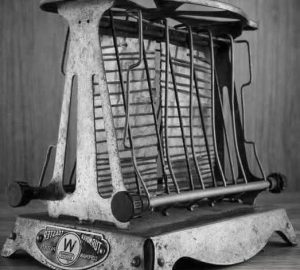


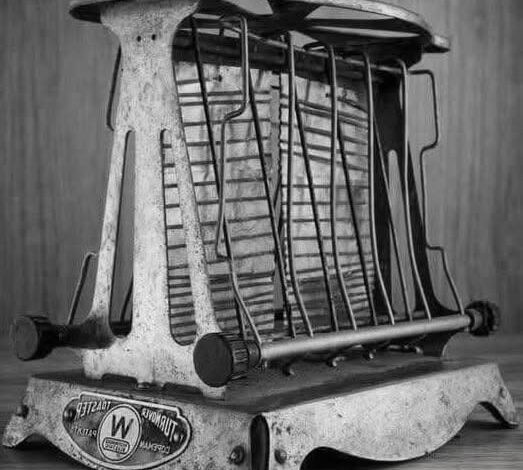
What Is a Turnover Toaster? The History of Early Electric Toasting
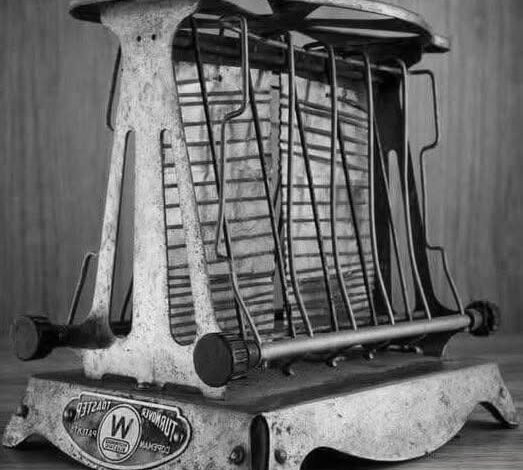
An early milestone in kitchen automation, the turnover toaster used exposed electric heating elements to brown bread. Unlike the familiar pop-up toaster found in many homes today, it required active attention from the person using it. Bread was placed near the heating elements, watched as one side browned, and then manually turned so the other side could be toasted.
Its unusual appearance can initially make it difficult to identify. A turnover toaster may look more like a small metal frame or laboratory-style electrical device than a modern kitchen appliance. Yet its purpose becomes clear when it is understood as part of a daily breakfast routine from an earlier era of household electrification. It was designed to bring controlled electric heat to bread while leaving timing, turning, and supervision to the user.
The name “turnover toaster” reflects this hands-on process. The appliance generated the heat, but the user had to turn, or “turn over,” the bread during toasting. This arrangement represented an important intermediate stage in the development of kitchen technology: a machine handled one part of the task, while a person remained responsible for the rest.
How a Turnover Toaster Worked
Early electric toasters generally used resistance heating elements. When electricity passed through the element, it became hot and produced the radiant heat needed to brown bread. In a turnover toaster, slices were commonly held upright or close to the heating element by a metal rack, support, or hinged carrier.
Because many early designs heated only one side of a slice at a time, the bread had to be turned manually. The user would watch for the desired level of browning, remove or rotate the bread carefully, and expose the opposite side to the heat. There was no automatic sensor, countdown program, pop-up mechanism, or enclosed slot to manage the process.
This required a degree of concentration that modern users may not associate with making toast. The person preparing breakfast had to remain nearby, observe the bread, and make a judgment about when it was ready. Toasting could vary according to the thickness of the bread, its moisture content, the electrical supply, and the condition of the heating element.
In practical terms, a turnover toaster made the process more convenient than using an open fire, stove, or traditional toast fork, but it did not eliminate the need for human involvement. It moved toast-making toward automation without fully automating it.
Why Early Toasters Had Exposed Heating Elements
Modern toasters are typically enclosed in a metal or heat-resistant casing, with bread inserted into narrow slots. Early electric models often looked much more exposed because appliance design, electrical standards, and household expectations were different. Manufacturers were still developing safe, durable, and affordable ways to apply electrical heating in domestic settings.
The development of suitable heating wire was especially important. Early electric heating devices needed materials that could withstand high temperatures without failing quickly. The use of nickel-chromium alloys, commonly known as nichrome, helped make electrical heating more practical because the material could resist oxidation and retain its performance at elevated temperatures.
Even so, early electric appliances were not designed around the same safety features now expected in household products. Modern electrical appliances are produced under detailed safety standards and are generally equipped with insulated wiring, protective housings, stable controls, and automatic shutoff functions. A historical toaster with visible elements should therefore be regarded as a collectible, museum object, or historical artifact rather than assumed to be safe for contemporary operation.
A photograph alone cannot establish an individual appliance’s manufacturer, age, electrical condition, restoration history, or suitability for use. Anyone who owns an antique electrical appliance should seek advice from a qualified conservator, electrician, or specialist before attempting to connect it to power.
The Turnover Toaster and the Rise of Kitchen Automation
The turnover toaster illustrates how household technology often develops in stages. A task that begins as entirely manual may first become partly mechanized before eventually becoming automated. In the case of toast, people once had to hold bread near a fire or place it in front of a heated surface. The early electric toaster introduced a dedicated source of heat, but users still had to monitor and turn the bread themselves.
Later designs added features intended to reduce that attention. Double-sided toasting arrangements made it possible to heat both faces of the bread more evenly. Timers and thermostatic controls helped users manage browning. Pop-up mechanisms eventually allowed bread to rise when a heating cycle ended, creating the basic form that remains widely recognized today.
The automatic pop-up toaster is often associated with developments in the early twentieth century, when inventors and manufacturers sought to make electric appliances easier and safer to use. These improvements were part of a broader transformation in domestic life. Refrigerators, electric irons, vacuum cleaners, washing machines, and cookers gradually changed how household work was organized in places where reliable electricity became available.
However, automation did not simply remove work. It often changed the type of work people performed. In the case of the turnover toaster, the user no longer needed to manage a flame or manually position bread beside a stove. Instead, the user needed to understand an electrical appliance, observe the heating process, and turn the slice at the right moment. Technology redistributed effort rather than making it disappear altogether.
What the Design Reveals About Everyday Life
Historic household objects can reveal much more than their immediate function. A turnover toaster provides a small but useful window into how people adapted to new technologies in the home. It reflects a period when electricity was becoming associated with cleanliness, speed, modernity, and convenience, even though the appliances of the time could still require close supervision.
For many households, electric appliances were not merely tools. They could also be symbols of changing living standards and access to modern infrastructure. Reliable electric power was necessary before devices such as toasters could become ordinary parts of daily routines. As electrical networks expanded, manufacturers found new markets for compact appliances that promised to save time or simplify familiar domestic tasks.
The turnover toaster also shows that the modern expectation of instant convenience is relatively recent. Today, many people insert bread into a toaster, select a setting, and continue with another task until the appliance finishes. Earlier users had a more visible relationship with the process. They could see the heating elements, observe the bread changing color, and decide when to stop.
This visibility made the appliance’s operation easier to understand. The transformation from bread to toast was not hidden behind a casing or automatic program. Heat, timing, and human judgment were all directly apparent. The design therefore offers a reminder that familiar technologies have histories, and that even simple tasks have been shaped by changing materials, infrastructure, and consumer expectations.
Why Old Appliances Can Be Difficult to Identify
Objects such as turnover toasters are sometimes mistaken for unrelated tools because their forms do not match modern expectations. A viewer may see a metal stand, exposed wires, clamps, or supports without recognizing how bread would have been positioned. Once the intended routine is understood, however, the design becomes easier to interpret.
The supports were practical: they held bread close enough to the heat for browning to occur. The open structure made it possible for the user to see the toast and turn it. What may appear strange now was functional within the context of the appliance’s original use.
Historical identification also requires caution. Similar-looking objects may have been produced by different companies, sold in different countries, or modified over time. Product markings, patents, catalogues, advertisements, museum records, and collector documentation can help establish a more precise history. Without such evidence, it is best to describe an object conservatively rather than assign a specific date or manufacturer based on appearance alone.
From Manual Toasting to the Modern Pop-Up Toaster
The contrast between a turnover toaster and a modern pop-up toaster is a clear example of changing appliance design. Contemporary toasters generally include enclosed heating chambers, spring-loaded bread carriers, adjustable browning controls, crumb trays, and automatic shutoff systems. Their purpose is not only to toast bread but also to reduce the amount of attention required from the user.
Yet the essential goal remains unchanged: applying heat to bread in a controlled way. The old turnover model and the modern toaster solve the same basic problem through different relationships between people and machines. One makes the heating process visible and demands active oversight. The other hides much of the process and prioritizes consistency and convenience.
That comparison helps explain why a turnover toaster matters as a historical object. It is not an exotic or mysterious machine after all. It is an earlier form of a familiar kitchen appliance, created at a time when electric power was beginning to reshape ordinary routines.
Safety Considerations for Antique Electrical Appliances
Antique electrical appliances should not be treated in the same way as modern consumer products. Wiring insulation may have deteriorated, components may no longer meet current electrical standards, and exposed metal parts can create hazards if an item is improperly restored or connected to an unsuitable power source.
Collectors and historians often preserve such objects for display rather than operation. If restoration is being considered, it should be approached carefully and with professional guidance. Electrical safety organizations consistently advise consumers to use properly maintained appliances and to avoid damaged cords, overheating equipment, or products with uncertain electrical integrity.
The greatest value of a turnover toaster is often educational. It can help explain how early homes adopted electric technology, how appliance design evolved, and why automatic functions that seem ordinary today were once significant innovations.
Conclusion: A Small Appliance With a Larger Story
The turnover toaster captures a transitional moment in the history of household convenience. It brought electric heat into the routine of making toast, while still requiring the user to watch, judge, and turn the bread. Its exposed elements and open frame may look unfamiliar today, but they made sense within the practical routine for which the appliance was designed.
By comparing it with the modern pop-up toaster, it becomes easier to see how everyday technologies evolve. The change was not simply about making breakfast faster. It was also about shifting responsibility from the user to the appliance through improved materials, engineering, safety design, and automatic controls.
For historians, collectors, and curious observers, the turnover toaster remains a useful reminder that modern convenience was built gradually. Before toast could pop up automatically, someone had to stand nearby, watch the bread carefully, turn it over, and decide when breakfast was ready.
Sources
Disclaimer: This content is intended for entertainment purposes only and is not based on real events.