

How to Identify an Unfamiliar Insect on a Maple Tree
On an exceptionally hot day, a routine task such as watering a maple tree can unexpectedly become a close encounter with local wildlife. An unfamiliar insect resting on a branch may immediately attract attention, especially when it has gray wings, dark spots, or markings that stand out against green leaves. These observations often raise understandable questions: Is the insect native? Could it harm the tree? Is it an invasive species, or is it simply a harmless visitor using the tree as shelter?
The most important first step is not to assume the worst. Backyards, gardens, and urban trees support a remarkable range of insects, including pollinators, decomposers, predators, and species that feed on plants without causing serious damage. A single insect on a maple branch is rarely enough evidence to determine whether a tree is in trouble. Careful observation, clear photographs, and reliable local guidance are far more useful than immediate intervention.
This guide explains how to approach an unfamiliar insect on a maple tree responsibly, which details can help with identification, what signs of tree stress to watch for, and when it may be appropriate to contact an agricultural extension office or local environmental authority.
Why Unfamiliar Insects Often Appear on Maple Trees
Maple trees are valuable parts of many landscapes. They provide shade, seasonal color, habitat, and food resources for numerous living organisms. Like other broadleaf trees, maples can host insects that feed on leaves, sap, bark, flowers, seeds, fungi, or other insects. Some species spend only a brief part of their life cycle on the tree, while others may rest there temporarily before moving elsewhere.
Warm weather can make insect activity more noticeable. Many insects become active during periods of higher temperatures, although the timing depends on species, region, rainfall, and seasonal conditions. A tree that is being watered may also draw attention because moisture, shade, and nearby vegetation create a favorable small-scale habitat. Seeing an insect during garden work does not necessarily mean it has suddenly arrived or that it is damaging the tree.
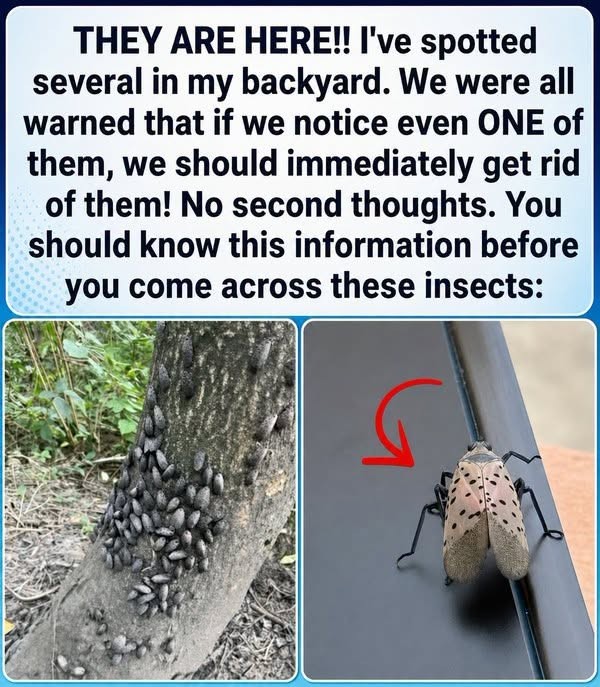
Insects with patterned wings can be especially striking. Moths, planthoppers, leafhoppers, beetles, and other groups may display gray, brown, black, white, or spotted markings that help them blend into bark and leaves. Color alone is not a dependable way to identify an insect. Lighting, wing position, and an insect’s age can also make the same species appear quite different in a photograph.
Do Not Identify an Insect From Color Alone
A gray-winged insect with dark spots may resemble several unrelated species. Accurate identification normally depends on a combination of characteristics rather than one visual feature. Entomologists and trained identifiers often examine wing shape, body form, antennae, leg structure, size, resting posture, and the location where the insect was found. They may also consider the season and the insect’s behavior.
For example, an insect that holds its wings roof-like over its body may belong to a different group from one that rests with its wings flat and open. An insect that jumps rapidly from stems may be different from a moth that remains still on tree bark. A beetle’s hardened wing covers also look different from the scaled wings of a moth, even when both have similar colors.
Because many insects are harmless or beneficial, it is best to avoid online identifications based only on a vague description. A photograph can be useful, but even a clear image may not allow a definite species-level answer. Local experts are often best placed to identify a specimen because they understand which insects are known to occur in the area.
How to Observe an Unknown Garden Insect Safely
Most insects found in gardens can be observed safely without touching them. The goal is to gather information while minimizing stress to the insect and avoiding unnecessary disturbance to the tree.
Take Clear, Useful Photographs
If possible, take several photographs from a respectful distance. A phone camera can often provide enough detail when used in good natural light. Try to capture:
- The top and side view of the insect
- Its wings, body, head, and antennae
- The branch, leaf, or bark where it is resting
- A size reference, such as a nearby leaf or a ruler placed beside it without touching the insect
- Any visible groups of insects, eggs, shed skins, or unusual residue on the plant
It is also helpful to note the date, approximate location, time of day, and weather conditions. Was the insect alone or were there many? Did it fly, hop, crawl, or remain still? Was it found on leaves, bark, the trunk, or the ground? These details can help an extension agent or insect identification service provide a more informed response.
Avoid Unnecessary Handling
Do not crush, spray, or handle an unfamiliar insect simply because it looks unusual. Handling can injure delicate species and can complicate later identification. Some insects may also cause mild skin irritation or trigger allergic reactions in sensitive people, so observing without direct contact is a sensible precaution.
If children or pets are nearby, encourage them to look without touching. This protects both the observer and the animal while creating an opportunity to learn about biodiversity in everyday spaces.
Check the Maple Tree for Signs of Stress or Damage
One insect on a branch is not necessarily a pest problem. More meaningful evidence comes from the overall condition of the maple tree. Examine leaves and branches calmly and systematically before deciding whether action is needed.
Possible signs worth noting include unusually heavy leaf chewing, widespread discoloration, curling leaves, early leaf drop, sticky residue on surfaces below the tree, or clusters of insects concentrated on young growth. Small holes or minor leaf damage are common in outdoor environments and may not threaten an otherwise healthy mature tree.
Other causes can also affect a maple tree’s appearance. Heat, drought, compacted soil, disease, nutrient issues, storm damage, and root stress can all contribute to leaf changes. During hot weather, trees may show signs of water stress, particularly if they are newly planted or growing in restricted urban soil. It is therefore important not to blame an insect without evidence.
Consistent watering practices can support tree health, but the appropriate amount depends on the tree’s age, soil type, rainfall, and local conditions. Watering deeply and less frequently is often preferable to shallow daily watering for many established landscape trees, though local horticultural guidance should take priority. Avoid overwatering, which can create separate root health problems.
Native Insects, Beneficial Species, and Potential Pests
Not every insect on a tree is an enemy of the garden. Many play useful ecological roles. Predatory insects may feed on other insects, while pollinators support flowering plants. Decomposer species help recycle organic material. Even leaf-feeding insects can serve as food for birds and other wildlife.
Some insects, however, can become problematic when their numbers are high or when they are introduced outside their natural range. Invasive species are organisms that establish and spread in new environments and may cause ecological or economic harm. Government agencies monitor certain invasive insects because early detection can help protect forests, farms, and urban landscapes.
It is important to use the term “invasive” carefully. An unfamiliar insect is not automatically invasive, and a non-native species is not always harmful. Proper identification and confirmation from qualified sources are essential. Public reports are valuable when they include photographs and location information, but they should be submitted through appropriate local or national channels rather than shared as unverified claims.
When to Contact Local Experts
Consider contacting a local cooperative extension service, municipal forestry department, university entomology program, or agricultural agency if you observe repeated signs of significant plant damage, a large concentration of unfamiliar insects, or an insect that matches an official pest alert in your area.
In the United States, state departments of agriculture, the U.S. Department of Agriculture’s Animal and Plant Health Inspection Service, and local extension offices may provide reporting instructions for regulated pests. Other countries often have comparable plant health authorities. These organizations can advise residents about identification, monitoring, and any recommended next steps.
When making a report, provide the clearest information available: photographs, date, neighborhood or general location, host plant, estimated size, and observed behavior. Do not transport an insect to another area unless authorities specifically instruct you to do so. Moving plant material, firewood, or live insects can unintentionally spread pests.
Why Accurate Information Matters
Social media and online image searches can make it easy to find dramatic claims about unusual insects. However, photographs are frequently mislabeled, and a species found in one country or region may not occur in another. Reliable information should come from government plant health agencies, universities, museums, or established science and news organizations that cite expert sources.
Before taking action, compare any suspected identification with official fact sheets for your region. Look for several matching characteristics, including life stage, host plant, season, and distribution. If the evidence remains uncertain, seek professional confirmation. This approach helps prevent unnecessary pesticide use and protects beneficial insects that contribute to a healthy garden ecosystem.
A Backyard Discovery Can Support Citizen Science
Encountering an unusual insect can be an invitation to learn more about the environment just outside the door. Observations from residents can contribute to citizen science projects and local biodiversity records when submitted responsibly. Platforms operated or supported by scientific institutions may help document where species occur, although community identifications should still be treated as preliminary when a regulated pest is suspected.
Backyard observations are especially valuable because insects can be difficult to monitor across large areas. Gardeners, walkers, and homeowners often notice seasonal changes before formal surveys take place. A careful photograph of a wing pattern, a note about the tree species, and a record of the date can all become useful pieces of ecological information.
At the same time, curiosity should be balanced with caution. Avoid using broad-spectrum insecticides unless there is a confirmed need and guidance from a qualified professional. These products may affect non-target insects, including pollinators and natural predators. Integrated pest management, which emphasizes monitoring, accurate identification, and targeted solutions, is widely recognized as a more thoughtful approach to many garden pest concerns.
Turning a Brief Sighting Into a Better Understanding of Nature
A quick trip outdoors to water a maple tree can reveal how much life exists in familiar spaces. A gray-winged, spotted insect may be a harmless visitor, a native species carrying out its normal life cycle, or a signal that warrants closer observation. The key is to remain curious without jumping to conclusions.
Take a photograph, note what you see, inspect the tree for genuine signs of stress, and consult trustworthy local resources if concerns remain. These simple steps support healthier gardens and more accurate public understanding of insects. In many cases, the encounter will become a memorable reminder that even an ordinary backyard contains a complex and often overlooked natural world.
Sources
Disclaimer: This content is intended for entertainment purposes only and is not based on real events.