
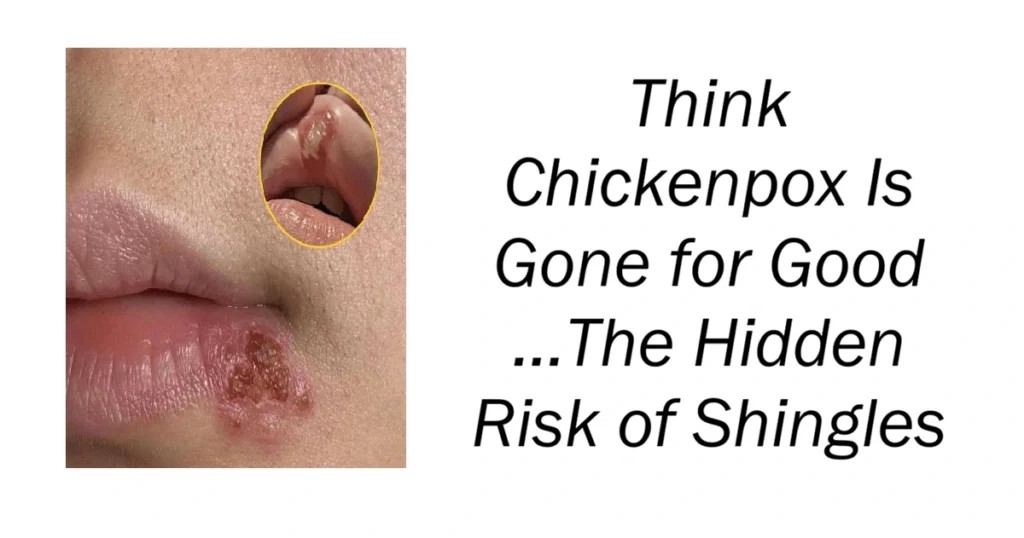
Think Chickenpox Is Gone for Good …The Hidden Risk of Shingles
For many people, chickenpox is remembered as a common childhood illness: an itchy rash, several days away from school, and then recovery. It can be easy to assume that once chickenpox clears, the virus responsible has left the body permanently. However, that is not how the varicella-zoster virus works.
Varicella-zoster virus, often shortened to VZV, causes chickenpox during an initial infection. After recovery, the immune system controls the virus, but it does not completely remove it from the body. Instead, the virus can remain inactive, or dormant, in nerve cells for many years. Later in life, it may reactivate and cause shingles, also called herpes zoster.
Shingles is a common and potentially painful condition, particularly among older adults and people with weakened immune systems. While most people recover, early recognition and timely medical advice can reduce the risk of complications. Understanding the link between chickenpox and shingles can help people identify warning signs, protect vulnerable contacts, and make informed decisions about vaccination.
What Happens to the Chickenpox Virus After Recovery?
Chickenpox occurs when someone is infected with varicella-zoster virus for the first time. The illness usually produces a widespread itchy rash along with symptoms such as fever, tiredness, or reduced appetite. Once the infection resolves, the visible rash disappears and the person generally develops immunity against another typical case of chickenpox.
However, VZV has an important biological feature: it can establish lifelong latency in the nervous system. After the initial infection, the virus travels to clusters of nerve cells called sensory ganglia, located near the spinal cord and brain. There, it remains inactive and causes no symptoms.
This dormant state can last for decades. A person usually has no way of knowing that the virus is still present. Most people who have had chickenpox will never think about VZV again unless it reactivates later as shingles.
Shingles is therefore not a new infection acquired from another person in the usual sense. It is a reactivation of the same virus that caused chickenpox earlier in life. People who have never had chickenpox, or who have not been exposed to VZV in another way, cannot develop shingles because the virus must first be present in the body.
Why Does Shingles Develop?
Medical researchers do not always know exactly why varicella-zoster virus reactivates in one person at a particular time. The immune system normally keeps the dormant virus under control. As people age, the immune response to VZV may become less effective, which is one reason shingles becomes more common with increasing age.
The risk may also be higher in people whose immune systems are weakened by certain illnesses or treatments. This can include people receiving medicines that suppress immune activity, such as some cancer treatments, transplant medicines, or long-term high-dose corticosteroids. Conditions that affect immune function may also increase vulnerability.
Physical illness, fatigue, and emotional stress are often discussed in connection with shingles. Stress can affect general health and immune function, but it should not be treated as a proven single cause of an outbreak. Shingles can occur in people who feel well and have no obvious trigger. The condition is not a sign that someone has done anything wrong or failed to manage stress properly.
According to the U.S. Centers for Disease Control and Prevention, about one in three people in the United States will develop shingles during their lifetime. The likelihood rises with age, and the condition can also affect younger adults and, less commonly, children.
Early Shingles Symptoms: Pain, Tingling, and Sensitivity
Shingles can be difficult to recognize at first because discomfort may begin before the rash appears. Some people notice unusual sensations in a specific area of skin several days before visible changes develop. These sensations may include:
- Burning, stabbing, aching, or throbbing pain
- Tingling, itching, or a “pins and needles” feeling
- Increased sensitivity to touch
- Numbness or altered sensation
- Discomfort localized to one area of the torso, face, neck, or another body region
These symptoms happen because the reactivated virus affects a sensory nerve. Pain can range from mild to severe, and it does not always match the appearance of the later rash. For some people, even light contact from clothing or bedding can become uncomfortable.
General symptoms may occur as well. These can include headache, fatigue, fever, or feeling unwell, though not everyone experiences them. Because early symptoms can resemble other conditions, a prompt medical assessment is useful when unexplained nerve-like pain is followed by skin changes.
Why a Shingles Rash Usually Appears on One Side
The shingles rash usually follows the path of an individual sensory nerve. This creates a distinctive pattern called a dermatome, which is an area of skin supplied by nerves from a particular part of the spinal cord or face.
As a result, the rash commonly appears as a band or cluster on one side of the body. It often develops on the chest, abdomen, back, or face, but it can occur elsewhere. The rash generally does not cross the body’s midline. Small fluid-filled blisters can form in the affected area, and these later dry and crust over as healing progresses.
A one-sided painful rash is an important clue, but not every rash that appears on one side is shingles. Other skin conditions can look similar, and only a qualified healthcare professional can assess an individual’s symptoms. Anyone with a new blistering rash, especially one accompanied by pain or sensitivity, should seek medical advice rather than attempting to self-diagnose.
Shingles Near the Eye Requires Urgent Attention
Shingles affecting the face can be especially concerning when it involves the eye or the skin around it. This form is sometimes called herpes zoster ophthalmicus. It can cause eye pain, redness, swelling, light sensitivity, blurred vision, or a rash on the forehead, eyelid, or nose.
Because shingles involving the eye can lead to serious eye complications, urgent medical evaluation is important. A painful rash near the eye, changes in vision, or eye redness should not be ignored. Rapid assessment by a healthcare professional, and sometimes an eye specialist, can help protect vision and guide appropriate treatment.
It is also sensible to seek prompt advice for a rash affecting the ear, widespread rash, severe pain, or shingles symptoms in someone with a weakened immune system. Infants, pregnant people, and people with immune suppression may require particular clinical consideration if they have been exposed to VZV.
Postherpetic Neuralgia: A Lasting Shingles Complication
Most shingles rashes heal within a few weeks. However, pain can sometimes continue after the skin has healed. This complication is known as postherpetic neuralgia, or PHN. It occurs when nerve fibers damaged or irritated during shingles continue sending pain signals after the original outbreak is over.
PHN may cause burning pain, sharp discomfort, itching, or extreme sensitivity in the area where the rash occurred. It can interfere with sleep, work, mobility, mood, and daily activities. The chance of developing postherpetic neuralgia increases with age, especially among adults over 50, although it can occur in other age groups.
Healthcare professionals can recommend options to manage ongoing nerve pain. These may include prescription medicines, topical treatments, and individualized pain-management strategies. People experiencing persistent pain after a shingles rash should discuss it with a clinician rather than assuming it will resolve without support.
Can Shingles Spread to Other People?
A person with shingles cannot directly give another person shingles. However, the virus in fluid from active shingles blisters can spread through direct contact. If a susceptible person has never had chickenpox and has not received chickenpox vaccination, exposure to the blister fluid could lead to chickenpox.
In other words, exposure to someone with shingles may cause chickenpox in a person without immunity, not shingles. Once a person has had chickenpox, the virus can remain dormant and may potentially reactivate as shingles later in life.
The risk of transmission is lower when the rash is covered. According to public health guidance, people with shingles should keep the rash covered when possible, avoid touching or scratching it, and wash their hands regularly. They should also avoid direct contact with people at higher risk from chickenpox until all blisters have crusted over. This includes pregnant people without known immunity to chickenpox, newborn babies, and people with weakened immune systems.
Shingles Treatment and the Importance of Acting Early
Antiviral medicines may be used to treat shingles. These medicines can help limit viral replication and are generally most effective when started as soon as possible after the rash begins. Clinical guidance often emphasizes treatment within the first 72 hours, although a healthcare professional may recommend treatment later in some circumstances, including ongoing new blister formation or a higher risk of complications.
Antiviral treatment is particularly important for people with shingles near the eye, people with weakened immune systems, and those with severe symptoms. A clinician may also advise on pain relief, skin care, and signs that require further assessment.
Home care should be gentle and practical. Keeping the rash clean and dry, wearing loose clothing, and using cool compresses may ease discomfort for some people. It is important not to apply unverified remedies that could irritate broken skin. People should speak with a pharmacist or healthcare professional before using medicines, especially if they have other health conditions or take regular prescriptions.
Can the Shingles Vaccine Help Prevent Illness?
Vaccination is an important tool for reducing the risk of shingles and its complications. The recombinant zoster vaccine is widely recommended in several countries for older adults and for some younger adults with weakened immune systems. It does not contain a live virus and is designed to strengthen the immune response against varicella-zoster virus.
Recommendations differ by country, age, medical history, and local public health policy. In the United States, the CDC recommends the recombinant zoster vaccine, known by the brand name Shingrix, for adults aged 50 years and older and for adults aged 19 years and older who are or will be immunodeficient or immunosuppressed because of disease or therapy.
People who have had shingles before may still be eligible for vaccination, as a previous episode does not guarantee lifelong protection from another outbreak. A healthcare professional can advise on the appropriate timing after illness and on whether vaccination is suitable for an individual’s circumstances.
The Key Facts About Chickenpox and Shingles
Chickenpox may seem like a distant childhood memory, but the virus that causes it can remain inactive in the body for life. If it reactivates, it can cause shingles, a condition usually marked by pain, tingling, sensitivity, and a one-sided blistering rash.
Shingles is common, particularly with advancing age, and it deserves timely attention. Early medical advice may allow antiviral treatment to begin quickly and is particularly important for rashes near the eye or face. Although shingles does not directly spread from one person to another, contact with blister fluid can transmit the virus to someone without immunity and cause chickenpox.
Knowing the symptoms, following sensible infection-control steps, and discussing vaccination with a healthcare professional are practical ways to reduce the impact of shingles. Anyone with unexplained nerve pain, a new painful rash, eye symptoms, or concerns about exposure should contact an appropriate healthcare provider.
Sources
Disclaimer: This content is intended for entertainment purposes only and is not based on real events.