

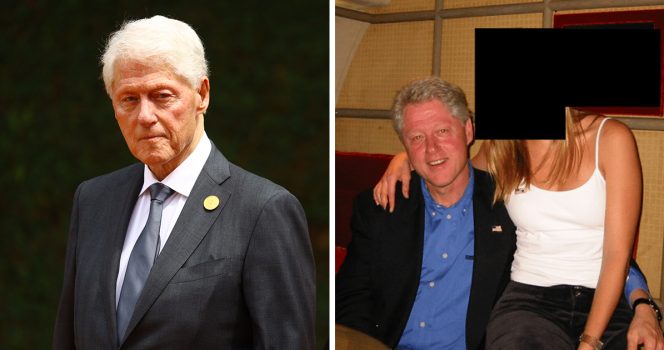
Former U.S. president Bill Clinton has publicly responded after a significant release of previously unseen photographs connected to the long-running investigation into Jeffrey Epstein became available to the public. The images, disclosed by the United States Department of Justice, have reignited political debate, media scrutiny, and online speculation, even as officials stress that the presence of individuals in the files does not imply wrongdoing.
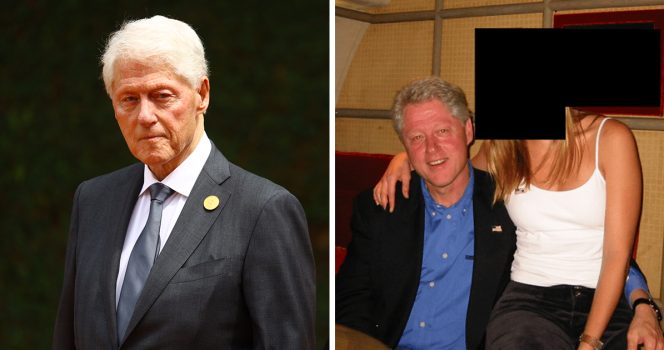
The latest disclosure, made in accordance with a congressional mandate, includes a vast archive of materials compiled during federal investigations into Epstein and his associate Ghislaine Maxwell. The release followed the passage of the Epstein Files Transparency Act, which requires the Justice Department to publish hundreds of thousands of pages of documents, images, and other records tied to the case, subject to redactions for privacy and legal reasons. The goal, lawmakers said, is to promote transparency rather than to draw conclusions about individuals named or shown in the materials.
Among the figures appearing in multiple photographs is Bill Clinton, who served as president from 1993 to 2001. Several images circulating online show Clinton in social settings that also include Epstein and Maxwell, some taken more than two decades ago. As soon as the images became public, critics and commentators began revisiting past reporting and rumors, prompting Clinton’s team to issue a forceful response.
In a statement shared on social media, a spokesperson for the former president rejected the suggestion that the image release was intended to expose new information about Clinton. Instead, the spokesperson argued that Clinton was being unfairly singled out amid a politically charged process. According to the statement, the timing and presentation of the materials were being used to redirect attention away from other issues, with Clinton portrayed as a convenient focal point.
The spokesperson emphasized that the photographs are old and lack broader context, noting that many were taken during public or semi-public events at a time when Epstein maintained connections with a wide range of prominent figures. “This is not about Bill Clinton,” the statement said, adding that Clinton had no involvement in Epstein’s criminal activities and had severed contact years before Epstein’s legal troubles became widely known.
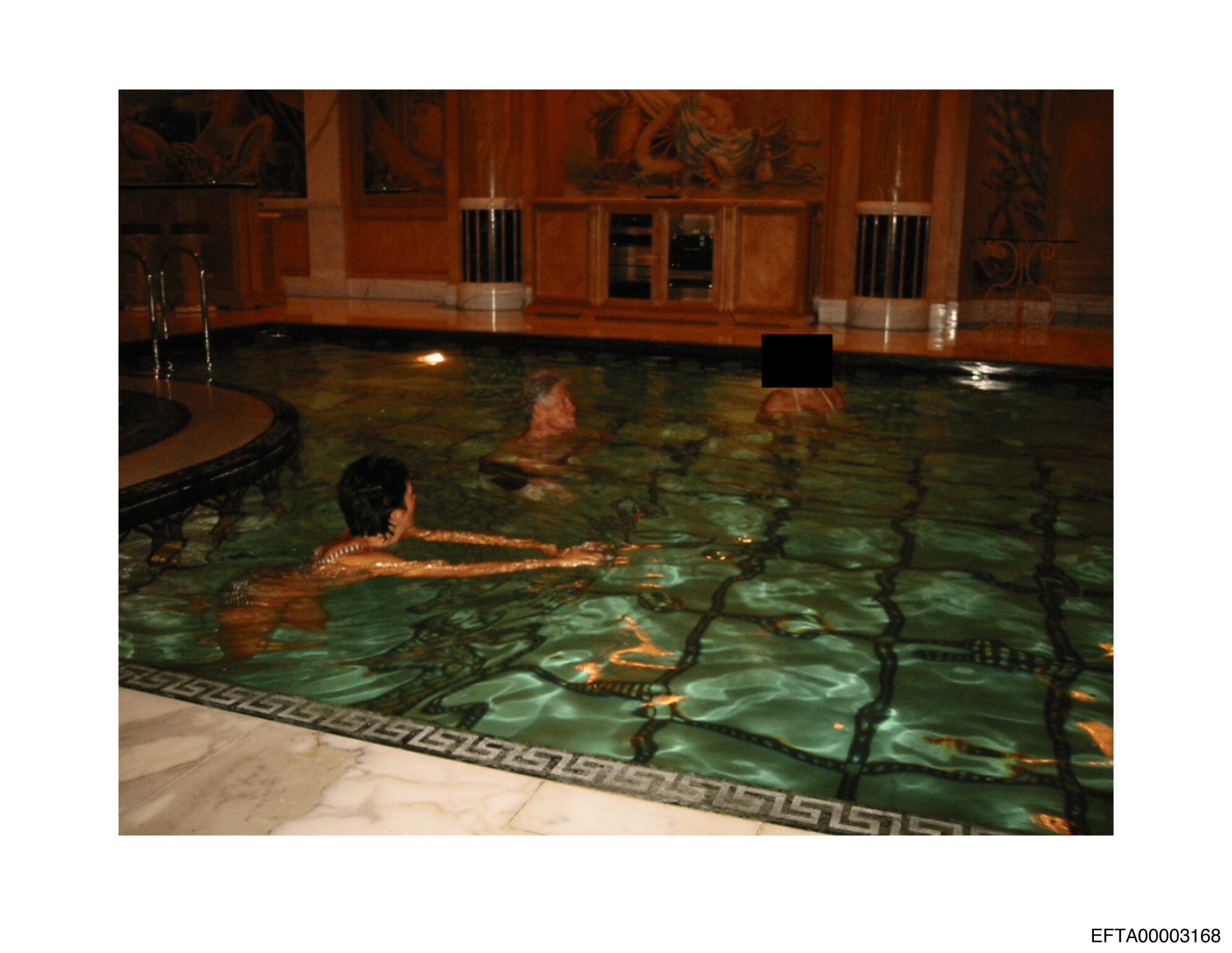
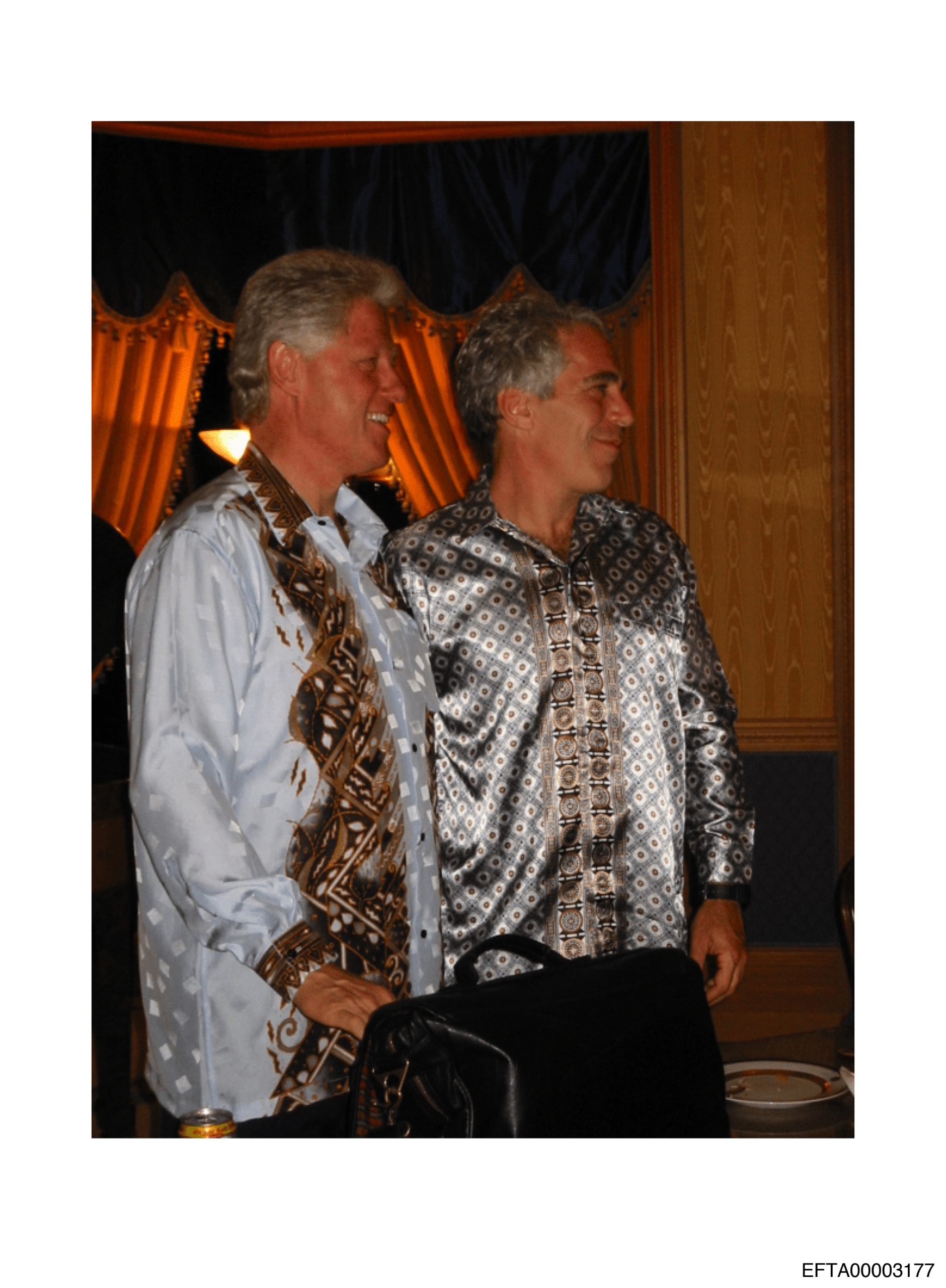
Some of the most widely shared images show Clinton in relaxed, informal environments, including a photograph taken near a swimming pool alongside Maxwell and an unidentified individual whose face has been obscured in the released version. Other images depict Clinton seated at a dinner table with Epstein and Mick Jagger, or appearing in leisure settings. While these photographs quickly went viral, legal experts and journalists have cautioned against reading them as evidence of misconduct.
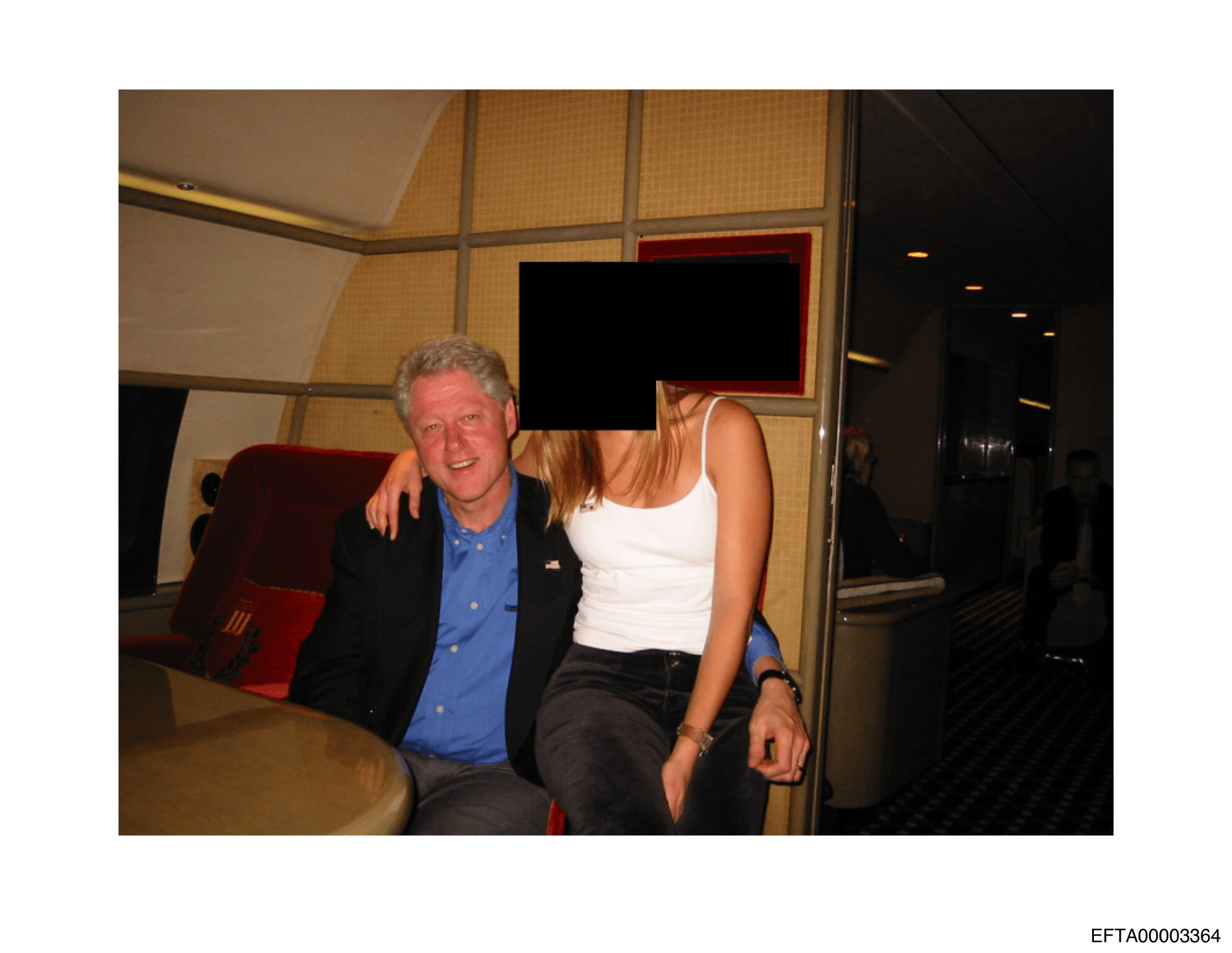
The public response intensified after White House press secretary Karoline Leavitt reposted one of the images online with a brief, lighthearted caption. That post drew criticism from some observers, who argued that commentary of that nature risked inflaming speculation rather than encouraging careful examination of the facts.
It is important to note that the release of the Epstein-related files is not limited to Clinton. The archive includes references to and images of numerous politicians, business leaders, entertainers, and other public figures. Officials have repeatedly stated that inclusion in the materials does not constitute an accusation. Many of the individuals shown were never charged with any crime related to Epstein, and some had only limited or incidental contact with him.
Clinton’s spokesperson, Angel Ureña, drew a sharp distinction between those who ended contact with Epstein once concerns about his conduct emerged and those who allegedly maintained relationships afterward. According to Ureña, Clinton belongs firmly in the former category. He reiterated that Clinton cut ties with Epstein well before Epstein’s 2008 guilty plea in Florida on charges related to solicitation, a point that has been previously reported by multiple news outlets.
Reporting by The Guardian has noted that Clinton acknowledged having traveled on Epstein’s private aircraft in the early 2000s as part of humanitarian and diplomatic efforts. However, Clinton has consistently denied any awareness of or involvement in Epstein’s crimes and has said he had no contact with Epstein after around 2005. No evidence has emerged contradicting those statements.
The broader release of the Epstein files has also revived political tensions in Washington. While former president Donald Trump does not appear in the most recent set of photographs, his past social interactions with Epstein have been documented in earlier reporting. Trump has stated that he distanced himself from Epstein years before the financier’s arrest, and he has denied any knowledge of criminal conduct.
The timing of the document release, late on a Friday, has drawn criticism from commentators across the political spectrum. Some argue that such scheduling minimizes immediate scrutiny, while others see it as a routine administrative decision tied to statutory deadlines. Regardless, the sheer scale of the material—nearly 600,000 pages when complete—means that journalists and researchers will be examining the files for months, if not years.
Legal analysts caution that transparency initiatives of this magnitude often generate confusion before clarity. Large document dumps can create the impression of new revelations even when they largely consist of previously known information presented in a different format. In the Epstein case, many of the relationships shown in photographs were already documented in flight logs, address books, and earlier media reports.
For Clinton, the renewed attention is an unwelcome return to controversies that have followed him long after his presidency. His allies argue that focusing on decades-old images distracts from the legal outcomes of the Epstein case itself, including Maxwell’s conviction and the unresolved questions about how Epstein was able to maintain his network for so long.
Critics, however, counter that public figures should expect scrutiny, particularly when transparency laws are designed to shed light on powerful networks. They argue that releasing all relevant materials allows the public to draw its own conclusions, even if those conclusions must be made carefully and without presumption.
As the Justice Department continues to release additional portions of the Epstein files, officials maintain that the process is guided by legal requirements rather than political considerations. Redactions remain in place to protect victims’ privacy and to comply with court orders, and authorities have urged the public to avoid speculation that could cause harm or misinformation.

For now, Clinton’s response represents one of the strongest reactions from any individual prominently featured in the newly released images. Whether the renewed attention will have lasting political or reputational consequences remains unclear. What is certain is that the Epstein files, once sealed from public view, are now reshaping conversations about accountability, transparency, and the responsibilities of those who move within elite social circles.
As more documents emerge, observers expect continued debate—not only about the individuals named or pictured, but also about how societies balance the public’s right to know with fairness, context, and respect for due process.