
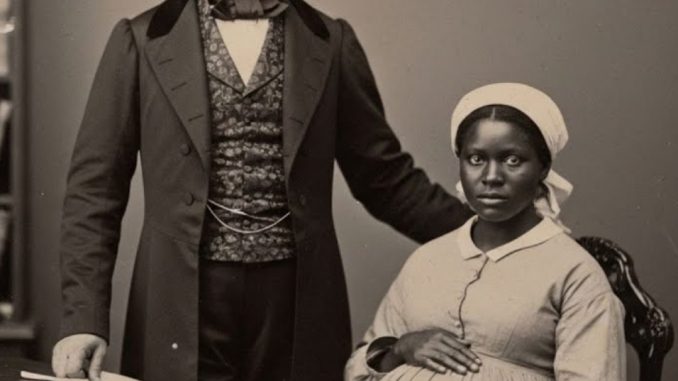
A Louisiana Plantation Record and the Truth Hidden Between the Lines
In the late 1840s, life on Louisiana plantations was documented with a precision that now feels unsettling. Parish registers, account books, property deeds, and private correspondence captured dates, transactions, and ownership with remarkable care. Yet for all that detail, these records often reveal more through what they omit than through what they preserve.
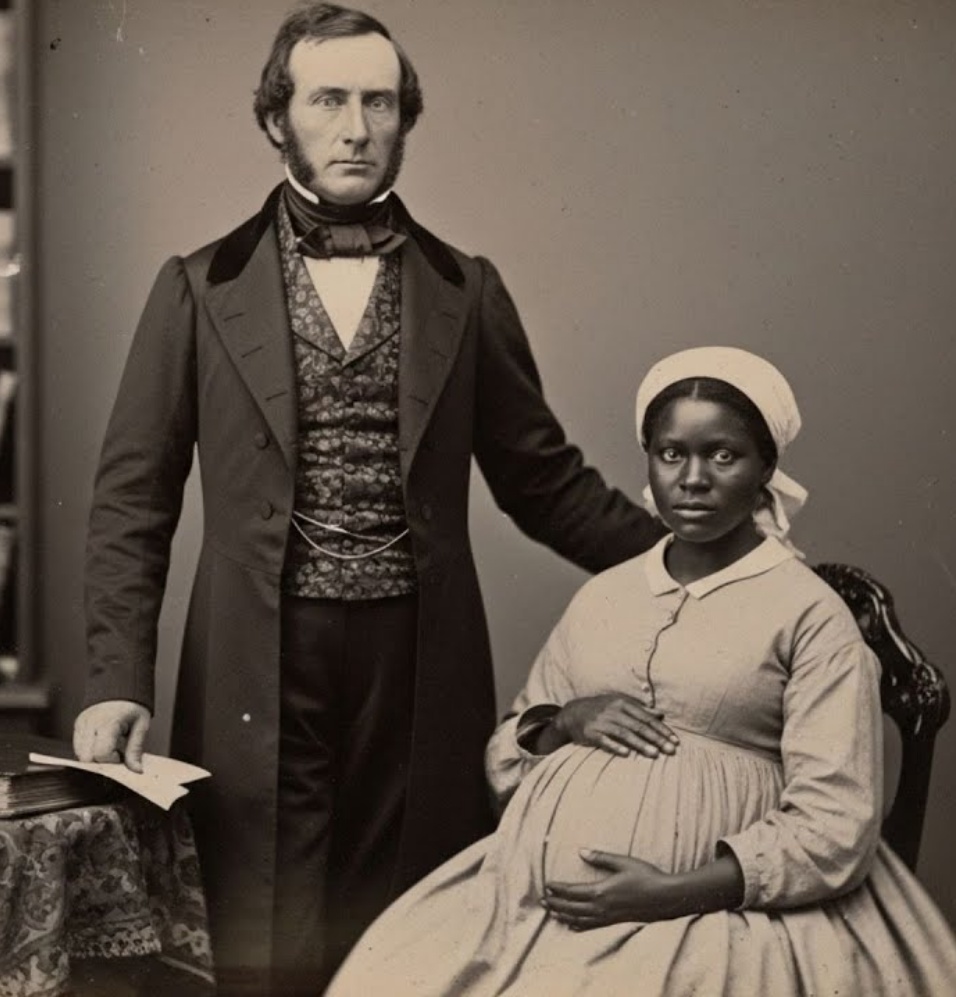
Historians studying the antebellum South frequently encounter entries that raise questions not because they are dramatic, but because they are incomplete. One such entry, preserved in regional archives and echoed in local oral history, refers to a transaction recorded in the autumn of 1844 involving an enslaved woman named Claraara Mayfield. The sum listed beside her name—twelve cents—stands out even within the harsh and dehumanizing economic logic of slavery.
For generations, that number has fueled speculation. But the deeper significance of the record is not the rumor that grew around it. It lies in what the entry reveals about how slavery functioned, how power shaped every aspect of enslaved life, and how modern readers must approach such material with care rather than sensationalism.
Understanding what historical records can and cannot tell us is essential to interpreting stories like this responsibly.
Why an Unusual Price Raises Immediate Questions
When historians encounter a transaction that appears symbolic or unusually small, several explanations are considered. The figure may represent a partial payment connected to a larger exchange. It may be a bookkeeping placeholder used for legal or accounting purposes. In some cases, it may indicate a transfer within a family rather than a public sale conducted at market value.
Under slavery, people were treated as assets, and those assets were appraised according to factors such as age, perceived health, and labor capacity. Records show that valuations could vary widely depending on context, local economics, and the intentions of the parties involved.
A pregnancy could be viewed in conflicting ways. In some circumstances, enslavers considered it an economic increase, since children born into slavery were automatically claimed as property. In other situations, pregnancy was treated as a financial burden if it was believed to limit immediate labor or require additional care. This cruel calculation was never consistent, and it was shaped entirely by those in power.
For that reason, a single price, taken out of context, cannot prove intent, conspiracy, or moral motivation. What it does indicate is that the record is incomplete or disconnected from surrounding documentation that might clarify the transaction.
The Problem With “Mystery Framing” in Slavery Narratives
Stories involving slavery often gain traction online when they are framed as mysteries: a shocking sale, a hidden truth, a secret family connection, followed by dramatic events inside a grand plantation home. This structure is effective at capturing attention, but it can distort history.
Under slavery, silence was not unusual. It was systemic. Family separations were routine. Parentage was frequently undocumented. Enslaved women’s bodies were controlled by law, custom, and force. The absence of names, testimony, or explanation in the historical record does not point to intrigue—it points to erasure.
When writers treat these gaps as invitations for speculation, enslaved individuals risk becoming narrative devices rather than human beings. Their lives are reduced to plot twists, while the structural violence that shaped their existence fades into the background.
A responsible historical approach resists this impulse. It centers the reality of power imbalance rather than constructing dramatic suspense where the archive falls silent.
Power Imbalance and the Limits of Language
One of the most important principles in studying slavery is recognizing that modern concepts like mutual choice or personal agency do not apply in the same way. Enslaved people lived under conditions defined by coercion, surveillance, and the constant threat of punishment or sale.
When historical documents use vague or softened language to describe interactions within enslaving households, readers must be cautious. Such language often reflects the perspective of those with legal and social protection, not the lived experience of those without it.
This does not mean historians can claim certainty about every detail. It does mean that writers must avoid framing speculation as fact or presenting imbalance as ambiguity. Under slavery, control was not a background condition—it was the defining one.
If records or rumors suggest that an enslaved woman’s pregnancy was connected to someone within the enslaving household, that is not a dramatic revelation. It is a reflection of a system that normalized domination while concealing responsibility.
What Personal Documents Can and Cannot Prove
Some versions of this story rely on the discovery of private letters, diaries, or religious records uncovered long after the events they describe. Such documents can be valuable, but only when treated carefully.
Personal writings often reflect emotion rather than evidence. They may be incomplete, self-justifying, or written with an audience in mind. A diary entry might reveal anxiety or guilt without offering verifiable detail. An unsent letter may represent intention rather than action.
Even when authentic, these sources overwhelmingly reflect the voices of those who were literate, protected, and empowered. The perspectives of enslaved individuals rarely appear directly and are often filtered through the interpretations of others.
Responsible historical writing clearly distinguishes between documented fact, personal interpretation, and later retelling. Blurring those categories risks creating a narrative that feels true because it is compelling, not because it is supported.
Centering the Human Reality
Even if we accept only the basic outline suggested by the record—that Claraara was sold and relocated while pregnant—the human implications are profound. Pregnancy under slavery intensified vulnerability. It increased surveillance, restricted movement, and heightened the risk of separation.
It also meant bringing a child into a legal system that treated that child as property from birth.
A story that centers Claraara’s humanity does not speculate about secrets. It focuses on constraint. It asks what choices were available, what risks were unavoidable, and how decisions were imposed upon her body and future without consent.
This approach shifts attention away from the emotional complexity of enslaving households and toward the lived reality of the enslaved themselves.
Why Dramatic Endings Can Mislead
Many retellings of plantation-era stories end with a dramatic event: a fire, a disappearance, a sudden vanishing that suggests either punishment or escape. While such events did occur, they often function in storytelling as emotional closure.
History rarely provides such neat conclusions.
Buildings burned. Records were lost. People disappeared into undocumented spaces. Sometimes this meant death. Sometimes it meant relocation. Often it meant uncertainty that no surviving document can resolve.
When writers present speculative survival or disappearance as definitive truth without strong evidence, they risk replacing history with comforting myth. Ethical storytelling acknowledges uncertainty rather than resolving it for dramatic effect.
Writing This History Responsibly
An engaging long-form article does not require sensational detail. Tension can be built through investigation, context, and clarity.
A responsible structure might begin with the unusual ledger entry and explain why it draws attention. It can then explore how record-keeping worked, how valuations were made, and why pregnancy complicated those calculations. It should explain why paternity was rarely recorded and why coercion was embedded in the system itself.
Most importantly, it should center the enslaved individual’s lived reality and acknowledge the limits of what the archive preserves.
Conclusion
The story of the so-called “twelve-cent sale” persists because it feels like a puzzle waiting to be solved. But its real significance lies elsewhere. It exposes how slavery transformed human lives into transactions and how historical records reflect that violence through omission as much as documentation.
When we tell stories about slavery, the goal should not be shock. It should be understanding. It should illuminate how power operated, how silence was enforced, and how humanity was systematically denied.
Claraara Mayfield’s name survives in a ledger not as a mystery to exploit, but as a reminder of how many lives were recorded without dignity or voice. Interpreting that record responsibly means resisting sensationalism and choosing clarity over drama.
History does not ask us to invent answers where none exist. It asks us to listen carefully to what remains—and to honor what was taken away.