

Why Women Cross Their Legs: A Deeper Look at Body Language and Meaning
Crossing one’s legs may seem like a simple, almost automatic habit. Yet when a woman crosses her legs, the gesture often carries layers of meaning shaped by psychology, social norms, and long-standing cultural traditions. It can signal comfort, confidence, self-awareness, or even subtle emotional boundaries — all without a single word being spoken.
What appears to be a casual posture is, in reality, a quiet form of communication. From historical expectations of elegance to modern interpretations in workplaces, social settings, and personal interactions, leg-crossing remains one of the most recognizable elements of female body language.
To understand why women cross their legs, it helps to look beyond comfort and explore how this posture developed, what it communicates psychologically, and why it continues to matter today.
A Posture Shaped by History

Long before modern furniture, tailored clothing, or ergonomic design, the way women sat was closely tied to social expectations. In the 18th and 19th centuries, posture was seen as a reflection of moral character and upbringing. Women were often instructed to sit with their ankles crossed or legs tucked neatly to one side. Crossing the legs at the knee was considered improper or overly bold in many societies.
These expectations were not arbitrary. Sitting “properly” was viewed as a sign of refinement, modesty, and self-control. Young girls were taught these habits early, reinforcing posture as both a physical and social discipline.
By the mid-20th century, cultural shifts began to reshape these ideas. Fashion evolved, chairs changed, and women entered professional and public spaces in greater numbers. In the 1960s, popular culture began to associate crossed legs with sophistication rather than restriction. Elegant silhouettes, fitted skirts, and poised seating positions became symbols of modern femininity and self-assurance.
While the rules loosened, the habit remained — adapting to new meanings rather than disappearing altogether.
The Psychological Layer Behind the Gesture
Although comfort is often the most obvious explanation, psychologists and body language specialists point out that leg-crossing frequently operates on a subconscious level.
The legs and feet are among the least consciously controlled parts of the body. While people may carefully manage facial expressions or hand gestures, leg positioning often reflects genuine emotional states. This makes leg posture particularly valuable in understanding how someone feels in a given moment.
When a woman crosses her legs, she may not be making a deliberate statement, yet her posture can still communicate openness, reservation, interest, or self-protection.
Direction Matters More Than You Think
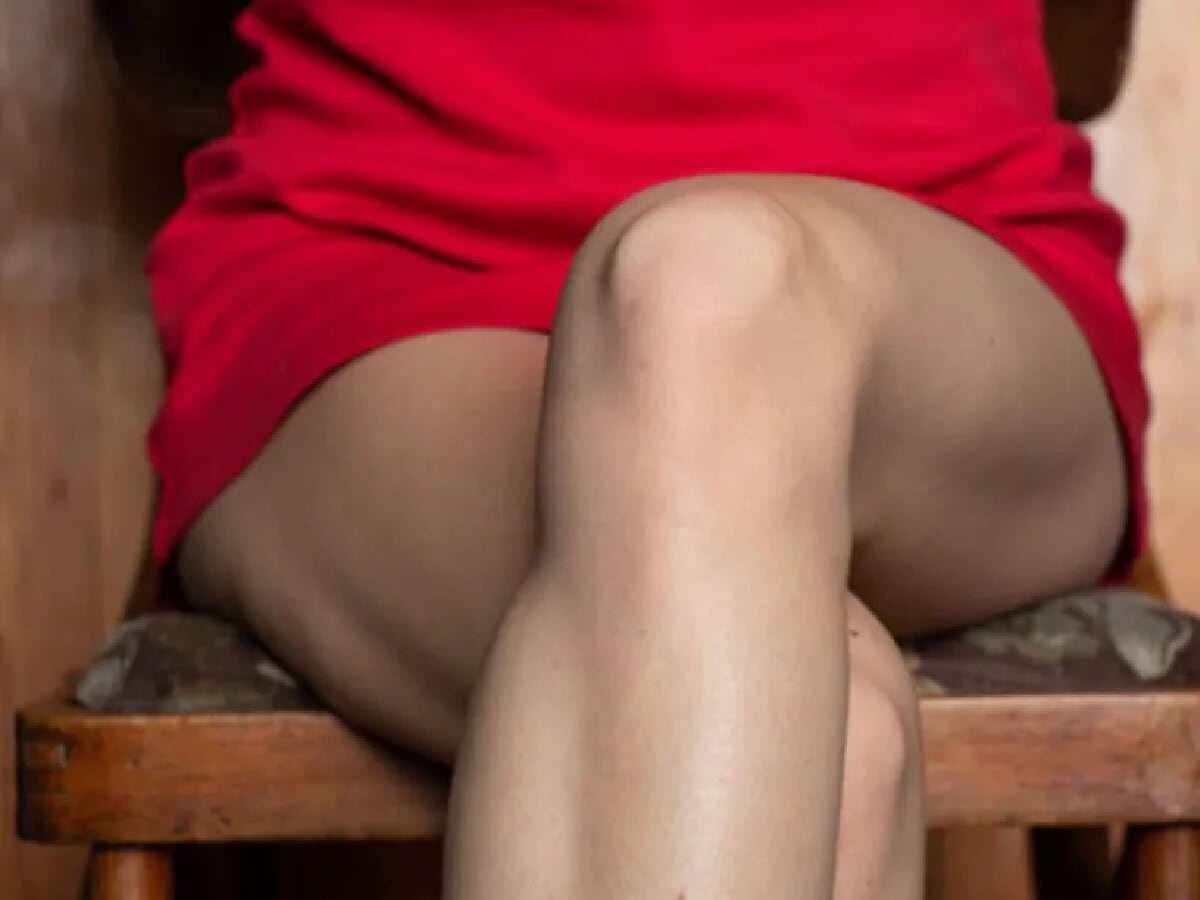
One of the most significant details in leg-crossing is direction. The way the legs are angled — toward or away from someone — can subtly indicate emotional orientation.
When legs are crossed toward another person, it often suggests comfort, engagement, or interest. The body naturally orients itself toward what feels safe or appealing. In conversations, this position can reflect attentiveness and connection.
When legs are crossed away, the signal may shift. This orientation can suggest emotional distance, discomfort, or a desire to disengage. Even if the face remains polite and attentive, the lower body may reveal hesitation or unease.
These cues are rarely intentional, which is why they are often more revealing than spoken words.
Modesty and Social Conditioning
Clothing plays a quiet but influential role in leg-crossing behavior. Historically, skirts and dresses made leg-crossing a practical way to maintain modesty, especially in public or professional environments. Over time, this behavior became ingrained, persisting even as fashion evolved.
Even today, when women wear clothing that offers greater freedom of movement, leg-crossing often remains a default posture. This suggests that the habit is not purely functional but also shaped by long-standing social conditioning.
In many cultures, crossing the legs still feels like a respectful or appropriate way to sit, particularly in formal settings. The gesture can serve as a nonverbal signal of decorum and awareness of social context.
A Form of Self-Comfort and Personal Space
Psychologists also note that leg-crossing can function as a self-soothing behavior. Much like folding arms or clasping hands, crossing the legs can create a subtle physical boundary.
In crowded rooms, unfamiliar environments, or emotionally charged situations, this posture may provide a sense of containment and control. It allows a person to claim personal space without overt gestures, offering comfort in situations where vulnerability might otherwise feel exposed.
This aspect of leg-crossing helps explain why the habit often appears during moments of stress, uncertainty, or quiet introspection.
Leg-Crossing in Professional Settings

In workplaces, leg-crossing takes on additional layers of meaning. Sitting with legs crossed at the knee or ankle is often interpreted as composed and confident. It is a posture commonly seen in meetings, interviews, and formal discussions.
However, context matters. Repeatedly switching leg positions, tightly wrapping the legs, or bouncing a crossed leg may suggest nervousness or impatience rather than confidence.
In leadership environments, posture can influence perception. A relaxed but controlled leg-cross often conveys authority without aggression. It suggests self-assurance paired with professionalism.
Some postures, such as resting one ankle across the opposite knee, are traditionally associated with assertiveness. While less commonly adopted by women, when it is used, it often communicates decisiveness and strong presence.
Casual Settings and Emotional Ease
Among friends or in relaxed environments, leg-crossing often loses its formality. The posture becomes looser, less symmetrical, and more about physical comfort than social signaling.
In these moments, the body language reflects emotional safety. There is less concern about precision or presentation, and more emphasis on ease. The legs may be crossed casually, shifted frequently, or not crossed at all — all signs that the environment feels non-threatening.
This flexibility highlights how posture adapts to emotional context rather than following rigid rules.
Dating and Social Attraction
In social or romantic situations, leg-crossing can become part of subtle nonverbal communication. Crossing the legs toward someone, maintaining relaxed posture, or slowly changing positions can reflect interest and attentiveness.
Unlike exaggerated gestures, these movements are often understated. They operate below conscious awareness, yet they contribute to the overall impression of engagement.
Stillness, fluidity, and orientation matter more than the act itself. A comfortable, natural posture often communicates more warmth than deliberate positioning.
Confidence Without Words
While leg-crossing can signal modesty or caution, it can also reflect confidence. Sitting comfortably in one’s space, without rigidity or tension, suggests self-acceptance and emotional balance.
Confidence in body language is not about dominance but about ease. A woman who crosses her legs naturally, without fidgeting or stiffness, often conveys a sense of calm authority and self-possession.
This balance is why the gesture has endured across generations. It adapts to changing norms while remaining a familiar expression of presence.
A Silent Language That Endures
Crossing one’s legs is rarely a conscious decision, yet it continues to serve as a meaningful form of communication. It reflects cultural history, personal comfort, emotional boundaries, and social awareness — all at once.
Whether in a boardroom, at a café, or waiting quietly in a public space, women around the world continue this gesture without thinking about it. And yet, it quietly tells a story.
The next time you notice yourself crossing your legs, it may be worth pausing for a moment. That simple posture may be expressing far more than comfort — it may be revealing confidence, context, and personality in motion.