
Barack Obama Responds After Social Media Video Targeting Him and Michelle Obama Draws Widespread Criticism
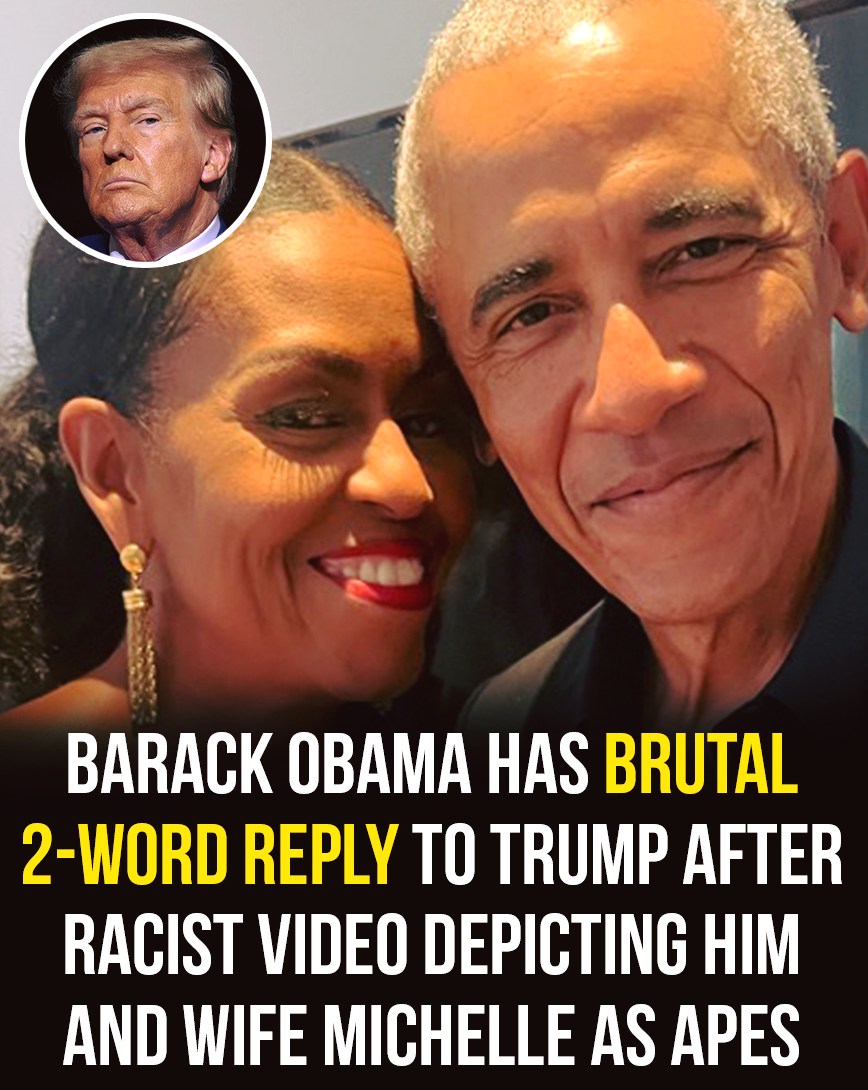
Former President Barack Obama has publicly responded after a social media video shared by former President Donald Trump drew widespread criticism for depicting Obama and former First Lady Michelle Obama in an offensive and racially insensitive manner. The video, which was later removed, sparked bipartisan condemnation and renewed debate about standards of conduct in American political discourse.
This article presents verified information based on statements made in public interviews and coverage from established media outlets. Unverified claims and speculative commentary have been excluded to ensure accuracy and compliance with responsible reporting standards.
The Social Media Post and Public Reaction

Earlier this month, a video was shared on Truth Social that portrayed Barack and Michelle Obama with their faces digitally altered onto animated characters in a manner widely viewed as racially offensive. The clip quickly circulated online and prompted criticism from political leaders, commentators, and members of the public.
Following the backlash, the video was deleted from the platform. However, the incident continued to generate discussion across national media outlets. Critics argued that the content crossed a line in political discourse, while supporters of Trump characterized the reaction as exaggerated.
The controversy quickly moved beyond social media and into formal political commentary, with elected officials from both major parties expressing concern about the tone of the post.
Obama’s Public Response
In an interview released on February 14 with political commentator and YouTuber Brian Tyler Cohen, Barack Obama addressed the video directly. During the conversation, he described the content as “deeply troubling” and reflective of a broader trend in contemporary political communication.
Obama emphasized that while controversial posts may generate attention, he believes most Americans value civility in public life. He stated that during his travels across the country, he encounters individuals who continue to believe in “decency, courtesy, and kindness,” despite what he described as a more theatrical and confrontational environment on social media and television.
He also expressed concern about what he sees as a decline in expectations for decorum in public office. According to Obama, there was once a stronger cultural expectation that political leaders demonstrate a level of respect consistent with the responsibilities of their roles.
His comments were framed not only as a reaction to the video itself but also as part of a broader reflection on the tone of national political discourse.
Response From Political Leaders

The video prompted reactions from several public officials. Some Republican lawmakers criticized the post. Senator Tim Scott publicly described it as inappropriate and offensive. Democratic leaders likewise condemned the content, characterizing it as racially insensitive.
White House Press Secretary Karoline Leavitt addressed the controversy when asked by media outlets, suggesting that coverage of the incident was disproportionate and encouraging reporters to focus on policy matters instead.
Former President Trump, 79, stated that he did not personally create the video and suggested it originated from a staff member. He indicated that he had viewed only part of the clip before it was posted and maintained that he did not believe he had made a mistake in sharing it. As of the latest reporting, he has not issued a formal apology.
No official investigation or disciplinary action has been announced regarding the post.
Political Speech and Digital Platforms
The incident highlights ongoing debates about the responsibilities of public figures when using digital platforms. Social media has become a central arena for political messaging, allowing elected officials and candidates to communicate directly with large audiences.
Experts in political communication note that online platforms often amplify emotionally charged or provocative content. Research from institutions such as the Pew Research Center has documented how social media contributes to political polarization and rapid information dissemination.
The removal of the video demonstrates how content moderation decisions can shape public discourse. However, it also raises questions about accountability and standards for elected officials’ online activity.
Obama’s Broader Concerns About Political Climate

During the same interview, Obama addressed other policy issues, including immigration enforcement practices during the Trump administration. He characterized certain enforcement actions as “deeply concerning” and raised concerns about how federal immigration authorities were deployed in specific cities.
Obama referenced enforcement operations in Minneapolis-Saint Paul and suggested that the scale and manner of federal action warranted scrutiny. However, law enforcement officials have previously defended immigration enforcement activities as part of standard federal procedures.
Public records show that immigration policy has been a central area of disagreement between the Obama and Trump administrations. The Trump administration implemented stricter enforcement measures, while the Obama administration prioritized certain categories of cases and implemented executive actions such as Deferred Action for Childhood Arrivals (DACA).
The former president connected his comments about immigration to a broader discussion about American democratic values. He emphasized the importance of protecting constitutional principles and ensuring that policy decisions align with national ideals.
Standards of Presidential Conduct
Political historians note that expectations for presidential behavior have evolved over time. While partisan conflict has long been part of American politics, modern social media platforms have intensified visibility and immediacy.
Public opinion surveys suggest that Americans remain divided on perceptions of appropriate political conduct. According to Gallup and other polling organizations, trust in political institutions has fluctuated significantly over the past two decades.
Obama’s remarks reflect a perspective that emphasizes restoring traditional norms of civility. Supporters argue that such standards help maintain public trust. Critics contend that political communication has always involved sharp rhetoric and that voters ultimately judge leaders based on policy outcomes.
The Role of Public Accountability

In democratic systems, public officials are accountable to voters through elections and constitutional processes. Obama noted in his interview that the American electorate ultimately determines how it responds to political behavior when casting ballots.
Legal experts explain that while offensive speech may draw criticism, constitutional protections of free expression limit government intervention unless specific legal thresholds are crossed. In this case, there has been no indication of legal action related to the video.
Instead, the matter remains primarily a question of political norms and public opinion.
Media Coverage and Public Reaction
National and international media outlets covered the controversy extensively. Coverage varied in tone, with some focusing on the racial implications of the imagery and others emphasizing the political exchange between Obama and Trump.
Social media users expressed a wide range of reactions. Advocacy organizations addressing racial equity condemned the imagery as harmful, while some political commentators framed the incident within the context of ongoing partisan rivalry.
Media scholars point out that controversies involving high-profile figures often generate substantial engagement online, contributing to cycles of attention that can overshadow policy discussions.
Historical Context of Racial Imagery

Historians and civil rights scholars have long documented the harmful legacy of racial caricatures in American history. Imagery comparing Black individuals to animals has been widely recognized as racist and dehumanizing.
Because Barack Obama was the first African American president, incidents involving racially insensitive depictions carry particular historical resonance. Civil rights advocates emphasize the importance of confronting such imagery due to its longstanding cultural impact.
While the current incident involved a digital video rather than printed material, experts note that the historical context shapes public reaction.
Looking Ahead
The exchange between Obama and Trump underscores persistent divisions in American political life. As the country approaches future election cycles, debates over political tone, accountability, and social media conduct are likely to remain central topics.
Obama concluded his remarks by expressing confidence that many Americans continue to value respect and truth in public life. He indicated that political engagement and informed voting remain key mechanisms for addressing disagreements.
For his part, Trump has continued to defend his approach to communication, emphasizing direct messaging to supporters.
As of now, the video has been removed, and no further official actions have been announced. The episode remains part of a broader national conversation about leadership standards in the digital age.
Sources
Interview with Barack Obama by Brian Tyler Cohen (February 14 release)
Public statements by Senator Tim Scott
White House press briefing comments by Karoline Leavitt
Pew Research Center – Studies on Social Media and Political Polarization
Gallup – Public Trust in Government Polling
Coverage from major national news outlets including CBS News, The New York Times, and The Washington Post