

The Strait of Hormuz is one of the most strategically significant waterways in the world. Roughly a fifth of global oil consumption passes through this narrow corridor connecting the Persian Gulf to the Arabian Sea, according to data from the U.S. Energy Information Administration. Because of its importance to global energy markets and regional security, even small incidents in this maritime chokepoint can send shockwaves through diplomatic channels and financial systems.
Over the past several decades, tensions between the United States and Iran have periodically surfaced in and around these waters. Military analysts, defense officials, and international observers have long warned that miscalculation in such a dense and politically charged environment could escalate quickly. While viral headlines often dramatize these events, reputable sources consistently emphasize a more complex reality: layered deterrence, advanced defensive systems, and carefully calibrated responses are designed to prevent conflict from spiraling beyond control.
This article examines how U.S. aircraft carrier strike groups operate in high-risk waters, how layered missile defense systems function, and how official accounts describe maritime confrontations in the Strait of Hormuz. It also explores why escalation management remains central to U.S.–Iran military doctrine.
The Strategic Importance of the Strait of Hormuz
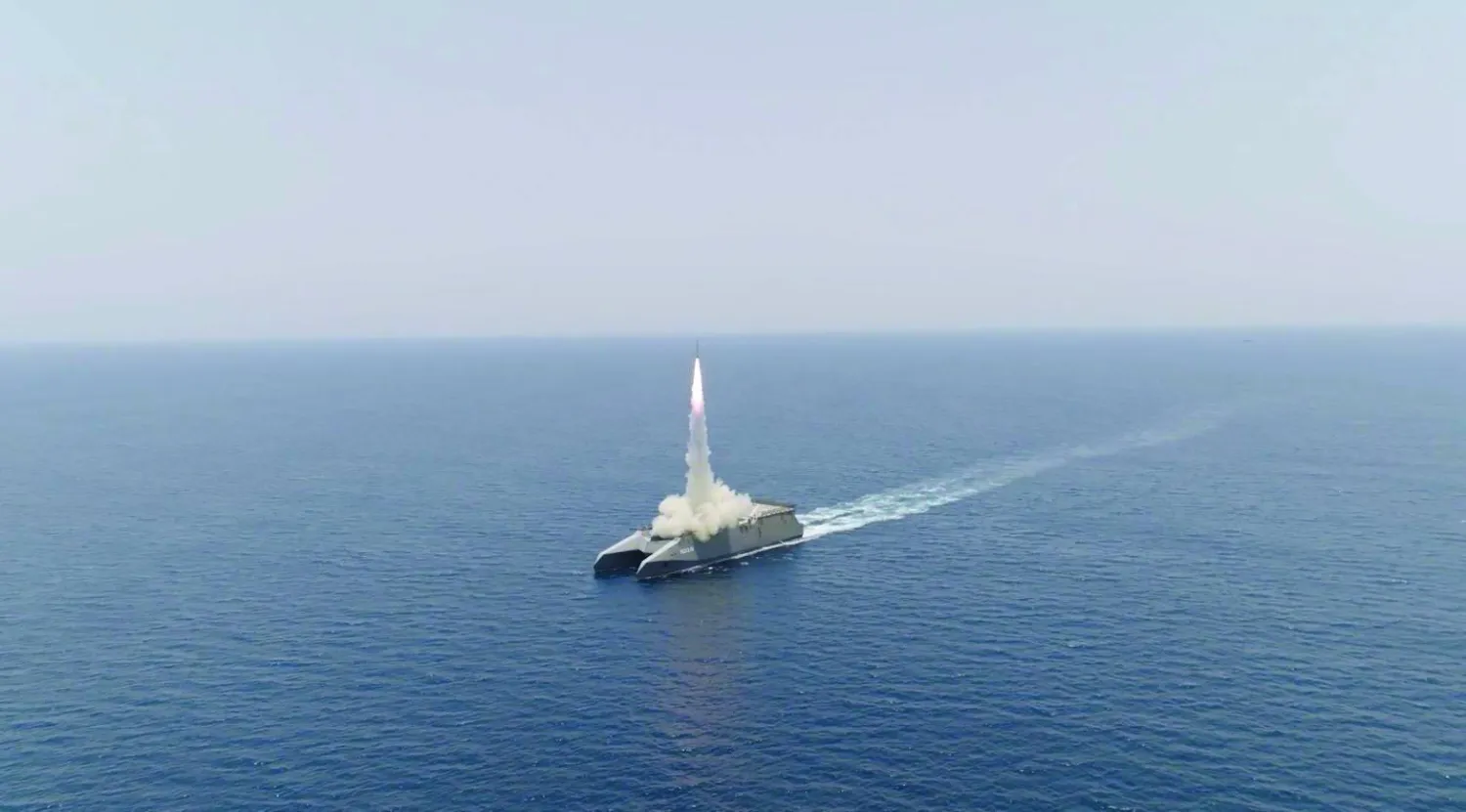
The Strait of Hormuz is only about 21 miles wide at its narrowest point. Shipping lanes in each direction are significantly narrower, making traffic patterns highly structured and closely monitored. According to the U.S. Energy Information Administration, millions of barrels of crude oil and petroleum products transit the strait daily, supplying markets in Asia, Europe, and beyond.
The U.S. Navy’s Fifth Fleet, headquartered in Bahrain, routinely conducts maritime security operations in the region. Official Navy statements describe these transits as part of “freedom of navigation” operations intended to ensure commercial shipping can move without interference.
Iran, for its part, has consistently maintained that it will defend its territorial waters and national interests. Iranian officials have, at various times, warned that pressure through sanctions or military buildup could lead to “consequences” in regional waterways. However, open-state conflict has generally been avoided, in part due to the visible deterrent posture maintained by both sides.
How a Carrier Strike Group Is Structured for Defense
A U.S. aircraft carrier does not operate alone. It travels within a carrier strike group (CSG), a coordinated formation of naval assets that typically includes guided-missile destroyers, cruisers, submarines, and an embarked air wing.
For example, the USS Theodore Roosevelt is a Nimitz-class aircraft carrier capable of launching and recovering dozens of aircraft. However, its true strength lies in integration with escort vessels equipped with the Aegis Combat System. This advanced radar and missile defense platform allows ships to detect, track, and engage multiple aerial threats simultaneously.
Layered defense typically includes:
-
Long-range surface-to-air missiles such as the RIM-66 Standard Missile.
-
Medium-range interceptors.
-
Close-in weapons systems like the Phalanx CIWS, designed to counter threats that penetrate outer layers.
-
Electronic warfare systems capable of jamming or confusing incoming guidance systems.
According to official U.S. Navy doctrine, these systems operate simultaneously in a layered configuration. Radar feeds, satellite data, and shipboard sensors are fused into a real-time threat picture. Decisions that once required human relay are now supported by integrated combat systems designed to reduce reaction time to seconds.
The Reality of Maritime Missile Threats

Iran has invested significantly in coastal defense capabilities, including anti-ship missile systems. Defense analysis from institutions such as the Center for Strategic and International Studies notes that Iran’s military doctrine emphasizes asymmetric tactics—leveraging geography, fast attack craft, and shore-based missile batteries to complicate larger naval operations.
However, credible military reporting consistently stresses that modern naval engagements are shaped by detection, tracking, and interception systems long before missiles approach their targets. In official briefings, the U.S. Department of Defense has described scenarios in which multiple incoming projectiles are intercepted at various ranges through coordinated missile defense.
It is important to separate dramatized narratives from documented events. While there have been incidents involving drones, patrol craft, and regional proxy forces, there is no publicly confirmed case in which an operational U.S. aircraft carrier has been successfully struck by an Iranian anti-ship missile in the Strait of Hormuz.
When missile launches have been reported in the broader Middle East context, defense officials typically release carefully worded statements outlining interception outcomes, damage assessments, and force protection measures. The emphasis is on de-escalation and deterrence rather than destruction.
Precision Response and Escalation Control
In the event of an attack on U.S. forces, official U.S. doctrine allows for proportional self-defense under international law. Responses are generally designed to neutralize specific threats while minimizing broader escalation.
Long-range systems such as the Tomahawk cruise missile are capable of striking pre-identified military infrastructure from significant distance. Carrier-based aircraft can deploy precision-guided munitions to target radar installations, missile launchers, or command facilities.
Public statements from U.S. Central Command have repeatedly underscored that such responses are focused, measured, and legally justified when undertaken. The objective is typically to degrade an immediate threat rather than initiate open-ended conflict.
Military experts note that response timing is also strategic. By acting swiftly against identified launch sites, a strike group can prevent follow-on attacks while signaling that escalation will carry tangible costs.
Information Warfare and Viral Narratives

In the age of social media, headlines often amplify the most dramatic version of events. Claims such as “everything was gone in 32 minutes” circulate rapidly, sometimes detached from verifiable sourcing. Defense correspondents from outlets like Reuters, the Associated Press, and BBC News typically advise caution until official confirmation is released.
Analysts warn that exaggerated accounts can serve propaganda objectives, whether intentional or incidental. Both state and non-state actors have been documented using digital platforms to shape perceptions during regional crises.
Responsible reporting relies on official statements from the U.S. Department of Defense, U.S. Navy press releases, or verified satellite imagery analysis before drawing conclusions about damage or outcomes.
Why Direct Naval War Has Been Avoided
Despite decades of tension, the United States and Iran have avoided full-scale naval war. Several factors contribute to this restraint:
-
Mutual Deterrence: Both sides understand the economic and geopolitical consequences of prolonged conflict in a global energy corridor.
-
Layered Defense Systems: The technical capability to intercept threats reduces the incentive for risky gambits.
-
International Scrutiny: The Strait of Hormuz is monitored closely by multiple nations whose economies depend on stability.
-
Backchannel Communication: Diplomatic and military deconfliction mechanisms often operate quietly behind the scenes.
Historical examples, including the 1988 naval clashes during the Iran–Iraq War and later incidents involving unmanned systems, demonstrate that while tensions can flare, both governments often recalibrate to avoid uncontrolled escalation.
The Broader Regional Context

The Persian Gulf region remains complex, involving Gulf Cooperation Council states, international coalitions, and overlapping security arrangements. U.S. forces coordinate regularly with regional partners to conduct maritime security operations, anti-piracy patrols, and surveillance missions.
Iran continues to modernize aspects of its missile and naval inventory, while the U.S. Navy updates carrier air wings, radar systems, and defensive interceptors. This ongoing modernization reflects a long-term strategic competition rather than a single confrontation.
Energy markets, diplomatic negotiations, and regional alliances all influence decision-making. Military moves are rarely isolated from these broader considerations.
Conclusion: Deterrence Over Destruction
High-tension maritime environments generate compelling headlines, but the documented reality is one of calculated deterrence rather than unchecked destruction. Carrier strike groups are built around layered defense, integrated sensor networks, and disciplined response protocols designed to prevent a single moment from triggering wider war.
While regional incidents will likely continue, credible sources emphasize preparedness, rapid interception capability, and proportional response as the guiding principles of U.S. naval operations in the Strait of Hormuz.
Understanding these dynamics requires looking beyond viral narratives and focusing instead on official briefings, defense analysis, and verified reporting. In one of the world’s most sensitive waterways, stability often depends less on dramatic outcomes and more on disciplined restraint, advanced technology, and the shared recognition that escalation carries costs neither side ultimately seeks.