

The Egg Riddle That Confuses Nearly Everyone: A Simple Puzzle About Attention and Logic
Puzzles do not always rely on complex mathematics or hidden formulas. Sometimes, the most memorable riddles are built on something far simpler: perception. One well-known brain teaser involving six eggs has puzzled countless readers—not because it requires advanced calculation, but because it quietly tests how carefully we track actions over time.
At first glance, the riddle appears straightforward. It describes six eggs. Then it lists three actions: two eggs are broken, two eggs are fried, and two eggs are eaten. Many people quickly conclude that all six eggs are gone.
But the correct answer is different.
The power of this puzzle lies in how it reveals a common mental shortcut. By slowing down and carefully following each step, the confusion disappears—and four eggs remain untouched.
This article explores why the egg riddle works so effectively, what cognitive science tells us about perception and mental processing, and how this simple puzzle reflects larger patterns in everyday thinking.
The Egg Riddle Explained

The setup is uncomplicated:
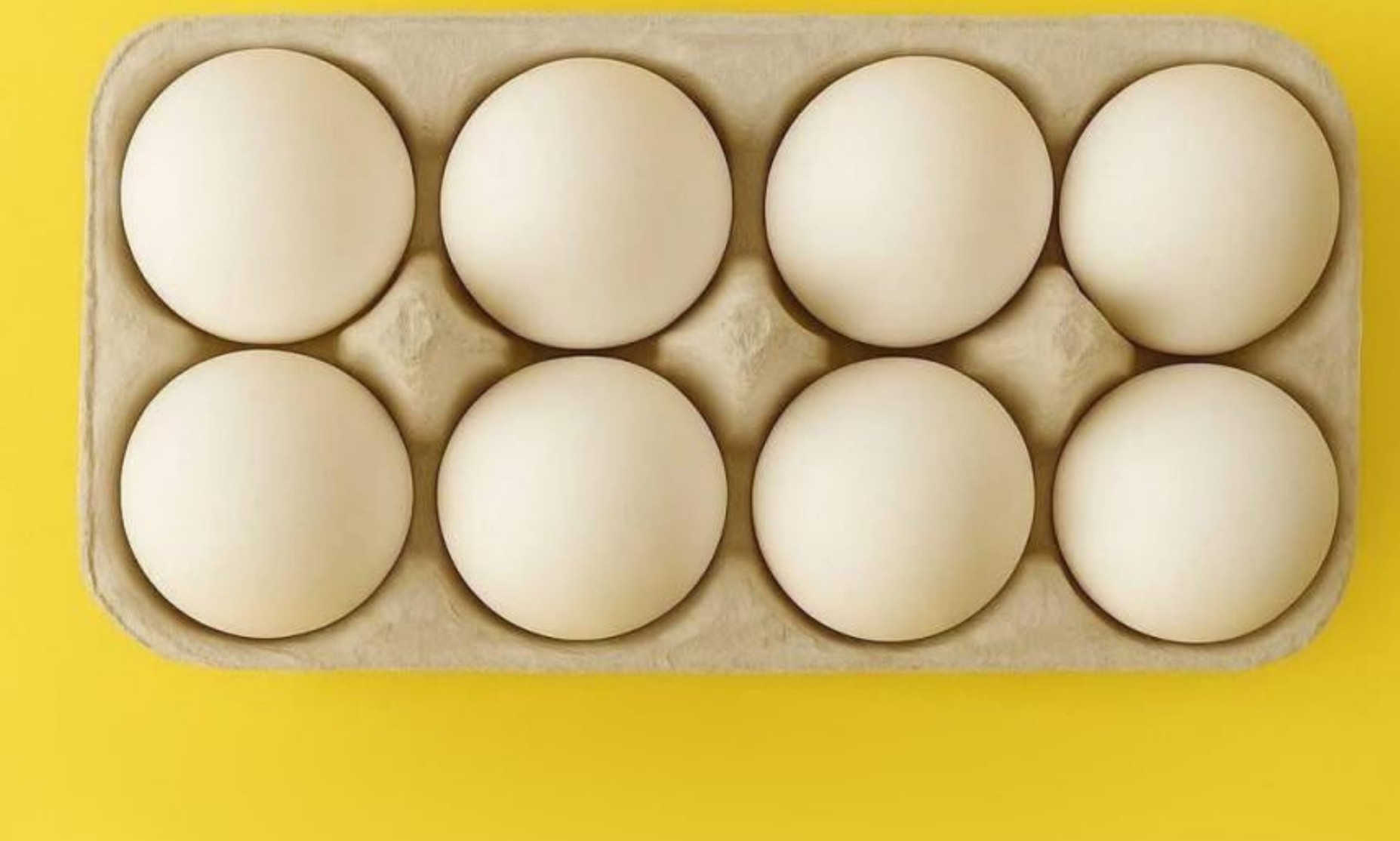
There are six eggs in a tray.
Then three statements are presented:
-
Two eggs were broken.
-
Two eggs were fried.
-
Two eggs were eaten.
At a quick glance, many readers add 2 + 2 + 2 and assume six eggs were used. That answer feels intuitive because our brains are conditioned to process numbers sequentially and combine them.
However, when you examine the logic more carefully, something changes.
Breaking eggs is required before frying them. Frying eggs must happen before eating them. These actions are not separate events involving different eggs—they describe a single chain of actions performed on the same two eggs.
So what actually happened?
Two eggs were selected from the six. Those same two eggs were broken, then fried, then eaten. The remaining four eggs were never touched.
The correct answer is: four eggs remain.
Why So Many People Get It Wrong

The egg riddle works because it exploits how human cognition handles repeated numbers and sequential information.
Research in cognitive psychology shows that the brain often relies on heuristics—mental shortcuts that allow for fast decision-making. According to studies discussed by the American Psychological Association, heuristics are efficient but can lead to predictable errors when details require careful tracking.
In this case, the repeated phrase “two eggs” triggers an accumulation bias. Our brains automatically treat each statement as introducing a new pair of eggs.
This phenomenon is related to what psychologists call “surface processing.” When readers skim text, they focus on visible elements—such as numbers—without analyzing deeper relationships between actions.
The puzzle is not about arithmetic. It is about continuity.
The Importance of Tracking Objects Over Time
Another key lesson from the egg riddle is object permanence and action continuity.
In everyday reasoning, it is essential to ask:
-
Is this the same object being referenced?
-
Or is a new object being introduced?
When the riddle says two eggs were fried, logic tells us that those eggs must have already been broken. The story never introduces a second set of eggs.
This type of reasoning mirrors what educators call “step tracking” in reading comprehension. According to literacy research from institutions such as Harvard Graduate School of Education, readers who visualize scenarios as physical sequences are more likely to interpret information accurately.
If you picture two physical eggs moving through three stages—broken, fried, eaten—the answer becomes obvious.
Visualization reduces confusion.
The Psychology of Speed and Overconfidence
Another reason this riddle is effective lies in modern reading habits.
In the digital era, people are trained to skim content quickly. Research from the Pew Research Center indicates that online readers frequently scan headlines and short paragraphs without deeply processing each line.
When readers encounter the egg riddle, they often feel confident that it is simple. That confidence encourages speed rather than analysis.
There is also a subtle psychological element at play. When a puzzle is framed as something that “confuses nearly everyone,” it can trigger a desire to answer quickly and prove intelligence. Ironically, that pressure increases the likelihood of error.
This effect aligns with findings in behavioral economics. Nobel laureate Daniel Kahneman described two systems of thinking in his book Thinking, Fast and Slow:
-
System 1: Fast, automatic, intuitive thinking
-
System 2: Slower, deliberate, analytical thinking
The egg riddle tempts System 1 to respond instantly. The correct answer requires engaging System 2.
Lessons Beyond the Puzzle
Although the egg riddle is lighthearted, it reflects patterns that extend into daily life.
Misunderstandings often occur when people assume that each new statement introduces a new subject. This can happen in:
-
Workplace instructions
-
Legal agreements
-
Academic problems
-
Verbal conversations
When actions are described sequentially, tracking whether they refer to the same object or a new one is essential.
For example, in project management, failing to recognize that multiple steps refer to the same resource can lead to duplication errors. In financial contexts, misreading sequential transactions can cause incorrect accounting assumptions.
The riddle highlights a broader truth: clarity depends on careful attention.
Why Visualization Makes the Answer Clear
One of the easiest ways to solve the egg riddle is to draw a simple diagram.
Imagine six circles representing six eggs. Then mark two circles as broken. Those same two circles become fried. Then those same two circles disappear when eaten.
Four circles remain.
Educational research consistently shows that visual aids improve comprehension. According to the National Center for Education Statistics, visual representation strengthens memory retention and logical sequencing skills.
In the egg puzzle, switching from abstract numbers to physical imagery eliminates the mistake.
It transforms arithmetic into narrative.
Why Simple Puzzles Are So Powerful
Riddles like this persist because they are memorable. They produce a small moment of surprise that reinforces learning.
When someone initially answers incorrectly, then realizes the mistake, the correction becomes anchored in memory. Psychologists refer to this as the “generation effect,” where actively solving a problem enhances retention.
The egg riddle also demonstrates that intelligence is not about speed. It is about process.
Many people who answer incorrectly are highly capable thinkers. The mistake occurs not because the problem is difficult, but because it is deceptively simple.
That simplicity invites carelessness.
The Final Answer
Let’s return to the original question:
There are six eggs.
Two are broken.
Two are fried.
Two are eaten.
Because the same two eggs move through each step, only two eggs were used.
Four eggs remain in the tray.
The answer is not hidden. It is revealed through careful tracking.
A Broader Reminder About Critical Thinking
In an era where information moves rapidly and headlines compete for attention, the egg riddle serves as a gentle reminder.
Slow down.
Read carefully.
Ask whether new information introduces something new—or simply continues the same thread.
Small details can change outcomes dramatically.
The egg riddle may be simple, but its lesson is enduring. Clear thinking does not require complexity. It requires patience, visualization, and the willingness to engage logic rather than assumption.
Four eggs remain—not because of clever math, but because of careful observation.
And that is what makes this small puzzle surprisingly powerful.