
More than five weeks after an 84-year-old woman vanished from her Tucson home, behavioral experts who have spent decades inside the FBI’s most elite investigative units are helping the public understand the critical question at the heart of this case: Why her?
TUCSON, Arizona — The question has haunted this case from the very first morning.
Why would someone enter a quiet residential neighborhood in the Catalina Foothills before sunrise, approach the home of an 84-year-old woman living alone, and take her against her will? Not a younger person. Not a wealthy entrepreneur. Not a public figure with visible enemies or known adversaries. An elderly great-grandmother who depended on daily medication and a pacemaker to maintain her health — and who, by every account, had lived a private, faith-centered life far from public controversy.
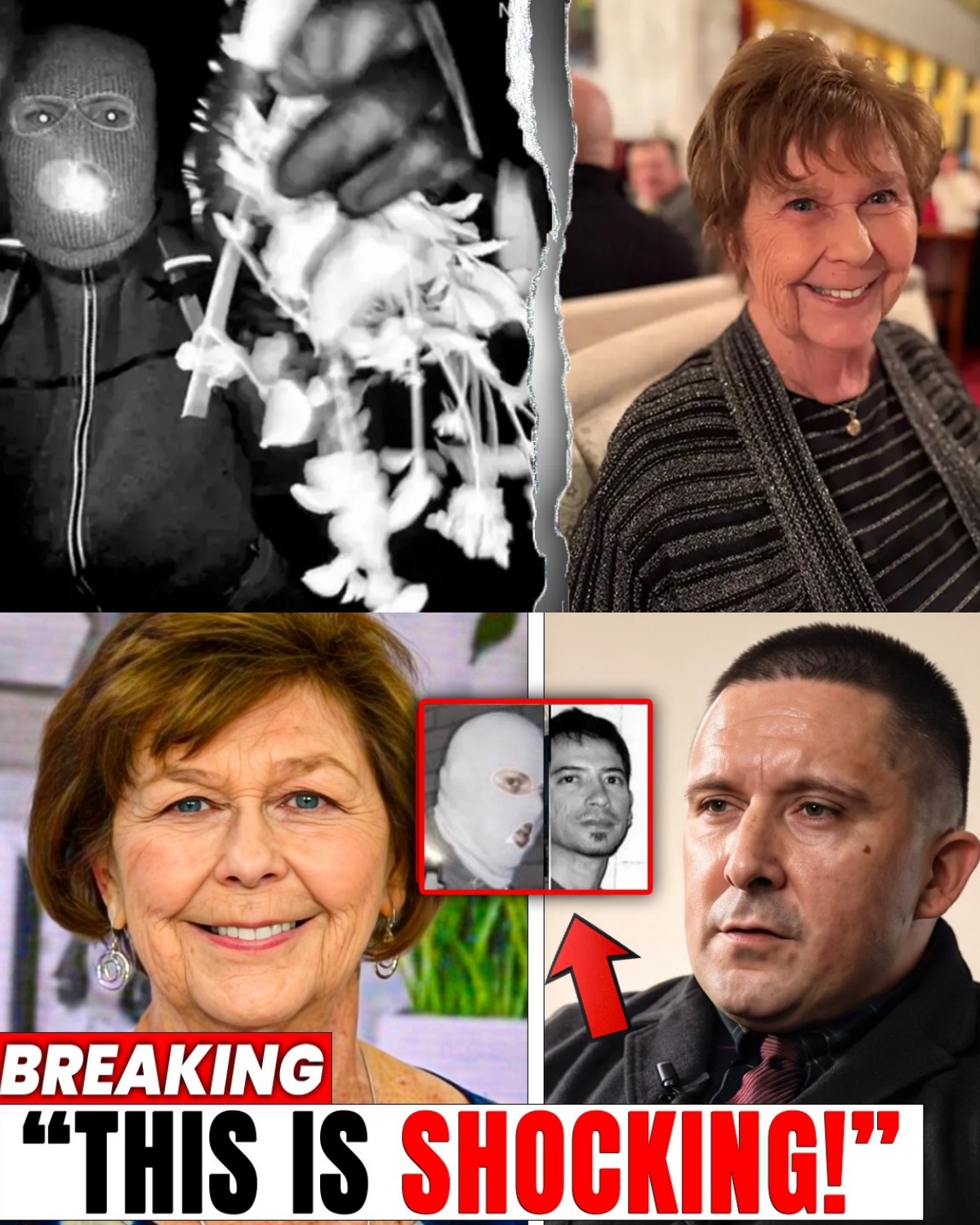
Nancy Guthrie was last seen on the evening of January 31, 2026, when family members dropped her off at her home. She was reported missing the following day after failing to appear for a planned church service livestream. Authorities with the Pima County Sheriff’s Department and the FBI classified the incident as an abduction, citing evidence including blood found on the front porch and doorbell camera footage showing a masked individual tampering with security equipment outside her residence in the early hours of February 1.
She has not been found.
But while investigators continue to pursue forensic and physical evidence leads, a parallel track of analysis has been unfolding — one conducted by some of the most experienced behavioral scientists in American law enforcement history. Their conclusions, shared publicly through interviews with NPR, CNN, Newsweek, and other major outlets, are beginning to reshape how investigators and the public understand the “why” behind this case.
The Profiler’s Fundamental Question

Mary Ellen O’Toole worked in the FBI’s Behavioral Analysis Unit for more than a decade and is now the director of the forensic science program at George Mason University. When she appeared on NPR’s Morning Edition to discuss the case, she framed the central investigative challenge with precision.
O’Toole described closely examining the overall behavior demonstrated by the individual captured on the doorbell camera footage. She noted that the suspect was not racing around, not exhibiting visible panic, and not looking over his shoulder with the frequency investigators would typically expect from someone committing a high-risk crime for the first time.
That observation — the suspect’s apparent composure in an extremely high-stakes situation — has become one of the most analytically significant details in the behavioral profiling of this case.
Most people, O’Toole has argued, would exhibit visible anxiety during a high-stakes criminal act. The absence of that anxiety, she suggests, can indicate either prior criminal experience or a psychological state in which the act felt, to the perpetrator, entirely rehearsed — as though the moment had been imagined and replayed so many times that it no longer carried the weight of the unfamiliar.
O’Toole also cautioned investigators and the public against assuming the suspect was incompetent simply because he was captured on camera using shrubbery to try to obscure the doorbell lens. It is unusual, she noted, to have the moments before a violent offender commits a crime captured on video at all. The footage, however imperfect, represents a significant evidentiary asset.
She also pointed out that investigators need to rule out whether the suspect visited the neighborhood — or even a neighbor’s property — in the days and weeks leading up to the incident. That detail could illuminate the reconnaissance process and establish precisely how long Nancy had been under observation before February 1.
Two Theories, Two Very Different Suspects
The behavioral analysis community has converged around two primary theories — and each carries significantly different investigative implications.
Theory One: Targeted Because of Savannah Guthrie
Former FBI agent and CIA officer Tracy Walder stated publicly that she does not believe the Nancy Guthrie disappearance could be a burglary gone wrong. In a standard burglary, she explained, perpetrators do not take victims with them — doing so dramatically increases risk, complicates escape, and serves no logical financial purpose.
Walder offered her professional assessment of the most likely motive: that someone was either deeply upset about something connected to Savannah Guthrie’s public career, or had developed an unhealthy obsession with her, and that this fixation drove the targeting of her family. The specificity of the operation, she argued, rules out opportunism entirely. This is not a house you simply come upon and decide to enter. The planning, timing, and execution all point to intent.
The logic, in behavioral terms, centers on accessibility. A nationally recognized television personality is surrounded by institutional security at work and travels with a level of public visibility that makes direct approach effectively impossible. A mother, at home, in a quiet residential neighborhood, at two in the morning, is not. To someone consumed by fixation or grievance directed at Savannah Guthrie, the path to causing harm may have led directly to Tucson.
Retired FBI profiler Greg McCrary reinforced this line of analysis, describing how offenders can simultaneously case a neighborhood for physical vulnerabilities while also developing connections — real or imagined — to a celebrity figure. In a blended scenario, an offender notices Nancy’s vulnerability, learns of her connection to Savannah, and builds a motivation that unites both elements: predatory calculation wrapped around personal obsession.
Theory Two: Targeted Because of Vulnerability
The second theory is more coldly transactional and does not require any connection to Savannah Guthrie’s public identity.
Nancy’s profile — elderly, living alone, pacemaker-dependent, with limited mobility — represents what predatory crime researchers describe as a low-resistance target profile. Under this theory, Nancy was identified through routine surveillance of an affluent residential neighborhood, and her specific physical circumstances were assessed as part of a deliberate targeting calculation. Investigators studying organized property crime have long noted that certain offenders conduct extensive reconnaissance before acting, sometimes monitoring properties for days or weeks before making a move.
However, multiple former investigators have noted that this explanation does not fully account for the most distinctive elements of this case. Professional property crime offenders almost universally avoid entering occupied residences — the presence of a person inside a home dramatically increases the risk of confrontation, detection, and escalation. The fact that the suspect entered a home where Nancy was present, and remained inside for an extended period, suggests a level of intent that goes beyond conventional property crime motivation.
The Forensic Evidence That Could Break the Case
While behavioral profiling addresses motive, the physical investigation has produced several concrete leads that experts believe could ultimately identify the suspect.
Retired FBI profiler Jim Clemente stated publicly that the suspect appeared to reveal a tattoo in the doorbell camera footage — a detail that investigators are scrutinizing carefully. Tattoo identification can be a powerful forensic tool: design style, placement, symbolism, and even the distinctive techniques of individual tattoo artists can narrow a field of potential suspects considerably. Clemente also noted that the suspect’s failure to fully cover his mouth during the operation meant he likely left biological material at the scene.
The gloves recovered near the scene have become another significant focal point. DNA recovered from a pair of gloves found several miles from Guthrie’s residence did not match any existing entries in CODIS, the FBI’s national criminal DNA database. However, the absence of a CODIS match does not close that investigative pathway. Genetic genealogy techniques — which have successfully identified suspects in cold cases across the United States by tracing family relationships from partial DNA profiles — represent a viable alternative route to identification that does not require a pre-existing database entry.
Retired FBI special agent Jennifer Coffindaffer described the investigation as the polar opposite of a cold case, characterizing it as a red-hot case with up to 100 agents, analysts, and law enforcement officers from multiple agencies working active, actionable leads simultaneously. She highlighted specific physical characteristics visible in the surveillance footage — including distinctive facial features, clothing choices, and what appears to be a pinky ring — as details that make the suspect unusually identifiable for a case in which the individual attempted to conceal their identity.
An additional forensic thread involves the possible use of a signal disruption device. An antenna-like object visible in the pocket of the person captured on the doorbell camera has prompted investigative questions about whether it was used to cause the localized internet outage that several neighbors reported experiencing on the night of February 1. Multiple residents in the surrounding area confirmed that FBI agents have asked them specifically about connectivity disruptions on that date — and at least one neighbor reported that his own home security camera history shows a gap marked “not available” precisely covering that window of time.
The Investigation’s Current Status
A dedicated task force has been formed to focus full-time on the Guthrie investigation, combining personnel from the Pima County Sheriff’s Department and the FBI. Pima County Sheriff Chris Nanos stated publicly that investigators are “definitely closer” to identifying a suspect — a characterization that he has maintained consistently across multiple press briefings, even as weeks have passed without a publicly announced breakthrough.
Retired FBI agent Maureen O’Connell noted that the $1 million reward offered by the Guthrie family significantly raises the pressure on anyone with relevant knowledge. In her assessment, if more than one person was involved in Nancy’s disappearance, that financial incentive has dramatically increased the likelihood that one of them will eventually break ranks.
Tip volume, after the initial surge that followed the release of surveillance footage, has followed a pattern consistent with most high-profile missing persons cases — tapering after the early weeks while the investigative team continues to process and cross-reference what has already been received. Analysts note that in a case of this complexity, the most valuable tips often arrive not in the first days of public awareness, but weeks later, when someone finally connects a behavioral observation to what they have seen in the news.
What Behavioral Analysts Want the Public to Know

Across multiple interviews and public statements, the behavioral experts commenting on this case have consistently directed one message toward the general public: the person responsible for Nancy Guthrie’s disappearance almost certainly displayed observable behavioral changes in the period surrounding February 1, and the people around that individual may hold information they do not yet realize is relevant.
Jim Clemente emphasized that because the suspect did not operate with professional precision, he would have exhibited behavioral signals before and after the incident — signals visible to people in his daily life. The patterns that experts describe include unusual purchases in the weeks prior to February 1, unexplained disruptions to normal routines around that date, obsessive and disproportionate consumption of media coverage of the case afterward, unexplained anxiety or shifts in demeanor, and any prior or ongoing expressions of unusual fixation on the Guthrie family specifically.
The Pima County Sheriff has stated his personal belief that Nancy Guthrie is alive. That belief, grounded in investigative knowledge not available to the public, continues to drive a search that has not slowed despite the passage of more than five weeks.
How to Help
If you have any information about the disappearance of Nancy Guthrie, authorities continue to urge the public to come forward immediately.
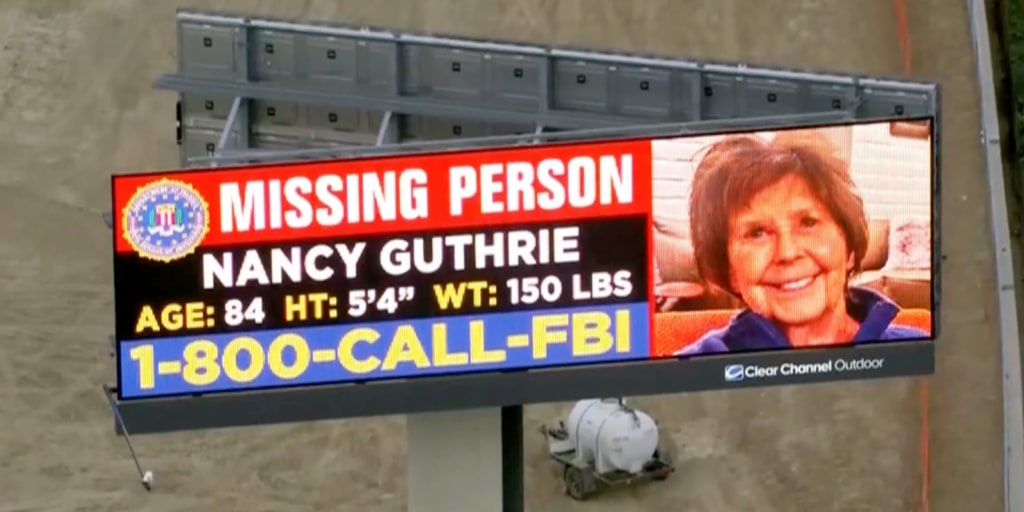
FBI Tip Line: 1-800-CALL-FBI (1-800-225-5324) Online Submissions: tips.fbi.gov Pima County Sheriff’s Department: 520-351-4900 Total Reward: Up to $1.1 million for information leading directly to Nancy’s safe recovery.
Sources: NPR Morning Edition, CNN, Newsweek, Wikipedia, IBTimes. All facts verified through multiple independent media sources.