
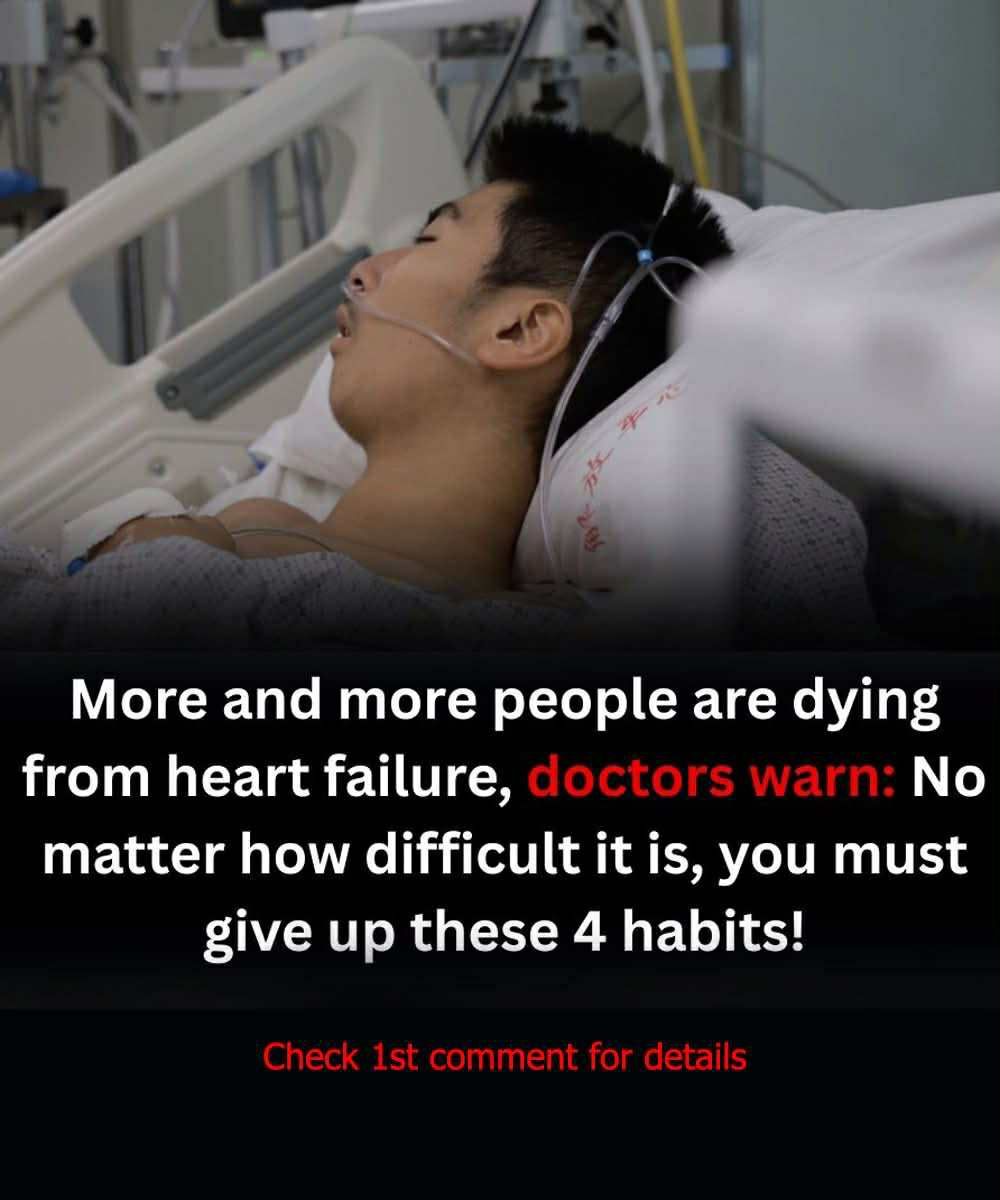
Heart failure has quietly become one of the most serious and widespread health crises of our time. According to estimates from the World Health Organization, the World Heart Federation, and the American Heart Association, heart failure currently affects at least 26 million people across the globe — and that number is climbing at an alarming rate. What was once considered a condition primarily affecting elderly individuals is now showing up in younger adults at increasingly concerning frequencies, pushing doctors and medical researchers to issue stronger and more urgent warnings to the general public.
Understanding what heart failure actually means is an important starting point, because the term itself is frequently misunderstood. Heart failure does not mean the heart has stopped working entirely. Rather, it means the heart has lost enough of its pumping strength that it can no longer deliver oxygenated, nutrient-rich blood efficiently to the rest of the body’s cells and organs. The body depends entirely on this continuous supply of blood to function properly, and when the heart begins to fall short, the consequences ripple outward through every system.
The most common early signs of heart failure include persistent fatigue, shortness of breath even during mild activity, and in some cases a chronic cough that does not seem to have an obvious cause. As the condition progresses, even simple and routine physical tasks — walking across a room, climbing a single flight of stairs, carrying a bag of groceries — begin to feel exhausting and overwhelming. Over time, the gap between what the heart can deliver and what the body needs grows wider, making everyday life increasingly difficult to manage.
The important thing to understand, however, is that heart failure does not have to be a death sentence. Medical experts consistently emphasize that with proper treatment and meaningful lifestyle changes, many patients are able to achieve a state of remission — a significant reduction in symptoms that allows them to return to a much higher quality of life. The heart is a resilient organ, and when given the right conditions, it has a remarkable capacity to recover and stabilize.
That is exactly why doctors are now raising their voices so strongly about four specific habits that are directly linked to an elevated risk of developing or worsening heart failure. These are not exotic or rare behaviors — they are deeply embedded in the routines of millions of ordinary people around the world. Recognizing them, understanding why they are harmful, and taking deliberate steps to change them could genuinely save lives.
Habit One: Consuming Too Much Salt

Salt is one of those dietary elements that most people know they should watch, yet consistently underestimate in their own diets. The relationship between excessive sodium intake and heart health is well established in medical literature and endorsed by virtually every major cardiology organization in the world. Dietary sodium restriction has been described as arguably the most frequently recommended self-care behavior for patients already living with heart failure, and it is considered a foundational element of heart health management more broadly.
The reason sodium is so dangerous in large amounts comes down to what it does inside the body. Excess sodium causes the body to retain fluid, and this fluid retention leads to increased pressure within the blood vessels. Over time, persistently elevated blood pressure places an enormous and continuous strain on the heart muscle. The heart is forced to work harder with every single beat, and after years of this extra effort, the muscle begins to weaken — a process that can eventually result in heart failure.
Making matters worse, sodium hides in places that most people never think to look. Canned soups, packaged snacks, frozen meals, condiments, bread, and restaurant food all tend to contain surprisingly high levels of sodium, even when they do not taste particularly salty. The cumulative effect of these hidden sources adds up quickly over the course of a day.
The most effective strategy for reducing sodium intake is shifting toward home-cooked meals made with fresh, whole ingredients, and replacing salt with herbs, spices, and other natural flavor enhancers. Reading nutrition labels carefully and being genuinely curious about what is in the food you eat can make a dramatic difference over time.
Habit Two: Living a Sedentary Life

The modern lifestyle has created conditions that make physical inactivity almost the default state for a large portion of the global population. Long hours at a desk, long commutes in a car or on public transportation, evenings spent on a couch — for many people, extended sitting is simply the shape that daily life has taken. The problem is that the human body was not designed for this level of stillness, and the cardiovascular system pays a heavy price for it.
Research has consistently demonstrated that a sedentary lifestyle significantly increases the risk of developing heart disease and ultimately heart failure. When the body does not move regularly, circulation becomes sluggish, weight tends to accumulate, blood pressure rises, and the heart muscle itself becomes less efficient. Physical activity, by contrast, keeps all of these factors in check in a natural and self-reinforcing way. Exercise strengthens the heart muscle directly, improves the flexibility and health of blood vessels, helps the body manage weight more effectively, and supports healthy blood pressure levels.
Medical guidelines suggest aiming for at least 150 minutes of moderate physical activity or 75 minutes of more intensive activity per week — numbers that sound significant but can actually be reached through surprisingly accessible means. Walking, cycling, swimming, and dancing are all excellent options that are gentle on the joints while being genuinely beneficial for the heart. Breaking up long periods of sitting with regular standing, stretching, or short walks can also make a meaningful difference, even on days when a full workout is not possible.
Habit Three: Smoking and Excessive Alcohol Consumption

These two habits are frequently discussed in isolation, but they often coexist and can compound each other’s harmful effects on the heart in serious ways.
Smoking damages the cardiovascular system through multiple mechanisms simultaneously. It narrows and stiffens blood vessels, reducing their ability to expand and contract as needed. It raises blood pressure. It reduces the amount of oxygen that the blood can carry and deliver to the heart and other organs. Over years of regular use, these effects accumulate and place the heart under a level of sustained stress that eventually begins to erode its function. For individuals who already have some degree of heart weakness, continued use of tobacco products can accelerate the decline dramatically.
Excessive consumption of alcohol presents a different but equally serious set of problems. The heart muscle itself is directly vulnerable to the toxic effects of alcohol when consumed in large quantities over extended periods. A condition known as alcohol-related heart muscle disease involves a weakening and enlargement of the heart that reduces its pumping efficiency — a pattern that closely mirrors and contributes to heart failure. Beyond the direct effect on the heart muscle, heavy alcohol consumption also disrupts the electrical signals that coordinate the heart’s rhythm, raises blood pressure, and contributes to weight gain, all of which further elevate cardiovascular risk.
For those who currently use tobacco products, seeking support to stop completely is one of the most impactful health decisions that can be made. Alcohol, for those who choose to consume it, is best limited to moderate levels — general guidance suggests no more than one standard drink per day for women and two for men. Anyone finding it difficult to reduce their consumption independently is encouraged to seek professional support, as this is a well-recognized challenge that responds well to the right kind of help.
Habit Four: Chronic Stress and Inadequate Sleep

Of all four habits discussed here, this final one may be the most underestimated in terms of its impact on heart health. Chronic stress and poor sleep are so deeply normalized in modern society that many people simply accept them as unavoidable features of adult life. But the physiological toll they take on the cardiovascular system is anything but trivial.
When the body experiences ongoing stress, it produces elevated levels of cortisol, a hormone that in short bursts serves an important protective function, but when chronically elevated, begins to cause real damage. Persistently high cortisol levels raise blood pressure, promote inflammation throughout the body, disrupt healthy metabolism, and keep the cardiovascular system in a state of heightened alertness that it was never meant to sustain indefinitely. Over time, this creates exactly the kind of cumulative strain that weakens the heart.
Sleep deprivation compounds these effects significantly. During sleep, the body undergoes essential repair and restoration processes that affect virtually every organ system, including the heart. When sleep is consistently insufficient — most adults need between seven and nine hours per night — these repair processes are disrupted. The risk of obesity, type 2 diabetes, high blood pressure, and ultimately heart failure all increase meaningfully with chronic sleep deprivation.
Building stress management into daily life does not require dramatic changes. Simple practices such as deep breathing exercises, brief periods of mindfulness or meditation, time spent in nature, or any activity that brings genuine relaxation can make a real difference when done consistently. Creating a calm, screen-free wind-down routine before bedtime and maintaining a consistent sleep schedule are among the most effective steps anyone can take to protect both their sleep quality and their long-term heart health.
The Bottom Line
Heart failure is serious, and its growing prevalence deserves serious attention. But the encouraging truth is that the habits most closely linked to its development are habits that can be changed. Reducing sodium, moving the body regularly, avoiding tobacco products, drinking responsibly, managing stress, and prioritizing sleep are not complicated or exotic interventions — they are accessible choices that, made consistently, have the power to protect one of the most vital organs in the human body and preserve the quality of life for years to come.