

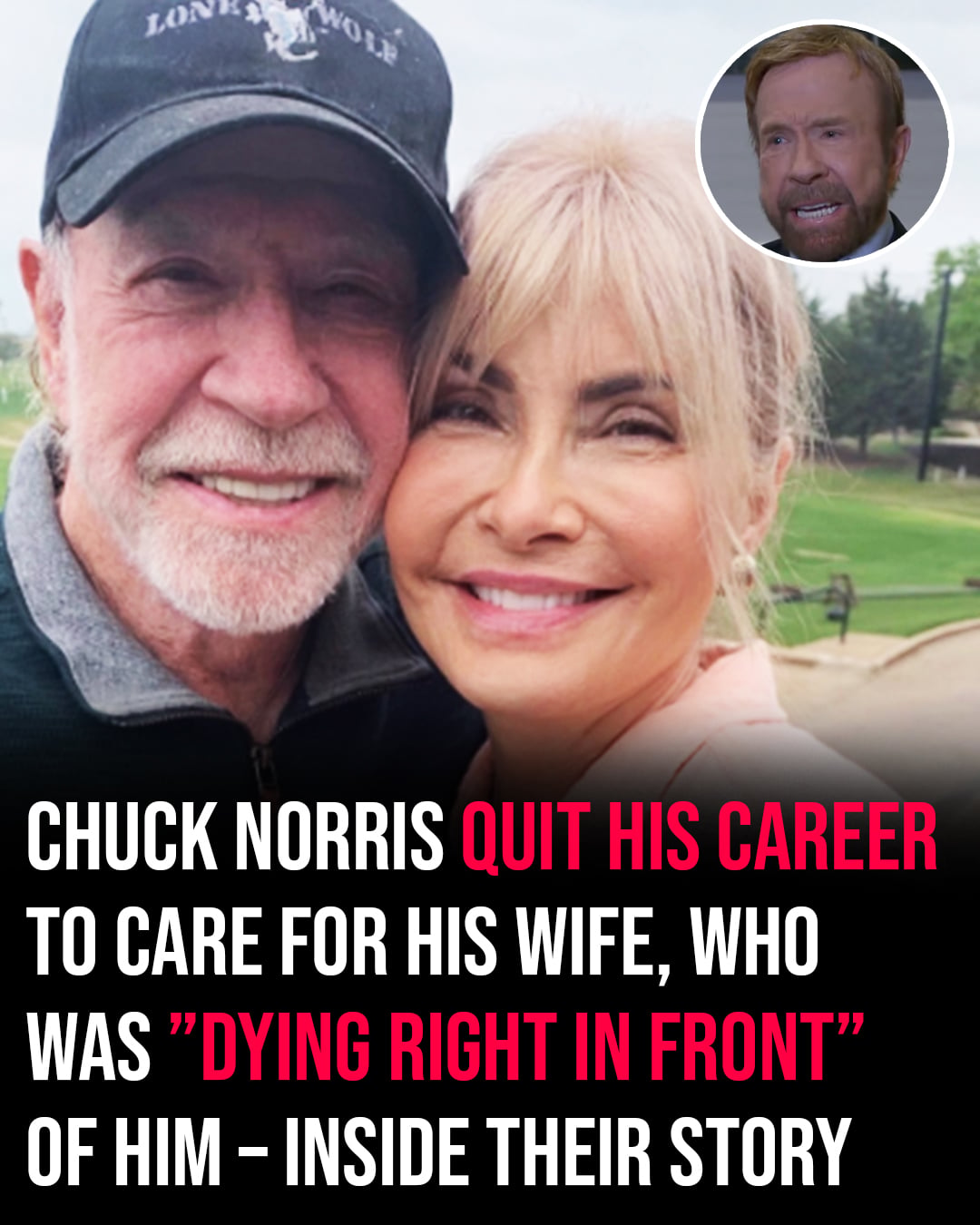
\The world knew him as the man who never lost. The memes said he could slam a revolving door. The movies showed him walking through walls of fire without flinching. But on March 19, 2026, Carlos Ray “Chuck” Norris — martial artist, actor, father, husband, and one of the most iconic figures in American popular culture — passed away at the age of 86 while surrounded by the people he loved most, on the island of Kauai, Hawaii.
“It is with heavy hearts that our family shares the sudden passing of our beloved Chuck Norris,” his family wrote in a statement posted to his social media accounts the following morning. “While we would like to keep the circumstances private, please know that he was surrounded by his family and was at peace.”
The world responded with an outpouring of grief, admiration, and nostalgia. Tributes came from presidents and governors, from fellow actors and martial artists, from fans who had grown up watching him on television every Saturday night. President Donald Trump called him “a tough cookie.” Texas Governor Greg Abbott said Norris “electrified generations.” But to those who knew him intimately — his children, his friends, his family — the tributes that mattered most were simpler than any of that. To them, he was a devoted husband, a loving father and grandfather, and the heart of their family.
That contrast — between the public legend and the private man — is perhaps the most compelling story Chuck Norris ever lived.

He was born Carlos Ray Norris on March 10, 1940, in the small town of Ryan, Oklahoma, to a homemaker mother and a World War II veteran father who struggled deeply with alcoholism. His childhood was marked by poverty, instability, and the kind of quiet suffering that leaves marks on a person long after they have moved on. He was shy, unathletic by his own admission, and did not yet know that the hardships of his early years were quietly building something within him that the world would one day call invincibility.
“Most people see a person in his success mode and they say, ‘Boy, was he lucky,'” Norris once recalled. “But it was extremely difficult. Extremely difficult.”
His path changed when he joined the United States Air Force in 1958. He was stationed at Osan Air Base in South Korea, and it was there that he first encountered martial arts. He began training in Tang Soo Do, and something clicked. The discipline, the focus, the physical and mental demands of martial arts practice gave a once-uncertain young man a sense of purpose and identity that he had never found before. He returned to the United States with a new name — “Chuck,” the nickname he had picked up overseas — and a new direction.
After leaving the Air Force in 1962, he opened a martial arts studio and began competing. His early competitive record was humbling — he lost his first several bouts — but he kept training, kept improving, and kept showing up. By 1967, he had won the World Professional Middleweight Karate Championship, a title he would go on to defend five more times. He became one of the most decorated competitive martial artists in American history, earning black belts across multiple disciplines and eventually founding his own hybrid style, Chun Kuk Do.
It was his friendship with Bruce Lee that opened Hollywood’s doors. The two men had trained together and shared a deep mutual respect. Lee invited Norris to play a formidable opponent in the 1972 film “The Way of the Dragon,” and the resulting screen presence — a broad-shouldered, bearded American who moved with quiet menace — introduced the world to something it had not seen before. One of Lee’s students, the actor Steve McQueen, watched Norris and encouraged him to take acting seriously. Norris listened, as he always did when the advice was good.
Throughout the late 1970s and the entire decade of the 1980s, Chuck Norris became one of the defining faces of American action cinema. Films like “Missing in Action,” “Code of Silence,” “The Delta Force,” and “Lone Wolf McQuade” cemented him as the all-American tough guy — stoic, principled, unstoppable. He was not the most verbally expressive actor of his generation, but what he communicated through presence and physicality was something that resonated powerfully with audiences around the world.
Then came “Walker, Texas Ranger.”
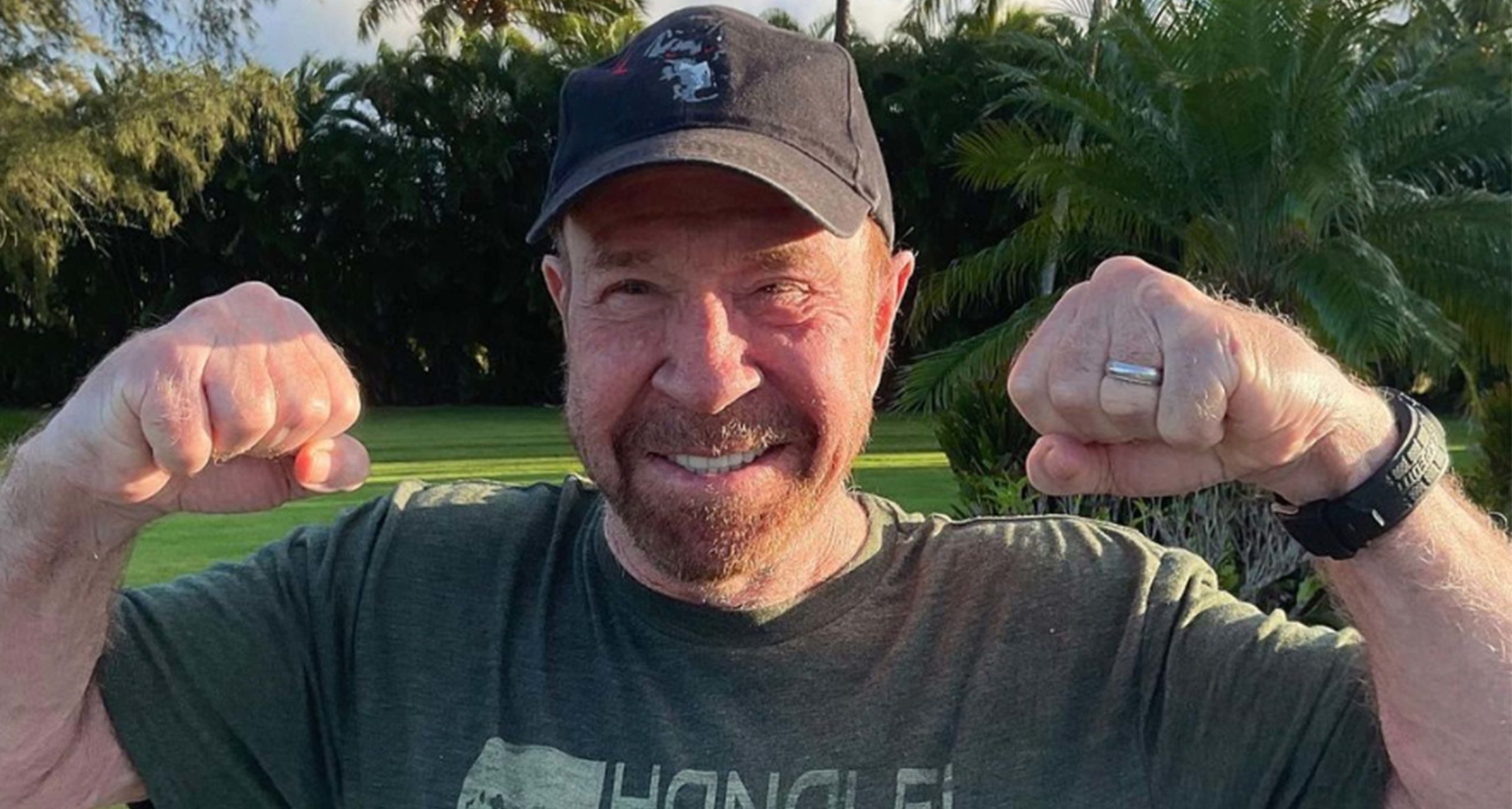
Beginning in 1993 and running for nine full seasons on CBS, the show gave Norris the role that would define his cultural legacy for generations. Cordell Walker — veteran, lawman, moral compass — was in many ways a fictional version of the man Norris had always tried to be: someone who stood firm against injustice, who protected the vulnerable, who operated by a code even when the world around him did not. The show remains a staple of syndicated television to this day, still watched by families who were not yet born when it first aired.
Off screen, Norris built a philanthropic legacy that quietly rivaled everything he accomplished in front of a camera. In 1990, he founded Kickstart Kids, a charitable organization dedicated to bringing martial arts instruction to at-risk youth in public schools across Texas. The philosophy was simple and powerful: teach young people discipline, self-respect, and focus through the same practice that had transformed his own life, and they would be far less likely to turn to drugs or violence. The organization has since provided martial arts instruction to hundreds of thousands of students, and its impact on the lives of those young people is incalculable.
In the years when his acting career wound down, a new cultural phenomenon kept Chuck Norris relevant in a way that no publicist could have planned. “Chuck Norris Facts” — absurdist, hyperbolic statements about his supposed toughness — went viral online in the mid-2000s and never really stopped. “Chuck Norris doesn’t do push-ups. He pushes the Earth down.” He embraced the jokes with grace and good humor, eventually publishing a book compiling his favorites. Just days before his passing, on the occasion of his 86th birthday on March 10, he posted a video of himself sparring with a trainer, declaring: “I don’t age. I level up.” The internet loved it.
But it is perhaps the story of Chuck Norris and his wife Gena that reveals the most about who he truly was beneath all of it.
In 2012, Gena Norris underwent a series of routine medical imaging scans. She subsequently developed a condition she attributed to gadolinium, a contrast agent used in certain MRI procedures. Her health declined significantly in the years that followed. She described at times feeling as though she were deteriorating from the inside, in a frightening and poorly understood way. The experience was devastating for the entire family.
Chuck Norris responded not with a press release or a spokesperson, but with his presence. He stepped away from his professional career without hesitation and devoted himself entirely to caring for his wife and fighting for her health. He spent millions of dollars consulting with specialists, seeking alternative treatments, and pursuing legal action against the manufacturers of the gadolinium-based contrast agents he and Gena believed were responsible for her suffering. He sat by her side through some of her worst days and advocated publicly for greater awareness of the risks associated with the imaging agent so that other families might be protected.
Those who watched this chapter of his life unfold said it was more moving than any film he had ever made. Because it was real. Because it was costly. Because it was chosen freely and without audience.
“His greatest role was not on a movie set,” one friend said. “It was at her bedside.”
In his final years, Norris continued to work out, continued to stay connected with fans online, and continued to express the values that had guided his life from the beginning — faith, discipline, loyalty, and service. He supported charitable causes, maintained his physical practice well into his eighties, and by all accounts never lost the quiet determination that had taken a shy, poor kid from Oklahoma to the heights of Hollywood and back again to what mattered most: family.
He is survived by his wife Gena, his children — including actor Mike Norris and NASCAR driver Eric Norris — and his grandchildren.
The family statement offered this final tribute: “To the world, he was a martial artist, actor, and a symbol of strength. To us, he was a devoted husband, a loving father and grandfather, an incredible brother, and the heart of our family. He lived his life with faith, purpose, and an unwavering commitment to the people he loved. Through his work, discipline, and kindness, he inspired millions around the world and left a lasting impact on so many lives.”
Chuck Norris once said that his goal in life was to project the image of a true hero on screen — someone worth rooting for, in a world full of ambiguity and anti-heroes. In the end, the most heroic thing he ever did was something no camera captured: the choice to love someone completely, even when it cost him everything else.
The legend lives on. But it is the man — the real, loyal, faith-filled man — who deserves to be remembered.