



Concerns about rising taxes, economic competitiveness, and the potential departure of high-income residents have placed New York City and the broader state of New York at the center of a major policy debate. While online narratives often exaggerate the situation, verified data from government agencies, economic research institutions, and established news organizations presents a more balanced and evidence-based picture.
Why New York’s Economy Matters
New York is one of the most influential economic centers in the world. Home to Wall Street and a wide range of industries including finance, media, technology, and healthcare, the state generates a significant share of U.S. economic output.
According to data from the U.S. Bureau of Economic Analysis, New York consistently ranks among the top contributors to national GDP. This economic strength is supported in part by high-income earners, who contribute a substantial portion of state tax revenues.
The reliance on top earners makes fiscal policy particularly sensitive. Even modest shifts in taxpayer behavior can influence revenue streams that fund public services such as transportation, education, and healthcare.
Understanding New York’s Tax Structure
New York has one of the more progressive tax systems in the United States. High-income individuals are subject to higher marginal tax rates compared to many other states. In addition to state income tax, residents in New York City also pay local income taxes.
Reports from the New York State Department of Taxation and Finance show that a relatively small percentage of taxpayers—those earning the highest incomes—account for a disproportionately large share of total income tax revenue. This concentration increases both the importance and the sensitivity of policy decisions affecting this group.
At the same time, policymakers must balance revenue needs with broader goals such as reducing inequality and maintaining essential public services.

Migration Trends: What the Data Says
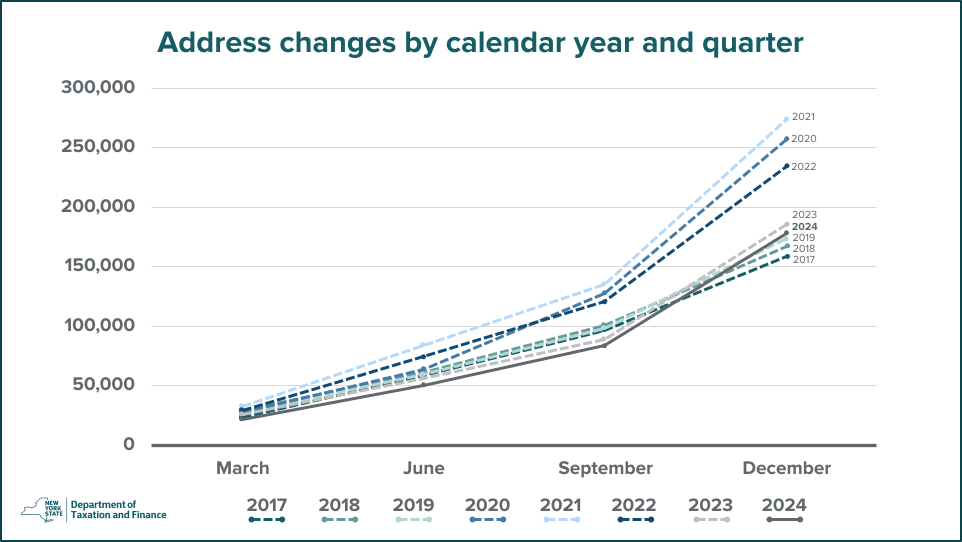
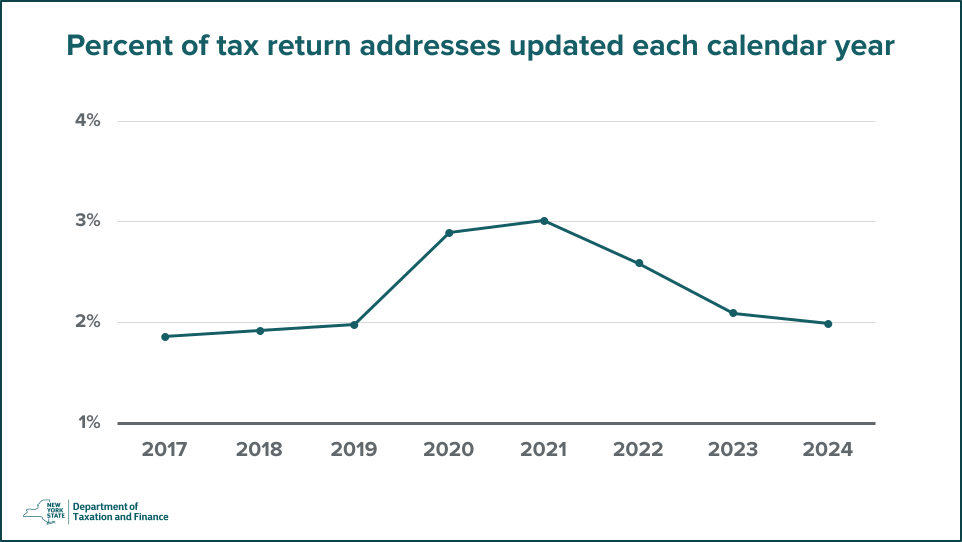
Claims that large numbers of wealthy residents are leaving New York are often overstated. However, there is evidence of population movement, particularly during and after the COVID-19 pandemic.
Data from the U.S. Census Bureau confirms that New York experienced net domestic outmigration in recent years. Some residents relocated to states such as Florida and Texas, which offer lower taxes and lower costs of living.
However, experts emphasize several important points:
Migration patterns are influenced by multiple factors, including housing costs, remote work flexibility, and lifestyle preferences—not just taxes.
Population losses have been partially offset by international migration and natural population changes.
High-income individuals are not the only group relocating; movement occurs across income levels.
Research institutions such as the Brookings Institution note that while tax policy can influence decisions, it is rarely the sole determining factor.
The “Wealth Flight” Narrative
The concept of “wealth flight” suggests a large-scale and sustained departure of high-income residents that could destabilize state finances. While this is a legitimate concern for policymakers, current evidence does not support extreme versions of this claim.
Analyses from organizations like the Tax Foundation indicate that while high earners are somewhat more mobile than lower-income groups, most do not relocate frequently due to business ties, family considerations, and professional networks.
Additionally, New York continues to attract significant investment and maintains a high concentration of wealth compared to other regions.
Economic Pressures and Policy Debate
The current debate in New York reflects competing priorities rather than a single crisis. On one side, there is concern about maintaining competitiveness and preventing further outmigration. On the other, there is pressure to increase revenue and address inequality through progressive taxation.
State leaders must weigh several factors:
Revenue stability and long-term fiscal planning
Economic competitiveness relative to other states
Public demand for investment in infrastructure and social programs
National and global economic conditions
This balancing act is not unique to New York. Many states are grappling with similar challenges as mobility increases and economic conditions evolve.

The Role of Businesses and Investment
New York remains a major hub for business activity. Large corporations, financial institutions, and startups continue to operate and expand in the state, attracted by access to talent, infrastructure, and global markets.
Reports from the Federal Reserve Bank of New York highlight the resilience of the regional economy, even amid periods of uncertainty.
While some companies have expanded operations in lower-cost states, many maintain a strong presence in New York due to its unique advantages, including proximity to financial markets and international connectivity.
Housing and Cost of Living Factors
One of the most significant drivers of migration is the cost of living, particularly housing. New York City has some of the highest housing costs in the country, which can influence relocation decisions across income levels.
Studies show that affordability challenges affect not only individuals but also businesses seeking to attract and retain employees. These pressures contribute to migration trends alongside tax considerations.
National Competition Between States
States across the U.S. actively compete to attract residents and businesses. Lower taxes, lower housing costs, and regulatory differences are key factors in this competition.
States such as Florida and Texas have promoted themselves as alternatives to high-cost states like New York and California. However, these states also face their own challenges, including infrastructure demands and population growth pressures.
The competitive landscape means that New York’s policy decisions must be considered in a broader national context.
Market Reactions and Perception
Financial markets and business decisions are influenced not only by actual policy changes but also by expectations. Announcements, proposals, and public debates can shape perceptions, which in turn affect behavior.
Experts caution that media narratives—especially those lacking context—can amplify uncertainty. Verified data and official statements provide a more reliable basis for understanding economic trends.
What Verified Sources Do Not Support
There is no credible evidence from major institutions or government agencies supporting claims of an immediate economic collapse or a sudden mass exodus of wealth from New York.
Instead, the available data points to gradual shifts, ongoing policy debates, and a complex economic environment shaped by multiple factors.
Conclusion
New York’s current tax and economic debate reflects broader national trends rather than a singular crisis. While concerns about migration and revenue are valid, they must be understood within the context of verified data and long-term economic patterns.
The state continues to play a central role in the U.S. and global economy, supported by its diverse industries, skilled workforce, and financial infrastructure.
As policymakers consider future steps, the outcome will likely involve a balance between maintaining competitiveness and addressing public needs. The situation remains dynamic, but it is far more nuanced—and far less dramatic—than viral narratives often suggest.
Understanding these realities is essential for anyone seeking an accurate view of New York’s economic future.