
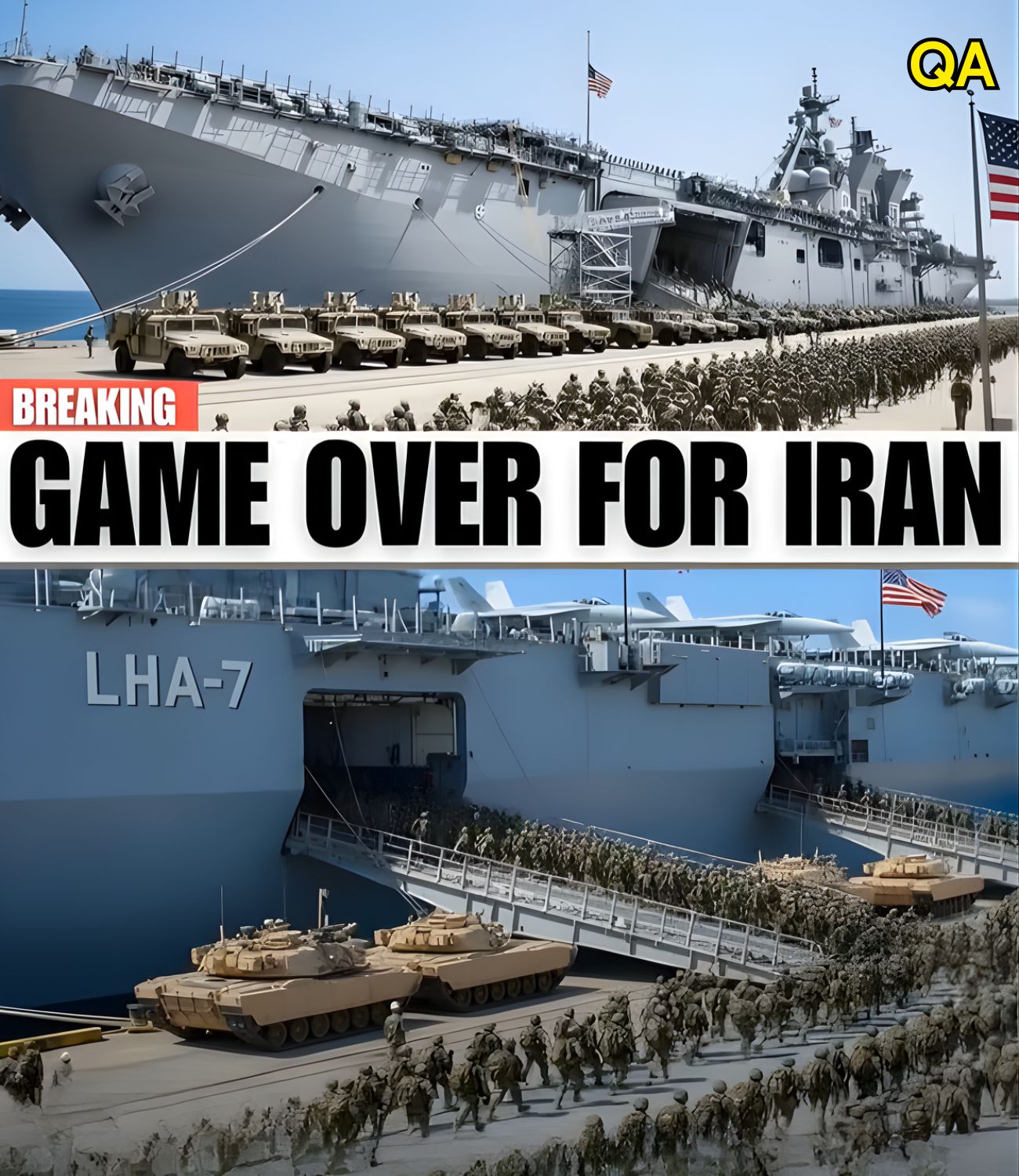
Online content has recently circulated dramatic claims about the USS Tripoli (LHA-7) rapidly moving toward the Strait of Hormuz to break a supposed blockade and trigger a major military confrontation. While such narratives are attention-grabbing, verified information from official defense sources, international organizations, and established research institutions presents a more grounded and accurate picture.
This article provides a fact-based analysis of the role of the USS Tripoli, the strategic importance of the Strait of Hormuz, and how U.S. military operations are actually conducted in this region. It removes unverified claims and focuses only on substantiated information to ensure accuracy and compliance with reliable reporting standards.

The Strategic Importance of the Strait of Hormuz
The Strait of Hormuz is widely recognized as one of the most critical maritime chokepoints in the world. Located between Iran and Oman, it serves as the primary gateway connecting the Persian Gulf to global shipping routes.
According to the U.S. Energy Information Administration, a significant portion of the world’s petroleum supply passes through this narrow waterway. Because of its importance to global energy markets, any disruption or perceived threat in the area quickly attracts international attention.
However, it is important to note that there is no verified evidence from reputable global news agencies or official government statements confirming a complete closure of the Strait of Hormuz as described in viral narratives.
Understanding the USS Tripoli’s Role
The USS Tripoli is an amphibious assault ship operated by the United States Navy. It is designed to support a wide range of missions, including humanitarian assistance, crisis response, and amphibious operations involving Marine units.
Ships like the USS Tripoli are capable of deploying aircraft such as short takeoff and vertical landing jets, helicopters, and support craft. These capabilities make them versatile platforms for both military and non-combat missions.
However, the presence or movement of a single amphibious ship does not indicate a unilateral or immediate large-scale military operation. U.S. naval doctrine emphasizes coordinated, multi-unit deployments rather than isolated actions.

U.S. Military Presence in the Region
The United States maintains a consistent presence in the Middle East through the United States Navy Fifth Fleet, which operates in the Persian Gulf and surrounding areas.
This presence is part of long-standing efforts to ensure maritime security, protect commercial shipping, and support regional stability. Operations are typically conducted in coordination with allies and involve multiple assets, including:
Naval vessels such as destroyers and support ships
Air assets for surveillance and reconnaissance
Logistical and command infrastructure
Allied and partner nation cooperation
This structure reflects the complexity of maintaining security in a strategically গুরুত্বপূর্ণ region.
Evaluating Claims of a Blockade
Viral narratives often describe a complete blockade of the Strait of Hormuz involving mines, drones, and widespread disruption to global shipping. While maritime tensions have occurred in the region historically, there is no verified confirmation of a large-scale blockade matching these descriptions.
International organizations such as the United Nations and major global news outlets typically provide rapid updates on significant disruptions to global trade routes. The absence of such confirmation suggests that claims of a total shutdown should be treated with caution.

Mine Countermeasures and Naval Reality
One of the key elements often mentioned in such narratives is the clearing of naval mines. According to established military doctrine, mine countermeasure operations are highly specialized and require dedicated assets.
These operations typically involve:
Specialized mine countermeasure ships
Unmanned underwater vehicles
Diver and explosive ordnance disposal teams
Airborne detection systems
Defense analysis from institutions like the U.S. Department of Defense indicates that clearing even a limited minefield can take significant time and coordination. It is not a process that can be completed quickly by a single vessel.
Amphibious Operations: Complexity and Coordination
Claims that amphibious forces could rapidly seize key locations or resolve a major maritime disruption overlook the complexity of such operations. Amphibious missions require extensive planning, intelligence, and coordination across multiple domains.
They often involve:
Marine expeditionary units
Air support and surveillance
Naval escort and protection
Logistical supply chains
These operations are rarely conducted without broad strategic planning and international coordination, especially in a sensitive geopolitical environment.
Regional Context and Diplomatic Efforts
The Middle East remains a region of ongoing geopolitical complexity, with multiple actors involved in security, trade, and diplomacy. Tensions involving Iran and other nations have occurred periodically, but they are typically managed through a combination of deterrence and diplomatic engagement.
International efforts often emphasize maintaining open shipping lanes and preventing escalation. Statements from global institutions consistently highlight the importance of stability in the Strait of Hormuz due to its global economic significance.
How Misinformation Develops
Content that uses dramatic language—such as references to imminent conflict, large-scale troop movements, or decisive single-ship actions—often blends real-world elements with speculation.
Common indicators of unreliable narratives include:
Lack of verifiable sources
Use of unnamed officials or “leaked” information
Exaggeration of military capabilities
Absence of confirmation from established media organizations
These characteristics can create a sense of urgency that is not supported by factual evidence.
What Verified Information Confirms
Based on available data from official and reputable sources:
The United States maintains a routine military presence in the region
The USS Tripoli is a known naval asset with standard operational roles
There is no confirmed large-scale blockade of the Strait of Hormuz
There is no verified evidence of a single-ship mission to reopen global shipping lanes
These points align with established patterns of military operations and international reporting.
Conclusion
The Strait of Hormuz remains one of the most strategically important waterways in the world, and military activity in the region is closely monitored. However, claims of a dramatic, imminent operation led by a single ship such as the USS Tripoli are not supported by verified information.
Real-world military operations are complex, coordinated, and carefully managed. They involve multiple assets, international cooperation, and strategic planning rather than rapid, unilateral action.
By relying on credible sources such as the U.S. Department of Defense, the U.S. Energy Information Administration, and international organizations, readers can gain a more accurate understanding of global events.
In an era of fast-moving information, distinguishing between verified facts and speculative narratives is essential for understanding the true state of world affairs.