


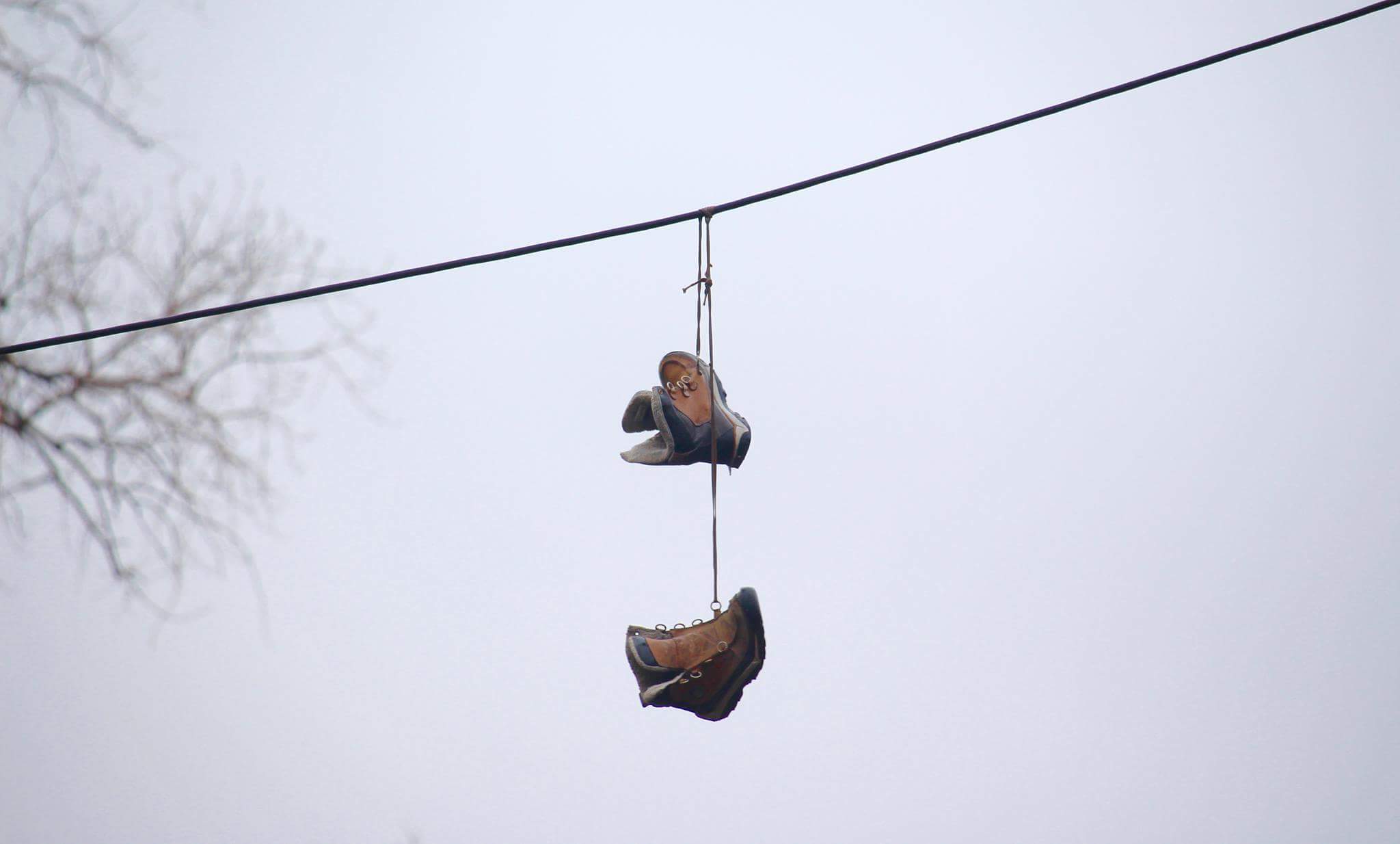
Sneakers dangling from power lines—often called “shoefiti”—are a familiar sight in many cities around the world. While the image can appear random or even puzzling, it has sparked widespread curiosity and numerous interpretations. From harmless pranks to cultural symbolism, the reasons behind this phenomenon vary significantly. To provide a clear and reliable understanding, it is important to separate verified information from speculation and examine what credible sources and urban studies suggest about this long-standing trend.

What Is “Shoefiti”?
The term “shoefiti” is a blend of “shoes” and “graffiti,” used to describe footwear tied together by their laces and thrown over overhead wires. This practice has been documented in urban areas across North America, Europe, Asia, and beyond. Researchers in urban culture and sociology often categorize shoefiti as a form of informal street expression, similar to graffiti, because it alters public space in a visible and often symbolic way.
Common Theories and Their Credibility
Over time, several explanations have emerged to explain why people throw shoes onto power lines. While some are supported by anecdotal or cultural evidence, others remain unverified or exaggerated.
1. Harmless Pranks and Social Imitation
One of the most widely accepted explanations is that hanging shoes on power lines is simply a prank or spontaneous act. Many individuals, particularly teenagers, engage in this behavior for amusement or as a challenge. According to urban behavior studies, acts like these often spread through imitation. When people see shoes hanging overhead, they may replicate the act without attaching any deeper meaning to it.
This explanation is considered credible because it aligns with documented patterns of social behavior, especially in public spaces where visual repetition encourages participation.

2. Personal Milestones or Symbolic Gestures
In some cases, shoes are thrown onto wires to mark a personal event or transition. For example, individuals may do this after graduating, finishing a sports season, or moving away from a neighborhood. While there is no universal meaning attached to this act, it can serve as a symbolic gesture for those involved.
Cultural researchers note that such practices are similar to other informal traditions, where individuals leave a mark to represent a memory or achievement. However, these meanings are typically localized and not widely standardized.
3. Street Art and Urban Expression
Shoefiti is sometimes viewed as a form of street art. Although it does not involve paint or traditional artistic tools, it changes the visual landscape and draws attention. In this context, the act can be interpreted as a creative or expressive gesture rather than vandalism.
Urban studies literature often highlights how public spaces become canvases for unofficial art forms. While not formally recognized as art in all communities, shoefiti contributes to the character and identity of certain neighborhoods.
4. Bullying or Social Behavior
Another explanation, occasionally referenced in media and films, suggests that shoes may be thrown onto power lines as part of a prank targeting an individual—such as taking someone’s shoes and making them inaccessible. While such incidents may occur, there is limited verified evidence to support this as a widespread or primary reason for shoefiti.
Experts caution against generalizing isolated incidents into a universal explanation, emphasizing the importance of distinguishing between rare occurrences and common practices.

Addressing Popular Myths
Some of the more dramatic interpretations of shoes on power lines have gained attention over time, particularly through word of mouth and online discussions. However, these claims often lack credible evidence.
Gang-Related Signals
One frequently repeated claim is that hanging shoes indicate gang territory or serve as coded messages. Law enforcement agencies in multiple countries have addressed this theory and generally found no consistent or verified link between shoefiti and organized criminal activity.
While isolated cases may exist, official statements and studies emphasize that there is no standardized system in which shoes on power lines are used as reliable markers. As a result, this explanation is widely regarded as a myth rather than a substantiated fact.
Hidden Messages or Warnings
Another theory suggests that the placement of shoes carries specific meanings or warnings. Similar to the gang-related claim, there is no credible evidence supporting a universal code or communication system behind shoefiti. Researchers in urban sociology note that these interpretations often arise from speculation rather than documented patterns.
Why the Phenomenon Persists
The continued presence of shoes on power lines can be explained by a combination of visibility, simplicity, and cultural curiosity.
- Ease of participation: The act requires minimal effort—just a pair of shoes and a successful throw.
- Visual impact: Hanging shoes are noticeable and often prompt questions, making them memorable.
- Cultural transmission: As new generations observe the practice, they may adopt it without needing a clear reason.
Additionally, because shoefiti does not typically cause significant disruption, it often goes unaddressed unless it poses a safety concern. This allows the phenomenon to persist over time.

Public Safety and Infrastructure Considerations
While shoefiti is generally harmless, there are some practical concerns associated with it. Utility companies and local authorities occasionally remove shoes from power lines because they can:
- Interfere with maintenance work
- Create minor safety hazards if objects fall
- Affect the appearance of public spaces
In most cases, removal efforts are based on maintenance needs rather than any symbolic meaning behind the shoes.
Cultural Interpretation and Urban Identity
Shoefiti reflects how individuals interact with shared environments. It demonstrates how everyday objects can take on new meanings when placed in unexpected contexts. For some communities, it becomes part of the local visual identity, while for others, it remains a curiosity.
Urban sociologists often use examples like shoefiti to illustrate how informal practices contribute to the character of public spaces. Even without a fixed meaning, the phenomenon encourages observation, discussion, and interpretation.

Conclusion
Shoes hanging from power lines are a global urban phenomenon shaped by a mix of creativity, imitation, and informal tradition. While many theories attempt to explain their presence, the most credible interpretations point to harmless pranks, personal expression, and spontaneous social behavior.
Claims linking shoefiti to organized signals or hidden messages are largely unsupported by reliable evidence. Instead, the practice should be understood as a form of everyday street culture—simple, visible, and open to interpretation.
Ultimately, the enduring appeal of shoefiti lies in its mystery. It invites people to ask questions, share ideas, and engage with their surroundings in a unique way. Whether viewed as playful, symbolic, or artistic, it remains a small but intriguing part of urban life.