
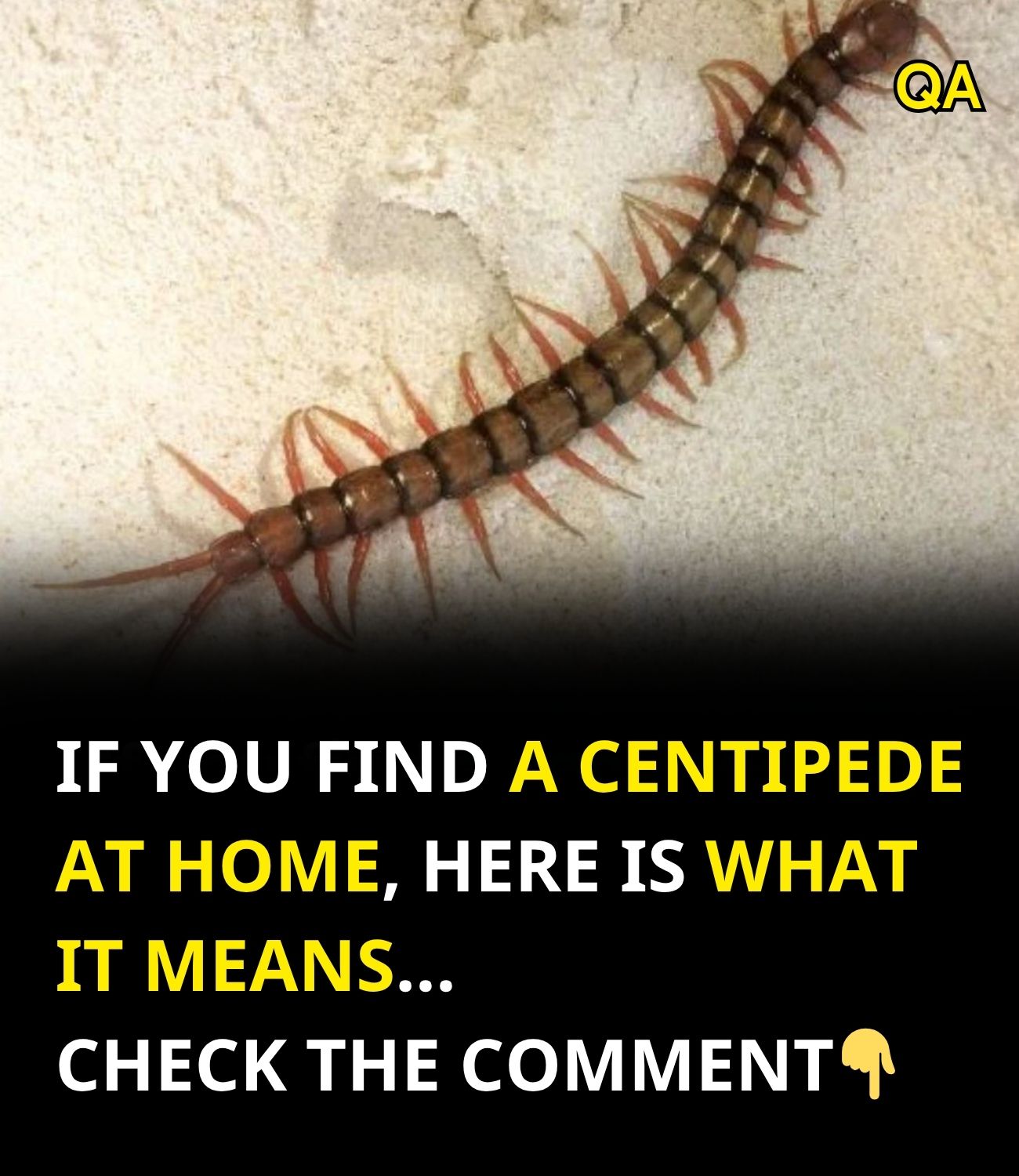
Spotting a centipede inside your home is one of those moments that tends to produce an immediate, instinctive reaction — usually involving a sharp intake of breath and a rapid retreat to the other side of the room. With their many legs moving in that unsettling rippling motion and their surprising speed across floors and walls, centipedes are not exactly welcome houseguests. But before you dismiss the sighting as a random, isolated event, it is worth understanding what their presence actually tells you.
A centipede in your home is rarely a coincidence. In most cases, it is a signal — sometimes about moisture, sometimes about other unwanted visitors already sharing your living space, and occasionally about the weather outside. Learning to read that signal correctly can help you address the real issue before it becomes a larger problem.
What It Means When You See a Centipede Indoors
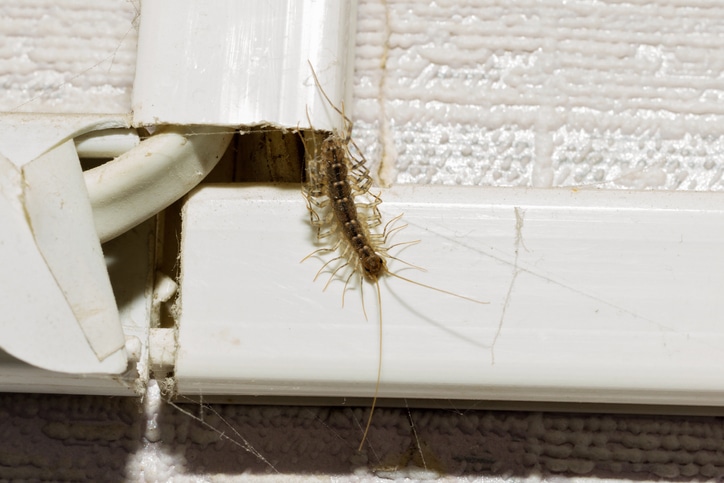
Your Home May Have Other Pest Activity
This is the most important thing to understand about centipedes: they do not wander into your home looking for food scraps, crumbs, or pantry goods. They are carnivores, and their diet consists entirely of other small creatures. House centipedes feed on ants, silverfish, small spiders, flies, cockroaches, and similar insects. They are, in a very literal sense, hunters.
When a centipede takes up residence inside your home, it is because the hunting is good. Their presence indoors is one of the clearest early indicators that your home already has an underlying pest population — possibly one you have not yet noticed because the other insects are hiding effectively or are simply too small to catch your attention. The centipede noticed them, though.
Think of it this way: a centipede inside your house is like a security alert. It is not the intruder itself — it is the alarm telling you that something else has already gotten in. Addressing only the centipede while ignoring the food source that attracted it will result in a recurring problem. The centipedes will keep coming back as long as there is something for them to eat.
There May Be a Moisture Problem in Your Home
If centipedes have one defining preference when it comes to habitat, it is moisture. These creatures require a consistently humid environment to survive, and they are drawn instinctively toward areas of your home where dampness is present. Their most common indoor hiding spots are predictable once you know this: basements, bathroom floor corners, the space under kitchen and bathroom sinks, crawl spaces, utility rooms, and areas near pipes that may have slow, undetected leaks.
Finding centipedes repeatedly in the same areas of your home is one of the early signs of a moisture problem that warrants investigation. Persistent dampness in walls, floors, or crawl spaces does more than attract centipedes — it creates the conditions for mold development, wood deterioration, and long-term structural damage that can be both costly and difficult to remediate.
In this sense, a centipede is doing you an unintentional favor by drawing your attention to a part of the house that may need closer inspection. Before dismissing the sighting, take a few minutes to check whether the area where you found it is genuinely dry or whether there is an underlying humidity issue you had not noticed.
They May Be Seeking Shelter from Outdoor Conditions
Not every indoor centipede sighting points to a serious problem. Sometimes, the explanation is much simpler: the weather outside has become inhospitable, and your home offers warmth and shelter.
Centipedes are sensitive to extreme temperature swings. During extended cold snaps, heat waves, or periods of heavy sustained rainfall, centipedes will migrate toward structures that offer more stable conditions. Your home is an attractive refuge precisely because it maintains a relatively consistent internal temperature year-round. If you notice a sudden uptick in centipede sightings during a particularly brutal week of summer heat or a stretch of winter cold, outdoor conditions are likely a contributing factor.
Are Centipede Encounters Dangerous?
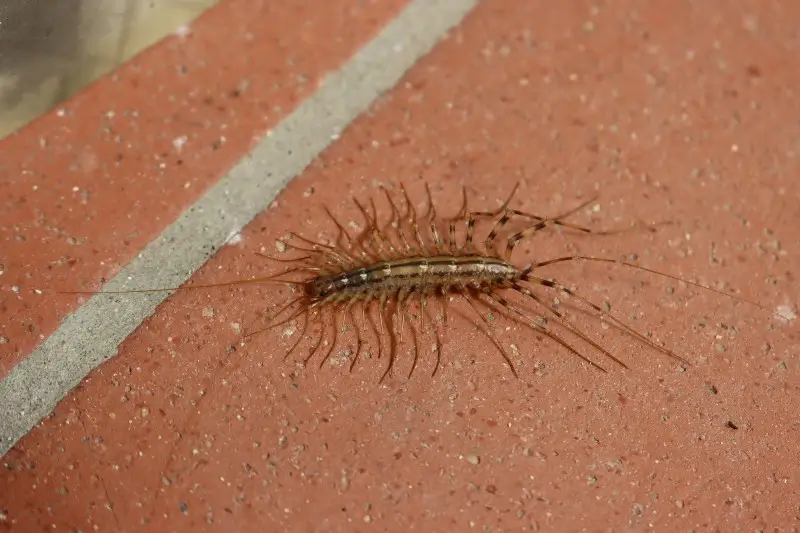
This is understandably one of the first questions people ask, and the answer is reassuring for the vast majority of people.
Unlike some household pests that spread bacteria or contaminate food supplies, centipedes do not transmit diseases to humans. They are not vectors of illness, they do not damage food stores, and they do not cause structural harm to buildings the way termites or carpenter ants can.
They are capable of delivering a bite through the small claw-like appendages near their head, which can introduce a mild venom. However, bites are genuinely uncommon. Centipedes are not aggressive toward humans — they strongly prefer to avoid contact and will typically flee from people rather than engage with them. Bites generally occur only when a centipede is accidentally pressed against skin, such as when someone reaches into a pile of stored clothing or rolls onto one while sleeping.
When bites do occur, the symptoms experienced by most people are comparable to those of a minor bee or wasp sting: some localized redness, mild swelling, a brief period of tenderness or burning, and perhaps some itching in the immediate area. These symptoms typically resolve within a few hours without any medical treatment.
Serious complications are uncommon and are generally limited to individuals who have a sensitivity or allergic response to insect venom. In these cases, reactions can be more pronounced — significant swelling, intense localized pain, or in rare situations, a more widespread response. Anyone who experiences difficulty breathing, extensive swelling beyond the immediate area, dizziness, or a rapid heartbeat following a centipede encounter should seek medical attention promptly.
For healthy adults without known venom sensitivities, a centipede encounter is more of a fright than a genuine health concern. For young children or pets, it is wise to exercise caution, as their smaller body size means a reaction could be proportionally more noticeable — but serious outcomes remain rare.
How to Get Rid of Centipedes in Your Home
If centipedes are appearing regularly or in large numbers, practical action is warranted. The most effective approach combines addressing the root causes with direct control measures.
Reduce Moisture Throughout Your Home
Since humidity is the primary environmental factor that makes your home attractive to centipedes, reducing dampness is the single most impactful step you can take. Inspect all plumbing under sinks and in utility areas for slow leaks, even minor ones. Install a dehumidifier in basement or crawl space areas where moisture accumulates. Ensure that bathroom exhaust fans are functioning properly and being used during and after showers. Check that dryer venting leads fully outside rather than into a wall cavity or crawl space.
Seal All Entry Points
Centipedes are remarkably thin for their length, which means they can fit through gaps that you might not initially take seriously. Walk the perimeter of your home’s lower level and look for cracks in the foundation, gaps where pipes or cables enter the building, spaces under exterior doors, and damaged or improperly sealed window frames. Weatherstripping, door sweeps, and appropriate caulking for cracks and gaps can significantly reduce the number of entry points available to centipedes and other crawling insects.
Eliminate Hiding Places
A cluttered home provides centipedes with exactly what they need: dark, undisturbed spaces where they can rest and hunt without interference. Reducing clutter — particularly in basements, storage rooms, and closets — removes the sheltered microenvironments they prefer. Pay particular attention to piles of clothing left on floors, stacks of cardboard boxes, bundles of stored materials, and any area that rarely gets disturbed during routine cleaning.
Address the Underlying Pest Population
Because centipedes are predators following their prey, eliminating their food supply is one of the most effective long-term strategies for reducing centipede activity. If you have noticed ants, silverfish, small flies, or other insects in your home, addressing those populations will reduce the centipedes’ motivation to remain indoors. Consider targeted treatments for the specific pests present rather than broad-spectrum approaches.
Natural and Low-Impact Repellents
Several natural options have shown effectiveness in deterring centipedes from specific areas. Diatomaceous earth — a fine powder made from fossilized aquatic organisms — can be sprinkled along baseboards, in corners, and around the perimeter of damp areas. It works by physically affecting the outer layer of insects and other arthropods that walk through it, and it poses no risk to humans or pets when used as directed.
Essential oils including peppermint, tea tree, and eucalyptus have repellent properties that discourage many crawling insects, including centipedes. Diluting a small amount in water and applying it along potential entry routes or in areas where centipedes have been spotted can be a useful supplementary measure.
Direct Removal
For individual centipedes spotted indoors, several simple methods work reliably. A glass jar placed over the centipede and slid under a piece of cardboard allows you to capture and release it outside without any risk of contact. A vacuum cleaner handles the task quickly if you prefer not to approach closely. Commercially available sticky traps designed for crawling insects can also be placed in corners, along baseboards, or in areas where sightings are frequent.
How to Prevent Centipedes from Coming Back

Long-term prevention rests on maintaining the conditions centipedes find unattractive. A dry, well-ventilated, and orderly home is fundamentally inhospitable to them. Beyond managing indoor conditions, extending attention to the area immediately surrounding your home makes a meaningful difference.
Keep the exterior of your home clear of debris accumulation — fallen leaves piled against the foundation, stacks of firewood stored against the wall, or overgrown vegetation touching the structure all create transitional zones where centipedes and their prey congregate before making their way inside. Keep grass trimmed, shrubs pulled back from the walls, and firewood stored away from the building’s perimeter.
Scheduling a professional pest control evaluation once or twice a year provides an additional layer of protection, particularly in homes with recurring activity or in regions where centipedes are more common due to climate. A professional can identify problem areas that are easy to overlook during a self-inspection.
The Bottom Line
A centipede in your home is worth paying attention to, but it is not a cause for alarm. In most cases, it is telling you one of three things: that other small insects have already found their way inside, that there is a moisture or humidity issue worth investigating, or that outdoor conditions temporarily made your home appealing as a shelter.
The centipede itself poses minimal risk to the health of most households. Its bite is rarely sought and is typically mild when it does occur. It spreads no disease and causes no structural harm.
The most sensible response to a centipede sighting is a brief but genuine home audit: check for dampness, look for signs of other insect activity, inspect entry points, and address any conditions that make your home more hospitable to pests in general. Taking those steps not only resolves the centipede question — it improves the overall comfort, safety, and long-term condition of your home.
By treating a centipede sighting as the useful early signal it actually is, rather than simply a nuisance to be dealt with in the moment, you give yourself the opportunity to address small problems before they become larger ones.